 Notting Hill Budget Lunch Route Planner: Golborne Road Cafes
Restaurants
Marylebone Beef Wellington Dinner Picker: Townhouse or Pub
Use this Marylebone beef wellington dinner picker to compare quiet Marylebone Lane townhouses and Chiltern Street taverns. Plan seating and evening walks.
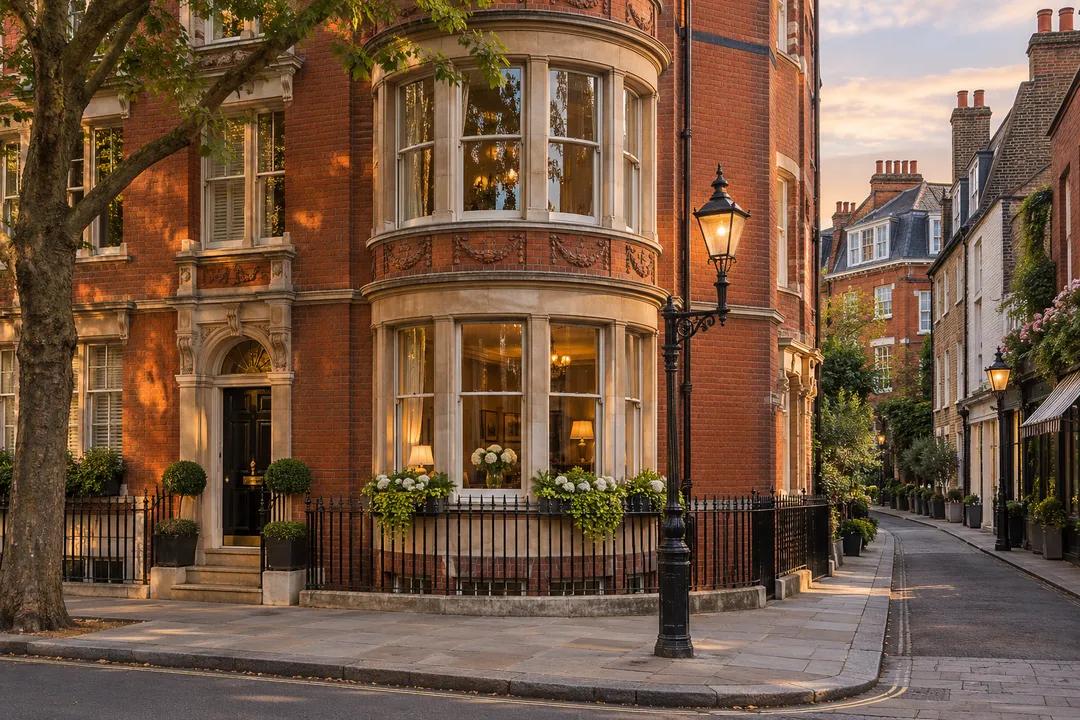
Two chamber musicians emerging from an evening recital at Wigmore Hall and their visiting parents from Yorkshire use a Marylebone beef wellington dinner picker to weigh an intimate Georgian townhouse dining room on Marylebone Lane against a handsome Edwardian corner tavern near Manchester Square. Unlike noisy West End thoroughfares, Marylebone rewards diners who care as much about room acoustics, warm lighting, and table spacing as they do about the flake of the puff pastry. Along Blandford Street, Thayer Street, and Chiltern Street, neighborhood kitchens roast dry-aged Highland tenderloin wrapped in prosciutto and black-trumpet mushroom duxelles, serving four-person tables where family conversation never has to compete with pounding background music or hurried table turns.
Georgian Townhouse Banquettes Versus Edwardian Corner Taverns
Picking the right Marylebone setting starts with matching the dining room layout to your group's pace and conversation needs. In the narrow Georgian townhouses lining Marylebone Lane and Seymour Place, dining rooms are divided into small carpeted parlours with upholstered leather banquettes, brass picture lights, and heavy linen drapes that absorb street noise. Here, a shared Beef Wellington arrives on a warmed silver platter after a measured forty-minute bake, carved into thick medallions alongside pressed potato terrine and black-truffle jus. The soft acoustics make these rooms ideal when hosting parents or older relatives after an evening concert at Wigmore Hall.
A few blocks west toward Manchester Square, George Street, and Chiltern Street, wood-paneled Edwardian taverns and high-ceilinged corner brasseries offer a more relaxed neighborhood cadence. Many feature dedicated midweek or Sunday Wellington platters accompanied by decanted claret and bowls of creamed horseradish greens. Because tavern dining rooms seat guests across both ground-floor booths and upstairs dining parlours, always request an upstairs window table when booking so your party avoids the draft and chatter of the front bar counter while enjoying views over the brick streetscape and passing evening strollers.
Inspecting the Prosciutto Wrap, Black-Trumpet Duxelles, and End Cuts
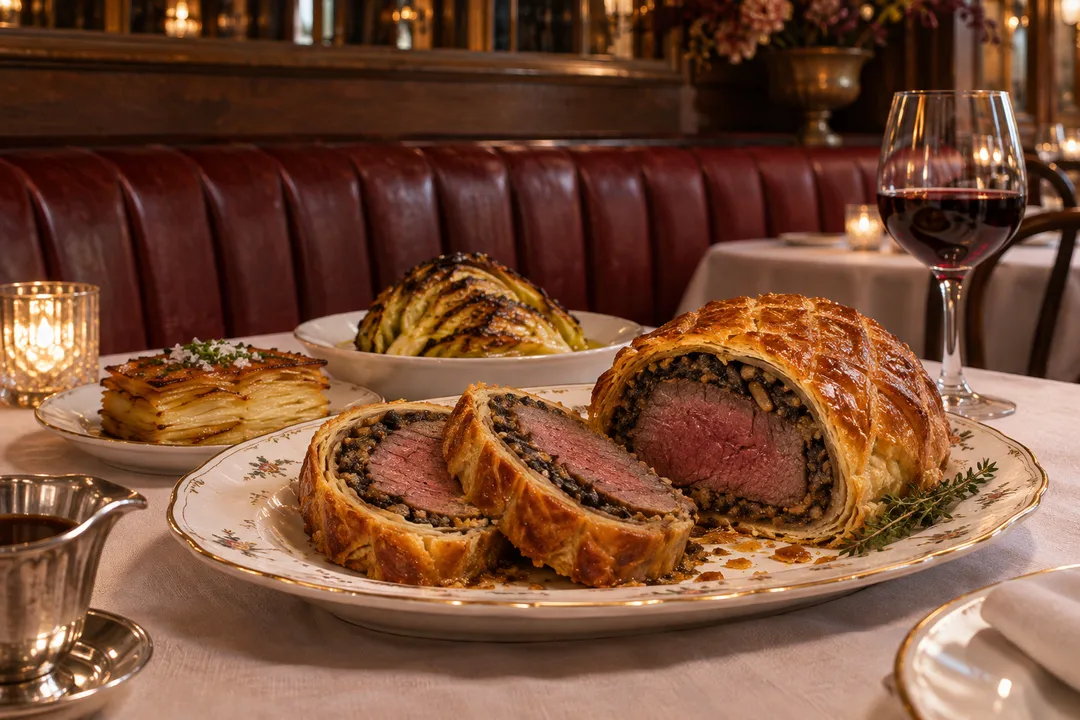
Marylebone's culinary reputation rests on quiet craft, and you can read the quality of a kitchen's Wellington in how evenly the pastry cylinder holds together from the center cuts to the tapered ends. Top neighborhood chefs sear Highland or Aberdeen Angus center-cut fillet quickly over cast iron, brush it with sharp English mustard while still warm, and wrap it tightly in thin-sliced prosciutto and dark black-trumpet mushroom duxelles cooked down with shallots and thyme before encasing the roll in all-butter puff pastry brushed with rich egg yolk. When sliced, the bottom pastry edge stays dry and golden because the cured prosciutto forms a tight seal around the mushroom layer.
When dining as a family of four with mixed preferences for meat doneness, use the geometry of the pastry cylinder to your advantage. In the dining rooms around Blandford Street and Moxon Street—where off-duty surgeons from Harley Street, classical cellists with instrument cases, and local book publishers occupy the corner tables—regulars ask the server or carver to reserve the outer pastry heel cuts for anyone who prefers medium-to-well beef, while saving the thick central medallions for those who want a warm ruby-rare heart. Every plate still gets a generous crown of crisp, golden-scored puff pastry without anyone compromising on how their beef is cooked.
Pairing Pressed Potato Sides and Skipping Heavy Charcuterie Starters
Because Marylebone menus are famous for artisanal cheese counters and cured-meat platters borrowed from nearby village delis, it is tempting to over-order before your Wellington even leaves the oven. Resist the urge to start with a heavy charcuterie board, baked Camembert, or coarse pork terrine with toasted brioche; loading up on cured fats and bread before a puff-pastry centerpiece blunts your appetite for the main event. Begin instead with something clean, bright, and mineral: dressed Dorset white crab with pickled fennel, cured chalk-stream trout with cucumber ribbons, or a light Jerusalem artichoke velouté.
For the table sides, pair the rich mushroom-and-pastry fillet with one crisp potato preparation—such as layered potato mille-feuille cooked in clarified butter or rosemary-salted skin-on fries—and two bright green dishes. Steamed winter greens tossed with lemon oil, roasted heritage carrots with toasted caraway seeds, or charred hispi cabbage with caper vinaigrette keep the palate refreshed between bites of buttery crust and tenderloin. If your group wants dessert afterward, share a single plate of poached damsons in red wine or a blood-orange granita rather than ordering heavy pastry tarts that repeat the rich butter dough of the main course.
Recital Timing, Evening Pastry Batches, and Backup Village Lanes
Marylebone kitchens follow an earlier, more residential rhythm than Soho or Covent Garden, with dinner demand clustering right after Wigmore Hall concerts finish and early-evening gallery viewings wrap up around Manchester Square. Because chefs prepare a modest number of hand-wrapped tenderloin logs each afternoon and chill them carefully before service, arriving for a late seating without noting your Wellington request on the booking can leave you facing a crossed-out line on the blackboard menu when the kitchen runs out of rested pastry rolls.
If you step into a Marylebone High Street or Blandford Street dining room and find the evening Wellington batch already spoken for—or if a popular tavern quotes a long wait for a four-person booth—pivot into the quieter side streets immediately. Walk west across Baker Street toward Seymour Place and Upper Berkeley Street or duck east into New Cavendish Street and Riding House Street, where independent wine bistros and French-inflected neighborhood dining rooms regularly serve individual fillet en croûte, duck pithiviers, and slow-cooked beef cheek bourguignon with the same unhurried table service.
Evening Stroll Past Manchester Square and Paddington Street Gardens
Walking through Marylebone after dinner feels like exploring a self-contained Georgian village tucked inside central London. Step out onto the winding medieval curve of Marylebone Lane, passing independent bookshops, cheesemongers, and quiet mews archways before emerging into Manchester Square, where the grand floodlit facade of Hertford House—home to the Wallace Collection—glows behind iron railings and tall plane trees that shelter the central garden.
From Manchester Square, loop north along Spanish Place and Blandford Street toward the leafy paths and brick mausoleums of Paddington Street Gardens, then turn down Chiltern Street to admire the red-brick Victorian fire station, tailors, and warm boutique windows under quiet streetlamps. Before leaving your banquette or while strolling past Manchester Square, open the Karpo APP to compare Marylebone townhouse dining rooms, filter quiet wine bars for a post-recital digestif, and plan your walking route back toward Bond Street or Baker Street stations.
Ask Karpo for more information.
Keep reading
- Notting Hill Budget Lunch Route Planner: Golborne Road Cafes
 Camden Budget Lunch Route Planner: Lock or Drummond Street
 Brixton Budget Lunch Route Planner: Covered Arcades When Wet