 Notting Hill Budget Lunch Route Planner: Golborne Road Cafes
Restaurants
Clerkenwell Beef Wellington Dinner Picker: Chophouse or Pub
Use this Clerkenwell beef wellington dinner picker to compare St John Street chophouses and Sekforde Street pubs. Plan group cuts and pickled sides.
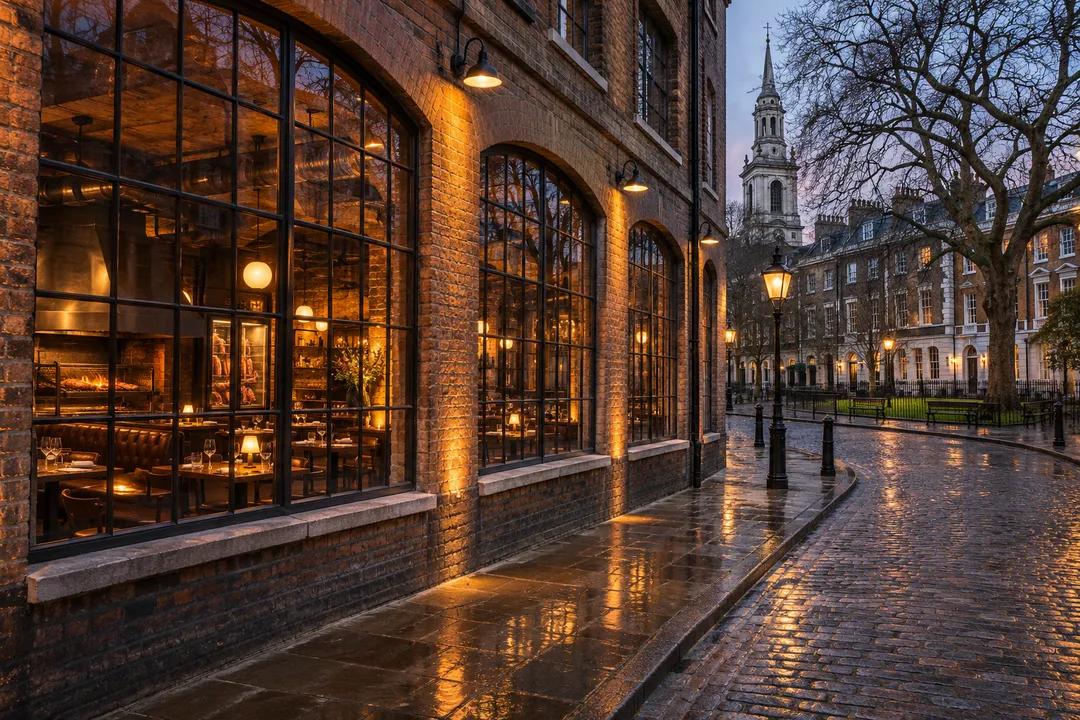
Three industrial architects and a bookbinder wrapping up their Friday studio deadline near Clerkenwell Green use a Clerkenwell beef wellington dinner picker to choose between a butcher-led warehouse chophouse on St John Street and a Georgian coach-house tavern tucked along Sekforde Street. Because Clerkenwell sits directly north of the historic meat arches of Smithfield, local kitchens treat beef with nose-to-tail reverence rather than dainty hotel polish. Along Cowcross Street, Charterhouse Street, and St John's Square, timber-tabled dining halls wrap dry-aged Longhorn tenderloin in ox-cheek duxelles and suet-enriched rough-puff pastry, bringing bubbling cast-iron trays to the table for studio crews who care about deep beef flavor, crisp golden crust, and honest pastry craft after a long week.
Butcher-Led Warehouse Chophouses Versus Georgian Coach-House Pubs
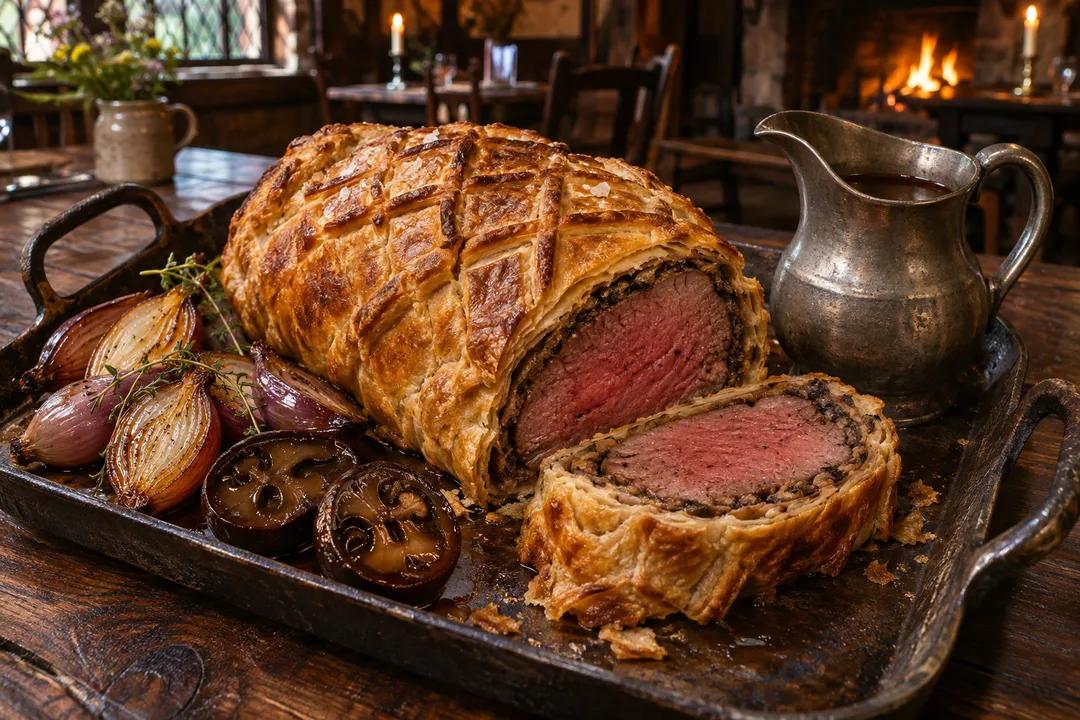
Picking your table in Clerkenwell starts with deciding between the high-ceilinged energy of a former Victorian printworks or the low-beamed intimacy of a residential Georgian pub. Along St John Street and Charterhouse Street, warehouse chophouses showcase their dry-aging cabinets right beside the open pass. Here, a shared Beef Wellington is built around thick-cut native Longhorn or Shorthorn fillet, wrapped in a savoury pancake with slow-braised oxtail or ox-cheek duxelles, and baked in a heavy cast-iron roasting tray until the rough-puff crust turns deep mahogany. Servers set the iron tray down on a wooden trivet so the table can carve thick slabs and spoon up the roasting juices while the crust crackles.
If your group prefers a quieter corner away from the clatter of open grills, turn into the Georgian terraces of Sekforde Street, Clerkenwell Close, and Wilmington Square. Coach-house gastro-pubs in these residential pockets bake two-person and four-person Wellingtons in deck ovens for evening chalkboard service, pairing the golden pastry roll with jugs of red-wine bone gravy and buttered winter greens. Request a booth in the back dining parlour or upstairs snug so your party stays warm when the front pub doors swing open to the evening breeze.
Nose-to-Tail Duxelles, Bone-Marrow Pastry, and Cast-Iron Resting
What sets a Clerkenwell Wellington apart from West End versions is the savory depth tucked inside the pastry seam. Instead of relying only on button mushrooms, Smithfield-trained chefs fold finely chopped braised ox cheek, roasted bone marrow, and cracked black peppercorns into their woodland mushroom duxelles. That slow-cooked beef richness seasons the lean center-cut tenderloin from the outside in while keeping the surrounding pastry layer moist, structured, and intensely aromatic without ever soaking through the crisp bottom crust.
When the cast-iron tray lands on your table, check how the crust was glazed and rested. In the studio-crowd dining rooms off Cowcross Street and Turnmill Street—where furniture makers, typographers, and structural engineers gather over carafes of Côtes du Rhône after laying down their drawing rolls—chefs brush the rough-puff dough with rendered beef dripping and egg yolk before scoring deep vents that let steam escape cleanly. Because cast iron retains fierce heat, ask the server whether the Wellington has already rested on a wire rack; if it came straight from the oven, give it five minutes on the trivet before slicing so the ruby fillet juices stay locked inside the meat and the end cuts remain flaky.
Pairing Pickled Walnuts and Splitting Cuts for Studio Groups
A nose-to-tail Clerkenwell Wellington carries far more richness than a standard fillet steak, so your side orders need sharp acidity and herbal bitterness to cut through the marrow and butter crust. Skip heavy pub starters like Scotch eggs, pork scratchings, or bone-marrow macaroni cheese; stacking heavy starch and fried breadcrumbs before a puff-pastry centerpiece overwhelms the palate halfway through dinner. Start instead with potted brown shrimp with pickled cucumber, bitter radicchio with aged Lincolnshire Poacher, or a clear oxtail broth served in warmed stoneware cups.
When ordering for the main table, ask for traditional British chophouse accompaniments: halved pickled walnuts, roasted shallots in dark malt vinegar, buttered cavolo nero, and a crisp watercress salad. Pickled walnuts are the secret weapon of Clerkenwell regulars—their dark, spiced acidity slices straight through rich mushroom duxelles and puff pastry without dulling the flavor of the beef. For a group of four, a smart chophouse strategy is ordering one two-person Wellington cylinder alongside a charcoal-seared bone-in ribeye or whole roasted turbot, giving every person at the table a thick slice of pastry-wrapped fillet plus a contrasting chargrilled cut.
Friday Studio Rush, Blackboard Allocations, and Backup Streets
Clerkenwell's dining rhythm is driven by architecture practices, design studios, and legal chambers around Farringdon, which makes Thursday and Friday evenings the most competitive windows of the week. Chophouses chalk up their exact count of wrapped Wellington cylinders at the start of evening service and erase each portion as tables claim them. Turning up after eight o'clock on a Friday without reserving a pastry roll in advance almost guarantees watching the last cast-iron tray head to a neighboring booth while the blackboard count drops to zero.
If your first-choice chophouse on St John Street or Cowcross Street has wiped Beef Wellington off the evening blackboard—or if the front bar wait stretches past thirty minutes—pivot north or east rather than waiting hungry by the door. Walk up toward Exmouth Market and Rosebery Avenue or cut across Clerkenwell Road into Britton Street and Great Sutton Street, where independent wine bars, rotisserie bistros, and traditional pie-and-chop rooms keep individual beef shin pithiviers, suet-crust steak puddings, and wood-roasted rump caps running throughout the evening for late studio tables.
Post-Dinner Walk Through St John's Gate, Passing Alley, and Exmouth Market
Clerkenwell's medieval alleyways and quiet Georgian squares reward an unhurried walk after a rich chophouse supper. Step out onto St John's Square and pause beneath the crenellated Tudor stone archway of St John's Gate, where lantern light illuminates the historic priory precinct and quiet cobbles. From the square, cross Clerkenwell Road and duck into Passing Alley, a narrow cobbled passage that threads between old brick workshops and print studios into the open expanse of Clerkenwell Green.
From Clerkenwell Green, climb the quiet residential curve of Sekforde Street to admire its intact Georgian fanlights, brick facades, and iron railings before looping north toward the strung canopy lights of Exmouth Market and the peaceful churchyard of St James's Clerkenwell. Before leaving your timber table or while walking under St John's Gate, open the Karpo APP to compare Clerkenwell chophouses, check nearby craft beer taprooms and natural wine bars, and map your evening walking route back toward Farringdon or Angel stations.
Ask Karpo for more information.
Keep reading
- Notting Hill Budget Lunch Route Planner: Golborne Road Cafes
 Camden Budget Lunch Route Planner: Lock or Drummond Street
 Brixton Budget Lunch Route Planner: Covered Arcades When Wet