 Clapham Weekend Brunch Planner: Parkside Morning Cafes
Restaurants
Chinatown Bao Bun Lunch Picker Led by a Homesick Student
A homesick Taiwanese student leads London friends through Chinatown to taste gua bao, char siu bao and pan fried buns, and shows how each one is eaten.
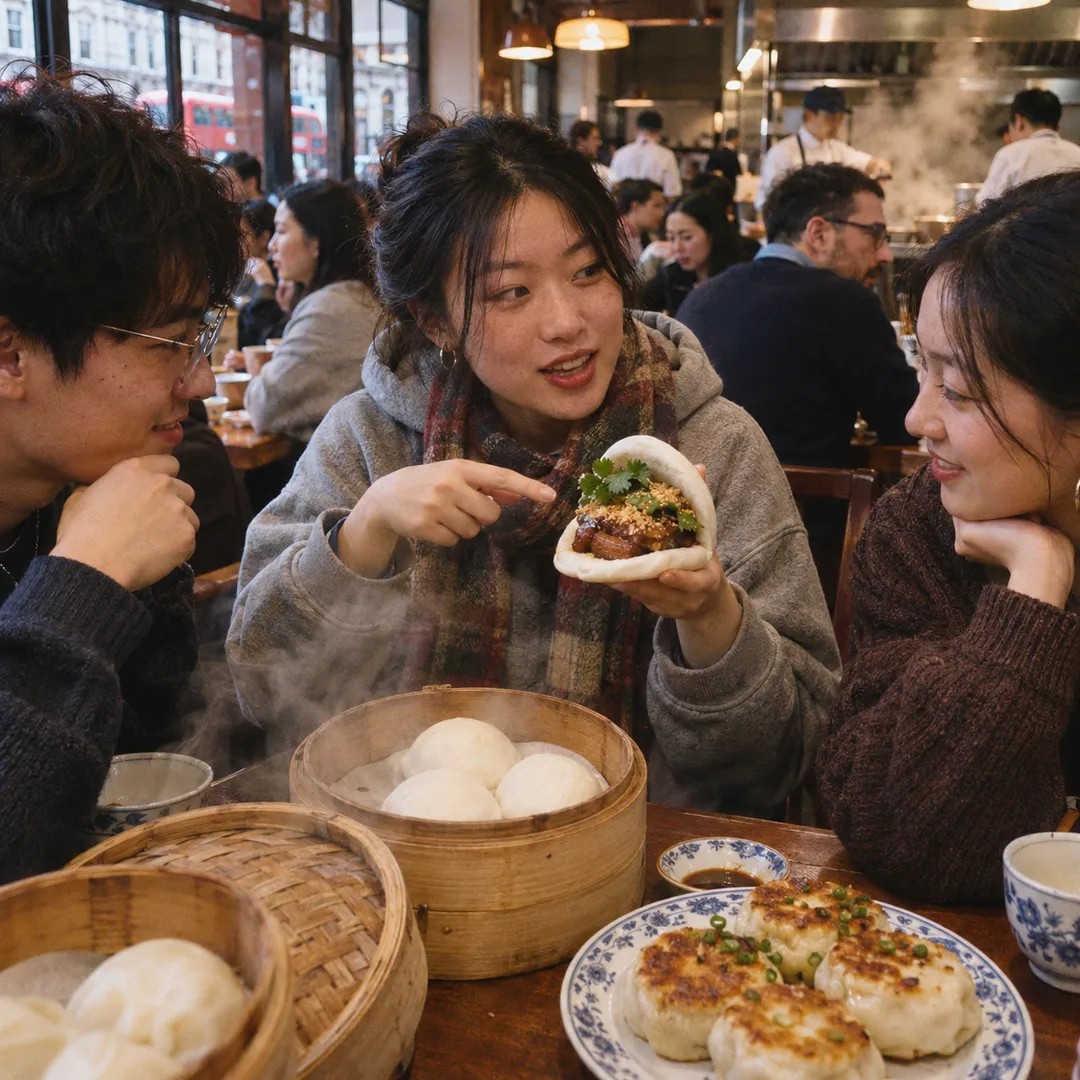
The first winter abroad is when homesickness hits hardest. For a student from Taiwan, it often arrives as a craving for a warm folded gua bao from a night market stall back home. London Chinatown cannot fully replace that, but it comes close enough to share. This bao bun lunch picker follows a homesick student leading new friends from her course through Chinatown, explaining the different buns as they go, and turning a lonely craving into a lunch with friends.
When a Craving Becomes a Plan
Homesickness rarely announces itself directly. It shows up as a sudden memory of a taste, a smell or a street. For many Taiwanese students in London, it is the memory of a soft folded bun stuffed with braised pork belly, peanut powder and pickled greens, eaten standing up at a busy night market. Wanting that taste is natural, and doing something about it is better than sitting alone with the feeling.
Turning the craving into a group lunch helps in two ways. It brings a little of home into a new city, and it gives new friends a reason to learn about where you come from. Most classmates are delighted to be invited, especially if they have only ever eaten bao as a trendy snack. A Chinatown lunch becomes a small cultural exchange as well as a meal.
Explaining the Bao Family
The word bao simply means bun, and that covers many different things. The folded Taiwanese gua bao is a flat oval of steamed dough wrapped around a filling, often called a pork belly bun in London. Cantonese char siu bao is round, pleated at the top and filled with sweet barbecue pork, a classic of dim sum. Baked versions have a shiny golden top, while steamed ones are soft and white.
Then there are the pan fried buns, often called sheng jian bao, which come from Shanghai. These have a crisp golden base, a soft top sprinkled with sesame and spring onion, and a hot, juicy filling. Explaining these differences at the table helps friends understand that bao is not one dish, but a whole family of buns from different regions, each eaten in its own way.
Ordering for a Mixed Table
When leading a group, order a little of everything rather than one style for each person. A steamer of char siu bao, a plate of pan fried buns and a few folded gua bao gives everyone a chance to taste and compare. Add a vegetable dish or some greens to balance the meal, and a pot of tea for the table. Sharing is part of the culture, and it makes the lunch feel generous.
Ask friends about allergies and dietary needs before ordering, since many buns contain pork, and some sauces include peanuts or shellfish. Vegetarian buns filled with mushrooms or mixed vegetables are often available, but it is worth asking the staff. Karpo APP can help you find bao spots in Chinatown that suit the group, so nobody feels left out of the tasting.

Teaching Friends How to Eat Them
Each bun has its own technique. Gua bao is held like a soft sandwich, with the fold at the bottom to stop the filling escaping. Char siu bao can be torn open to let the steam out before biting, which helps avoid burnt tongues. Pan fried buns need the most care, since the filling holds hot soup inside. Bite a small hole first, let it cool, and then eat the rest.
These little tips make friends feel more confident and turn the lunch into a fun lesson. Expect a few spills and laughter, especially with the pan fried buns. That is part of the experience. By the end of the meal, most people have a favourite and a few new words, and the homesick host usually feels a lot less far from home.
Telling Stories From Home
Food is a good starting point for sharing stories. As friends taste each bun, the host can talk about the night markets back home, family meals, or the street stall near her old school where she bought buns after class. These memories help friends see beyond the food, and they often respond with stories of their own favourite comfort dishes.
A classmate from Mexico might compare the folded bun to a soft taco, while someone from Italy might talk about the bread from their grandmother's kitchen. These connections are what make a shared lunch special. Homesickness becomes easier to carry when it is shared, and a new group of friends can start to feel like a small family in the city.
A Walk Through Chinatown After Lunch
After eating, take a slow walk through the streets. Gerrard Street, with its ornate gateways and strings of red lanterns, is the heart of London Chinatown. On a grey November afternoon the lanterns add a warm splash of red overhead. The side streets around Newport Place and Lisle Street hold small supermarkets, bakeries and tea shops that are worth a quick look.
A Chinese supermarket is a good place to pick up snacks from home, such as Taiwanese biscuits, instant noodles or tea. Sharing these with friends extends the lunch into a small tasting session. For students, these shops can also become a regular stop for ingredients when they want to cook something familiar in a shared kitchen at halls.
Ending With Something Sweet
Chinatown bakeries are perfect for a sweet ending. Egg tarts, sweet buns filled with custard or red bean, and soft cakes make an easy dessert that can be eaten while walking. For Taiwanese students, bubble tea is another reminder of home, and many friends will be happy to try a cup if they have never had one before.
From Chinatown, it is a short walk to Leicester Square, Soho or Covent Garden. If the group has time, a gentle wander through the lanes is a nice way to close the afternoon. Even a few extra minutes together can make a new friendship feel stronger and turn a lonely day into a good one.
Planning a Chinatown Bao Lunch
Chinatown is busy at weekends and during holidays, so a weekday lunch is often calmer for a group. Arrive slightly before or after the main lunch rush to get a table more easily, and keep the group to a size a small dining room can welcome. Having two or three options in mind helps if one place is too crowded.
Different kitchens specialise in different types of bao, so it is worth trying more than one over time. Use Karpo APP to shortlist a few bao spots in Chinatown before the lunch, pick one that offers several styles for the group, and save the others for future lunches when homesickness returns.
Ask Karpo for more information.
Keep reading
- Clapham Weekend Brunch Planner: Parkside Morning Cafes
 Hackney Weekend Brunch Planner: Canalside Roastery Tables
 Soho Weekend Brunch Planner: Historic Townhouse Tables