 Greenwich Gelato Shop Crawl: Market Cobbles to Park Hilltop
Coffee & Dessert
Marylebone Bakewell Tart Bakery Crawl: Mews Slices to Split
Plan a Marylebone bakewell tart bakery crawl along Chiltern Street and Marylebone Lane, no booking needed. Split iced tearoom wedges and laminated tarts.
Between a late-morning chamber rehearsal at Wigmore Hall and an afternoon gallery circuit through the Wallace Collection, the quiet red-brick lanes of Marylebone turn into an ideal testing ground for almond pastry. Taking a bakewell tart bakery crawl through Marylebone Lane, Thayer Street, and Chiltern Street feels completely different from navigating a bustling south-bank food market. Here, narrow Georgian shopfronts and Edwardian porticoes house two distinct schools of baking: refined neighborhood tearooms that guard traditional shortcrust and feathered royal icing, and contemporary viennoiserie counters that fold almond cream and red-berry compote into crisp, multi-layered croissant dough. My cellist friend and I always walk this loop as a pair, ordering one classic slice and one laminated tartlet to cut down the middle so we can compare pastry engineering without hitting a mid-afternoon sugar wall. Walk-in counter service is the norm across the village, and timing your stroll for the calm window after the morning coffee rush gives you first pick of the midday bake.
Georgian Tearoom Shortcrust Versus Chiltern Street Laminated Shells
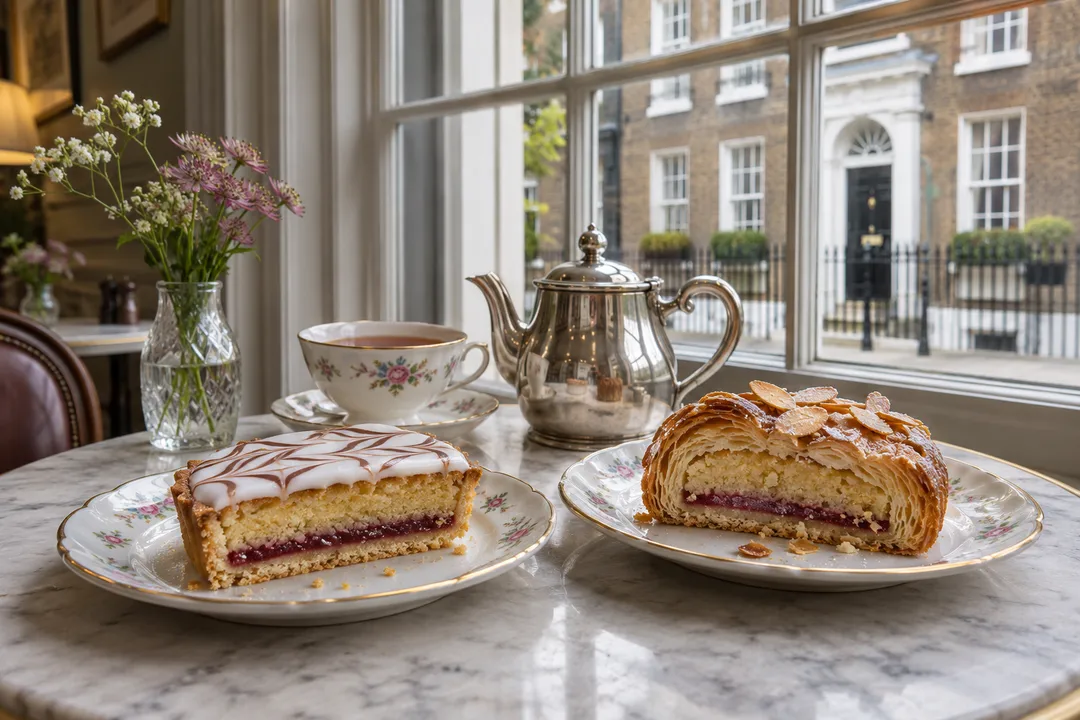
What makes Marylebone such a rewarding pocket for pastry lovers is how closely traditional British baking sits beside modern French-trained viennoiserie. Along the curve of Marylebone Lane and the side streets leading toward Thayer Street, classic café counters bake their Bakewell tarts in wide, shallow fluted tins. The base is an all-butter sweet shortcrust rolled thin enough to snap cleanly under a pastry fork, spread with seedless raspberry or redcurrant preserve, and topped with a pale, lemon-zest-scented almond sponge. Over the cooled sponge goes a mirror-smooth coat of white glacé icing, cross-hatched with dark berry lines pulled by the tip of a paring knife.
Cross over to the red-brick stretch of Chiltern Street or the mews alleys off Blandford Street, and the silhouette changes completely. Bakers working with cold-fermented butter blocks build spiral-laminated shells that cradle roasted Marcona almond frangipane and a tart core of sour cherry or blood-orange marmalade. Instead of sugar icing, the exterior shatters into caramelized, honeycombed flakes dusted lightly with icing sugar and crushed roasted almonds. Eating a forkful of dense, butter-rich shortcrust followed five minutes later by an airy, blistered croissant-tart shell highlights just how differently almond meal behaves depending on the fat and dough beneath it.
Watch the regulars who slip into these narrow rooms around midday and you quickly pick up the local rhythm. Musicians with violin cases tucked upright beside banquette corners, art dealers from New Cavendish Street, and residents walking terriers back from Regent's Park rarely order a full iced wedge apiece. Instead, two people ask the barista for a spare side plate and a serrated table knife, halving each pastry so every person gets both the nostalgia of feathered fondant and the savory crunch of dark-toasted laminated edges.
How to Spot Real Marcona Frangipane and Avoid Synthetic Essence
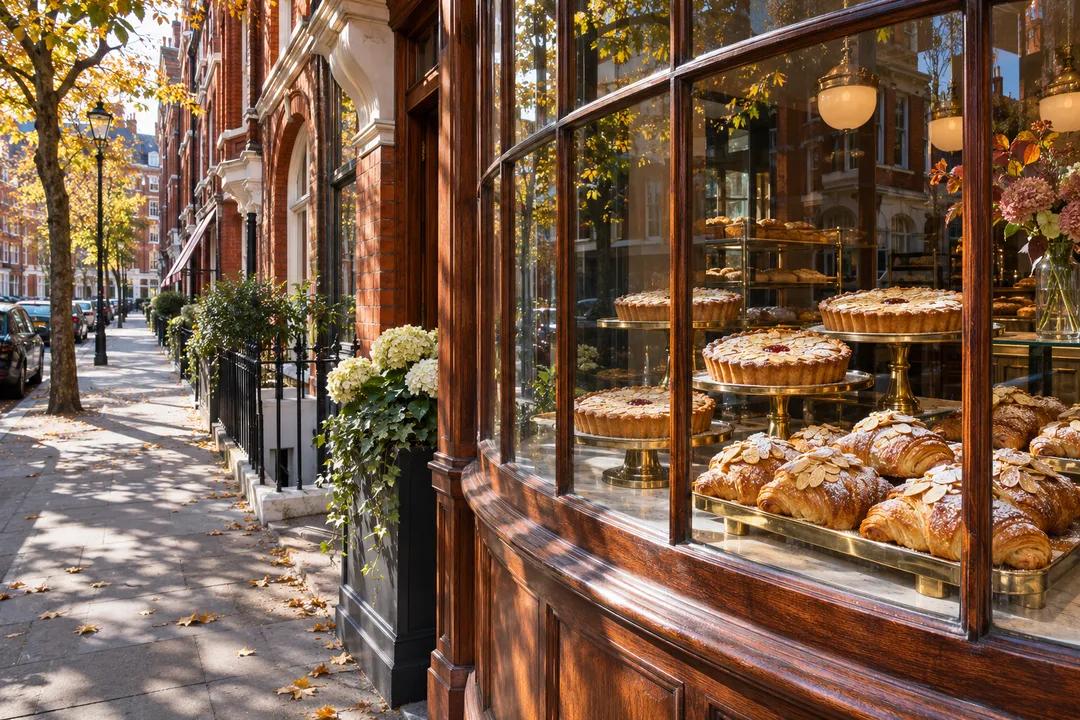
Because Marylebone counters display their pastries at eye level on marble slabs and brass cake stands, you can read the quality of a Bakewell before saying a word. Start by looking at the color of the exposed almond sponge along the cut edge of a wedge. Genuine frangipane made from finely milled blanched almonds, eggs, and cultured butter shows a warm, pale-straw hue with tiny, irregular air pockets and a satin sheen. When a bakery cuts corners with white wheat flour extenders and clear almond flavoring drops, the sponge looks chalky white and uniformly spongy, much like a standard birthday cake.
Pay careful attention to the icing thickness on classic slices as well. A balanced fondant layer should be no thicker than a coin, acting as a delicate sweet lid that seals moisture into the almond crumb below. Skip any slab where a thick, opaque block of sugar paste sits atop a dry, yellowing base—a common sign that the tray has sat under warm halogen display lamps since early morning. If you prefer brighter acidity to cut through rich almond paste, ask whether the counter uses redcurrant-spiked raspberry jam or Morello cherry compote, both of which keep the finish brisk when paired with black Assam or bergamot-scented Earl Grey tea.
When you order at the counter, specify whether you want your slice plated for a quick perch at the window bar or packed flat in a rigid cardboard box. Delicate feathered icing smudges easily if slipped into a flat paper bag, whereas a sturdy hinged box lets you carry two half-slices upright while browsing the independent print sellers and perfumeries along Marylebone High Street.
Pacing a Midday Loop Through St Christopher's Place and Garden Squares
Begin your crawl at the southern entrance of St Christopher's Place, stepping away from the roar of Oxford Street into pedestrianized flagstones and quiet boutiques. Follow the historic winding path of Marylebone Lane northward—its gentle curves still trace the medieval footpath along the buried Tyburn stream—and stop at your first counter for a plated traditional iced Bakewell wedge and a pot of loose-leaf tea. Sitting inside for the iced slice saves you from juggling sticky fondant outdoors and gives you a warm table to divide the wedge cleanly.
From Marylebone Lane, cut west past the fountain and plane trees of Manchester Square, where the brick townhouse of the Wallace Collection presides over the north side. Continue onto Chiltern Street to pick up your second stop: a laminated almond-and-berry Bakewell pastry or a brown-butter flaked-almond tartlet packed to go, along with a paper cup of filter coffee. The Gothic brick façade of the former fire station and the quiet arcade windows make Chiltern Street one of the calmest strolling corridors in West London.
Carry your takeaway box two blocks north into Paddington Street Gardens, a leafy green space shaded by mature London planes and lined with long wooden benches. Sitting on the south lawn lets you enjoy the flaky laminated pastry in the open air without worrying about scattering croissant crumbs across a small indoor table. Afterward, a five-minute walk north brings you straight to the York Gate entrance of Regent's Park for a lakeside promenade past the waterfowl.
Using the Karpo APP to Filter Seating and Quiet Mews Detours
Marylebone's charm lies in its compact shopfronts, which also means indoor seating can fill up quickly when nearby rehearsal halls or medical chambers break for lunch. Opening the Karpo APP before you set off lets you compare neighborhood bakeries, patisseries, and tearooms across Marylebone, check which venues suit a sit-down tea service versus a quick takeaway hatch, and build a custom walking sequence from St Christopher's Place to Regent's Park.
If your first-choice Chiltern Street counter has no window stools free or a sudden drizzle makes Paddington Street Gardens less inviting, use the Karpo APP to pivot to a sheltered alternative within a two-minute radius. You can locate quiet courtyard cafés tucked into the glass-roofed arcades off Baker Street or calm coffee rooms along Moxon Street and Blandford Street, keeping your pastry crawl smooth, dry, and unhurried from the first forkful to the final crumb.
Ask Karpo for more information.
Keep reading
- Greenwich Gelato Shop Crawl: Market Cobbles to Park Hilltop
 Hackney Gelato Shop Crawl: Small-Batch Arch and Park Route
 Islington Gelato Shop Crawl: Sunday Canal and Passage Walk