 Brixton Christmas Light Up Walk Planner: Rainy Arcades
Free Things to Do
Autumn Walk Near Me: Victoria Park by the Canal
A practical East London guide to Victoria Park in autumn, with a canal-side route, tree-walk details, food stops, and dusk-friendly planning notes.
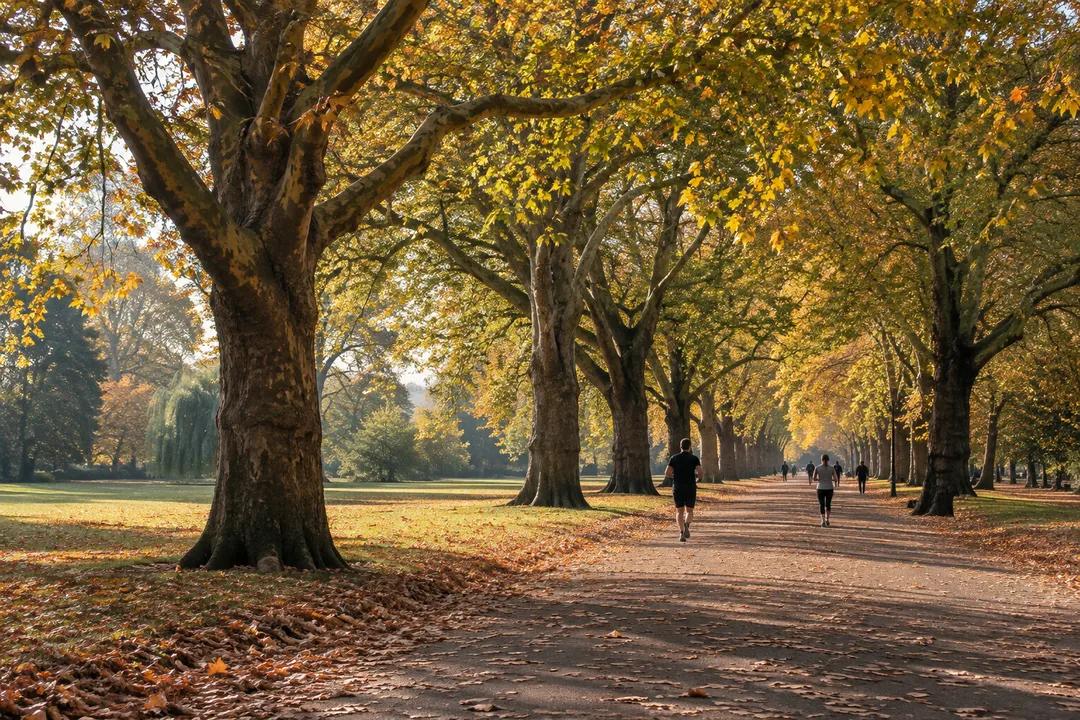
Victoria Park gives an autumn walk near me in London a useful East End shape: a large public park, a lake, mature trees, and streets that make the outing easy to extend. The park is at Grove Road, London E9 7DE. Tower Hamlets' current parks page says Victoria Park opens at 7am and closes at dusk, 365 days a year. That makes daylight planning more important than a fixed evening schedule.

Begin at Grove Road
Enter from Grove Road and let the first stretch be observational rather than ambitious. Victoria Park was London's first public park created for ordinary residents, and its broad layout still feels designed for repeated local use. You will see joggers, dog walkers, parents with scooters, and people crossing the park as part of a commute. The atmosphere is not a quiet country estate; its appeal is that autumn color is woven into everyday city movement.
The park's East Walk tree route is the best starting idea for visitors who want a little structure. The council guide describes one of three tree walks, so you can treat the route as a prompt rather than a compulsory circuit. Notice bark, canopy, and the difference between trees lining a formal path and trees standing beside open grass. In autumn, the walk works because it gives your eyes a sequence instead of one oversized lawn.
The tree walk earns its name
The lake is the visual hinge. Water changes the way the trees read, especially when wind breaks up reflections and sends leaves across the edge. Walk slowly around the busier side first, then take a quieter angle where the park opens out. The must-see detail is not a particular tree but the relationship between the lake, the path, and the skyline beyond. It is a small piece of landscape design inside a dense part of London.
Victoria Park also rewards a route that crosses itself. Start with the tree walk, move toward the lake, then angle toward the park's bridges and open lawns before returning through a different avenue. That gives you three textures in one outing: enclosed canopy, reflective water, and open grass. If you are meeting friends, choose the lake or a named gate as the regrouping point rather than relying on a small café or bench.
There is a recognizable local rhythm to the park. A runner will keep left on a narrow path. A dog walker may pause at the edge of the grass; parents often let children move ahead only where the sightline stays open. The quiet rule is to share the paths without treating them like a private photo set. Autumn photographs are better when you step aside, wait for a gap, and let the park's real movement remain in the frame.
Water, bridges, and open space
The Pavilion is useful when you need a pause, but do not make it the reason for the visit. The strongest part of Victoria Park is the changing outdoor route, and a busy café stop can interrupt that rhythm. Bring a water bottle and a layer, especially after late afternoon when the open lawns cool quickly. If you want a warm ending, plan it around the park rather than assuming the first nearby table will be available.
My honest skip is a rigid lap that ignores the season. Victoria Park is large enough that the same distance can feel repetitive if you follow the most obvious edge without looking up. Use the tree-walk material to choose one stretch, then cut across toward the lake. That makes the visit shorter and more varied. The goal is not to prove you completed a loop. It is to leave with a clear memory of how the park changed.
How to pace the park
The canals and waterways around the park make the neighborhood finish easy. From the park, you can continue toward the Hertford Union Canal or angle toward Hackney Wick for a more industrial, arts-oriented second act. Alternatively, return toward Bethnal Green and choose a café away from the gates. Leave enough time for this extension because the park's edges are deceptive: the walk from a beautiful interior spot to the next transport point can be longer than it appears.
Victoria Park's history is present without needing a museum stop. Its purpose as a public park is visible in the range of people using it and in the way the paths connect different communities. The old trees are not merely scenery. They are the park's long memory. In autumn, a tree walk becomes a way to see that continuity—new runners, old trunks, children on the same lawns, and a city changing around them.
A neighborhood finish in the East End
A rainy-day backup is to shorten the route and keep to the tree-lined sections rather than attempting the full open perimeter. If the wind makes the lake edge unpleasant, move inward and use the paths around the formal areas. If the park is busy during an event, treat the crowd as a reason to shift toward the quieter side rather than abandoning the neighborhood. There is enough space here for a second version of the walk.
For families, set two simple promises: one water view and one tree detail. For a solo walk, add a bench where you can read or sketch. For a photography outing, use the bridges and lake edge as visual punctuation, then finish with an ordinary street scene outside the park. The outing becomes more memorable when the route includes both the designed landscape and the lived-in East London around it. Do not arrive at the last possible minute before dusk. Tower Hamlets' guide says the park closes at dusk and that closing time fluctuates with the season. Its entrances carry the specific daily timing. Autumn afternoons can lose light quickly, especially under cloud. Start earlier if you want a calm circuit, or enter with a shorter plan if you are meeting near sunset. The park is generous, but daylight is the constraint. A good exit route is part of the plan. If you finish near Grove Road, you can move toward the Pavilion and the surrounding streets. If you finish by the canal side, Hackney Wick gives you a different atmosphere and more visual texture. Do not promise yourself a specific late meal without checking your own timing. The practical pleasure is choosing the neighborhood finish after you know how much energy the walk used. Practical notes: Victoria Park is at Grove Road, London E9 7DE. The park is free and open from 7am to dusk, 365 days a year, according to Tower Hamlets' current parks page. Toilets are listed as opening daily from 10am until one hour before the park closes. Wear shoes suited to damp paths, keep dogs and children visible near crossings, and leave room for changing dusk times. Victoria Park works as an autumn walk near me because it does not demand a special occasion. You can come for twenty minutes between errands or build a longer route through the lake, tree walks, canals, and East London streets. The color is only part of the appeal. The larger story is a public landscape that keeps making room for ordinary city life, even as the season changes around it.
Ask Karpo for more information.
Keep reading
- Brixton Christmas Light Up Walk Planner: Rainy Arcades
 Hackney Christmas Light Up Walk Planner: Canal Boats
 Islington Christmas Light Up Walk Planner: Square Dates