 Brixton Christmas Light Up Walk Planner: Rainy Arcades
Free Things to Do
Autumn Walk Near Me: Kew Gardens and the Palm House
A practical London guide to an autumn walk through Kew Gardens, with a calm route, botanical highlights, nearby Kew streets, and useful timing notes.
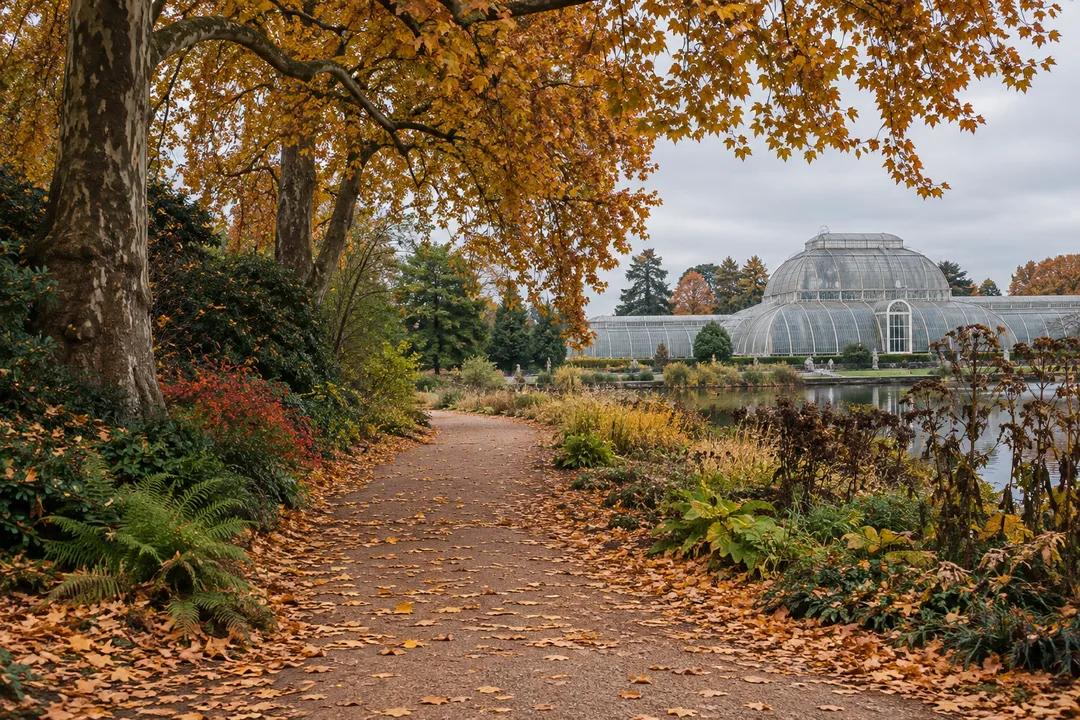
Kew Gardens is one of the strongest answers to an autumn walk near me in London when you want a full landscape rather than a short loop. Royal Botanic Gardens, Kew is at Richmond, London TW9 3AE, and the official visitor page lists daily opening from 10am to 7pm with last entry at 6pm. The gardens are not a free public park, but the scale makes the ticket feel tied to a real day out: paths, glasshouses, lawns, collections, and changing views keep the walk moving.
The first hour inside Kew
Start at Victoria Gate if you are coming by Underground, or Elizabeth Gate if you are arriving from Kew Bridge. The first few minutes should be deliberately unhurried. Kew is large enough that rushing to the famous glasshouses can make the visit feel like a checklist, while a slower entry lets you notice the shift from suburban street to planted landscape. Save the Palm House for later in the first circuit, when the greenery inside feels like a change of climate rather than your opening scene.
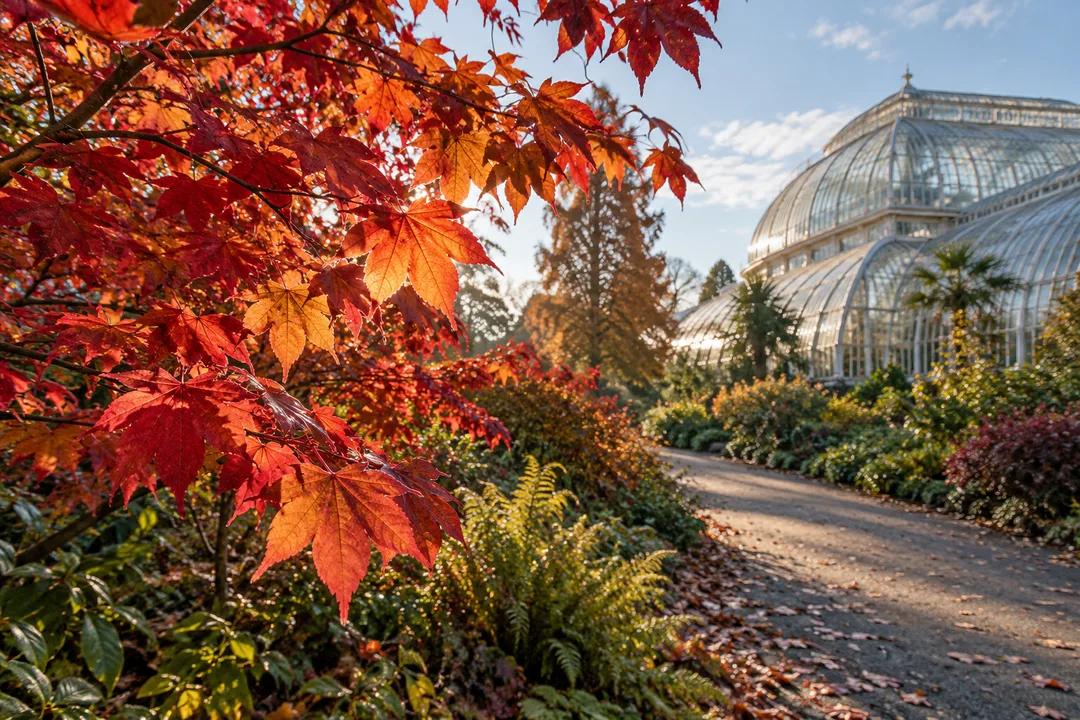
The autumn appeal here is not one dramatic leaf turn. It is the combination of broad lawns, damp paths, late color, and botanical details that remain interesting after summer flowers have faded. Look for the way mature trees frame the avenues, then compare that scale with the smaller beds and labels nearby. The must-see is the contrast: a huge outdoor garden followed by an architectural glasshouse, not a single perfect viewpoint.
A botanical route with texture
Kew's story is part of what makes the walk feel substantial. The gardens are a working botanical institution as well as a visitor attraction, so the landscape carries a different mood from an ornamental city square. Collections, research, and conservation sit behind the public route. You do not need to turn the walk into a lecture, but reading a few labels changes the experience from leaf-spotting to understanding why a plant is there.
For a first visit, make the Palm House your anchor and build outward. Its curved iron-and-glass structure gives the route a clear middle, while the surrounding paths offer enough alternatives that you can shorten the outing without feeling you missed the point. If the weather is wet, the glasshouse becomes the reliable reset. If the afternoon is bright, use it as a warm visual break between outdoor sections rather than as the entire destination.
The Temperate House and the surrounding formal areas reward people who like big spatial changes. One path can feel architectural, with clipped edges and long sightlines; the next can become leafy, quiet, and almost woodland-like. This is where sturdy shoes matter. The official practical guidance describes Kew as an outdoor learning environment and recommends footwear with support and grip, a useful rule for an autumn day when lawns and paths can hold rain.
What to see before the crowds
There are also small human rituals that make the place work. Parents tend to set a meeting point before splitting toward the glasshouses; photographers pause at path junctions instead of stopping in the middle; regular visitors carry a light layer because the temperature changes between open lawns and enclosed spaces. A quiet rule is to let the path stay usable. Step aside for wheelchairs, buggies, and visitors reading plant labels, especially near the busiest entrances.
Do not plan the whole visit around a single café stop. Kew has cafés and restaurants, but the stronger rhythm is walk, warm up, and walk again. Bring water and a small snack if that suits your day, and treat indoor seating as a pause rather than a guarantee of a table at the busiest time. If you need a calm break, the garden's broad spaces give you more options than a crowded indoor queue.
The practical rhythm of the visit
My honest skip is trying to cover every named collection in one afternoon. The garden is too large for that to be satisfying, and you will spend more time navigating than looking. Choose one greenhouse, one outdoor landscape section, and one quiet return route. That combination gives you a beginning, a visual peak, and a softer ending. Kew works best when the walk has room for curiosity instead of a strict inventory.
When you leave, Kew Green is the natural neighborhood extension. The village-like streets around the garden change the pace without requiring another major attraction. A short walk toward the river gives you a different view of the area, while the station side has cafés for a simple finish. Keep the garden's scale in mind: even the exit can take time, so do not schedule a tight connection immediately after last entry or a long indoor circuit.
A slower finish around Kew Green
A useful backup plan is to make the outing shorter rather than abandoning it. If rain settles in, prioritize one glasshouse and the nearest outdoor paths, then finish around Kew Green. If the garden feels too busy, move away from the headline building and follow a quieter avenue. The point of an autumn walk near me is not to win a distance challenge; it is to leave with one memorable landscape and enough energy to enjoy the neighborhood.
For photographs, work with layers: a leaf-covered foreground, a long path, and a greenhouse or tree canopy in the distance. Avoid staging people or photographing staff without permission. The most convincing Kew image is usually a detail that proves you were there—a wet iron railing, a warm glasshouse interior, or a tree-lined route disappearing beyond the next bend. Natural light and patience will do more than a crowded checklist of landmarks. Kew also suits different walking speeds. One person can read labels while another takes the next bench; children can move between open lawns and enclosed spaces; older visitors can choose shorter sections without losing the central experience. Set a meeting point before entering a glasshouse, and agree on one time to regroup. That simple plan prevents a large garden from turning into a series of frantic phone calls. The visit becomes more satisfying when you notice the transition out. The garden's planted order gives way to Kew's residential streets, then to the river and transport links. That sequence is why the address matters: you are not visiting an isolated attraction but a district where a botanical day can become a gentle half-day. Leave the final hour loose enough for a café, a riverside pause, or an unplanned turn. Practical notes: Royal Botanic Gardens, Kew is at Richmond, London TW9 3AE. Victoria Gate is closest to Kew Gardens Underground station; Elizabeth Gate is at TW9 3AE near Kew Bridge. The official Kew visit page lists daily 10am–7pm opening with last entry at 6pm. Kew is a paid garden, while the surrounding streets and Kew Green are public. Wear shoes with grip, carry a layer, and allow more walking time than the map suggests. This is a good autumn walk near me when you want the season to arrive through texture rather than spectacle. The route can be botanical, architectural, social, or quiet depending on which path you choose. Come for the Palm House, stay for the changing scale of the garden, and finish beyond the gates with enough time to notice Kew as a neighborhood rather than just a famous name.
Ask Karpo for more information.
Keep reading
- Brixton Christmas Light Up Walk Planner: Rainy Arcades
 Hackney Christmas Light Up Walk Planner: Canal Boats
 Islington Christmas Light Up Walk Planner: Square Dates