 Clapham Weekend Brunch Planner: Parkside Morning Cafes
Restaurants
Marylebone Artisan Sandwich Deli Since 1900: Paul Rothe
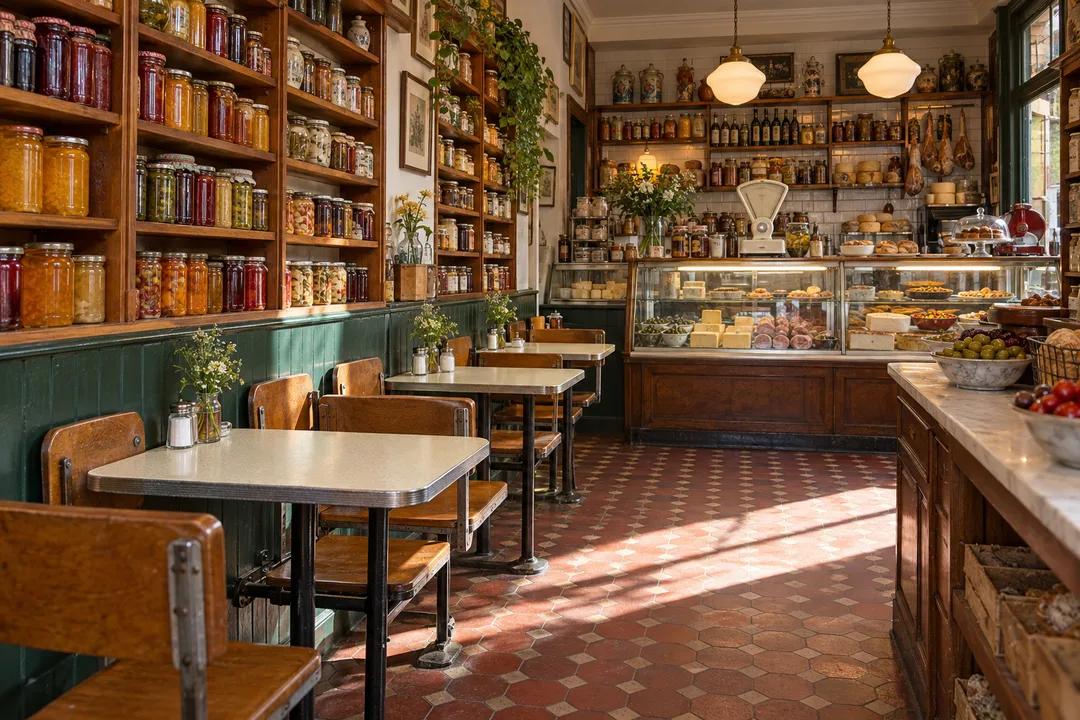
Paul Rothe & Son, 35 Marylebone Lane, has made sandwiches since 1900. Order at the counter, then grab one of the 1950s Formica tables, first come, first served.
Paul Rothe & Son has traded on Marylebone Lane since 1900, and it still runs on one rule: order at the counter first, then sit down. This artisan sandwich deli at 35 Marylebone Lane, London W1U 2NN, is a family shop with half a dozen Formica tables, shelves of jams and chutneys, and sandwiches made to your instructions, from pastrami with Swiss cheese and gherkins to egg mayo with anchovies.
Four Generations From a Coal Barge
The family story, told by Paul Rothe to the blog Spitalfields Life in April 2026, starts with his grandfather, also called Paul, who came from Saxony and worked his way to London on a coal barge in 1898. He met his wife through a German flower shop called Schillers, and their son, Paul's father, was born in 1915. The shop opened as a German deli, and until the First World War its windows read Deutche Delicatessen.
The Rothes kept trading through the Second World War, when Paul's aunt ran the shop with one other member of staff. Today Paul works the counter with his son Stephen, both in white grocer's coats. The Infatuation describes Stephen as the great-grandson of the founder, which makes this one of very few central London sandwich counters still run by the family whose name is on the sign.
The Tables That Will Not Move
The seating has its own story. Paul told Spitalfields Life that after the Second World War his father began serving food on the premises with freestanding tables, but groups kept rearranging the chairs and blocking the queue. So he ordered tables that were screwed to the floor, very fifties with Formica tops, and two more were added in 1964. They have been there ever since, along with flip-up seats.
That arrangement explains the pace. Paul's father, in his son's words, did not like anything that slowed service down, so he would not do toast and would not do lettuce. The modern shop is more flexible, but the spirit is the same: a short counter, a quick exchange about white or brown bread, and a sandwich wrapped and on its way before the next person in line has finished deciding.
Ordering the Rothe Way
The Infatuation's review spells out the etiquette: it is first come, first served, and you give your order, most likely to Stephen, before you sit down. The words you will hear most are white, brown, please and thank you. Decide before you reach the front. At the lunchtime rush the line fills with office workers taking food away and locals settling in for a bowl of soup.
Sandwiches are made to order, and the counter will build almost anything from what is in the fridge. Classic combinations include ham, cheese and piccalilli, smoked salmon with a squeeze of lemon, and a homemade prawn cocktail. The Liptauer and cucumber sandwich, made with the spiced Central European cheese spread, is the one regulars remember from childhood visits, and it is the most distinctly Rothe thing on offer.
What to Order
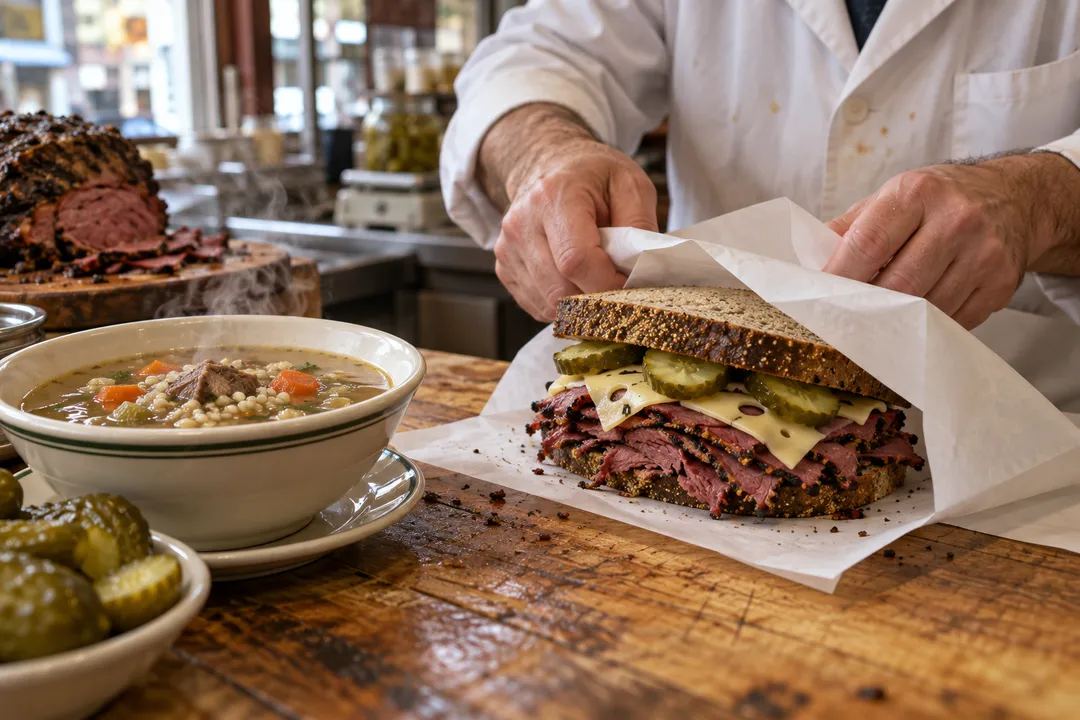
Start with the pastrami. In the Spitalfields Life photographs Stephen layers the meat, adds pickles, and wraps the finished sandwich in paper with practised folds, and The Infatuation names pastrami with Swiss cheese and gherkins among its picks. The egg mayo with anchovies is the sleeper order: salty and soft, and best on brown bread for contrast.
On a cold day add the soup. Scotch broth is a fixture, and Spitalfields Life notes that David prepares the soup of the day freshly in the kitchen. Time Out has also singled out the beef goulash, a nod to the German and Central European roots of the shop. Skip the jacket potato unless you are staying a while; the sandwiches are the reason to come, and potatoes slow the turn of the tables.
Shelves Worth Browsing
Do not leave without looking at the walls. Jars of jams, marmalades, chutneys, pickles and sauces line the shop from floor to ceiling, and The Infatuation compares the interior to a cross between a caff, a deli and an old chutney emporium. Picking a jar to take home is part of the ritual for longtime customers, and it makes a better souvenir of Marylebone than anything on the high street.
The counter has long fed the street around it. A nearby salon told Spitalfields Life that in its heyday it ordered sandwiches from Paul Rothe for clients, a small example of how embedded the counter is in the lane. If you need sandwiches for a group, phone the order through rather than turning up at peak time with a long list.
A Walk Down Marylebone Lane
Marylebone Lane is one of the few streets in the area that curves instead of running straight, winding between Wigmore Street and Marylebone High Street. Directly opposite the deli is The Button Queen, an old haberdashery devoted entirely to buttons, and in summer you can hear music drifting out of the rehearsal rooms across the road, as Spitalfields Life recalls.
Carry on north to Marylebone High Street and you reach Daunt Books, the Edwardian bookshop with its long oak galleries and skylight. Wigmore Hall, the chamber music venue, is a short walk west along Wigmore Street. With a sandwich in hand, the whole loop from Bond Street station to the High Street and back takes well under an hour.
Practical Notes
Paul Rothe & Son, 35 Marylebone Lane, London W1U 2NN. Phone 020 7935 6783. Bond Street on the Central, Jubilee and Elizabeth lines is the closest Tube station, a short walk south. Service is counter ordering, then table or takeaway, with about six fixed Formica tables and a small counter for seating. The shop has no website, so call ahead for large orders.
Expect a queue at the lunchtime peak, when the line of office workers moves quickly but steadily. Mid-morning and mid-afternoon are calmer for a seat. Ask Karpo APP to pair a Rothe sandwich with an afternoon on Marylebone High Street, or to find another old-school London deli when you want to compare.
Ask Karpo for more information.
Keep reading
- Clapham Weekend Brunch Planner: Parkside Morning Cafes
 Hackney Weekend Brunch Planner: Canalside Roastery Tables
 Soho Weekend Brunch Planner: Historic Townhouse Tables