 Clapham Board Game Night Finder: New to London Meetups
Weekend Plans
Aquarium Near Me in Forest Hill: Inside the Horniman's Coral and Jellyfish Basement
The Horniman Aquarium at 100 London Road, Forest Hill, packs 15 exhibits, from a British pond to a Fijian coral reef, into the museum basement. Adult tickets are £6.50, and behind the glass Project Coral breeds reef corals by moonlight.
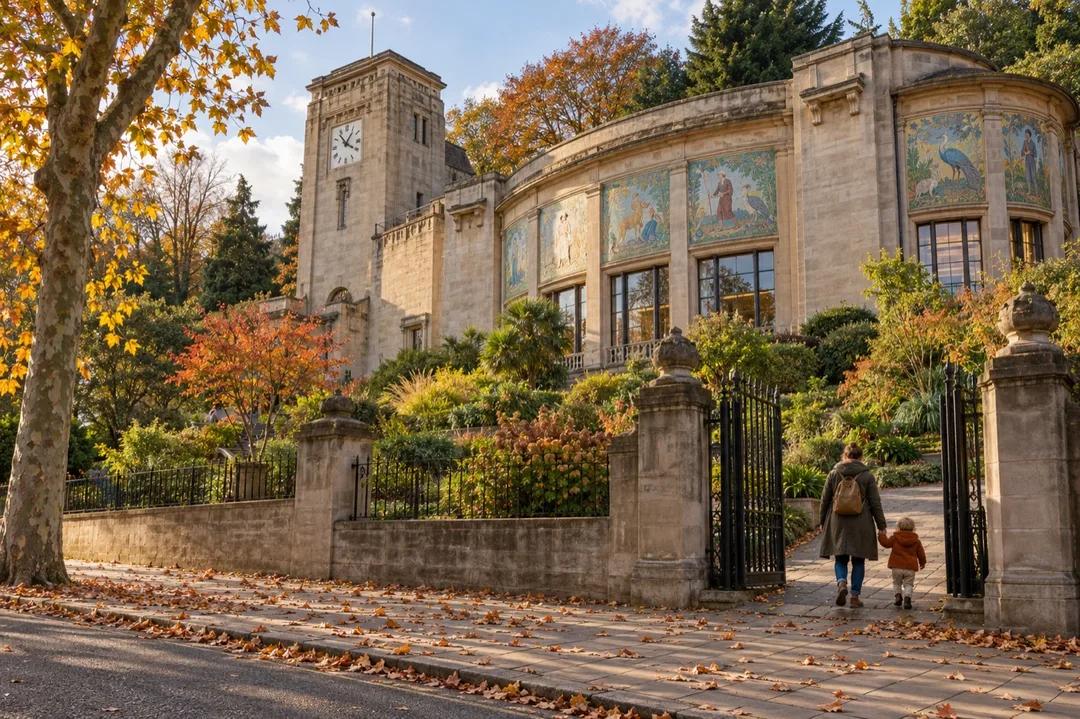
The Horniman Aquarium fills the basement of the Horniman Museum and Gardens at 100 London Road, Forest Hill, SE23 3PQ, and its 15 exhibits run from a British pond to a Fijian coral reef. It opens daily from 10:30am to 5:30pm with last entry at 4:45pm, and an adult ticket costs £6.50. For south Londoners typing aquarium near me, this is the small, research-led alternative to the big tourist tanks, with 16 acres of free gardens upstairs.
From a 1901 Corridor of Jars to Fifteen Basement Exhibits
When tea trader Frederick John Horniman gave his museum to the people of London in 1901, the aquarium was a single corridor serving as a living extension of the natural history galleries. Curators began with table displays of jars and dishes, then added 47 slope-fronted tanks in 1907, according to the Horniman's own history of the aquarium.
After a period of stagnation and public criticism, the aquarium was redeveloped in 1991 and again in 2006, both times around habitat simulation. That is why the basement reads as a chain of habitats rather than a row of fish boxes: flooded mangrove roots with South American fish, a rainforest corner for poison dart frogs and tropical tree frogs, a native pond, and a live coral reef where reef fish move between the colonies.
Moon Jellyfish, Angus the Cowfish and a Clownfish's Anemone
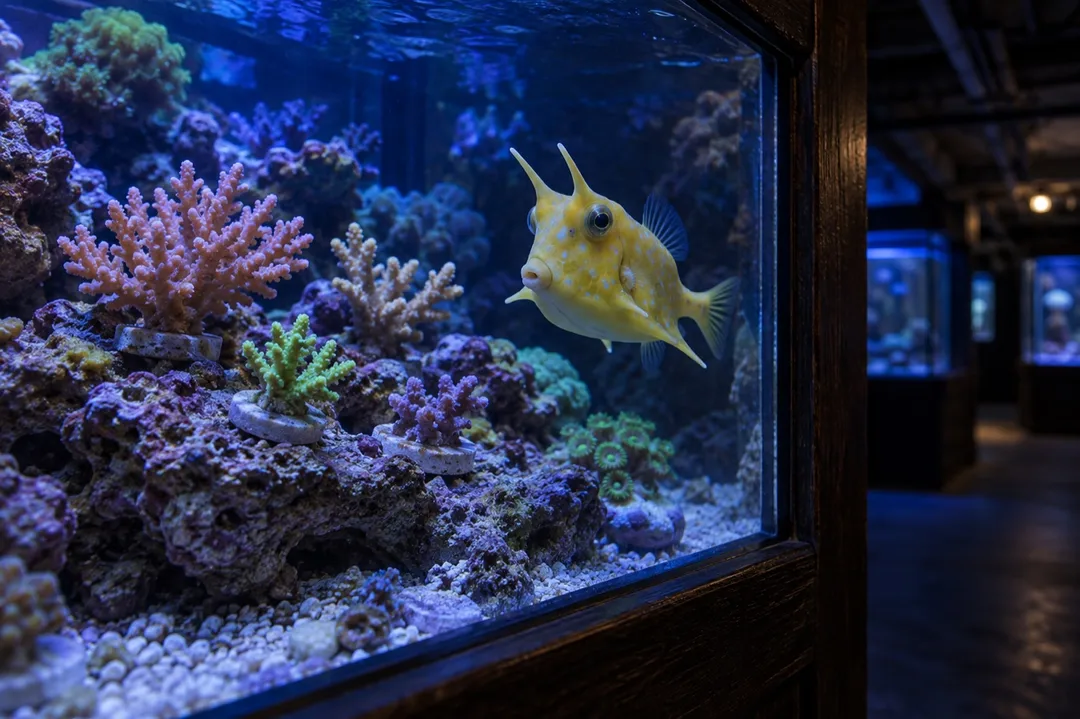
The purpose-built jellyfish tank is the one visitors gush about; a visitor quote on the Horniman's aquarium page simply reads "love love love jellyfish" beside its moon jellies. Close by, look for Angus, a longhorn cowfish the aquarium names as one of its most popular residents, plus seahorses and a clownfish sheltering in its host anemone, the display used to explain symbiosis. The museum's February 2026 press release notes that its clownfish are bred behind the scenes.
The rainforest end of the room is easy to rush past on the way to the reef. Poison dart frogs in warning colours, tropical tree frogs and a milk toad, which keepers photograph dozing on a branch, sit next to the mangrove display, where South American fish weave between the roots. Start at the British pond tank: it shows native freshwater life first, so the jump to Fijian coral feels as dramatic as it should.
Project Coral's Moon-Timed Spawning Lab
The reef tank fronts the aquarium's most important work. In 2013 Project Coral, led by Principal Aquarium Curator Dr Jamie Craggs, cracked predictable spawning of broadcast corals in a lab by recreating the temperature, light and lunar cues of wild reefs, then published the method open source. The Florida Aquarium's coral centre in Tampa Bay runs four systems copying those protocols. In the public reef tank, look for the baby corals growing among the adults.
The research continues off display. In October 2024 the threatened pink sea fan, a native British species, reproduced at the Horniman, the first time a UK institution had achieved it. The museum says its lab is the only one in the world studying corals from five regions side by side: Australia, Fiji, the Indian Ocean, Singapore and the UK. Read the Project Coral display at the live coral tank before moving on.
Six Porthole Tanks in Voyage to the Deep Until 1 November
Until Sunday 1 November 2026, the separately ticketed family exhibition Voyage to the Deep – Underwater Adventures adds six living displays shaped like submarine portholes, holding lionfish, lobsters, puffer fish, sea stars, fluorescent corals and feather duster worms. Senior Aquarium Curator Hartley George says most of those species are not shown in the main aquarium. Built around Jules Verne and a giant Nautilus submarine you can pilot, the show is in Europe for the first time.
Tickets cost £9.80 for adults, £7 for children and £27 for a family of four, and the tanks carry Octonauts creature reports from the CBeebies series, with a free Octonauts trail elsewhere in the museum. Adults visiting without children can skip it: the Nautilus controls and cartoon reports are pitched at young families, and the £6.50 main aquarium plus the free galleries already fill a morning.
£6.50 Tickets, Single Entry and Quiet Term-Time Afternoons
Everyone needs an aquarium ticket, Members included, and the Horniman recommends booking online. Adults pay £6.50, children aged 3 to 16 pay £3.50 and under-3s go free, with family prices applied automatically: £11.70 for one adult and two children, £15.20 for a family of four. People receiving Universal Credit and several other benefits can buy up to four £2 tickets. Entry is single only, so see every tank before heading upstairs for lunch.
Flash photography is banned throughout the museum, as are tripods and monopods indoors. Buggy parking sits in Gallery Square, and a short official film shows the route down to the basement plus its noise and lighting levels. The Horniman lists term-time afternoons as the quiet slot. Avoid half-term from 24 October to 1 November, when online £2 tickets are suspended, and remember the Gardens close entirely on 31 October for the Day of the Dead festival.
If your slot sells out, the museum and gardens are free. Inside, the World Gallery of anthropology and the Music Gallery need no ticket; outside, the free Animal Walk opens 12:30pm to 4pm with alpacas, goats, Valais Blacknose sheep, rabbits and Silver Spangled Hamburg bantams. The Butterfly House, last entry 3:30pm, is the other ticketed living exhibit. Skip the hunt for the Natural History Gallery: it stays closed until 5 February 2027.
Uphill from Forest Hill Station on the Windrush Line
Forest Hill station, on the Overground's Windrush line, is a five- to 10-minute uphill walk; use the platform 1 exit towards London Road, not Perry Vale. Routes 176, 185, 197, 356 and P4 normally stop outside on London Road and run direct from central London on the 176 and Victoria on the 185. In mid-October 2026 both stops outside were closed by burst water mains, so use the 363 on Sydenham Hill Road or the 122 on Dartmouth Road instead.
Bandstand Views, Alpacas and Sydenham Hill Wood
After the aquarium, climb through the gardens to the 1912 bandstand, restored in 2012, where the Bandstand Terrace looks out across London. The Sound Garden has giant playable world instruments, and the Prehistoric Garden, on the site of the Horniman family's Surrey Mount house, hides a velociraptor. The gardens open from 7:15am, 8am on Sundays, and close at sunset, and they form part of the Green Chain Walk.
For a longer walk, head west along Sydenham Hill to Sydenham Hill Wood and Cox's Walk, the London Wildlife Trust's oldest nature reserve, where new and ancient woodland grows over the remnants of Victorian gardens. Come back to the Horniman Cafe, which serves until 5pm, for a hot drink before the train home.
Practical Notes for 100 London Road
The Horniman Aquarium is in the basement of the Horniman Museum and Gardens, 100 London Road, Forest Hill, London SE23 3PQ. The aquarium opens daily from 10:30am to 5:30pm, last entry 4:45pm, and closes 24 to 26 December; the museum opens at 10am. It is wheelchair accessible, with seating and subtitled media, and assistance animals are welcome. Ask Karpo in the Karpo APP for more South London days out.
Ask Karpo for more information.
Keep reading
- Clapham Board Game Night Finder: New to London Meetups
 Marylebone Board Game Night Finder: Baker Street Mysteries
 Notting Hill Board Game Night Finder: Two-Player Rainy Dates