 Marylebone Coffee Shop Finder: Village Cafes and Espresso
Coffee & Dessert
London Afternoon Tea Shortlist Builder: 3 Weekday Plans
Fit London afternoon tea into a weekday by comparing three possible time windows, protecting your next appointment and keeping a workable second choice.
A weekday tea should fit the gap in your day without turning it into a race. Start your London afternoon tea shortlist builder request with the appointment you cannot move, then describe the time on either side. Karpo APP accepts conversational requests about places and plans. Use that conversation to explore three possible shapes for the afternoon: a substantial early meal, a pause between activities, or a later tea that replaces another stop.
Put the immovable commitment first
Suppose you have a late-afternoon meeting, a timed exhibition ticket or a train home. Write down when you need to be at that next destination, rather than when you hope to leave the tea room. Work backward to allow for the journey and the time it takes to get out of a building. Your available window is what remains. This simple exercise prevents an attractive sitting from quietly consuming time that already belongs to something else.
Send a request like this: “Help me plan a London afternoon tea on a weekday. I finish near Bloomsbury after lunch and need to be in Covent Garden later. Compare an early tea, a shorter café pause and a later full service on a different day.” Substitute your own commitments. The alternatives are planning scenarios, not statements that a particular venue serves at those times. The suggestions need to earn their place against your actual calendar.
Plan A makes tea the main meal
If the afternoon can begin early enough, you may prefer a substantial tea instead of lunch. Describe the food you need: savouries, scones and sweets, or a smaller selection if that is your preference. Ask Karpo for ideas suited to that kind of meal. Then read the candidate's published menu to see whether its serving format matches your appetite. A three-tier photograph alone tells you little about how much food each person receives.
This version works only when you can give the meal enough attention. Avoid booking it immediately after an appointment that regularly overruns. If the morning is unpredictable, a later start or a different day may be the more comfortable choice. You are choosing where tea belongs in the schedule, not trying to prove that every free interval can hold a formal service. A plan that depends on everything happening perfectly is fragile before you even set out.
Plan B is a deliberate pause
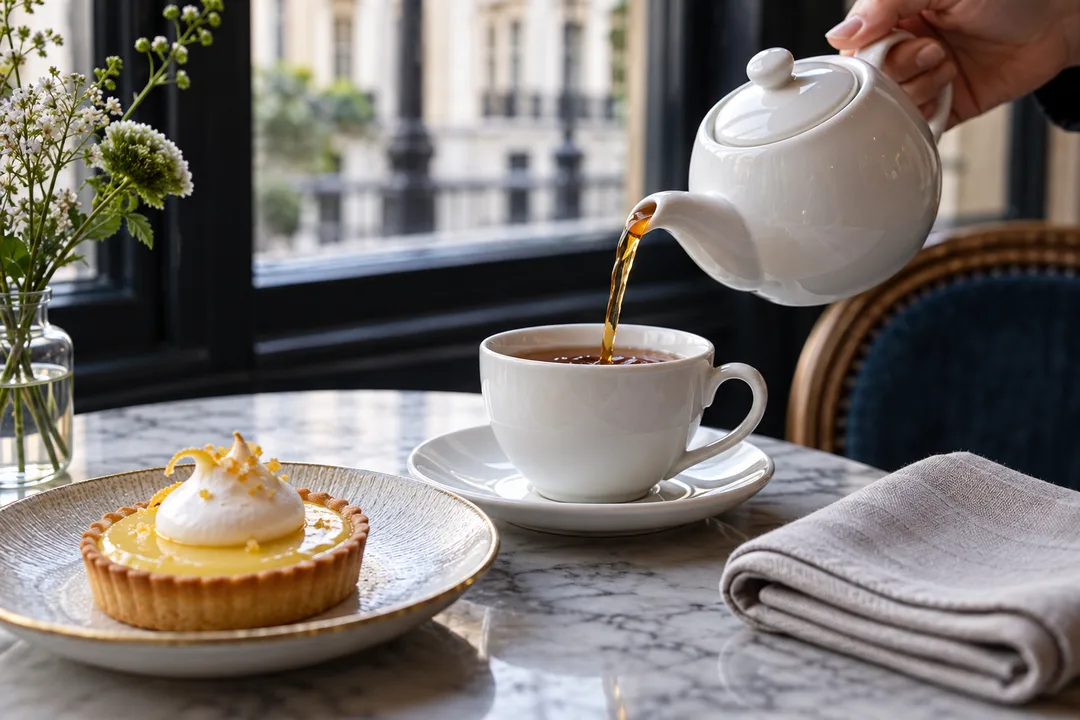
For a gap between activities, choose the size of experience that suits the time. A pot of tea and one plate can be exactly what you want when the purpose is to sit, talk and rest. Describe that as a café pause so it is not confused with a complete afternoon tea. Ask for suggestions near the route you are already taking, and put an easy onward journey ahead of an elaborate room.
Decide in advance what you are willing to leave out. If you only have a short break, a full savoury course and several rounds of sweets may be the wrong target. The solution is to change the meal, rather than expect a venue to compress its service. My recommendation for a tightly timed day is the smaller pause. Save the formal tea for an afternoon when your companion will not spend the conversation calculating the walk to the next appointment.
Plan C moves the occasion to a better day
Sometimes the most useful result of planning is to stop forcing the outing into this particular weekday. If a complete tea is the reason for meeting, compare another date with a wider window. Give Karpo the new day, the area you prefer and who is coming. Its how-it-works page describes using mood, budget, neighbourhood and companions to shape picks. Explain which constraint has changed so the next request reflects a different plan.
Keep a small ordinary refreshment stop for the busy day and arrange the occasion separately. This avoids paying for an experience that you can only half enjoy. It also makes the invitation clearer: one meeting is a brief catch-up and the other is the tea you intend to sit through. Do not let an existing afternoon booking elsewhere become a reason to rush an expensive meal that could be placed more comfortably on the calendar.
Compare service time with arrival time
A venue's opening hours, its afternoon tea serving period and the sittings offered by its booking page are different pieces of information. Read the information attached to the service you are considering. An establishment can be open without serving the menu you want, and a dining room's published closing time does not tell you how long your sitting lasts. Keep the service name beside the time in your own planning note.
When a booking page offers a specific sitting length, use that in your schedule. If it does not, send the venue a concise question before making an inflexible onward arrangement. Include the service, party size and intended date. You do not need a general promise that the restaurant is fast. You need to know whether the particular experience you want fits the window available to your party, including any dietary preparation or access arrangements.
Make the walk part of the afternoon
Choose one small stretch of the neighbourhood to enjoy rather than adding several ambitious stops. A walk before tea can give a friend arriving early something to do, while a short stroll afterward gives the group a natural way to finish. Ask for ideas around the area you selected, then choose the one that follows your route. A leisurely afternoon loses its shape when every spare minute acquires a separate destination.
Build a rainy-day version at the same time. You might shorten the outdoor walk, travel directly to tea or keep the meeting entirely indoors. This is a personal decision about comfort and timing, not a claim that any café has spare seating whenever the weather changes. If tea is booked, keep that fixed point and simplify the surrounding activities. Avoid making a reservation depend on completing an optional walk first.
Settle the group decision before the booking
Send your companion the two plans that actually survive the timetable. Karpo's FAQ says users can save and share picks with friends and compare options. Use that capability to present a clear choice: a smaller pause this week or a full tea on a less crowded day. Mention the timing reason in the same message so the other person understands why you removed an attractive but impractical candidate.
Once the group chooses, use the venue's reservation process to select the service, date and party size. Treat its confirmation as the booking record. A saved recommendation is useful for discussion, but it does not reserve a table or secure a particular menu. Keep a second candidate only if it also fits the same schedule, since a backup on the other side of London may solve availability while recreating the travel problem.
Practical Notes for the day itself
Your final plan should contain an arrival target, the named tea service, the route to the next commitment and a clear decision about lunch. Put the venue's booking reference with that note. If one guest needs a different menu, keep the accepted arrangement there too. The purpose is to reduce the number of decisions you make while moving between places, especially when people are arriving from different parts of the city.
Begin with the time you have, choose which version of tea belongs in it, and ask Karpo APP for suggestions that fit that brief. Compare the service details outside the conversation and book through the venue when the plan is settled. A successful weekday tea leaves enough space to enjoy the table and still arrive at the next part of your day without bringing the rush with you.
Ask Karpo for more information.
Keep reading
- Marylebone Coffee Shop Finder: Village Cafes and Espresso
 Fitzrovia Coffee Shop Finder: Quiet Central London Espresso
 Covent Garden Coffee Shop Finder: Hidden Courtyard Cafes