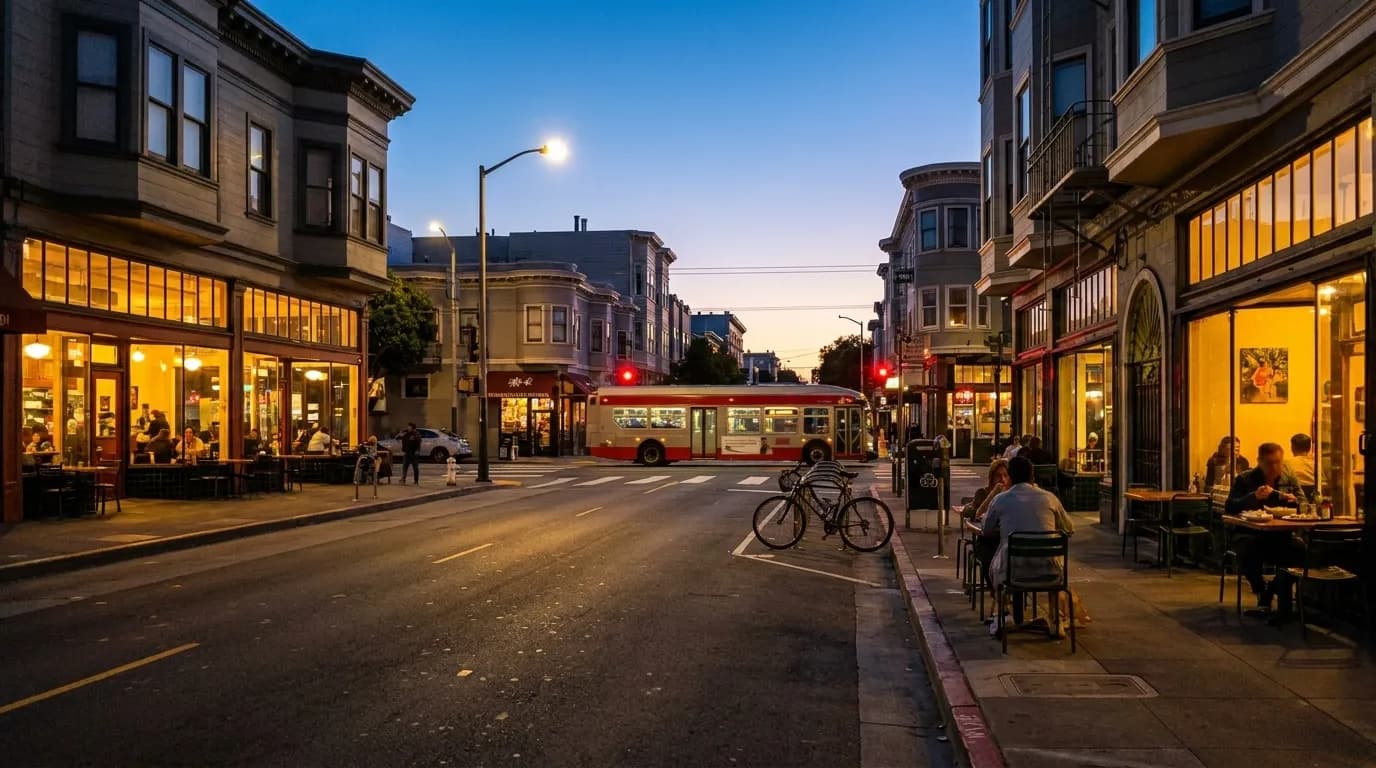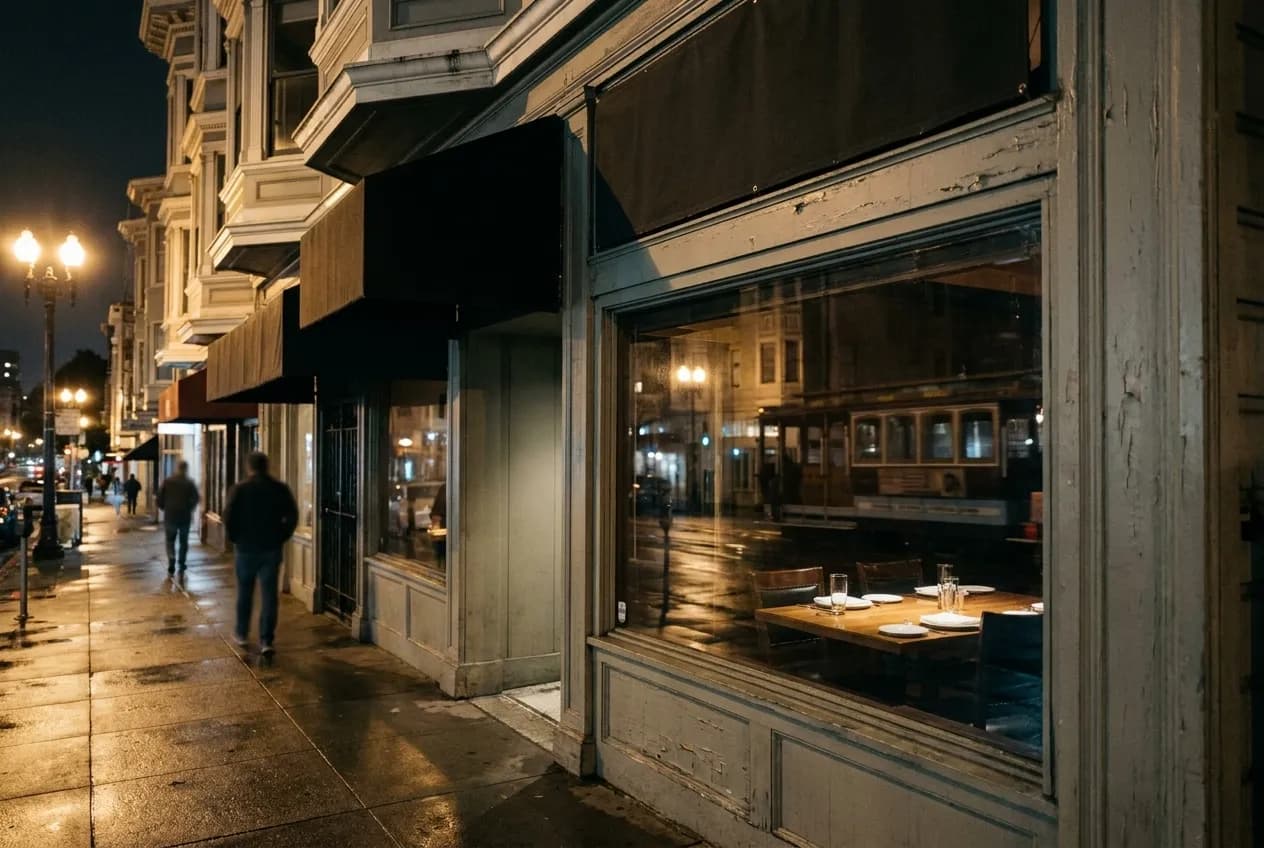
San Francisco has fewer national fast-food outlets per head than most large American cities, and it is not primarily a matter of taste. High commercial rents, a restrictive planning process for chain retail — the city has long required a public review for formula retail in most neighbourhood commercial districts — and a dense independent restaurant culture combined to keep the chains thin on the ground. What filled the gap is a set of independent fast formats that are genuinely better.
The fastest cheap meal near you is almost certainly independent and almost certainly not on any app. Ask Karpo which counters are open now.
The burrito, which is the city's fast food
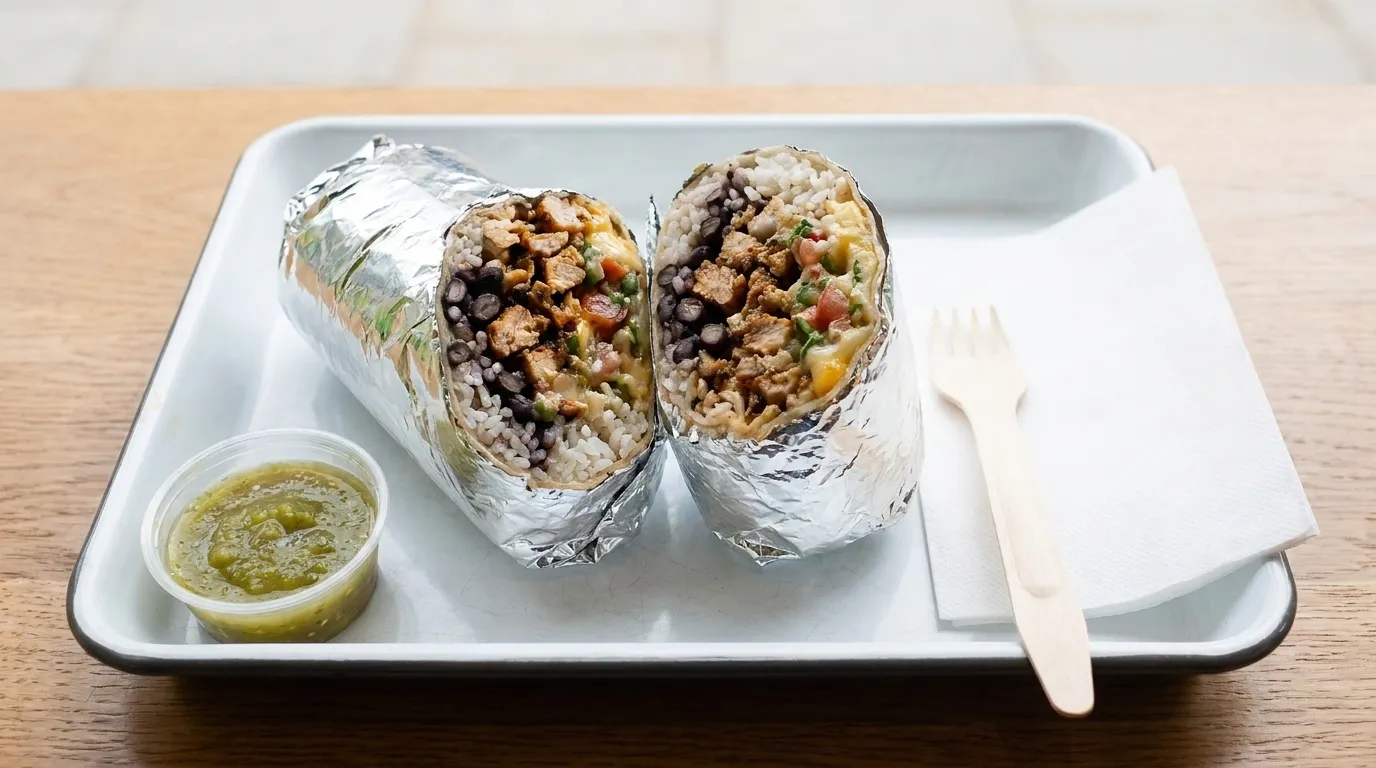
The Mission burrito is San Francisco's defining quick meal. It emerged in the Mission District's taquerias in the 1960s — a large flour tortilla, steamed to make it pliable, wrapped around rice, beans, meat, salsa and often cheese and avocado, then foiled so it can be eaten walking. The rice is the structural innovation that turns a taco filling into a single portable meal, and it is what makes the format work as fast food.
Ordering knowledge that pays for itself: super gets you cheese, sour cream and avocado; dorado or a la plancha gets the wrapped burrito seared on the flat top, which is what most regulars order and which almost nobody visiting knows to ask for. The salsa bar is where the quality difference between taquerias shows up most clearly. Mission Street and 24th Street have the highest density, but every neighbourhood in the city has at least one good one.
Banh mi and the Tenderloin counters
The Vietnamese sandwich counter is the second great independent fast format here, concentrated in the Tenderloin around Larkin Street — the city's Little Saigon — and out along Clement Street and in the Sunset. A banh mi is made to order in about two minutes, costs a fraction of a chain sandwich, and is one of the genuinely great cheap foods anywhere.
The same counters usually sell pho and rice plates, and the Tenderloin more broadly has the highest concentration of cheap independent fast food in central San Francisco, including Cambodian, Burmese, Middle Eastern and West African counters within a few blocks. It is not a comfortable neighbourhood to wander after dark, but at lunchtime it is the best value in the city centre by a distance.
Chinatown and the roast meat counter
The roast meat shop — a window of hanging char siu, roast duck and soy chicken, sold over rice — is fast food by any definition and has been operating in San Francisco's Chinatown since long before the category had a name. A plate takes ninety seconds to assemble and costs less than a chain combination meal. Chinatown, the Richmond along Clement and the Sunset along Irving and Noriega all have them in quantity.
The related format is the dumpling and bao counter, where a paper bag of pork buns or potstickers is a complete lunch for a few dollars. These shops are busiest between about ten and one, which is when everything is freshest — buying from a steam cabinet at four in the afternoon is a different experience.
The pupusa, the taco truck and the rest
San Francisco's Salvadoran community, concentrated in the Mission and the Excelsior, supports a strong pupusería scene — thick griddled corn cakes stuffed with cheese, beans or pork, served with curtido and salsa, made to order in a few minutes. It is one of the cheapest hot meals in the city and one of the most satisfying.
Add the taco trucks that park along Mission Street and out in the Bayview and the Excelsior, the halal and Middle Eastern counters near the universities and hospitals, and the Italian delicatessen sandwich counters in North Beach, and you have a fast-food landscape that is almost entirely independent. The common thread is that all of them are cooking in front of you and none of them require an app.
Why the formats stayed independent
There is a policy history behind this that is worth knowing. San Francisco has regulated formula retail — chains with standardised branding above a certain number of locations — in most of its neighbourhood commercial districts for two decades, requiring a public review before one can open. Combined with some of the highest commercial rents in the country and a planning process that is slow by design, the effect has been to keep national fast-food density low and to leave the fast, cheap end of the market to independents. Whatever you think of the policy, the culinary result is that the cheapest food in this city is also frequently the best.
Where the chains still make sense
Two situations. Late at night in neighbourhoods where the independents have closed — San Francisco's kitchens shut earlier than in most large cities — and when you specifically want the predictability and the bathroom. Otherwise the independents win on price, speed and quality simultaneously, which is unusual and is worth taking advantage of.
It is also worth noting that the independent counters are where the city's food culture actually lives. A taqueria that has been on the same block for thirty years is a more reliable institution than any chain location, and it is the thing that makes eating cheaply here genuinely good rather than merely affordable.
Practical notes
Many independent counters close between about three and five and several close one weekday. Cash is still faster at the smallest windows though cards are near-universal. Ask for a burrito dorado if you want it seared, and check whether a taqueria has a salsa bar before ordering, because it changes the meal. Portions at most of these counters are large enough that half a burrito or half a rice plate is a reasonable lunch. And note that kitchens here close earlier than you expect — a nine-thirty arrival is late in much of San Francisco.
Tags: #SanFrancisco #SFFood #FastFood #MissionBurrito #BanhMi #Chinatown #Tenderloin #ClementStreet #Excelsior #Pupusa #CheapEats #FoodNearMe #SFEats #EatLocal
All trademarks are the property of their respective owners.
Ask Karpo first
Want to know which independent counters near you are open right now, which have the shortest line, and what to order when you get there? Ask Karpo before you settle for a chain.