The Little League World Series wraps its final Pennsylvania bracket, and suddenly Bay Area living rooms go quiet—no more nail-biting eliminations, no more 12-year-old pitchers throwing heat that makes adults wince. But the craving for baseball doesn't vanish with the LLWS schedule. It migrates west to Oracle Park, where the San Francisco Giants play out their late-summer home stand against a backdrop of bay water, kayakers, and the kind of garlic fries that announce themselves three sections away. This is where tournament fever meets the big leagues, where families who spent August tracking Williamsport games discover that professional baseball under lights, with actual splash hits into McCovey Cove, delivers its own kind of magic.
Karpo tracks live Oracle Park gate times, Caltrain connections, and Muni schedules so you can ride the baseball wave from youth tournaments to big-league nights without missing first pitch.
When youth baseball hype meets the big leagues
August brings Little League World Series fever to living rooms across the country, and that energy doesn't dissipate when the Williamsport brackets close. Bay Area families who've spent weeks tracking LLWS schedule updates and debating pitch counts over dinner find themselves craving more baseball—the kind played under lights with the San Francisco Bay as a backdrop. Oracle Park delivers that continuation, turning late-summer evenings into waterfront rituals where the crack of a major-league bat echoes the youth tournament drama that just wrapped.
The timing works beautifully. LLWS championship games typically conclude in late August, leaving a narrow window before school routines reclaim weeknights. Giants home stands during this stretch draw families still riding the tournament high, Little League coaches looking for professional-level instruction to dissect, and casual fans who discovered they actually enjoy watching baseball when the stakes are clear and the announcers aren't droning. Oracle Park's 42,300-seat capacity means even popular matchups rarely sell out midweek, so spontaneous Tuesday-night plans stay viable.
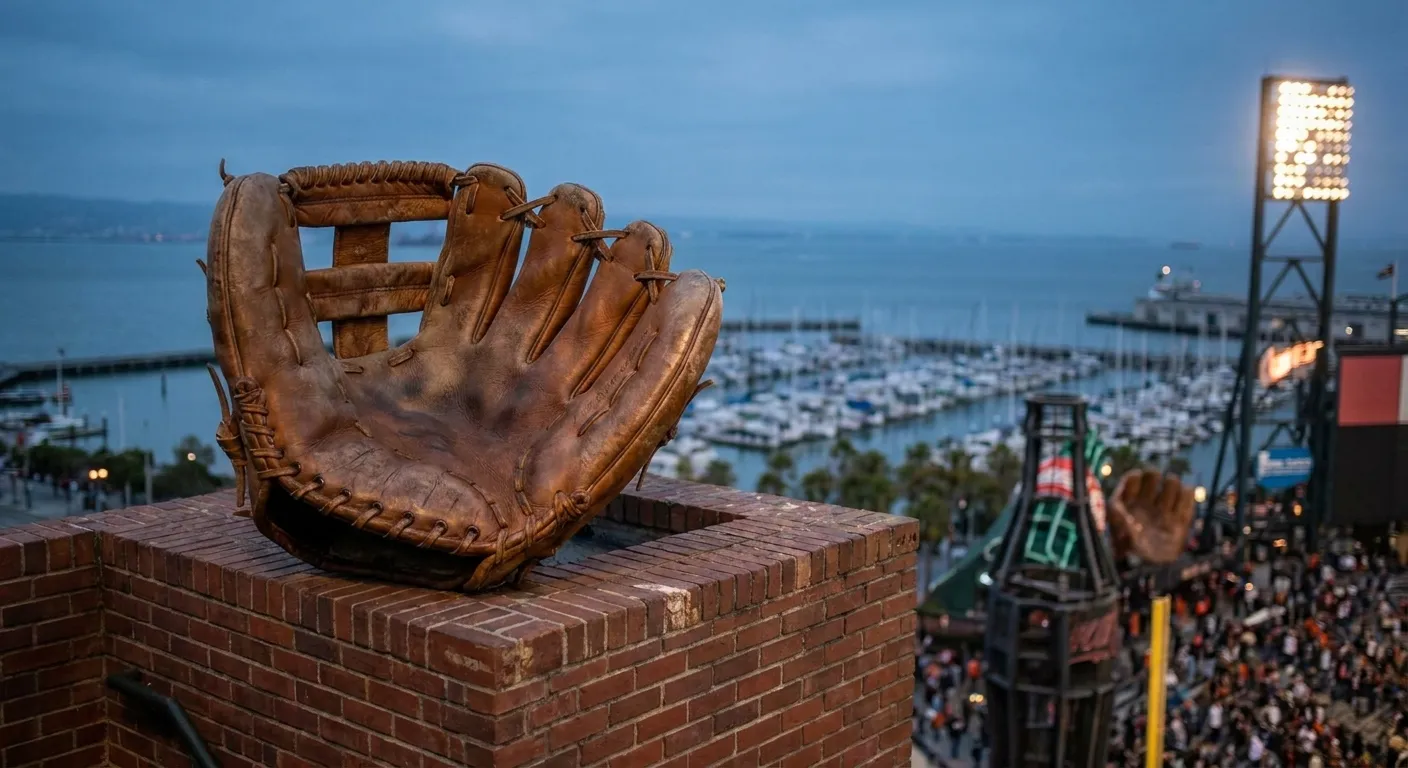
The ballpark itself bridges nostalgia and modernity in ways that resonate after weeks of LLWS broadcasts from a Pennsylvania stadium built in 1959. Oracle Park opened in 2000 as the first privately financed MLB venue since Dodger Stadium, yet it honors baseball's slower rhythms—no retractable roof gimmicks, no artificial turf, just brick and steel and water. The 24-foot right-field wall and McCovey Cove beyond it create a target that echoes the Williamsport fences, except here a splash hit means a kayaker in the bay scrambles for a souvenir ball worth actual money.
Four gates, one facial-scan shortcut
Oracle Park's entry system splits into four main public gates—Willie Mays at Third and King, Lefty O'Doul near the bridge at Third and Berry, Marina along the Portwalk behind center field, and Second and King. Weekday games open these gates 90 minutes before first pitch; weekend contests push that to two hours. Promotional giveaway nights or pregame ceremonies can shift those windows, but the real insider move involves Go-Ahead Entry, the facial-authentication system now deployed at every main gate.
Fans 18 and older who register in advance can skip the ticket-scan choreography entirely. You walk through a dedicated lane, the system recognizes your face, and you're inside without breaking stride or fumbling for your phone. It's the kind of friction-reduction that matters when you're herding kids who've been talking about garlic fries since the BART platform. The system launched at select gates but expanded across all four main entrances, so gate choice no longer dictates whether you get the fast lane—just whether you remembered to enroll before game day.
Gate selection still matters for transit connections. Caltrain riders arriving at Fourth and King station find the Willie Mays Gate closest, while Muni's N Judah deposits passengers at Second and King station, making that gate the natural choice. The T Third line stops at Fourth and King, one block away. The Marina Gate serves ferry passengers and anyone who wants to walk the Portwalk before settling into a seat, though it's the farthest from most parking options.
McCovey Cove and the three-inning freebie
The body of water beyond right field carries Willie McCovey's name and a singular purpose: catching home-run balls that clear the 24-foot brick wall. Kayakers and boaters gather before first pitch, jockeying for position in a floating lottery that pays off maybe once every few games. When it does happen—a right-handed batter connecting on an inside fastball, the ball arcing toward the bay—the scramble becomes its own theater. Oracle Park's design makes this interaction visible from most seats, a reminder that the ballpark ends where the city's working waterfront begins.
The Portwalk that rings the cove offers something most MLB venues don't: free viewing for up to three innings. You pass through security screening but don't need a ticket. The catch is capacity—popular games fill the standing-room portal quickly, and once it's full, late arrivals get turned away. Arrive early if you're testing whether your kids can handle nine innings before committing to tickets, or if you want to catch a few at-bats before a dinner reservation in Mission Bay. No alcohol allowed in this free zone, which includes non-alcoholic beer, and no cans or bottles of any kind.
The Portwalk also provides the best vantage for watching kayakers retrieve splash hits, assuming one clears the wall during your viewing window. The bay's tidal currents and boat traffic create a chaotic scramble that makes Little League World Series outfield errors look polished. Between innings, the Seals Plaza statue—a bronze seal balancing a baseball on its nose—marks the China Basin Ferry Terminal entrance, where boats from Oakland, Alameda, and Vallejo disgorge fans who've spent an hour on the water instead of in bridge traffic.
Garlic fries, crab sandwiches, and the two-drink rule
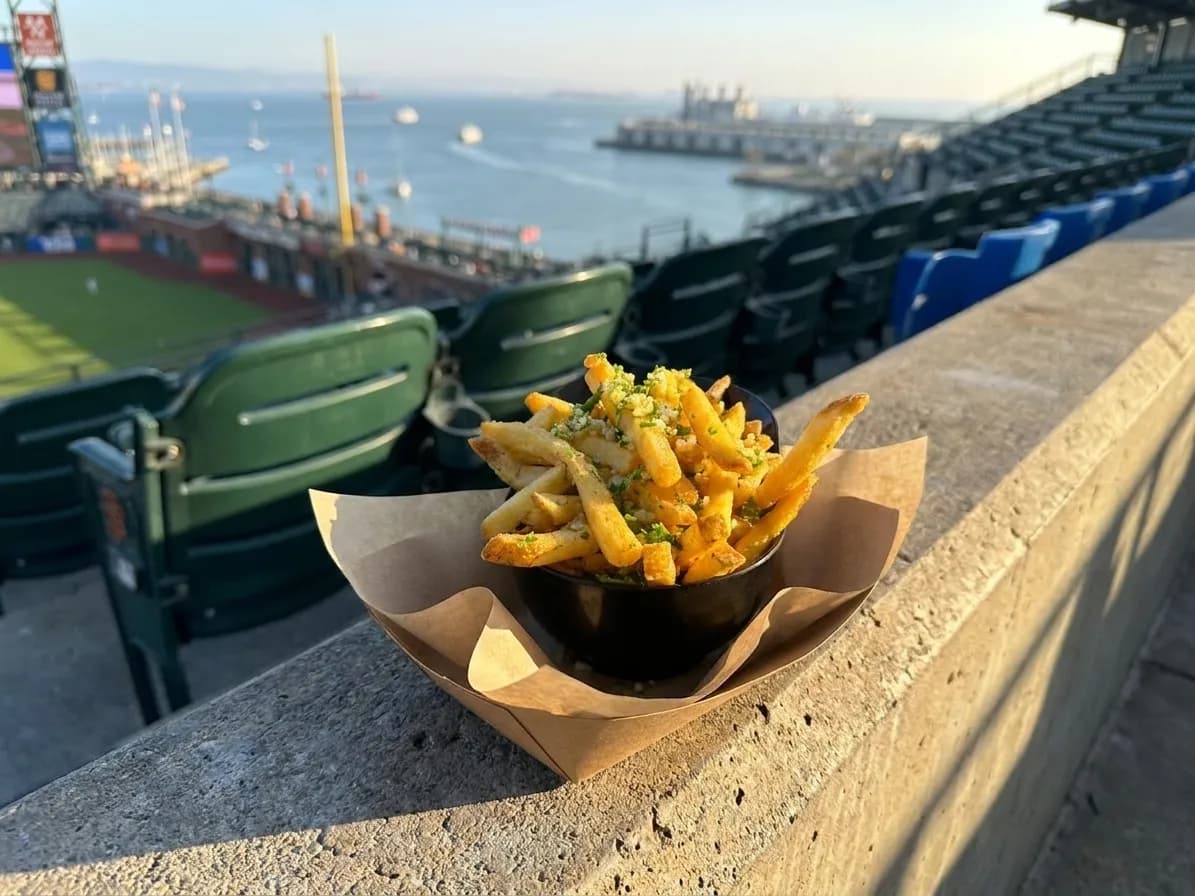
Oracle Park's food reputation rests on garlic fries—shoestring potatoes tossed with chopped garlic, parsley, and enough olive oil to perfume your jacket for days. They're sold at stands throughout the park, though lines at the main concourse vendors peak around the third inning when everyone's settled and hungry. The MLB Ballpark app's Food Finder maps every vendor in real time, a useful tool when you're craving something specific like Dungeness crab sandwiches or a particular local brewery's IPA.
The crab sandwiches showcase Bay Area ingredients in a way that feels appropriate for a waterfront ballpark—whole crab leg meat on a toasted roll, sometimes with avocado, always priced like the premium item it is. They're not budget food, but neither is anything else inside the gates. The dynamic pricing model that governs tickets also shapes concession traffic; a Tuesday game against a struggling opponent means shorter food lines than a Saturday rivalry matchup.
Alcohol sales follow MLB's standard cutoff at the end of the eighth inning, with a two-drink-per-purchase limit enforced throughout the park. Beer, wine, liquor, and hard seltzers are available, but you can't bring your own—outside alcohol, including non-alcoholic varieties, gets confiscated at security. The Giants partner with Heineken 0.0 for a designated driver program: pledge not to drink, receive a complimentary non-alcoholic beer. Given the transit options and the wisdom of not driving after a night game, it's a program worth considering. The ballpark encourages fans to drink responsibly, identify a designated driver, or take advantage of Muni, BART, Caltrain, or ferry service that runs well past midnight most nights.
Transit beats parking, especially after the final out
Oracle Park sits in a transit-rich pocket where Muni, BART, Caltrain, and ferries converge within a few blocks. Caltrain's electrified service now offers faster, more frequent Peninsula and South Bay connections, with trains departing the San Francisco station at Fourth and King every 5 to 20 minutes during peak hours. After evening games, Caltrain runs an extra local train to handle the crowd. BART service runs until after midnight seven days a week, connecting through Embarcadero and Powell stations where Muni trains also stop.
Muni's N Judah and T Third lines serve the ballpark directly, with the N stopping at Second and King (adjacent to Oracle Park) and the T at Fourth and King (one block away). Both run until midnight Monday through Sunday, giving post-game travelers options even after a 13-inning thriller. For East Bay fans, SF Bay Ferry offers direct service from Alameda, Oakland, and Vallejo for night games—but you must book tickets in advance through the SF Bay Ferry website. No walk-up boarding.
Driving remains an option, but parking requires advance reservations through SpotHero for Lot A at Pier 48 and dozens of surrounding garages. ADA placard holders also need reservations for Lot A. The hassle factor climbs after the final out when several thousand cars try to exit a neighborhood with limited freeway access. Biking avoids all of that—protected bikeways ring the ballpark and waterfront, with free guarded bike parking on the Portwalk and public racks scattered around the gates. If you're coming from the Mission or Potrero Hill, two wheels beat four every time.
Practical notes
Oracle Park sits at 24 Willie Mays Plaza in Mission Bay, capacity approximately 42,300. Gates open 90 minutes before weekday first pitch, two hours before weekend games. Go-Ahead Entry facial authentication requires advance registration for fans 18+. Tickets available online at sfgiants.com/tickets, by phone at 415-972-2209 (Monday–Friday, 9 a.m.–5 p.m.), or at the Box Office on game days (opens 2.5 hours before first pitch, no fees, cash and credit accepted). Dynamic pricing adjusts costs based on demand—check current rates before purchasing. Muni N and T lines, Caltrain, BART, and ferries all serve the ballpark; parking reservations required through SpotHero. Food Finder in the MLB Ballpark app maps all concessions. Alcohol sales end after the eighth inning, two-drink limit per purchase. The Portwalk offers free viewing for up to three innings, subject to capacity and security screening. No outside alcohol, cans, or bottles permitted.
Tags: #OraclePark #SFGiants #McCoveyCove #LittleLeagueWorldSeries #LLWS2026 #SanFranciscoBaseball #WaterfrontBaseball #GarlicFries #CaltrainToGame #MuniMetro #SplashHit #BayAreaBaseball #GiantsNation #SummerBaseball #MissionBaySF
Please drink responsibly. Must be of legal drinking age.
All trademarks are the property of their respective owners.
Ask Karpo first
Ask Karpo which Oracle Park gate opens earliest for your ticket section, whether the N Judah or T Third gets you closer to Willie Mays Plaza, or where to find the designated driver Heineken 0.0 station. I'll map your door-to-seat route and flag any pregame ceremony gate-time changes before you leave the East Bay or Peninsula.