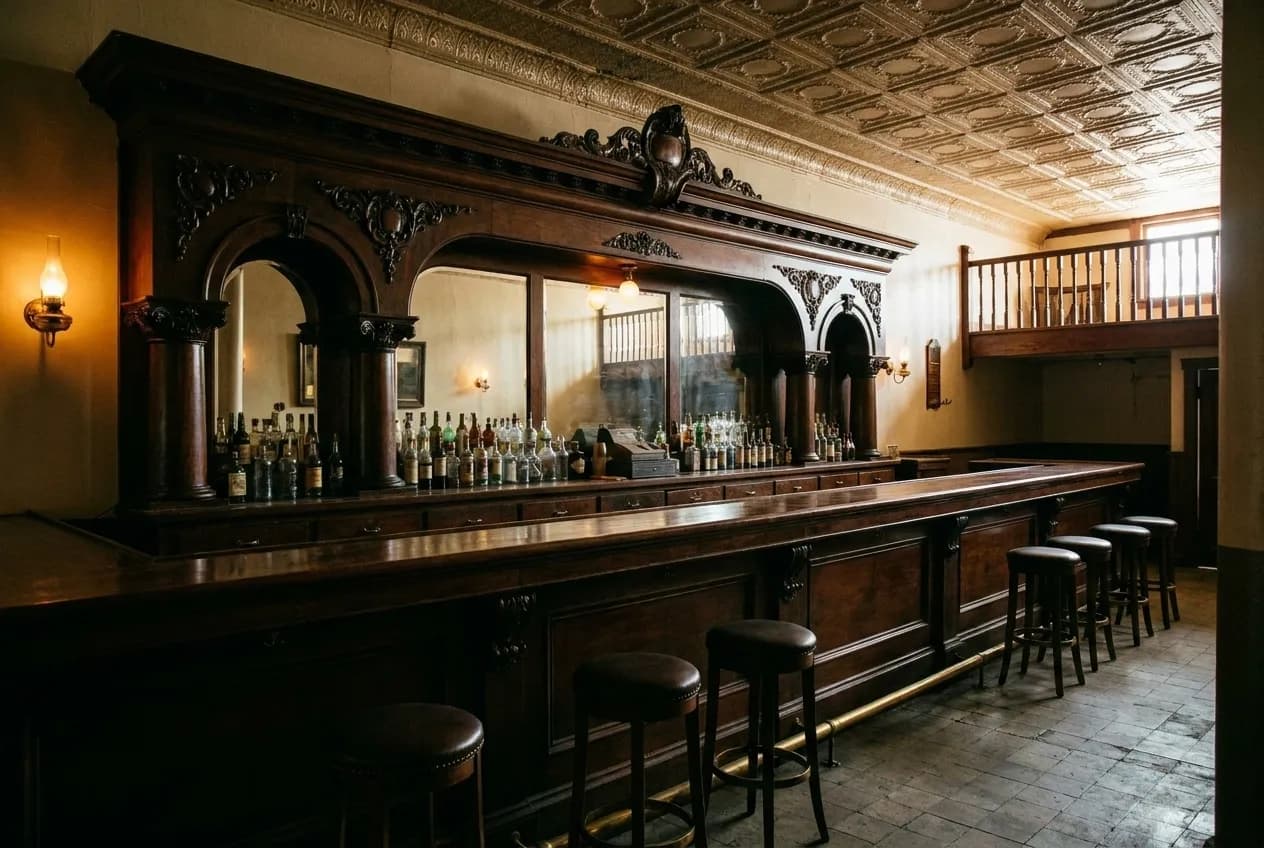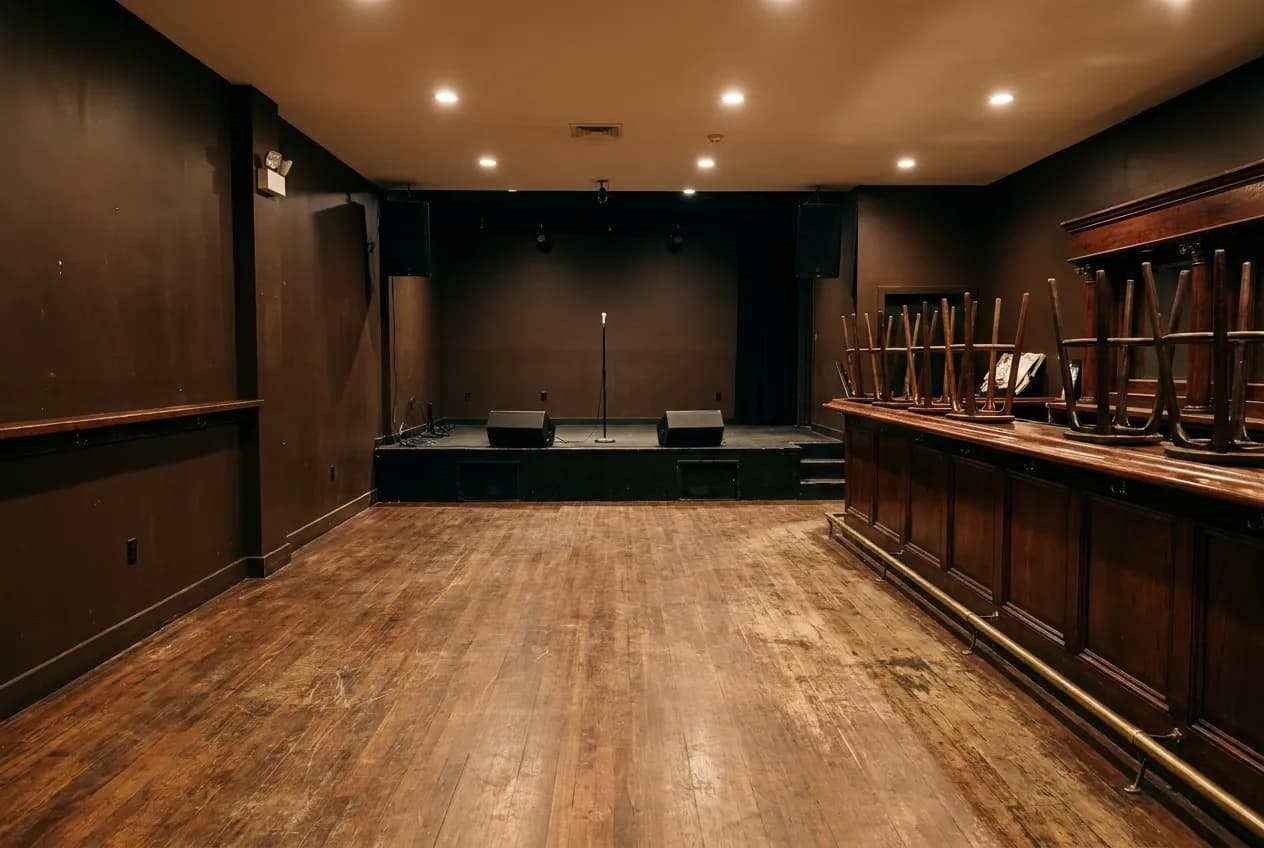
Three hundred shows a year in a room that holds two hundred and fifty people. Run those numbers and the picture is clear: this is a venue that is open with a band on it four to six nights in most weeks, which makes it one of the very few places in San Francisco where the question is not whether something is happening but whether you like the sound of it.
The best small venue near you is the one with something on almost every night, not the one with the famous name. Ask Karpo what is playing tonight within walking distance.
The arithmetic of a small room
Brick and Mortar Music Hall sits at 1710 Mission Street, and its capacity of two hundred and fifty is the single most important fact about it. At that size nobody is more than about ten metres from the stage, there is no bad position in the room, and the band can hear the audience — which changes how they play.
Capacity also dictates programming. A two-hundred-and-fifty-capacity room does not need to sell out to survive a night, which means it can take a risk on a touring act nobody in the city has heard of yet, or hand a Tuesday to three local bands. That is why the calendar runs from indie rock to hip-hop and back with no obvious through-line.
Why this is the better default than the famous rooms
San Francisco's well-known venues are well known for good reason and they are also, most nights, sold out weeks ahead at a price that reflects it. A show you have to plan a month in advance is a different kind of evening — and it is not the evening most people actually want on a Wednesday.
What a small hall with a dense calendar gives you instead is the ability to decide at six o'clock. There is almost always something on, tickets are almost always available, and the downside risk of not liking the band is fifteen or twenty dollars and an hour, rather than a ruined plan.
There is a second argument, less obvious: acts that will fill an arena in four years play rooms this size on the way up. Nobody can predict which ones, which is exactly why you go often rather than carefully.
Reading the running order
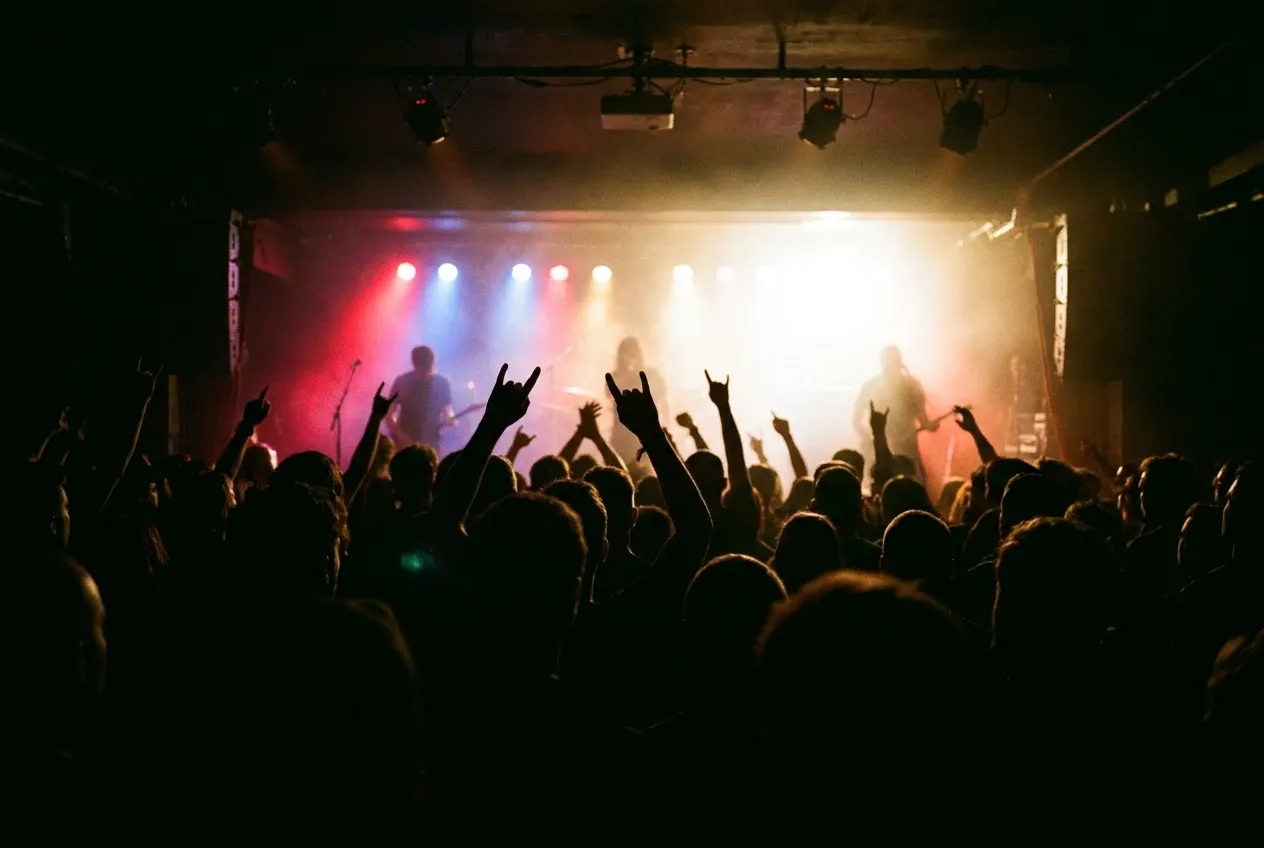
Doors and stage times at a small venue are not decorative. Doors are typically an hour before the first act, and on a three-band bill the headliner will not appear until well after ten. If you have come for the headliner and arrive at doors, you are buying three hours of standing.
The inverse mistake is more common and more costly. Arriving at half past nine for a headline set means missing both support acts, and in a room booking this many shows the support is frequently the reason to have gone. If the bill has a local band opening, that band is on because the promoter thinks they are good.
- 1710 Mission Street, between Duboce and 13th
- Capacity 250; more than 300 shows a year
- Four to six nights a week, any night of the week
- Indie rock, hip-hop, electronic and local bills
- Small enough that every position in the room works
Where it sits
This stretch of Mission Street is the hinge between the Mission proper and the Civic Center, which puts it within a short walk of two BART stations and on several bus lines. That is the practical reason to favour it over a venue further out: you can get home from it at midnight without planning.
It also means the rest of the evening is solved. The Mission's kitchens run late in every direction from here, so the sequence of dinner at eight, doors at nine, home by half past midnight assembles itself without anybody having to drive. Parking, conversely, is genuinely bad, and it is the one thing that will sour the night if you attempt it.
What the room is actually like
Standing, dark, a bar along one side and a low stage at the end. There is no seating to speak of and no separate quiet area, which is worth knowing if you were hoping to have a conversation — at this size, during a set, you will not be having one.
The sound is loud in the way a small room is loud, which is to say it arrives directly rather than as a wash off the back wall. Earplugs are not an admission of age, they are the difference between hearing the band and hearing a noise, and the better small venues keep them behind the bar.
How to use it properly
Set a standing rule: check the calendar on the way home from work, and if anything at all looks plausible, go. The economics support this. At small-venue ticket prices, going to six shows a year on instinct costs less than one arena ticket and will produce at least two nights you remember.
That is the actual function of a venue like this in a city, and it is why the number of shows matters more than the name over the door. A room that is dark five nights a week is a place you visit. A room with something on almost every night is a habit, and habits are what make a city feel like it belongs to you.
Practical notes
Brick and Mortar Music Hall, 1710 Mission Street, San Francisco. Capacity is 250 and the venue programmes more than 300 shows a year, typically four to six nights a week, across indie rock, hip-hop, electronic and local bills. Doors are usually an hour before the first act and headliners on a three-band bill often start after 10pm — check the running order rather than the door time. The room is standing only with a bar along one wall. It is a short walk from 16th Street and Civic Center BART; street parking nearby is difficult enough that it is not worth attempting.
Tags: #SanFrancisco #LiveMusic #BrickAndMortar #MissionDistrict #BarsAndNightsOut #SFNightlife #IndieRock #SmallVenues #MissionStreet #SFThingsToDo #Gigs #Tonight #LocalBands #Music
Please drink responsibly. Must be of legal drinking age.
All trademarks are the property of their respective owners.
Ask Karpo first
Want to know which small venues near you have something on tonight, what time the support goes on and what the door costs? Ask Karpo instead of opening six ticket sites.