Little Haiti has the most interesting live music in Miami and the smallest visiting audience for it, and the reason is not access - most of it is cheap or free and physically easy to get to. The reason is that people do not know what they would be listening to. Haitian music is not one genre; it is at least four distinct traditions with different instruments, different tempos, different social functions and different rooms. Twenty minutes of orientation makes the difference between standing at the back confused and following what a band is doing.
Most of this neighbourhood's music happens at weekends and around the cultural complex's own calendar rather than nightly. Tell Karpo the night you are free and get what is genuinely on.
Kompa, which is the popular music
Kompa - konpa direk in full - is the dominant popular form and the one you are most likely to hear at a party, a restaurant or a lounge. It emerged in Haiti in the mid-1950s and is built on a slow, insistent, unbroken groove in a moderate tempo, with a big band arrangement: horns, guitars, keyboards, bass, and a percussion section carrying the pulse. The tempo is deliberately steady and danceable rather than showy.
The thing to listen for is the bass and the tanbou together holding a pattern that barely varies for the whole song, with everything else moving over the top of it. Kompa is social music - it is meant to be danced to in couples, at length, and the length is the point. Songs run long and the band builds rather than switching. If you are at a Little Haiti restaurant with a band on a Friday, this is almost certainly what you are hearing.
Rasin, which is the roots music
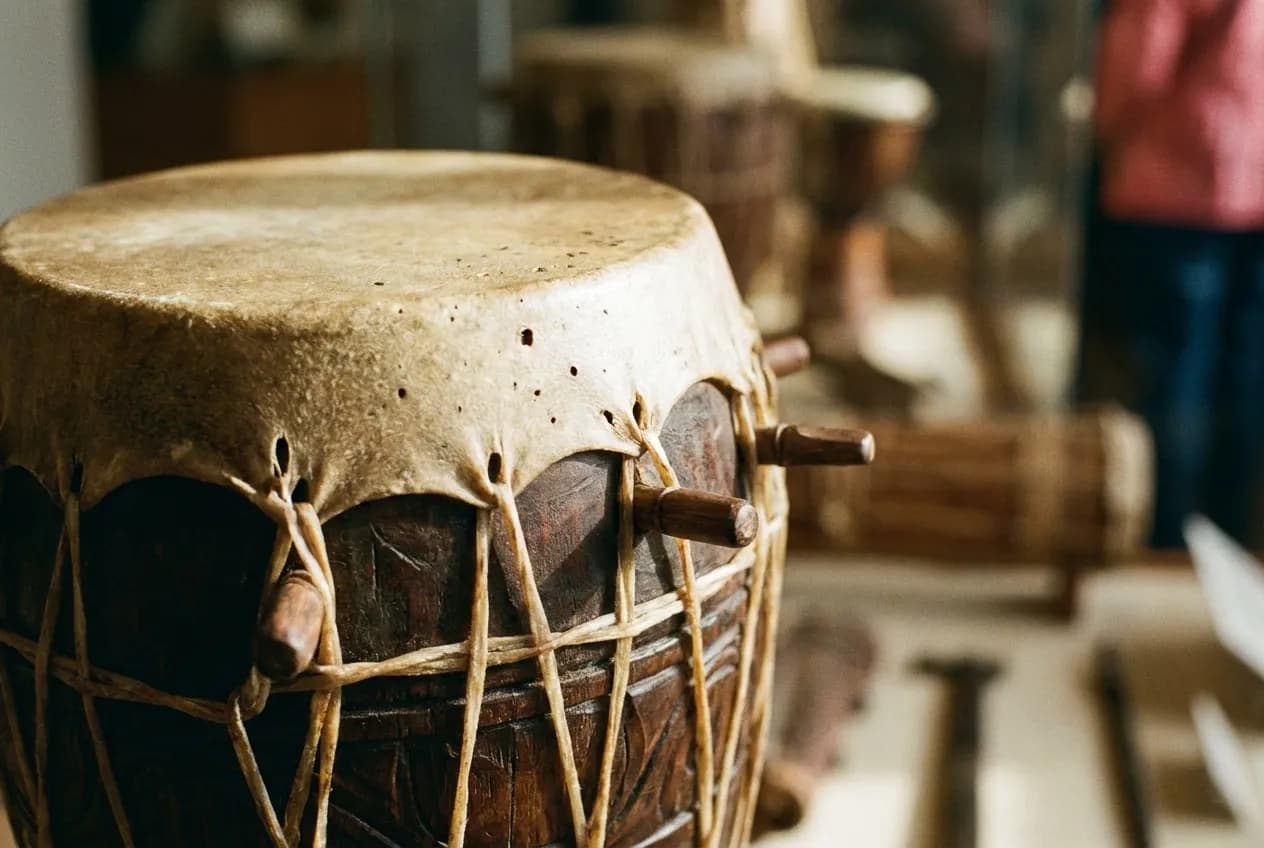
Mizik rasin - roots music - is the more confrontational and, to an unfamiliar ear, the more immediately striking of the traditions. It takes the rhythms and song forms of Vodou ceremonial music and puts them into a band context, often with electric guitars and a rock or reggae backline underneath. It emerged in the 1970s and 1980s and carries a political charge that kompa mostly does not.
What to listen for: the drums are the lead instrument rather than the timekeeper. The tanbou - a family of hand drums played with hands and sticks - drive the piece, the vocals are call-and-response with a chorus answering a lead, and the rhythms are considerably more complex and less regular than kompa's. If a band on stage has three drummers and the crowd is answering the singer, you are hearing rasin.
Twoubadou and the acoustic layer
Twoubadou is the smallest-scale form and the easiest to encounter without planning: an acoustic guitar, an accordion or a small hand-held instrument, a manoumba or marimbula for bass, and a singer telling a story. It descends from Cuban son by way of Haitian labourers who worked in the Cuban cane fields in the early twentieth century, which is why it sounds like a cousin of what you would hear on Calle Ocho.
This is the music of restaurants and small rooms rather than stages. Two or three players, a corner, no amplification worth speaking of, and lyrics that are frequently funny and pointed if you understand Haitian Creole. It is the most approachable entry point of the four and the most likely to be happening on a quiet Thursday evening in a neighbourhood restaurant.
Where it happens
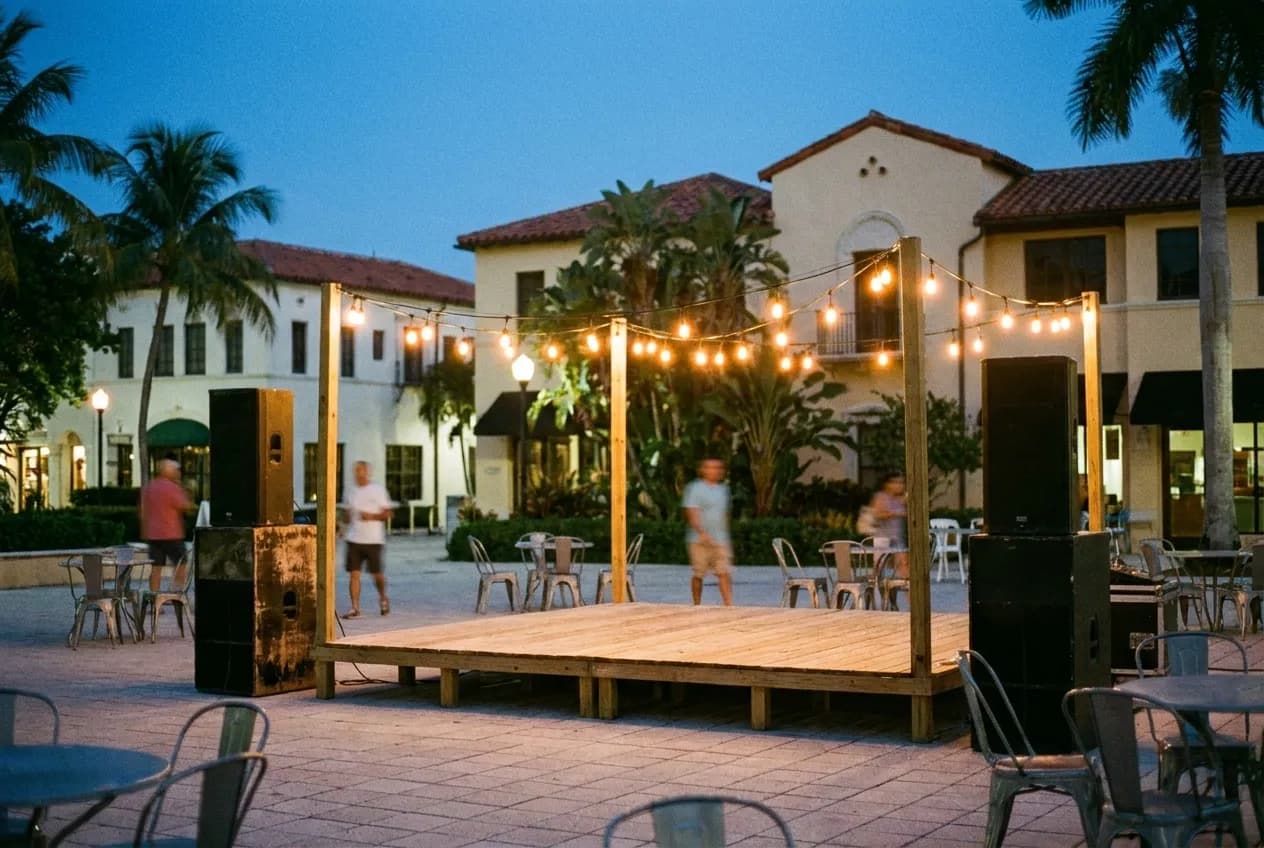
The Little Haiti Cultural Complex on NE 59th Terrace is the anchor and the first place to check. It is a purpose-built cultural centre with a theatre, a plaza and a gallery, and it programmes concerts, dance and community events across all of these traditions. Its long-running Big Night in Little Haiti series has been the neighbourhood's flagship music night for years and is generally free or very cheap. If you only do one thing in this neighbourhood after dark, check what is on there first.
Beyond the complex, the music lives in restaurants and lounges rather than dedicated venues. Naomi's Garden on NW 71st Street puts on live music at weekends alongside dinner, in a garden setting that is the easiest possible introduction. Several other rooms along NE 2nd Avenue and the streets around it run weekend bands with no cover. This is a weekend scene rather than a nightly one, and the programming is announced locally rather than on national listings sites.
How to be a good audience
A few things make an unfamiliar visitor welcome rather than conspicuous. Eat first, and eat there - these are mostly restaurants with music, and ordering food is the normal way to occupy a table. Dance if there is dancing, badly is fine, sitting is also fine, but do not stand in the middle of the floor watching. Applaud between songs rather than during, and note that in rasin the call-and-response is participatory - joining in the chorus is expected rather than intrusive.
Ask what you are listening to. Musicians and audiences in this neighbourhood are generally pleased that someone wants to know, and the answer will be more useful than any article. And be aware that some of these forms carry religious and political weight - rasin in particular draws on Vodou ceremonial material - so treat it as somebody's culture rather than as a soundtrack.
Practical notes
Timing: weekend-weighted, with most music from Friday to Sunday and the cultural complex's calendar as the main exception. Bands start late - advertised nine usually means ten. Costs: much of the cultural complex's programming is free or a few dollars; restaurant music generally has no cover but expects you to eat and drink. Getting there: Little Haiti is roughly fifteen minutes from downtown and ten from the Design District by car; parking on the residential streets is straightforward. Language: Haitian Creole is the working language of most rooms and English is universally understood. And check the cultural complex's schedule before anything else - it is the most reliable single source for what is actually happening this week.
Tags: #LiveMusicNearMe #LittleHaiti #Miami #Kompa #Rasin #Twoubadou #Tanbou #HaitianMusic #LittleHaitiCulturalComplex #BigNightInLittleHaiti #CaribbeanMusic #HiddenGems #MiamiMusic #NightOut
All trademarks are the property of their respective owners.
Ask Karpo first
The barrier to this neighbourhood's music is knowing what is on and what it will be, and both change week to week. Ask Karpo what is programmed at the cultural complex this week, which restaurants have bands the night you are free, and whether what you would be walking into is kompa, rasin or two people with a guitar.