Searching for live music in Miami produces a list of venues, which is the wrong unit. This city does not have one music scene with different rooms; it has several parallel scenes that share a map and almost nothing else — Cuban traditional and salsa, jazz and blues, and indie and punk, each with its own venues, its own crowd and its own idea of what time the night starts. Picking the genre first and the room second is the only approach that works here.
Genre alone will not get you into the right room on the right night — the Cuban bands play a rota, the jazz rooms change trio weekly, and the indie bookings move between an indoor stage and a garden. Text Karpo what you want to hear tonight and get the rooms near you actually playing it, what time the set starts, and whether there is a cover.
Cuban, salsa and timba: Little Havana
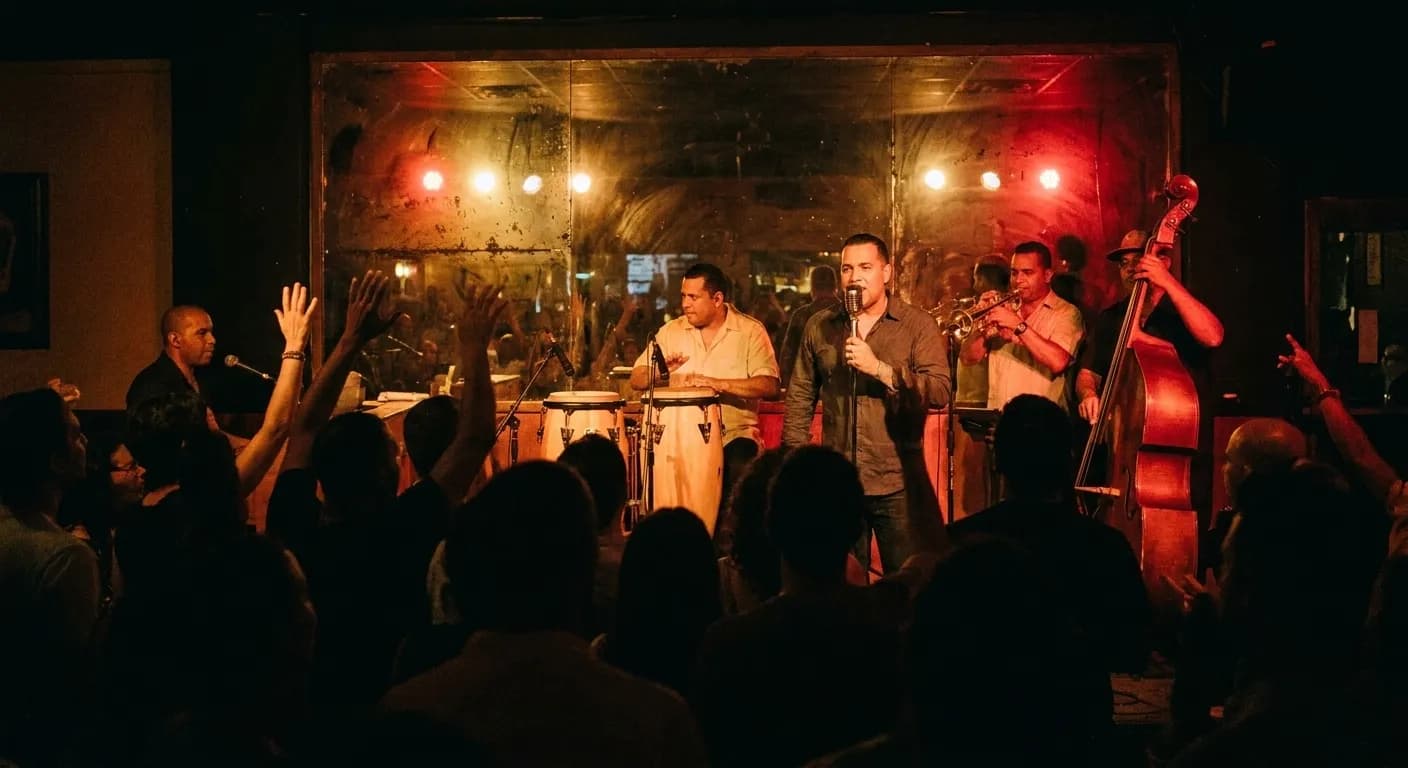
This is the scene Miami is actually best at, and it is concentrated in a few blocks. Hoy Como Ayer is the serious room for live Cuban salsa and timba, with regular performances by Los 3 de La Habana; Cubaocho in the core of Little Havana operates as a museum and gathering space as much as a venue, running everything from salsa bands to Latin jam sessions to Cuban jazz. Café La Trova and Ball & Chain fill in the same corridor.
Two things to know before you go. The music starts late — genuinely late, not New York late — and arriving at nine for a band that goes on at eleven is a common mistake. And people dance, competently, which is either the appeal or the reason to stand at the back. Both are acceptable; standing in the middle of the floor not dancing is the one thing that is not.
Jazz and blues: Midtown, nightly
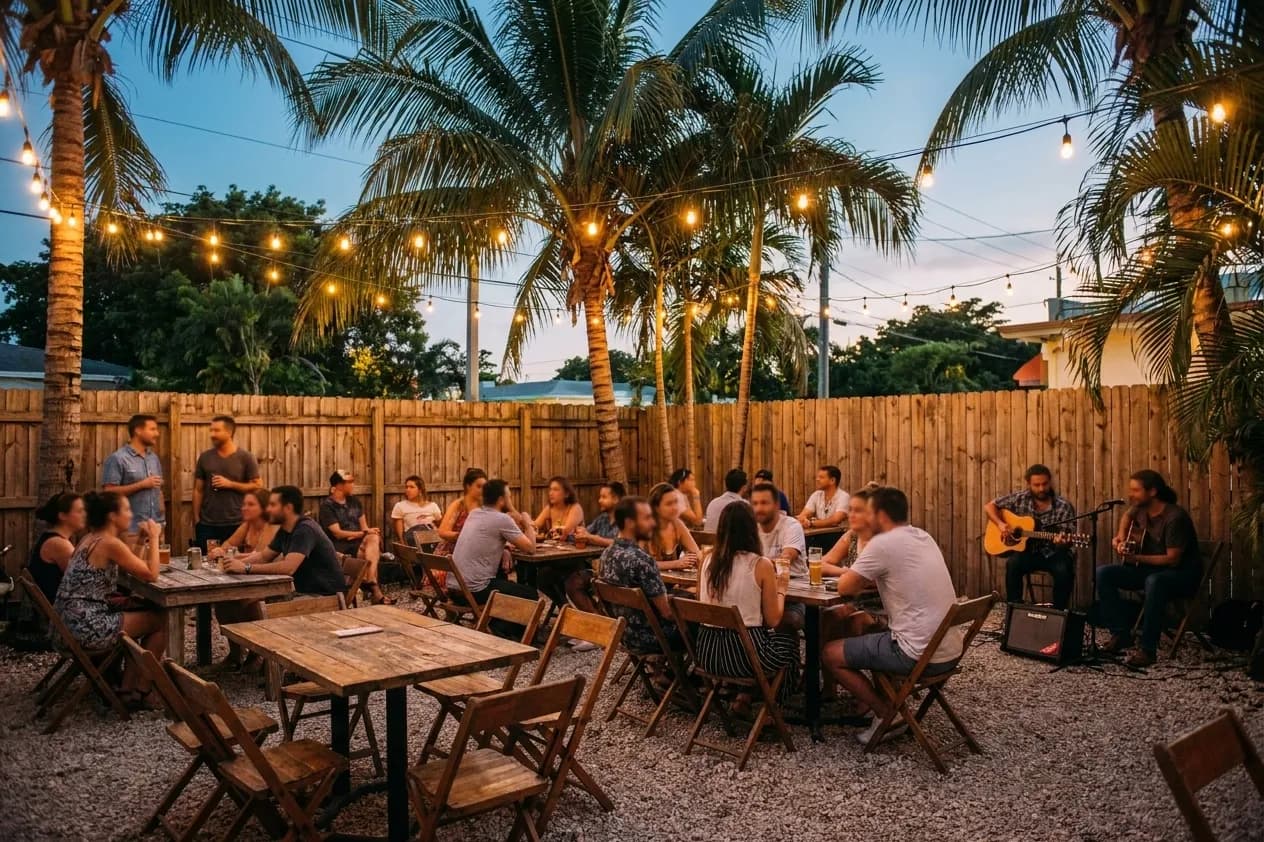
Lagniappe House in Midtown is a New Orleans-inspired wine bar with live jazz and blues every night of the week, played in a backyard setting. The every-night part is what makes it structurally important to this city's music week — it is the one room you can go to without checking anything, on a Monday, and hear someone playing.
The programming rotates through local jazz, acoustic, Latin ensembles, soul and singer-songwriters, so the genre label is looser than it looks. Treat it as a room rather than a bill: you are going for the backyard and the fact that there is live music in it, and what specifically is playing is a bonus rather than the plan.
Indie, punk and everything loud: Wynwood
Gramps in the heart of Wynwood is the anchor for the other scene entirely — a dive bar and live music venue with an indoor stage and an outdoor garden, hosting local and touring bands playing punk, synth-pop and things that do not have a genre yet. It is the room where Miami's independent music actually happens, as opposed to where it gets talked about.
The indoor-and-garden layout is worth understanding because it changes the night. A show on the inside stage is a show; the garden is a bar with a band in it. Check which one your bill is on, because they are different amounts of commitment for the same ticket.
How the scenes differ in practice
Start times are the biggest divergence. The Little Havana rooms run latest by a wide margin; the Midtown jazz starts early and civilised; the Wynwood bills sit in between and depend on how many bands are on. If you are trying to do two scenes in one night, the only sequence that works is jazz first, Cuban second, and even that requires committing to a late finish.
Cover charges differ too. The indie rooms usually have a door price for a touring act and nothing for a local bill. The Cuban rooms vary by night and by band, and the ones with a famous ensemble on will charge accordingly. The jazz rooms most often run on drinks rather than a cover, which makes them the cheapest way to hear live music in this city on a random Tuesday.
Choosing well on a given night
Ask what you want the evening to be, not what you want to hear. If you want to be part of something loud and physical, go to Little Havana and accept the hours. If you want to talk to the person you came with and have music happening, Midtown. If you want to discover a band you will look up afterwards, Wynwood.
And check the specific night rather than the venue's reputation. Every one of these rooms has an off night, and the difference between the best and worst evening at the same address is much larger in Miami than in cities where the venue books a single style.
The thing that surprises people
The most musically serious rooms in Miami are not the ones with the biggest sound systems or the best-known names. They are the ones where the musicians drink after their own sets — the Little Havana bars where the band that just finished sits down at the next table, the Midtown backyard where the trio changes personnel weekly because everyone in it plays in three other bands.
That is the actual scene, and it is visible from a barstool if you stay past the end of the set. Most people leave when the music stops, which is precisely the hour at which this city's music community becomes legible to an outsider.
Please drink responsibly. Must be of legal drinking age.
Tags: #livemusicinmiami #miamimusic #cubanmusic #salsa #timba #jazzmiami #hoycomoayer #cubaocho #lagniappe #gramps #littlehavana #wynwood #midtownmiami #miaminightlife
All trademarks are the property of their respective owners.
Ask Karpo first
The same night in Miami can offer a Cuban timba band, a jazz trio and a punk bill within fifteen minutes of each other, and none of them advertise where the others do. Ask Karpo what is playing near you tonight in the genre you actually want, what time the band starts rather than what time the door opens, and whether the room takes a cover.