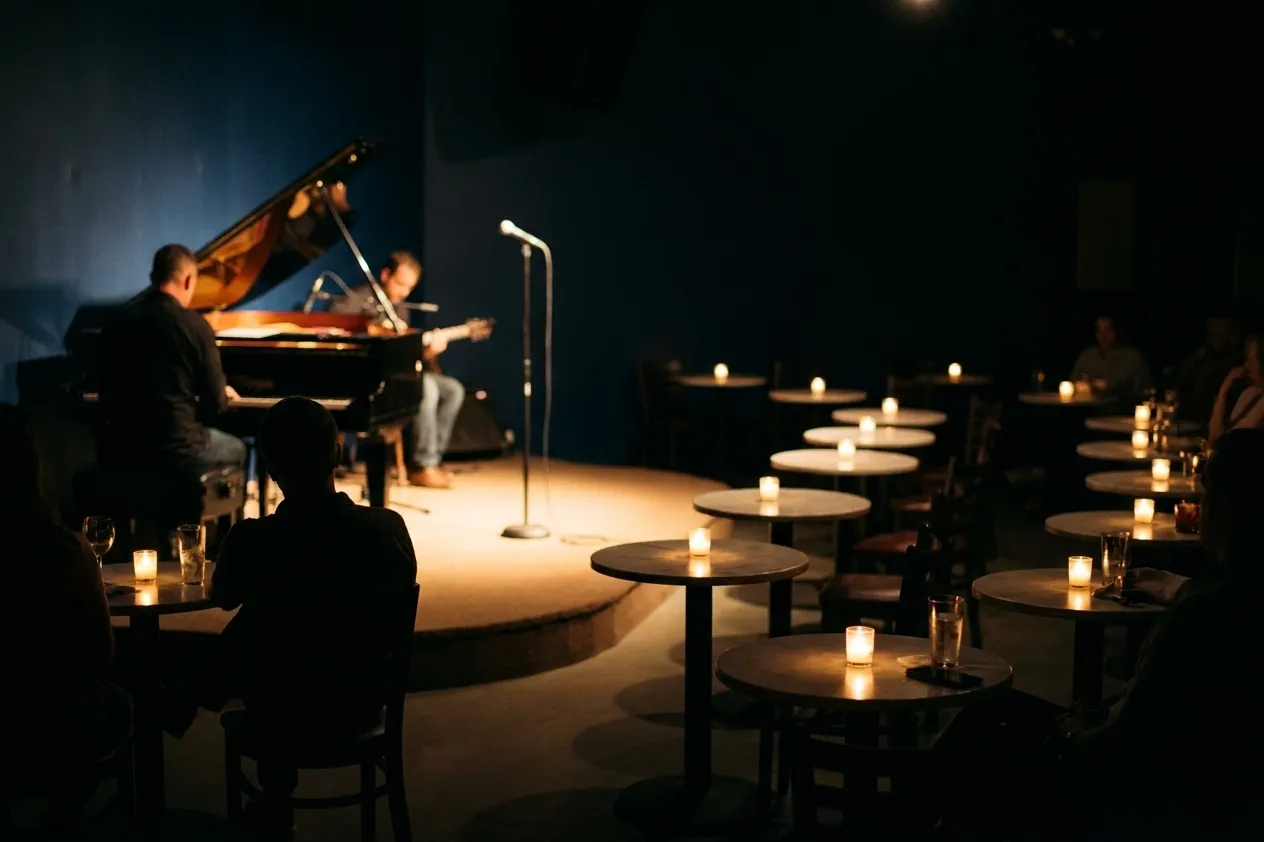
Miami's reputation is for volume — clubs, DJs, rooftops, a city that plays music at you rather than for you. Underneath that there is a small, serious and largely invisible jazz scene, running in rooms that seat forty or fifty people, with proper set times, real musicians, and an audience that came to listen. It is one of the best things about the city and it is genuinely hard to find, because these rooms do not advertise, do not appear in nightlife listings, and frequently do not have a website worth reading. Finding them takes a different approach than finding anything else in Miami nightlife, and the payoff is the most rewarding music the city has.
Karpo can find Miami jazz rooms with sets tonight, tell you the reservation window and the minimum, and which nights are open jams.
Small rooms, fixed sets, limited seats
The defining constraint is size. These are rooms of forty to eighty people, often with a single set time or two sets an evening, and seating that runs out. Unlike a club, there is no capacity elasticity — when the tables are gone, they are gone.
That makes reservations essential and short-notice attendance unreliable. The booking windows are usually short, often opening a week or two before, and they are frequently handled by phone, message or the venue's social account rather than by any platform. If a room's booking process feels informal, that is normal and it is not a sign of disorganisation; it is a sign that a small number of people run it.
The Afro-Cuban and Latin jazz thread
What makes Miami's jazz scene distinctive rather than generic is its Latin American component. Afro-Cuban jazz, Brazilian standards and the traditions that arrived with the city's Cuban, Colombian, Venezuelan and Haitian communities are not a subgenre here; they are the mainstream of what gets played, and the rhythm sections are correspondingly extraordinary.
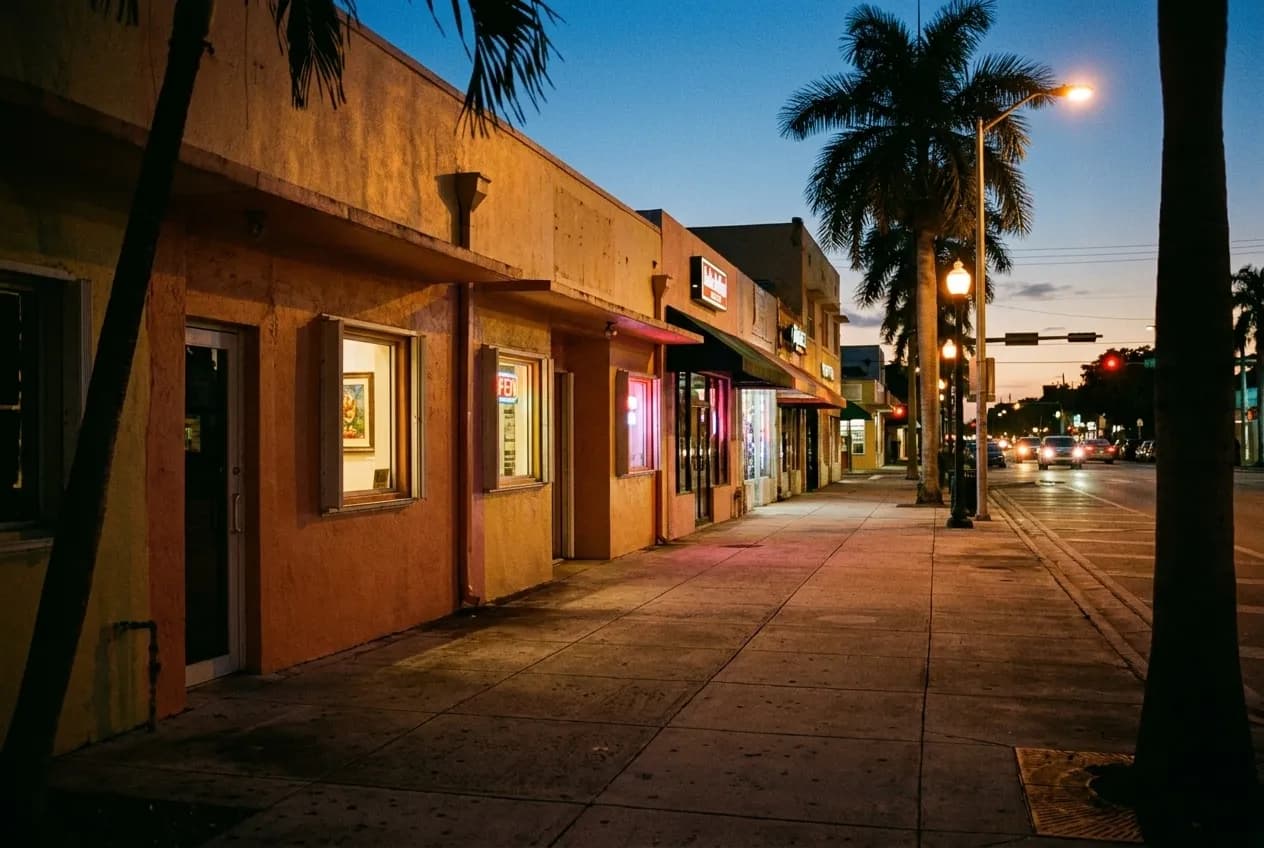
This is why the scene rewards attention. A room in Little Havana or Little Haiti on a Thursday may have players on stage with international reputations within their own tradition, performing for a room of fifty people at a fraction of what the equivalent would cost in New York. The lack of publicity is a feature of the economics, not a comment on the quality.
Cover, minimum, and how the money works
Expect either a cover charge, a per-person minimum spend, or both — and expect to have to ask, because they are rarely published. A cover pays the band; a minimum pays the room. In a fifty-seat venue neither is unreasonable, and the numbers are typically modest by the standards of Miami nightlife.
Ask when you book, along with whether the minimum applies per person or per table. The difference matters for a group. And if a room has no cover and no minimum, assume there is a bucket or that the bar is carrying the cost, and behave accordingly.
Dress is worth a word, because Miami's general nightlife dress conventions do not apply here. Listening rooms are casual, the crowd skews older and more mixed than at a club, and turning up in the outfit you would wear to a Brickell rooftop will make you conspicuous rather than well dressed. Comfortable and unremarkable is exactly right.
Set times and the Miami late start
Miami runs late, and jazz rooms are no exception. A first set advertised at nine may begin at 9:30, and a second set can run past midnight. Where a room publishes set times, they are usually accurate to within fifteen minutes or so; where it does not, ask.
For a first visit, take the first set. It starts closer to schedule, the room is fuller and more attentive, and it finishes at an hour that leaves options. The second set is looser and often better musically, but it is a commitment to being out very late in a city where getting home takes planning.
Jam nights are the way in
Most cities with a jazz scene run a weekly jam session, and Miami is no different. These are the nights to go if you do not know the scene: no cover or a very low one, a house rhythm section, and a rotating cast of local players sitting in. The standard varies within a single evening and that is the point.
It is also the fastest way to learn who is who. The players who turn up to jams are the players working the rooms, and after two or three visits you will start recognising names on the bills at the ticketed rooms. That is a far more reliable guide to what is worth booking than any listing.
Finding them at all
This is the hard part and it is worth stating plainly: general nightlife listings in Miami will not surface these rooms. The reliable methods are following the venues' own social accounts, following individual musicians rather than venues, and asking at a room you have already been to where else is good.
The last one works remarkably well. The scene is small, the musicians play across multiple rooms, and the person at the door will happily tell you where to go on a night they are dark. Two or three conversations gets you a map of the whole scene, which is not available in written form anywhere.
One last point about how fragile this is. A fifty-seat listening room in an expensive city survives on a small number of people turning up regularly and spending money, and Miami has lost several such rooms over the past decade. If you find one you like, go back, bring people, and buy from the bar. That is not sentimentality; it is the entire economic basis on which the scene continues to exist.
Tags: #MiamiJazz #LiveMusicNearMe #LiveJazz #LittleHavana #LittleHaiti #AfroCubanJazz #MiamiMusic #JamSession #ListeningRoom #MiamiNightlife #ThingsToDo #MusicScene #CityGuide #EventsNearMe
Please drink responsibly. Must be of legal drinking age.
All trademarks are the property of their respective owners.
Ask Karpo first
Want to know which Miami jazz rooms have sets tonight, what the minimum is, and which night is the jam? Ask Karpo before the tables go.