# Article
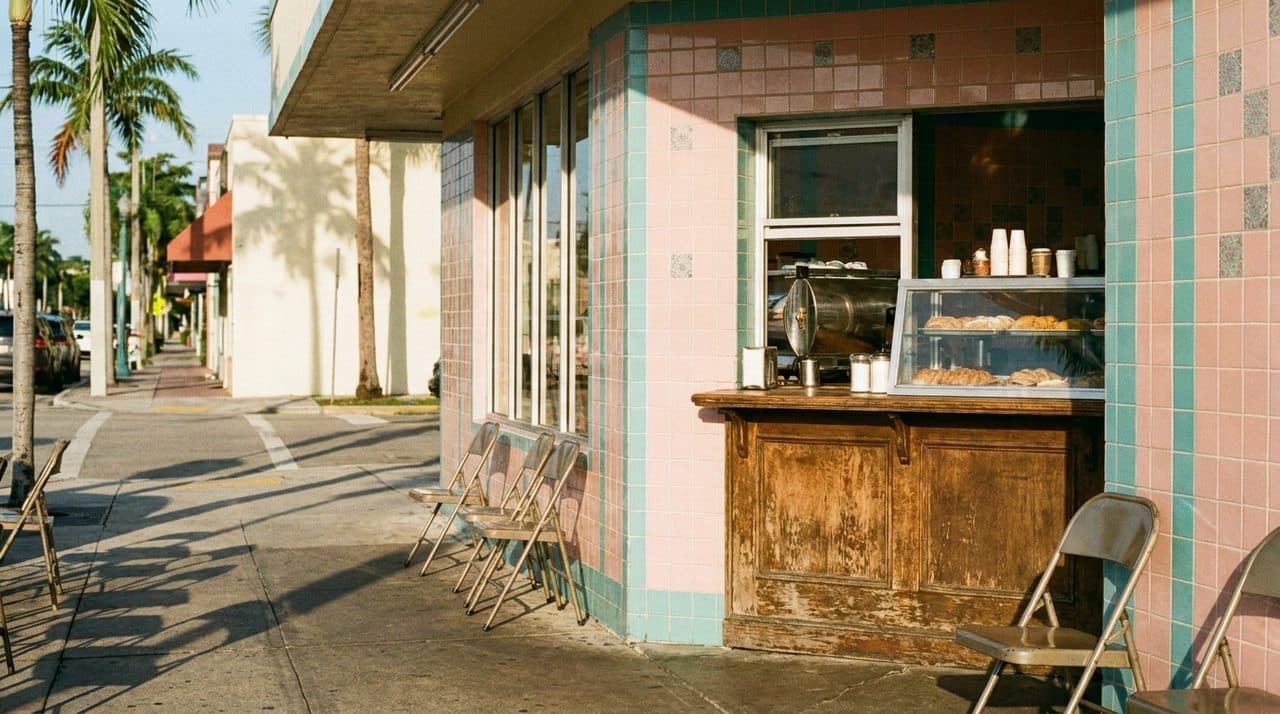
A walk-up window opens before the sun clears the rooflines on Calle Ocho, and by the time the first domino tiles hit the tables in Máximo Gómez Park, the counter has already served two dozen coladas. The café operates from a slot in a pastel building where the paint peels in strips and the awning offers just enough shade for three people to stand shoulder-to-shoulder. Men arrive in guayaberas and baseball caps, some still wearing the dust from overnight shifts, others dressed for nowhere in particular. They order in rapid Spanish, hand over a few bills, and take their thimble cups to the curb.
The Window Opens in Near-Darkness
The metal shutter rolls up around six, sometimes earlier if the cook is already inside. No sign announces the hours. The people who need to know are already there, standing in a loose cluster that never quite forms a line. The first colada of the day gets poured into a Styrofoam cup the size of a shot glass, passed through the window with a handful of plastic spoons and a stack of napkins. The espresso is thick enough to coat the sides of the cup, sweetened with raw sugar that dissolves into syrup at the bottom. Regulars drink it in two sips, sometimes one, then stand around talking until the second round.
The cook behind the counter works without looking up much. She pulls shots on a machine that hisses and drips, fills the cups in a rhythm that doesn't pause for small talk, and slides them across the Formica ledge. The window itself is barely wide enough for two people to order at once, but no one rushes. The men waiting their turn lean against the building or sit on the low wall across the sidewalk, where someone has left a folded newspaper and a half-finished game of dominoes from the night before.
The Crowd That Comes Before the Heat
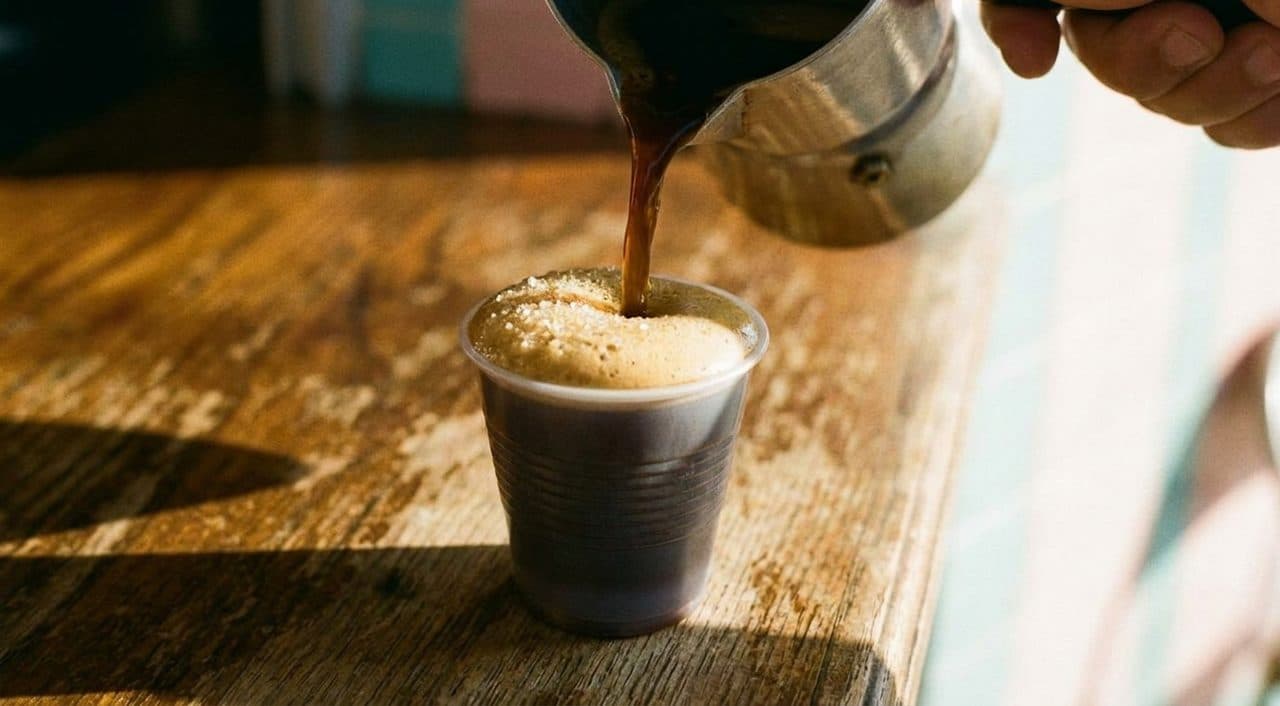
By seven, the group has grown. Pickup trucks idle at the curb, engines running, drivers standing outside with their cafecitos. A few women join, usually in pairs, ordering cortaditos and pastelitos that come wrapped in wax paper, still warm from the fryer. The pastries leave grease stains on the napkins and flakes of dough on the pavement. No one sits inside because there is no inside—just the window, the counter, and the kitchen behind it where the cook moves between the espresso machine and the stove.
The conversation shifts between English and Spanish, sometimes mid-sentence, and the topics are unremarkable: work schedules, someone's cousin visiting from Tampa, the Marlins' bullpen, the price of gas. The men who've been coming here for years know each other's orders and hand over cups without asking. A guy in a faded Dolphins jersey shows up every morning at the same time, stands in the same spot, drinks his colada in silence, and leaves. Another regular brings his thermos and asks for a full shot poured directly into it, no cup, no sugar.
What Gets Ordered and How It Arrives
The menu is unwritten but understood. Coladas come in small Styrofoam cups meant for sharing, though plenty of people drink them alone. Cortaditos arrive slightly lighter, cut with steamed milk that takes the edge off the espresso's bitterness. A few people order café con leche in tall cups, the kind that require two hands and a slower pace. The pastelitos rotate—guava and cheese most mornings, sometimes meat, occasionally coconut—but no one asks what's available. They just take what comes out of the kitchen.
The window doesn't do iced drinks or oat milk or anything that requires explanation. The espresso is Cuban, the sugar is generous, and the milk is whole. The cook pours everything with the same efficient motion, no measuring, no second-guessing. She's been doing this long enough that the cups come out identical every time, the foam settling in a thin layer that clings to the rim.
The Tables Across the Street Begin to Fill
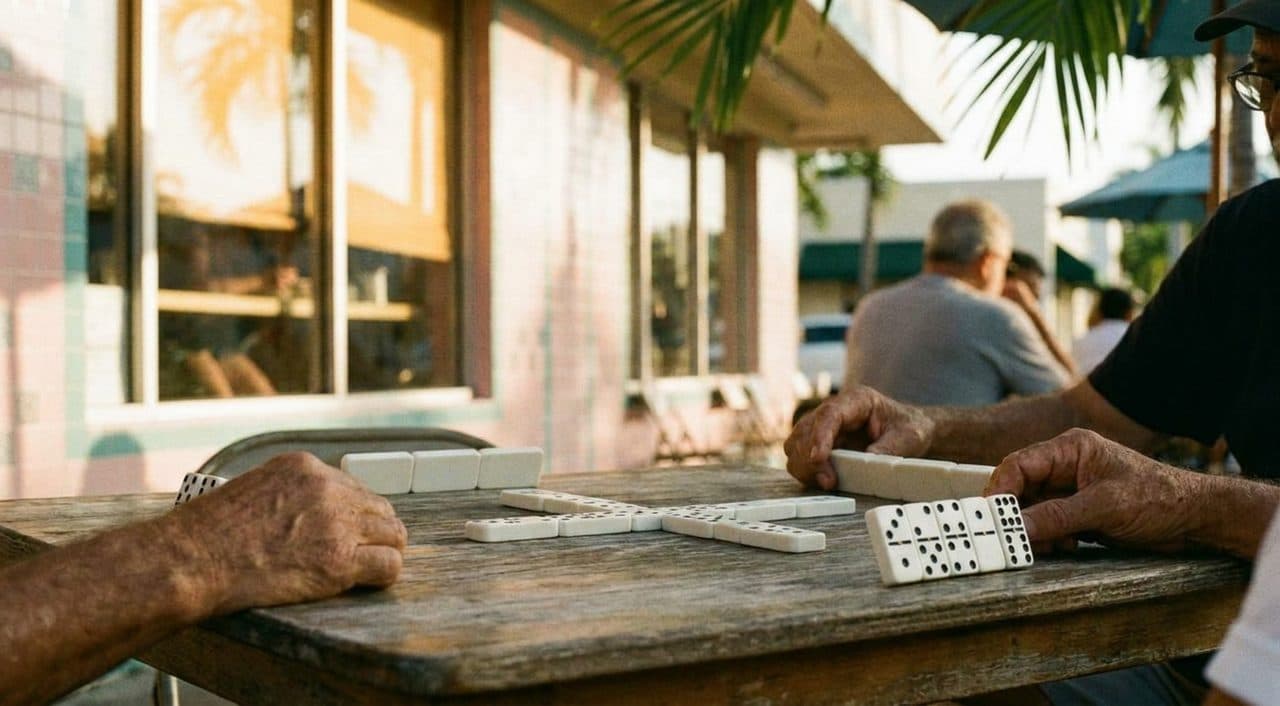
By eight, the domino players have started gathering in the park. They carry folding chairs and card tables, set up in the shade of the banyan trees, and arrange the tiles in rows. The clack of dominoes becomes the background noise for the rest of the morning, a rhythmic punctuation that carries across the street to the café window. Some of the men who ordered coladas earlier drift over to watch the games, still holding their empty cups, unwilling to throw them away until the last drop is gone.
The café window stays busy through mid-morning, then slows as the heat climbs and the crowd disperses. A few stragglers show up around ten, looking for a late breakfast or a second round of caffeine. The cook keeps pulling shots, frying pastelitos, wiping down the counter between orders. The window doesn't close until early afternoon, though the peak hours are long over by then. The regulars know to come early, before the sun makes standing on the sidewalk unbearable and before the domino tables are claimed by the players who stay all day.
The Rhythm of the Sidewalk and the Counter
There's no seating, no Wi-Fi, no reason to linger beyond the time it takes to finish a small cup of espresso. People drink standing up, leaning against whatever surface is closest, then move on. The turnover is constant but unhurried, a flow that matches the pace of the neighborhood itself. No one checks their phone while ordering. No one asks for the password to a network that doesn't exist.
The café window operates on a logic that predates Yelp reviews and Instagram check-ins. It serves the people who live within walking distance, who stop by on their way to work or on their way home, who treat the morning colada as a ritual rather than a caffeine fix. The tourists who wander over from the murals on Calle Ocho sometimes join the crowd, but they're easy to spot—they take photos of the cups, ask for recommendations, hesitate before drinking something so small and so sweet.
Practical Notes
The window opens early, usually before six-thirty, and stays open through early afternoon. Cash is the standard, though the cook has been known to accept cards if the machine is working. There's no phone number posted, no reservations, no way to order ahead. The café sits on Calle Ocho in the stretch between the Tower Theater and Máximo Gómez Park, close enough to hear the domino games but far enough from the main tourist corridor that the crowd stays local. Parking is street-only, tight on weekday mornings, easier after nine. The nearest bus stop is a block west, served by routes that run frequently through Little Havana. Expect to stand, expect to order in Spanish if possible, and expect to leave with sticky fingers from the pastelitos.
Tags: #PullUpAChair #LittleHavana #MiamiCoffee #CubanCafe #CalleOcho #VentanitaCulture #ColadaLife #MiamiMornings #LocalRituals #DominoTables #CafeCubano #LittleHavanaMiami #MiamiFinds #CoffeeWindow #MiamiNeighborhoods
Sources consulted: eater.com · timeout.com · infatuation.com
All trademarks are the property of their respective owners.
Ask Karpo first
Want to know which Little Havana ventanitas the locals actually use?
Ask Karpo for the Cuban coffee counters where the morning ritual starts earliest before you head out.