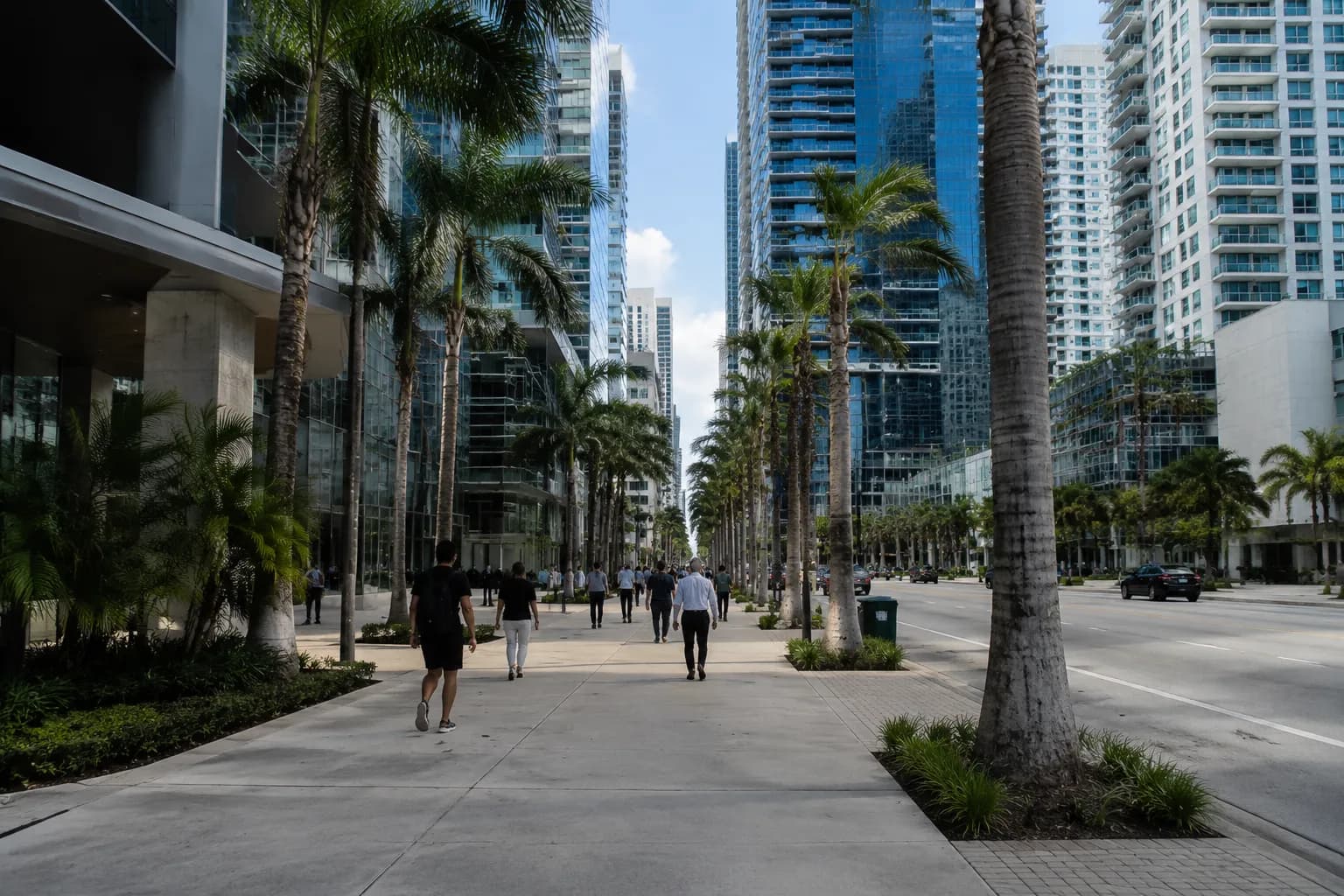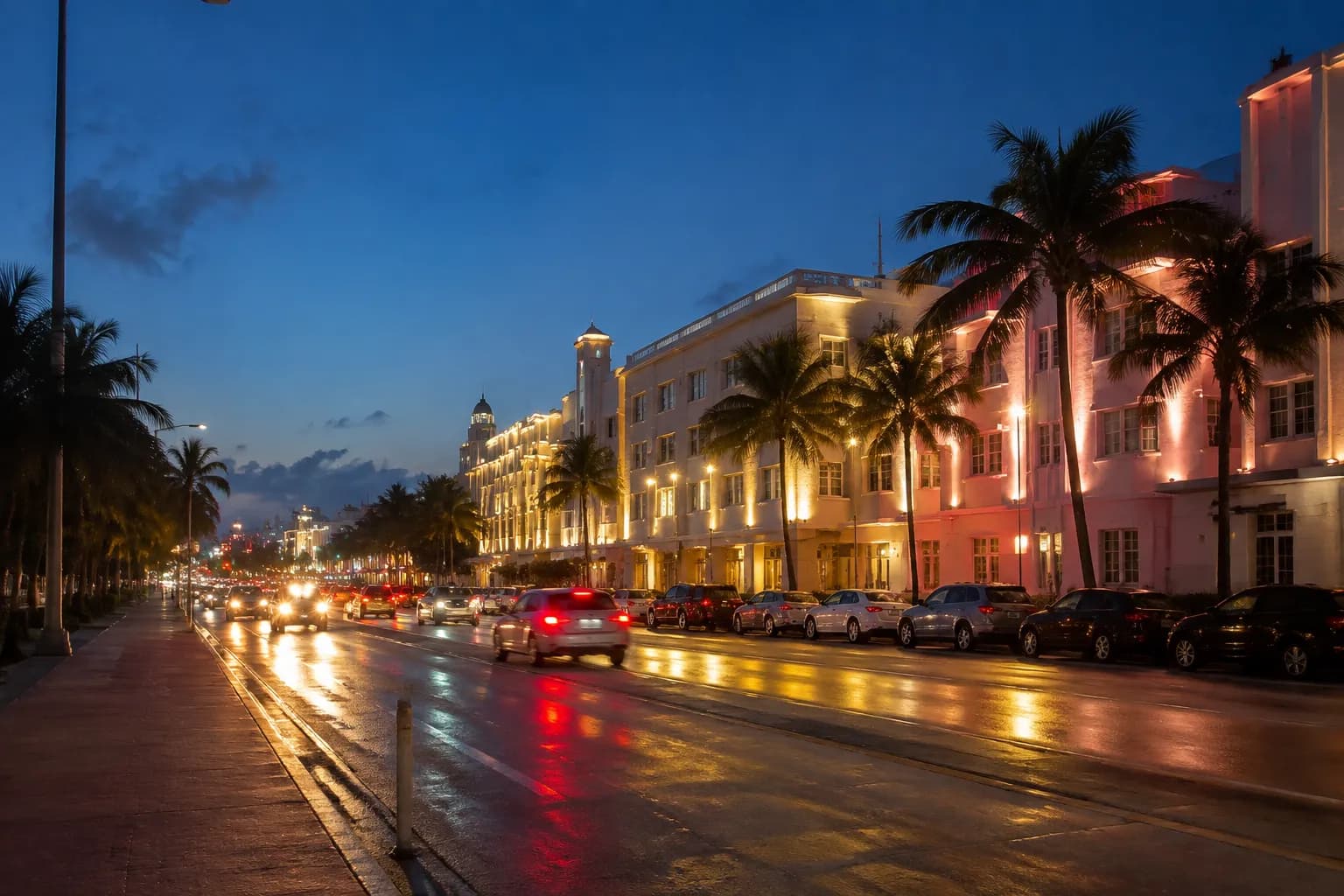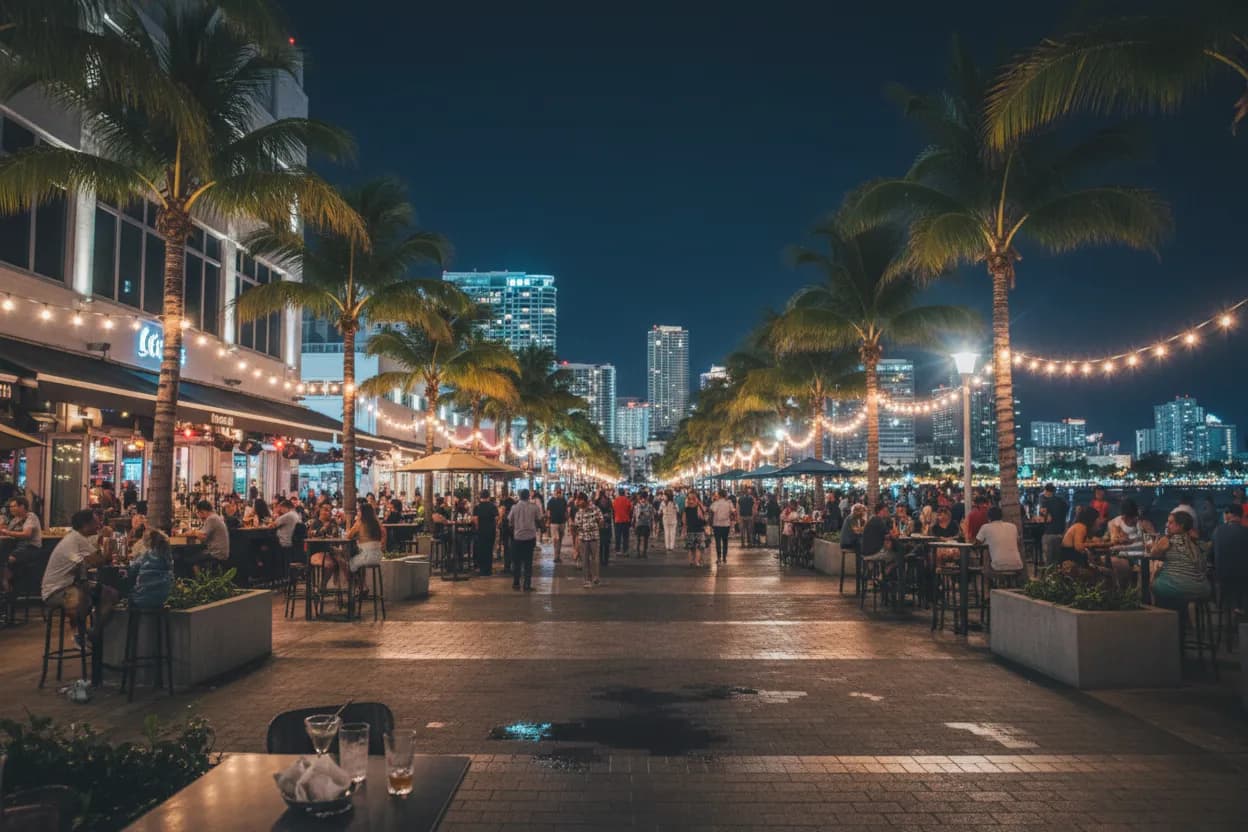
The locked title says it plainly: lindsay clancy case: Where Miami Can Talk Without Shouting. If that phrase brought you here, treat it as a reminder that not every night out has to become a loud, half-heard scroll of opinions. Miami is built for energy, but it also has enough neighborhoods, cultural corners, restaurants, music rooms, hotel lounges, and waterfront routes to shape a night around conversation first. This guide does not claim any local appearance, affiliation, private access, event tie-in, or endorsement connected to the lindsay clancy case. It is a public, practical Miami plan: pick the sound level before you pick the drink, verify the program before leaving, watch transit alerts, and keep a second room in reserve.
Want a quieter Miami plan before the group chat overcommits? Text Karpo with your neighborhood, arrival time, mobility needs, and preferred sound level, and ask for a verified two-stop route.

Use the topic as the night’s conversation starter
A serious national story can make people want a real table, not a thumping room where every sentence turns into a shout. If your group is meeting because the lindsay clancy case is in the news cycle, set the tone before anyone orders: this is a conversation night, not a spectacle. Keep the public topic separate from speculation about people, locations, or access. Nothing in Miami’s official visitor information indicates a local event or appearance connected to the case, so do not build the evening around rumors.
Use the city instead. Greater Miami & Miami Beach’s official visitor site frames the destination around beaches, culinary options, arts and culture, music events, neighborhoods, and a welcoming, inclusive public experience. That gives you a better assignment: choose a setting where people can speak carefully, step outside if the room gets too charged, and redirect the night toward food, music, or a walk when the conversation has run its course.
Choose sound level before cocktails
The first Miami mistake is choosing a bar by reputation and discovering too late that the room is built for dancing, not talking. Before you commit, check the venue’s official page or listing for that night’s program. If it advertises live music, DJs, a watch party, a special activation, or a private function, assume the sound and crowd profile can change. If the official page is vague, call or message the venue directly rather than relying on a stale post.
For conversation-first plans, the safer pattern is early arrival, seated service, and a room with food nearby. Miami’s official visitor site highlights the city’s rich culinary scene and its music and culture options, which means you can choose whether the night is primarily dinner, drinks, music, or a mix. In August, the official site also points visitors toward Miami Spice, a July-through-September dining program with specially priced three-course meals at participating eateries; verify participating restaurants and current terms on the official page before using it as your anchor.
Pick the sound level in writing in the group chat: quiet table, moderate lounge, music-forward bar, or dancing. That one sentence prevents the familiar Miami drift where half the group wants to debate and the other half wants a bassline.
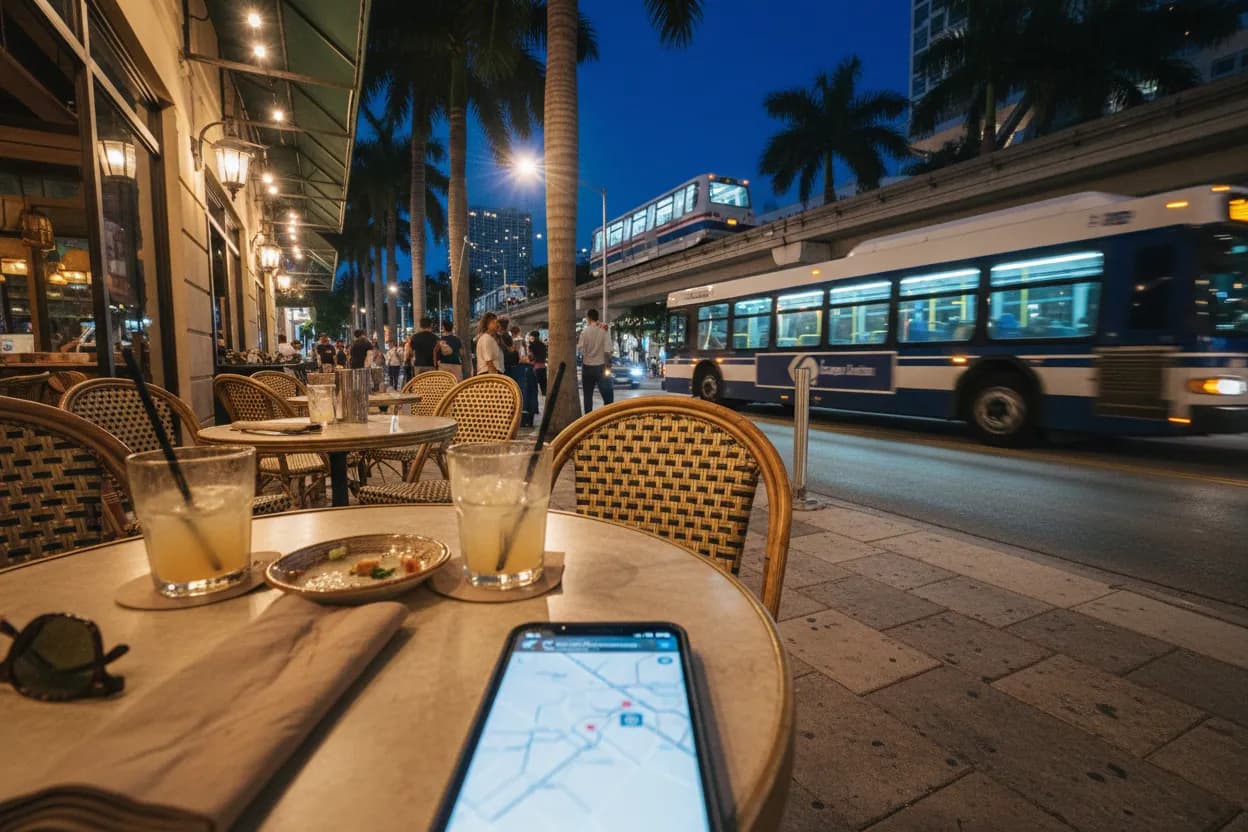
Build a walkable two-stop route
A good Miami night plan has two stops, not six. Stop one should be the conversation anchor: a restaurant, hotel bar, lounge, or casual counter where seating is plausible and the group can arrive without performing. Stop two should be optional and close enough to reach on foot, by a short transit hop, or by a regulated for-hire ride. The point is not to maximize venues; it is to reduce friction when the first room gets too loud, too full, or too expensive for the mood.
Use official neighborhood geography to keep the plan grounded. Greater Miami & Miami Beach’s visitor site points travelers toward areas such as Downtown Miami, South Beach, Wynwood, Lincoln Road, Ocean Drive, Calle Ocho in Little Havana, Coconut Grove, Bayfront Park, and the beaches. Do not treat those as interchangeable. Downtown and Bayfront Park can work well when Metromover or Metrorail access matters; Lincoln Road can support a walking plan; Wynwood may suit art-and-music energy; Calle Ocho can shift the night toward culture and conversation if you pick the room carefully.
Your route test is simple: if stop one fails, can everyone understand the backup within two minutes? If the answer requires three rideshares, a parking hunt, or crossing town because one person saw a clip online, the plan is not walkable enough.
Keep food and late transit in the plan
Food is not decoration in a Miami night-out plan; it is crowd control. A table with dinner or substantial snacks gives the conversation structure and keeps the group from chasing louder rooms out of impatience. Because August in Miami also overlaps with official seasonal dining promotions listed by the visitor bureau, verify current restaurant participation, reservation rules, and timing directly before assuming a Miami Spice option will fit your night.
Transit needs the same skepticism. Miami-Dade County’s Department of Transportation and Public Works tells riders to read service updates and rider alerts, plan routes, and track buses and trains in real time. Its system includes Metrobus, Metrorail, Metromover, Metro Express, MetroConnect microtransit, and Special Transportation Service. Before leaving, check the official trip planner, transit tracker, and rider alerts rather than assuming your usual connection is running normally.
Access checks matter, too. Miami-Dade Transit provides an elevators and escalators status tool and describes ADA transit services and complaint channels. If anyone in the group uses mobility equipment, has trouble with long walks, or needs predictable station access, check those official tools before committing to a station-based route.
Know when to switch to the backup room
The backup room is not a failure; it is the part of the plan that keeps the night civilized. Switch when the room’s sound makes people repeat every sentence, when a posted program turns out to be different at the door, when a line changes the timing, or when the crowd feels more performative than social. Miami nightlife can move fast, and a night built around a sensitive conversation should not depend on a single room staying calm.
Set a decision time before arrival. For example: if the table is not working after the first round, move to the backup; if the official program has changed, do not debate it on the sidewalk; if transit alerts show a disruption, shorten the night or move closer to the line you can actually use. Keep the backup in the same general area whenever possible. That is especially useful in tourist-heavy zones such as South Beach, Lincoln Road, Ocean Drive, Downtown, and Wynwood, where the difference between a workable room and a shouty one can be one block.
Also watch the emotional temperature. A topic that begins as current-events conversation can get personal. If the table is no longer listening, move the night toward food, a walk, or music that does not require everyone to keep arguing.
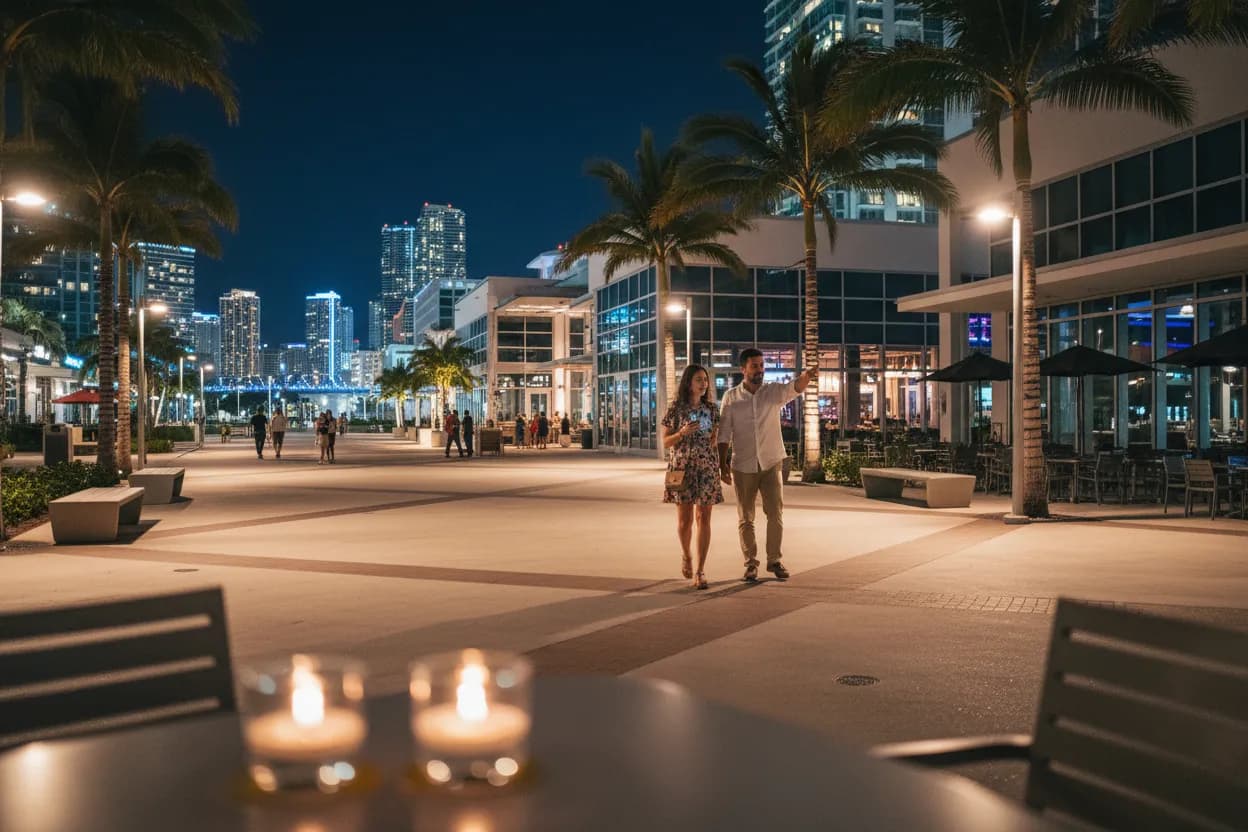
Verify the night’s program before leaving
The final check should happen the same day, not last week. Open the venue’s official page, confirm the address, look for tonight’s program, scan reservation or entry notes, and verify whether there is a private event, live music, DJ, holiday schedule, or access notice. If the venue uses a separate official ticketing or reservation page, use that page for current details. Do not infer availability from a reposted flyer or a friend’s memory.
Then check the public-city layer. The official Greater Miami & Miami Beach site maintains event and destination information, including featured events, music, arts and culture, neighborhoods, webcams, accessible travel resources, and seasonal programs. Miami-Dade Transit provides rider alerts, service updates, transit tracking, and a trip planner. Those are the sources to consult before you leave, especially if your night depends on Metromover, Metrorail, Metrobus, or a specific station elevator.
For Tuesday, August 11, 2026, build the plan with today’s information only. Do not assume a future weekend notice applies tonight, and do not assume a normal pattern overrides an official alert. A calm Miami night is less about finding the mythical perfect bar and more about verifying the room, the route, and the exit before the group is already standing in the heat.
Tags: #Miami #MiamiBars #MiamiNightOut #QuietBars #MiamiNightlife #DowntownMiami #SouthBeach #Wynwood #LittleHavana #MiamiTransit #MiamiSpice #AccessibleMiami #AskKarpo #BeforeYouGo
Sources consulted: miamiandbeaches.com · miamidade.gov · miamidade.gov
All trademarks are the property of their respective owners.
Ask Karpo first
Ask Karpo first before you turn a sensitive headline into a messy night out. Send your starting neighborhood, time window, noise tolerance, food needs, and transit preference, and Karpo can help you pressure-test a public Miami plan with a nearby backup.