The plaza at Lincoln Center operates on two clocks. The first is mechanical, precise, tied to the fountain's evening illumination sequence. The second is human, slightly ragged, governed by the curtain schedules of three major performance venues whose audiences spill onto the same stone expanse within minutes of one another. If you time it right—and in fall 2026, with a new slate of productions drawing full houses—you can witness both rhythms in a single evening, standing in the right corner while light and water perform their choreography and the intermission crowds swirl past in silk and wool.
The Fountain's Evening Sequence
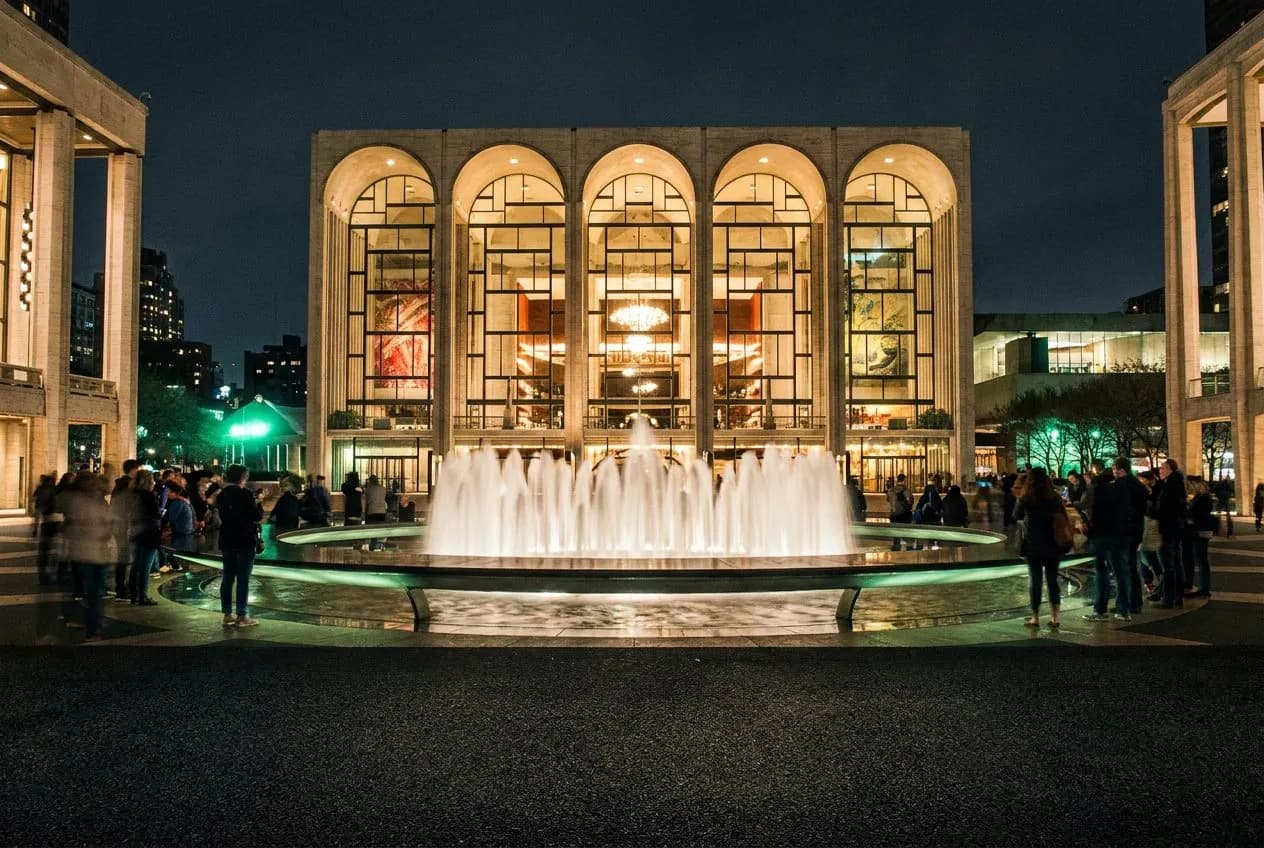
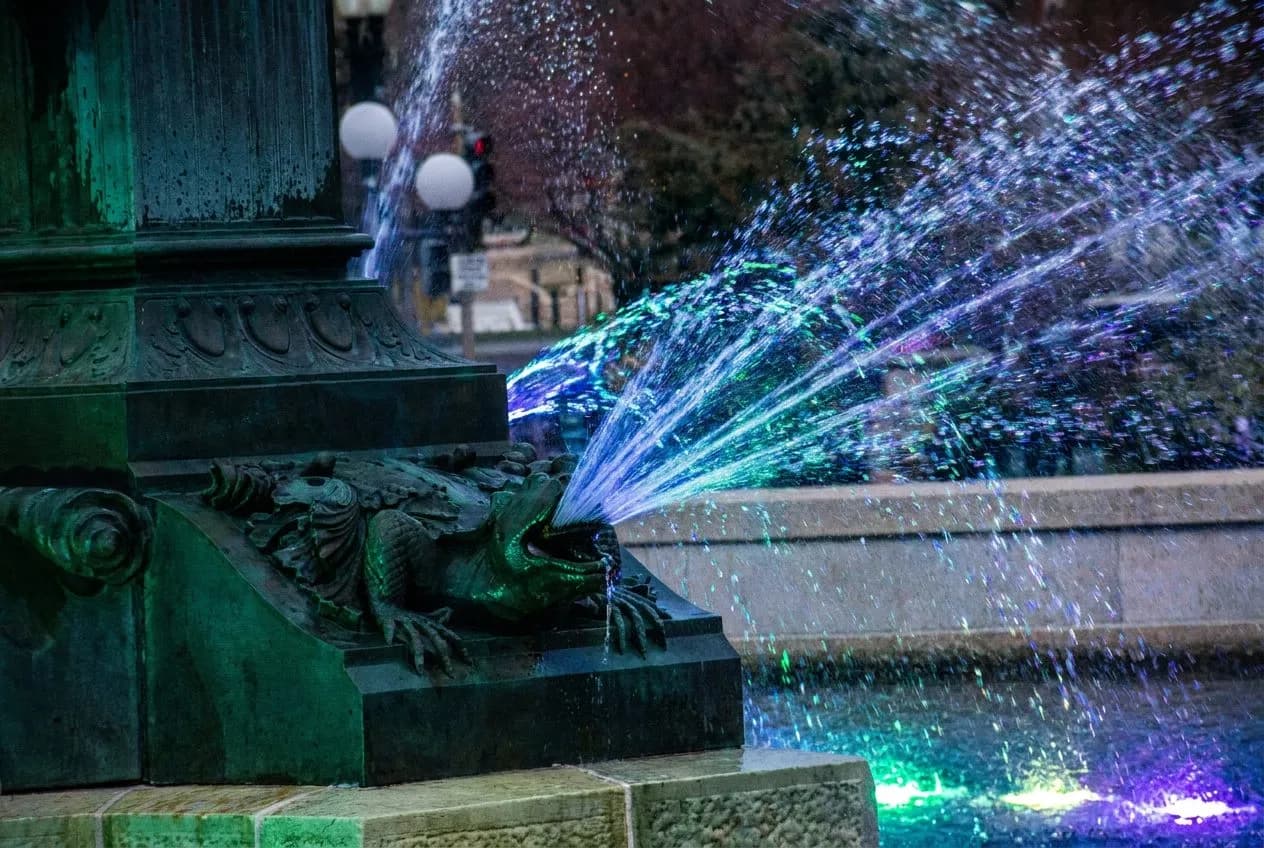
At exactly 7:30pm, the fountain's evening light sequence begins, and it runs through closing without pause. The pattern changes every eight minutes, cycling through six different color and water combinations: amber jets at medium height, then cool blue with the center spout climbing three stories, followed by violet side sprays, green with synchronized pulses, white at full theatrical volume, and finally a low amber wash that feels like a breath before the cycle starts again. The timing is unyielding. Visitors arriving at 7:28pm watch the last gasp of daylit water; those who arrive at 7:31pm are already one cycle behind.
The fountain sits at the heart of the plaza, surrounded by travertine and open sky. In late 2026, the stone has taken on the patina of decades—smooth where feet have worn it, slightly rough where water has splashed and dried ten thousand times. The sound is constant but not oppressive: a low whoosh punctuated by the higher splash of jets returning to the pool. On cooler fall evenings, a faint mist rises when the wind shifts east.
Claiming the Northwest Corner
The northwest corner of the plaza, near the reflecting pool, offers the clearest view of all three venue entrances and the fountain in one sight line. Photographers and dedicated people-watchers claim these spots by 7:00pm on performance nights, staking out the low wall with camera bags and thermoses. It's the geometry that makes it valuable: from here, you can track the fountain's color shifts, watch the early arrivals hurrying toward the concert hall, and see the opera house doors without craning your neck.
The reflecting pool itself is shallow, black-bottomed, designed to mirror the buildings rather than invite interaction. On calm evenings it duplicates the fountain and the surrounding lights with near-perfect fidelity. When the wind picks up, the surface fractures into ribbons of color. By 9:30pm, the corner is crowded three-deep, everyone positioning for the intermission wave they know is coming.
The 9:45pm Synchronized Exodus
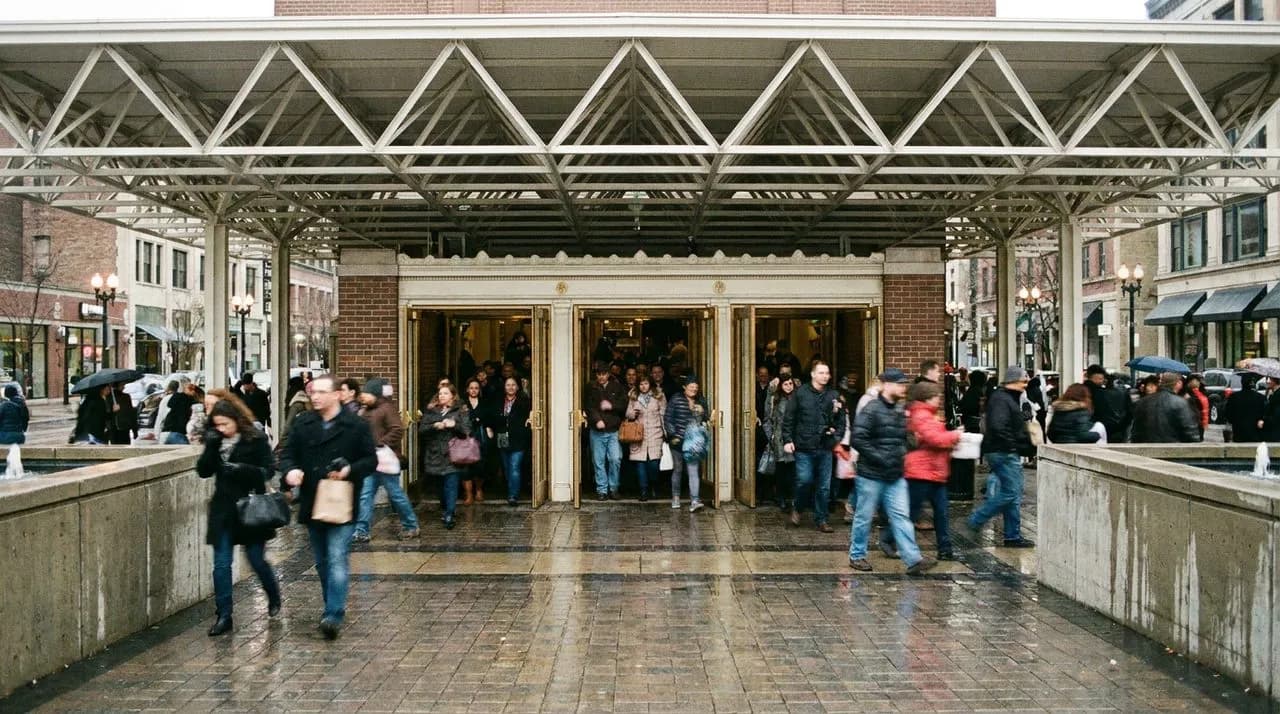
Intermission at all three major venues is staggered within a five-minute window around 9:45pm, creating a synchronized plaza rush as audiences exit for air and refreshments. The timing is never perfectly simultaneous—one hall breaks at 9:43pm, another at 9:46pm, the third somewhere in between—but the effect is the same. Doors open, and suddenly the plaza is full: patrons in dark jackets and bright scarves, program books rolled in hand, conversations mid-sentence as they step from carpeted lobbies onto cold stone.
The energy is distinct from the pre-performance arrival. Before curtain, people move with purpose, checking tickets and watch faces. At intermission, they drift. Some head straight for the fountain, leaning against the edge to feel the mist. Others cluster near the entrances, unwilling to stray far. A few break toward the street, chasing a quick bite at one of the nyc restaurants that line the nearby blocks, though ten minutes is barely enough for a glass of wine and a return sprint.
The sound changes, too. The fountain's steady whoosh is now layered with voices, laughter, the occasional ring of a phone. You can hear snatches of opinion—someone loved the soprano, someone else found the choreography too spare. The plaza, so carefully composed in stone and water, becomes briefly chaotic, human, warm.
The Ten-Minute Window
Intermission lasts exactly as long as it needs to: ten minutes, sometimes twelve if the stagehands are slow. The crowds know this. Around the nine-minute mark, you see people glance at their phones, crush empty cups, start the slow drift back toward the doors. The northwest corner empties first, photographers packing up their gear. The fountain continues its eight-minute cycle, indifferent to the human tide.
By 9:57pm, the plaza is nearly clear again. Stragglers hurry across the travertine, and the ushers reappear at the entrances, patient but firm. The second act is about to begin. What remains is the fountain, mid-cycle, and the few non-ticket-holders who came only to watch the light and water and the twice-nightly choreography of a crowd that knows exactly where it needs to be.
What to Watch For in Fall 2026
The fall 2026 season has brought full houses and a renewed energy to the plaza. Productions are selling well, and the intermission crowds feel denser than they did a year ago. The fountain's evening sequence remains unchanged—same six patterns, same eight-minute intervals—but the human overlay is richer. Arrive early if you want the northwest corner. Stay through both cycles, 7:30pm and 9:45pm, if you want the full picture. Dress for the temperature; the plaza offers no shelter, and the mist from the fountain adds a layer of damp to October and November evenings.
Practical notes
Lincoln Center is on Manhattan's Upper West Side, generally centered near Columbus Avenue between West 62nd and West 66th Streets. The plaza is publicly accessible. Nearest subway: 1 train to 66th Street–Lincoln Center. Parking is limited; garages operate along Amsterdam Avenue. The fountain's evening light sequence begins at 7:30pm nightly and runs through closing; intermission timing varies by performance but typically falls between 9:40pm and 9:50pm. The plaza is wheelchair accessible. Bring layers for cool evenings and a camera if you plan to capture the light cycles. Verify performance schedules directly with each venue.
Tags: #LincolnCenter #UpperWestSide #NYCPlazas #FountainChoreography #RightOnTime #PerformanceNights #ChicagoReaders #Fall2026 #PublicSpaces #UrbanObservation #NYCAfterDark #IntermissionRush #CityRhythms #TravertineAndLight #PlazaWatching
Please drink responsibly. Must be of legal drinking age.
Sources consulted: Lincoln Center Wikipedia · Lincoln Center Official Site · NYC Landmarks Preservation Commission · MTA 66th St–Lincoln Center Station · Time Out New York: Lincoln Center
All trademarks are the property of their respective owners.