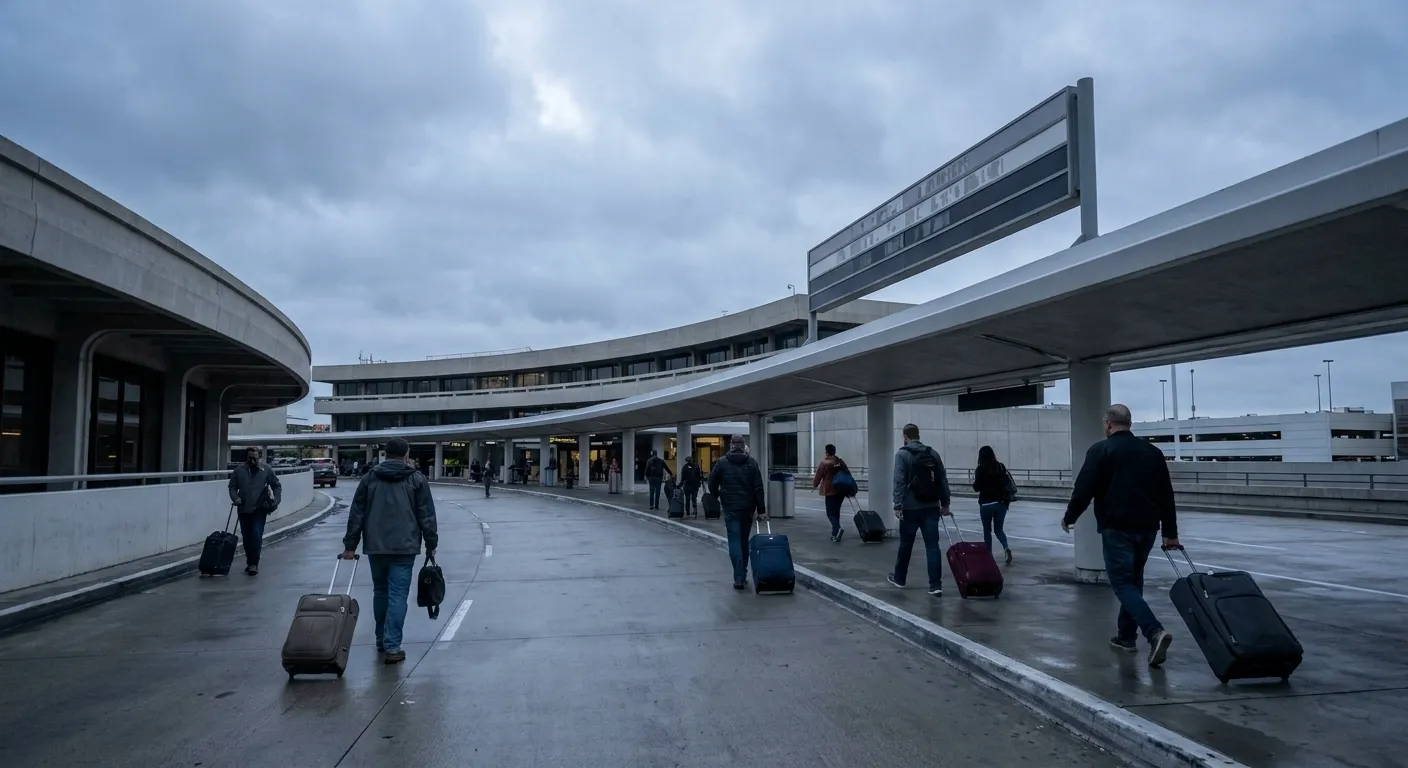
A plume of smoke in the cabin of an American Airlines flight bound for Dallas this past spring set off a chain reaction that now affects every traveler passing through Los Angeles International Airport with a portable phone charger. What began as a isolated incident—a lithium-ion power bank overheating inside an overhead bin—has become the catalyst for the strictest battery regulations US airlines have ever imposed. At LAX, the TSA and carrier staff now enforce a two-device limit, a 100 watt-hour ceiling, and a mandate that any charger in use must remain visible for the duration of the flight. For the millions of passengers who rely on backup batteries to survive cross-country trips, these rules represent a sharp departure from the lax oversight of previous years, and understanding them before you reach the checkpoint can save your device—and your departure time.
Karpo tracks live TSA wait times at LAX terminals and alerts you to changing battery regulations before you pack, so your portable chargers clear security without surprises.
Why airlines tightened battery rules after smoke incidents
Lithium-ion battery fires aboard aircraft have climbed steadily over the past three years, prompting both the TSA and individual carriers to revise what passengers can bring and how they must store it. The catalyst for the latest wave of restrictions came in spring 2026, when an American Airlines flight experienced smoke in the cabin traced to a portable charger that had been charging inside an overhead bin. No one was injured, but the incident forced an unscheduled landing and grounded the aircraft for inspection. Similar events on other carriers—some involving power banks wedged into seat pockets or buried in checked luggage—convinced regulators that clearer, stricter enforcement was overdue.
Starting May 1, 2026, American Airlines formalized a policy limiting passengers to two portable chargers per person, each capped at 100 watt-hours, and requiring those devices to remain visible and within arm's reach during flight. That means no stowing a power bank in the overhead bin, no tucking it into a backpack under the seat if you're actively using it, and no plugging the charger itself into the aircraft's seat power to recharge mid-flight. The airline's crews now conduct spot checks at the gate, and flight attendants are trained to confiscate non-compliant devices before pushback. Other major US carriers have adopted similar rules, but American's policy is among the most explicit about the "visible and within reach" requirement.
The TSA's existing rule—lithium batteries must travel in carry-on bags only—has not changed, but enforcement at checkpoints has intensified. At Los Angeles International Airport, screeners now pull aside any bag with a power bank in checked luggage, and passengers face the choice of retrieving it, discarding it, or missing their flight. The 100 watt-hour threshold covers nearly all consumer portable chargers; anything larger requires airline approval in writing, and devices rated above 160Wh are banned outright. For travelers who rely on battery packs to keep phones and laptops alive during cross-country hops, understanding these limits before arriving at LAX can mean the difference between breezing through Terminal 3 and scrambling to repack at the checkpoint.
What 100 watt-hours actually means for your gear
Most portable chargers do not advertise their capacity in watt-hours; instead, manufacturers print milliamp-hour ratings—10,000mAh, 20,000mAh, 30,000mAh—on the casing. To convert that number into watt-hours, divide the milliamp-hours by 1,000, then multiply by the battery's voltage, which is typically 3.7 volts for lithium-ion cells. A 20,000mAh power bank at 3.7V works out to 74Wh, comfortably below the 100Wh ceiling. A 27,000mAh unit—common among heavy-use travelers—lands right at 99.9Wh, still legal but cutting it close. Anything above 27,000mAh at standard voltage will exceed the limit and require advance airline approval, which American and other carriers grant sparingly and only for professional equipment.
The confusion arises because some power banks list only milliamp-hours, omit voltage entirely, or round watt-hours in marketing materials. At LAX, TSA officers and gate agents now carry conversion charts and occasionally use handheld calculators to verify compliance on the spot. If your charger lacks a legible label showing watt-hours or the math needed to derive it, you risk having it confiscated even if the actual capacity is legal. Travelers who fly frequently out of Los Angeles International have started photographing their power bank labels and saving the images in their phone's photo library, ready to display if questioned. Some also use a permanent marker to write the calculated watt-hour figure directly on the device, a low-tech solution that speeds up gate checks.
How LAX checkpoints handle battery screening now
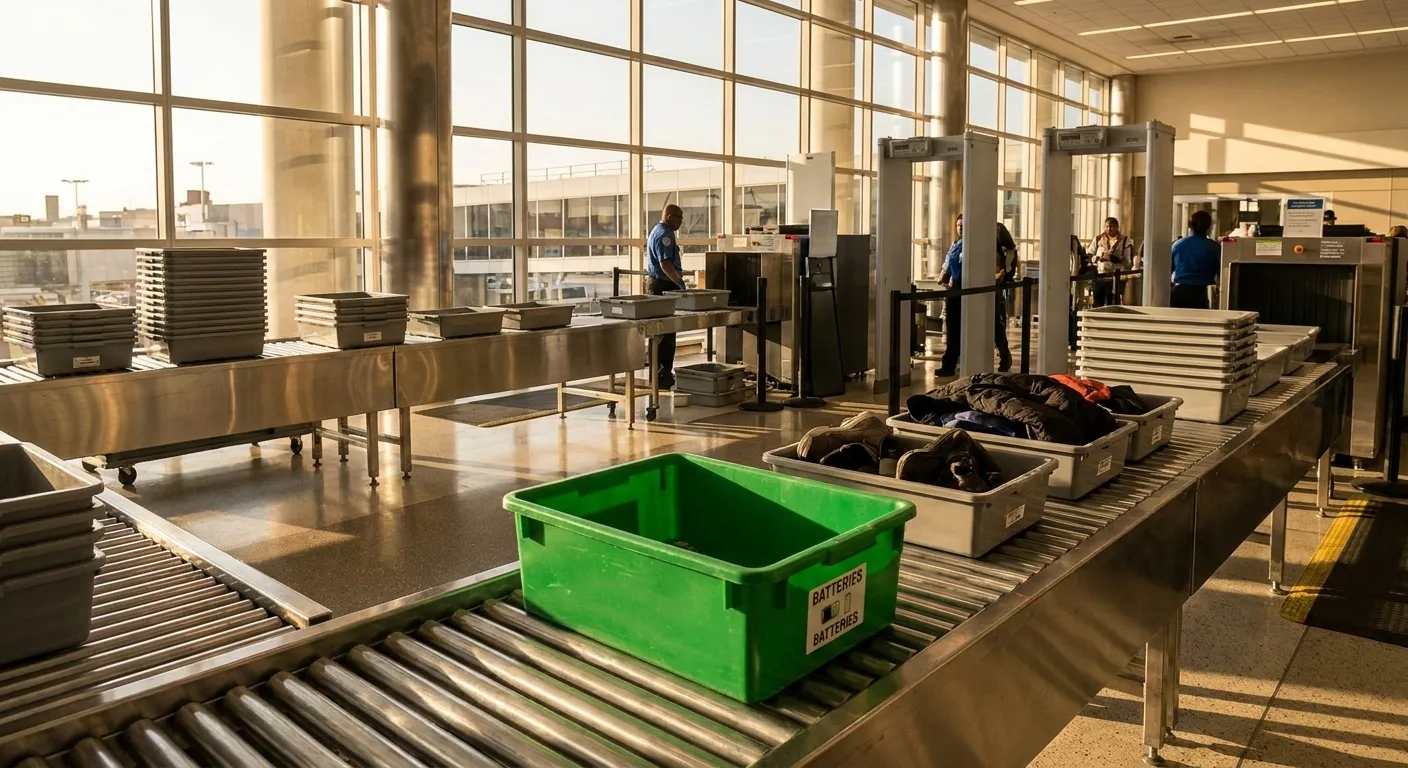
Los Angeles International's nine terminals each run TSA checkpoints with slightly different layouts, but the battery-screening protocol has become uniform across all of them since mid-2026. Passengers are instructed to remove laptops and tablets from bags as always, and now power banks must come out too, placed in a separate bin or alongside the laptop. Terminal 3, which American Airlines dominates, has introduced color-coded bins: gray for electronics, blue for shoes and belts, and a new green bin specifically for lithium batteries and portable chargers. Using the green bin signals to screeners that you've pre-sorted, often resulting in faster processing through the X-ray conveyor.
If a power bank appears in a checked bag during the random screening that happens after you've dropped luggage at the ticket counter, TSA staff will page you over the terminal intercom or send a text if you've enrolled in the agency's notification system. You then have roughly ten minutes to return to the check-in area, retrieve the device, and either pack it in your carry-on or dispose of it in a battery-recycling drop box that LAX installed near each ticket counter in early 2026. Missing that window means your checked bag travels without you, and you'll spend the rest of your trip trying to recover it at your destination. The recycling bins are clearly marked and monitored, so there's no risk of someone else walking off with your charger, but you won't get it back.
Gate agents at American's LAX gates—concentrated in Terminal 3 but also operating some flights out of Terminal 4 and the regional satellite—now perform visual inspections of carry-ons as passengers board. They're looking for power banks that lack watt-hour markings or that passengers have buried deep in a bag. If you're asked to pull out a charger and it's not immediately accessible, the agent may deny boarding until you can demonstrate the device meets the 100Wh limit and will remain visible during flight. This secondary check adds a minute or two per passenger, so arriving at the gate early—at least 20 minutes before scheduled departure for domestic flights—gives you buffer time if you need to rearrange your bag.
Where to stow your power bank once you're aboard
American Airlines' new policy requires that any portable charger in use must stay in the seatback pocket, on the tray table, or on your lap. It cannot be charging inside a bag under the seat, even if that bag is at your feet and theoretically within reach. The rule stems from fire-response protocols: flight attendants need to see smoke or smell burning plastic immediately, and a charger hidden in a backpack delays detection by critical seconds. If you're not actively using the power bank—say, your phone is already at 100 percent—you can leave the charger in your personal item under the seat, but it must be powered off and disconnected from any cables.
The seatback pocket is the most common storage spot, but on older aircraft the pocket may be shallow or already stuffed with the inflight magazine, safety card, and airsickness bag. Passengers have taken to folding the magazine lengthwise and sliding it behind the safety card to create a deeper pocket for the charger. If you're in a bulkhead or exit row without a seatback pocket, the tray table becomes your only option besides your lap, and you'll need to secure the charger so it doesn't slide off during turbulence. Some travelers use a rubber band or hair tie to anchor the cable to the tray table's hinge; others simply rest the charger inside a half-open laptop or tablet case that sits flat on the tray.
You cannot plug your power bank into the aircraft's seat power outlet or USB port to recharge it during the flight. That restriction surprised many passengers when it took effect, because recharging a portable battery from a wall outlet at home is routine and safe. The difference is that aircraft electrical systems are more sensitive to power surges, and a malfunctioning charger drawing current can trip circuit breakers that affect multiple rows of seats. You can still charge your phone, laptop, or tablet directly from the seat power—only the act of recharging the power bank itself is prohibited. If you need your charger topped up, do it in the terminal before boarding; LAX has added dozens of charging stations with both AC outlets and USB-C ports near every gate in the American Airlines terminals, all clearly marked and free to use.
What happens if your charger exceeds the limit
Travelers who show up at LAX with a power bank rated above 100 watt-hours face three options: check it as cargo through American's special handling process, which requires advance approval and costs extra; leave it with someone outside security who can take it home; or surrender it to TSA for disposal. The first option is rarely granted for personal travel—airline approval is reserved for professional film crews, medical equipment operators, and similar cases where the larger battery is essential and documented. The second option works only if you have a friend or family member willing to drive to the airport and meet you pre-security, a logistical hassle that most people skip. The third option is permanent: once you drop the charger into the TSA disposal bin, it's gone.
Some passengers attempt to remove the battery cells from an oversized power bank and carry only the compliant portion, but TSA and airline staff are trained to recognize modified devices and will reject them as potential safety hazards. Others try to argue that their 30,000mAh charger is actually two separate 15,000mAh units that happen to share a casing, but the watt-hour calculation applies to the entire device as a single unit. The only reliable workaround is to travel with two separate, smaller power banks—say, two 20,000mAh units at 74Wh each—which the rules explicitly allow and which together provide more capacity than one oversized charger.
If you're flying American out of LAX and realize at the gate that your charger is non-compliant, gate agents will confiscate it and issue a receipt for the device, which you can theoretically claim at a lost-and-found later. In practice, few passengers bother, because the charger is held for only 30 days before being recycled or destroyed. The airline does not compensate you for the value of the confiscated item, so the best strategy is to verify your power bank's rating before leaving home. Most manufacturers list watt-hours in the fine print of the user manual or on their website's product page, even if the label on the device itself shows only milliamp-hours.
Practical notes
Los Angeles International Airport is located at 1 World Way in Westchester, about 18 miles southwest of downtown Los Angeles and directly accessible via the 405, 105, and 110 freeways. Terminal 3, American Airlines' main hub, sits on the north side of the central terminal loop; if you're arriving by rideshare or taxi, request drop-off at Terminal 3 Departures to minimize walking. The airport's LAX-it rideshare lot, a short shuttle ride from the terminals, can add 15 minutes to your journey, so factor that into your arrival time. TSA PreCheck lanes are available in Terminal 3 and can cut security wait times from 30 minutes to under 10 during peak morning hours. Power bank compliance is checked at two points—the main security checkpoint and again at the gate—so keep your charger accessible in an outside pocket of your carry-on and have the watt-hour rating visible or documented on your phone. If you need to purchase a compliant power bank after surrendering an oversized one, the Hudson News shop in Terminal 3's post-security concourse stocks several models under 100Wh, though at airport markup; buying before you leave home is cheaper.
Tags: #LAXTravel #PowerBankRules #AmericanAirlines #TSARegulations #LithiumBattery #FlightSafety #LosAngelesAirport #CarryOnRules #BatteryFire #TravelTips2026 #WestchesterLA #AirportSecurity #PortableCharger #InFlightSafety #LAXDepartures
All trademarks are the property of their respective owners.
Ask Karpo first
Flying out of LAX soon and unsure whether your portable charger meets the new rules? Ask Karpo to decode the watt-hour label on your power bank, find the fastest security lane at your terminal, or check real-time gate changes for American Airlines flights—all without leaving your iMessage thread.