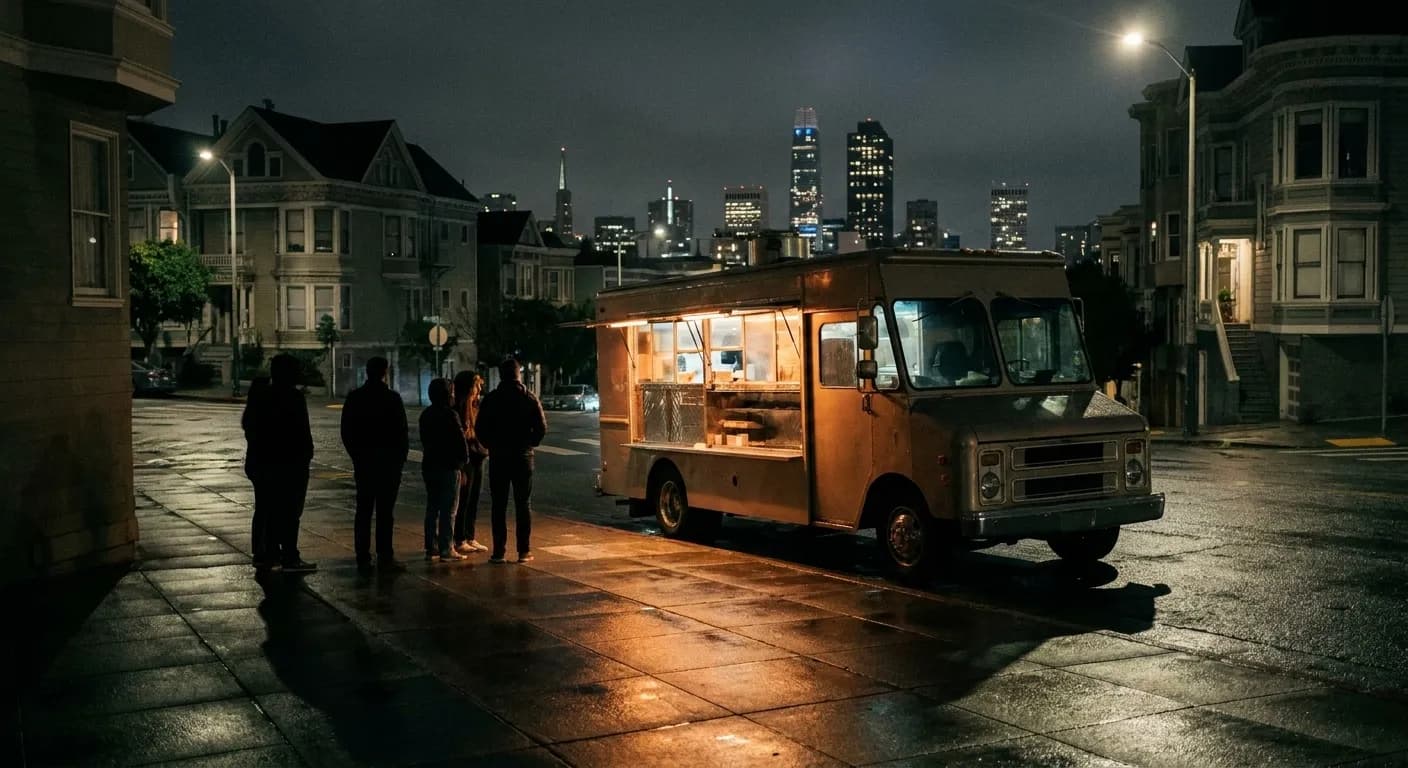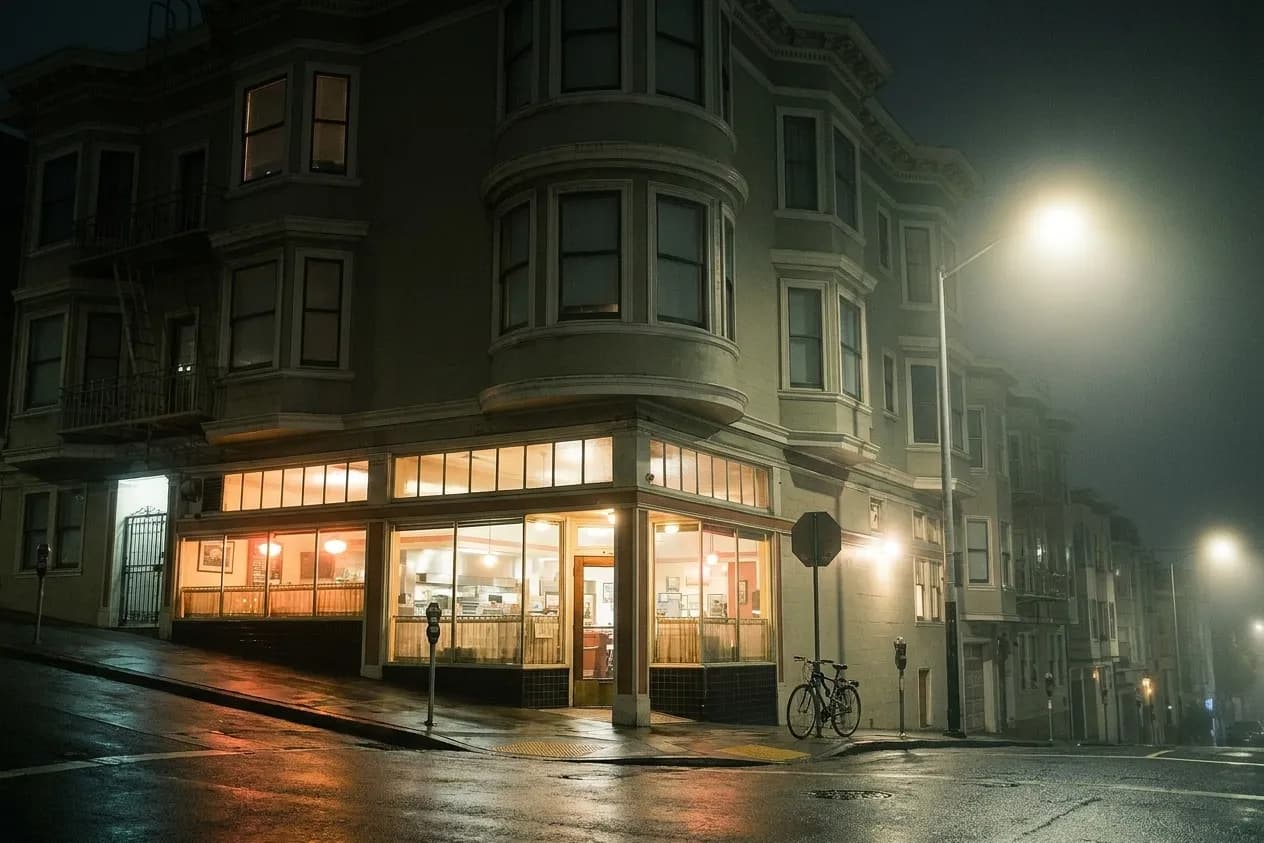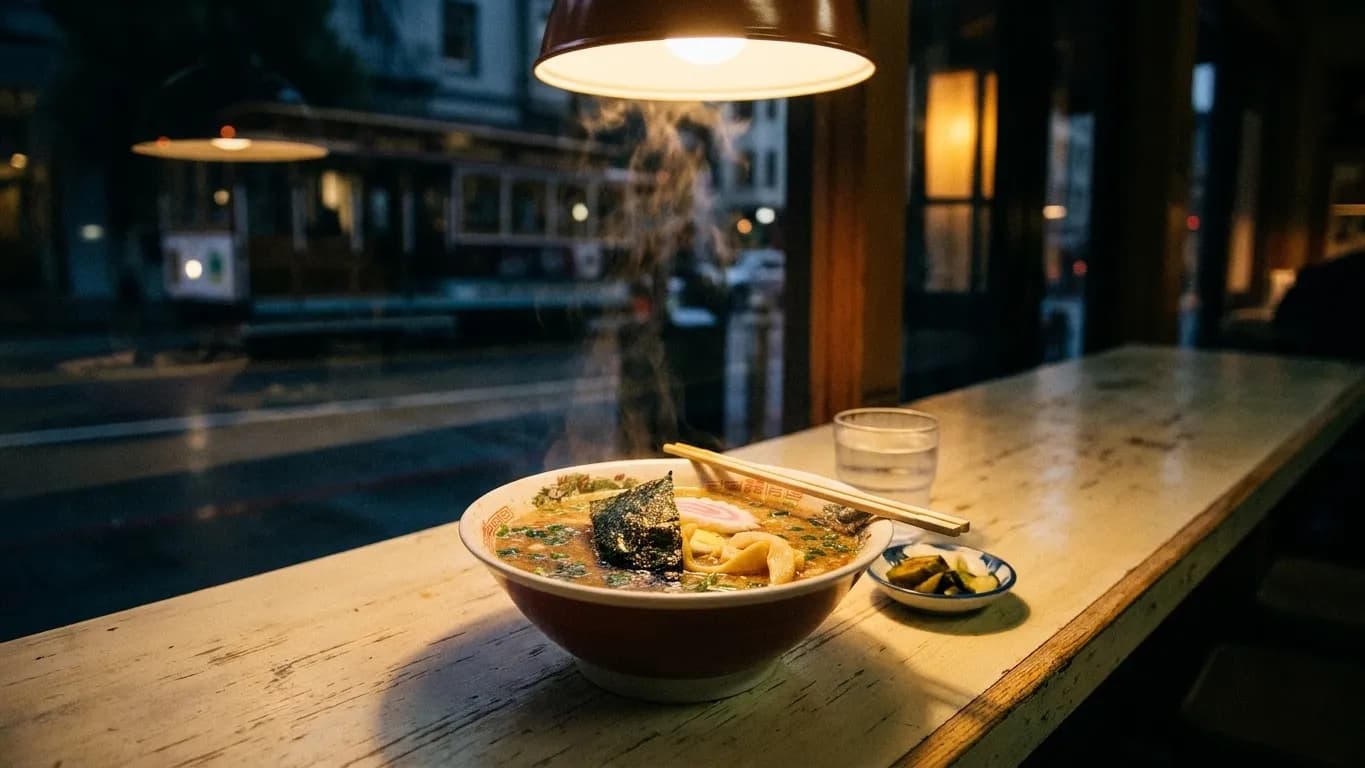
In Tokyo, ramen is late-night food because the shops are tiny, the format is fast and the rent structure supports a counter open until four. In San Francisco almost none of that applies, which is why the search for the best ramen in San Francisco after eleven turns up a much shorter list than the city's dozens of ramen shops would suggest. Most of them close at nine thirty, and understanding why makes the exceptions easier to find.
Most ramen counters here stop earlier than you think. Ask Karpo which ones are still taking orders tonight.
Why the kitchens close early
Broth is the constraint. A shop making tonkotsu or a serious shoyu base has a fixed quantity that took twelve to eighteen hours and cannot be extended at ten at night. When it is gone, the shop is done, regardless of what the posted hours say. This is why arriving at nine to a shop that closes at ten can still mean being turned away, and it is not the shop being difficult.
The second factor is staffing. A ramen counter runs on two or three people, and a late service requires a second shift that the volume does not support on a Tuesday. The shops that do run late are almost always the ones attached to a bar trade, where the drinks revenue justifies keeping the kitchen on.
Where the late bowls actually are
Japantown and the blocks around it hold the most options and close earlier than people expect — the mall-adjacent shops keep shopping-centre hours. The genuinely late layer is in the Tenderloin and along the Geary corridor, where a handful of counters run past eleven and one or two go later at weekends, catering to a mix of bar staff, students and people coming out of venues.
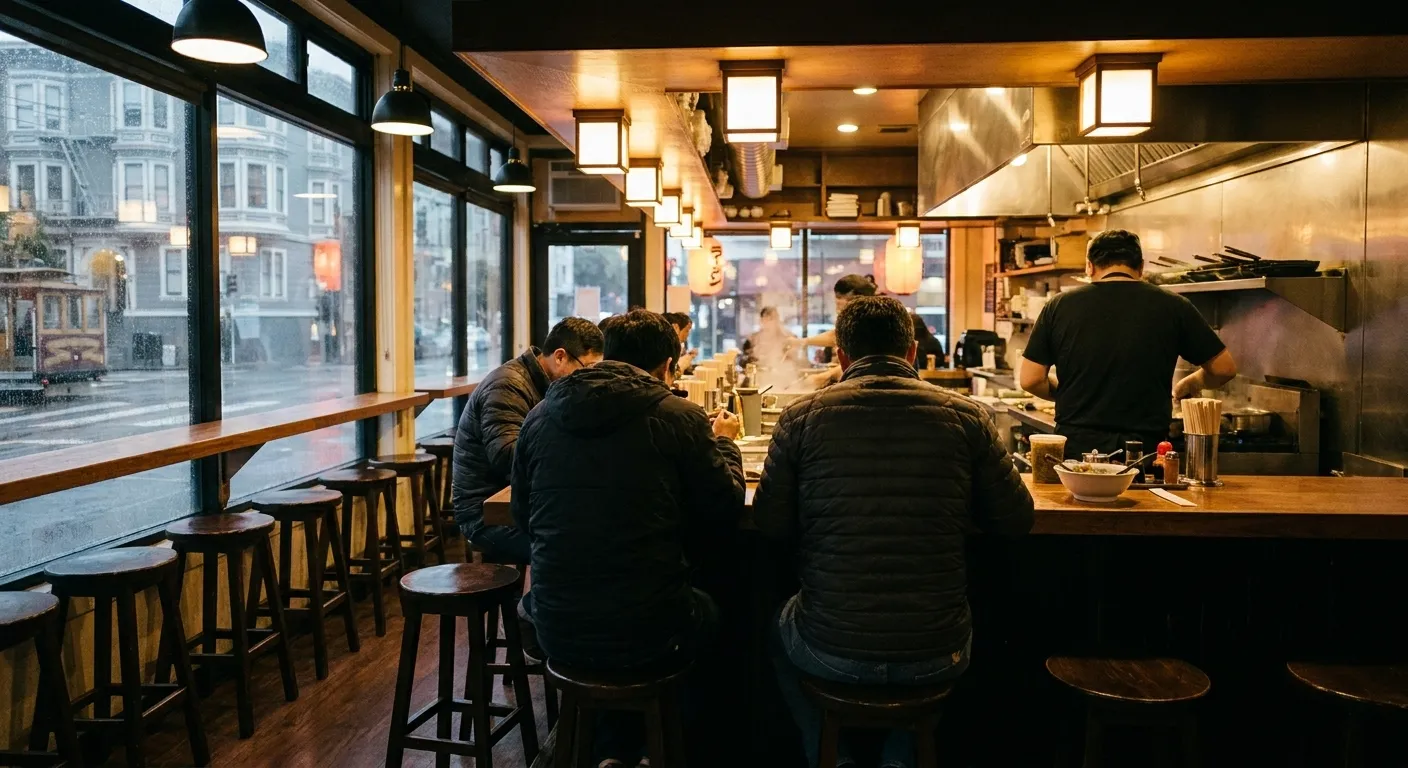
The other pocket is the Inner Richmond, where a cluster of Japanese and Korean places along Clement and Geary keep later hours than the citywide average, largely because the neighbourhood eats late. That area is the most reliable answer for a bowl between ten and midnight, and it is consistently overlooked in favour of Japantown.
What to order when the kitchen is winding down
Ask what is left rather than what you want. Late in the service, a shop may be out of the specialty broth, out of chashu, or down to one egg. A counter that tells you honestly is doing you a favour, and ordering the thing they still have plenty of is reliably better than ordering the thing they are scraping the bottom of.
Shio and shoyu bowls hold up better late than tonkotsu, because the lighter broths are made in larger volumes and are less prone to reducing into something oversalted over a long service. If the pork broth has been on since eleven in the morning, the eleven-at-night version of it is a different and usually saltier product than the lunchtime one.
The tsukemen and mazemen alternative
Worth knowing because they solve the late-service problem structurally. Dipping noodles and brothless bowls do not depend on a large pot of soup, which means shops that serve them can run later without running out. If a place offers both and it is late, the brothless option is frequently the better-executed dish at that hour.
They are also better food for someone who has been drinking, which is the honest context for most late ramen orders. A concentrated dipping broth and cold noodles is easier to eat at midnight than a large bowl of hot soup, and the leftover broth diluted with soup stock at the end is the traditional and correct finish.
The queue problem
The best ramen counters in this city have queues at every hour they are open, and late is no exception — in fact the eleven o'clock queue at a good shop is often longer than the eight o'clock one, because everyone has had the same idea. Counters seat eight to twelve people and turn slowly, so twelve people in front of you is forty-five minutes rather than fifteen.
The workaround is to go to the second-best shop, which in this category is a much smaller drop in quality than the queue difference suggests. Ramen in San Francisco is generally good; the gap between the celebrated shops and the merely solid ones is narrower than the wait times imply, and at midnight the calculus is not close.
Etiquette that speeds everything up
Know your order before you sit down, eat at a reasonable pace, and do not linger over an empty bowl at a counter with people waiting. This is not fussiness — the economics of a twelve-seat room depend on turnover, and the shops that stay open late are the ones where customers understand that. Forty minutes for a bowl is generous; ninety is why a shop stops serving late.
And if a shop says last order at eleven, that is a real deadline rather than an approximate one. Turning up at ten to eleven and being seated is normal; turning up at five past and asking is how counters end up posting earlier hours the following month. The late layer in this city is small and it survives on people not straining it.
It is worth calling ahead if you are coming from any distance. A thirty-second phone call establishes whether the broth has held out, which no app will tell you and which is the single most common reason a late ramen trip ends in a walk back to the car. Most counters will answer even mid-service, and most will be straight with you about what is left.
Tags: #SanFrancisco #RamenSF #LateNightSF #Japantown #InnerRichmond #BestRamenSF #SFEats #Tsukemen #AfterDark #NoodleShop #BayArea #SFNightlife #LateNightEats
All trademarks are the property of their respective owners.
Ask Karpo first
Ask Karpo which ramen counters near you in San Francisco are still open, what time last orders are, and whether there is a queue.