Miami is a late city with an early reputation. The clubs on the Beach and in Wynwood do not empty until three or four, the industry that staffs them eats after that, and there is a whole layer of the city's food that only exists between midnight and sunrise. What there is not, in most of Miami, is walkability — late-night eating here is a driving route between a small number of reliable anchors, and knowing the anchors matters more than knowing any single restaurant.
Late kitchens in Miami close and reopen with the season and the night of the week, and almost none of them update a listing. Ask Karpo what is still serving on your side of the causeway right now.
Start on Calle Ocho
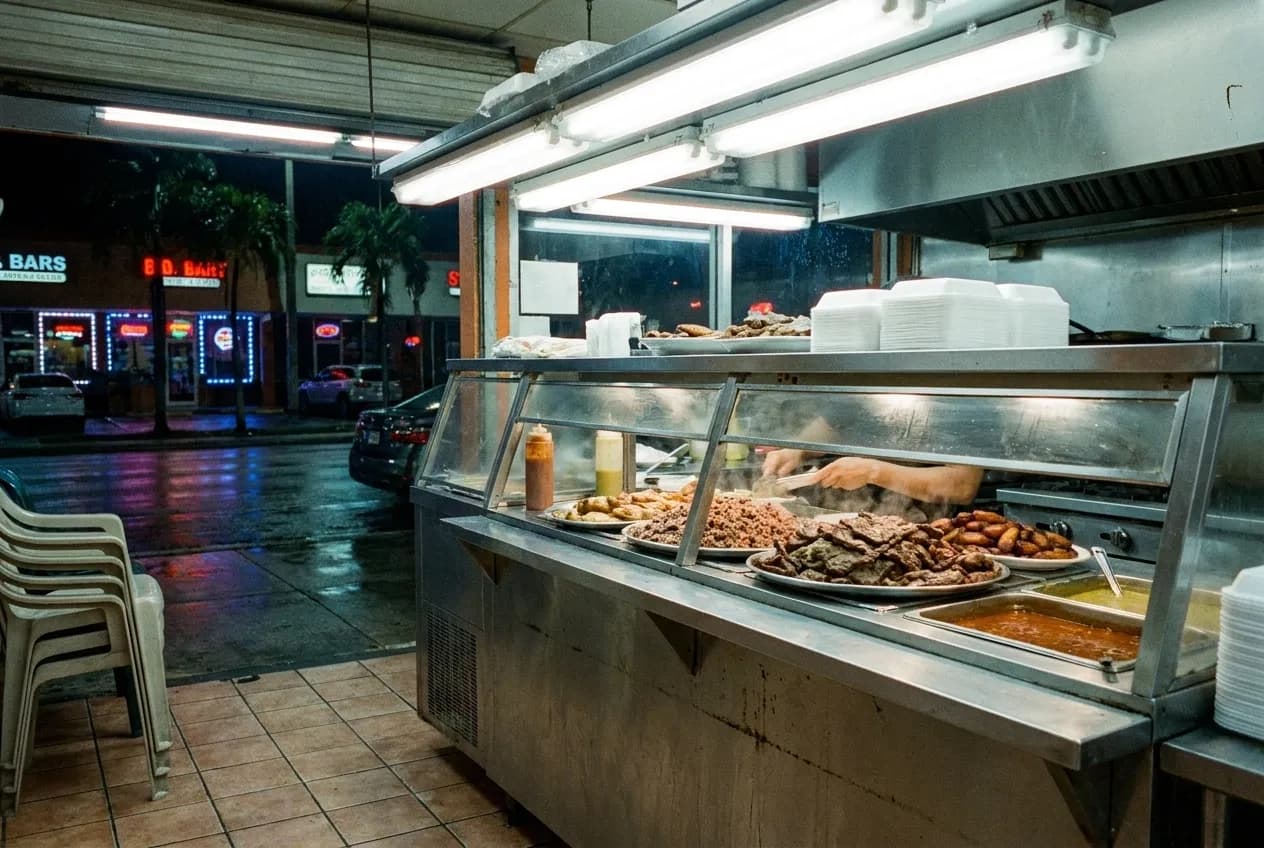
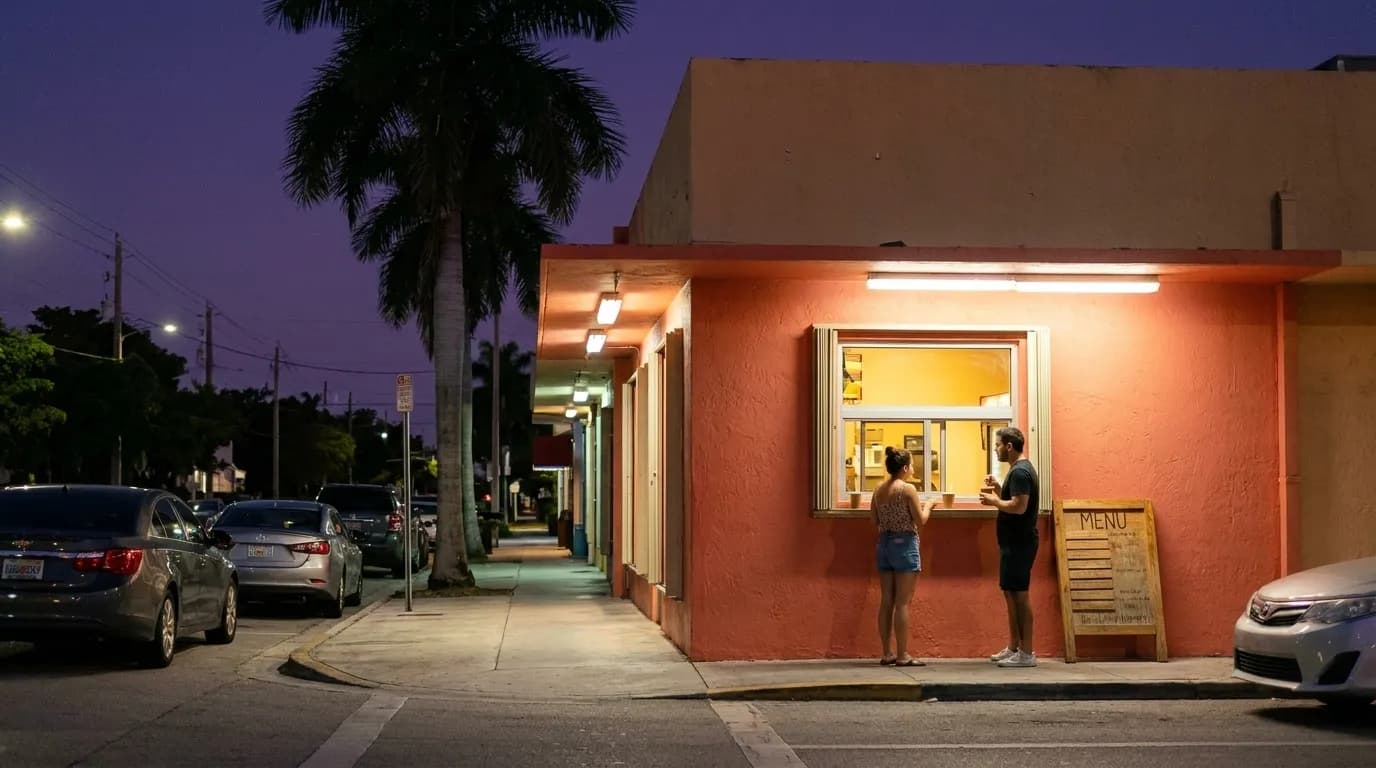
Little Havana's stretch of Southwest Eighth Street is the spine of late eating in Miami proper. The format to look for is the ventanita — the walk-up window on the side of a cafeteria, serving cafecito, croquetas and pastelitos to people standing on the pavement. Ventanitas keep hours that have nothing to do with the dining room behind them, and several on Calle Ocho are effectively open whenever anyone is awake. A colada, which is a small cup of sweetened espresso with a stack of thimble cups, is the standard thing to buy and to share; ordering one for yourself alone is the clearest possible sign you are new.
Versailles at 3555 SW 8th Street has been the neighbourhood's civic centre since 1971, and its ventanita is the most reliable late window in the city. La Carreta, a few doors down at 3632, plays the same role with longer dining-room hours. Both are places where a two-in-the-morning plate of arroz con pollo is entirely normal and nobody will ask what you have been doing.
The Beach after the clubs
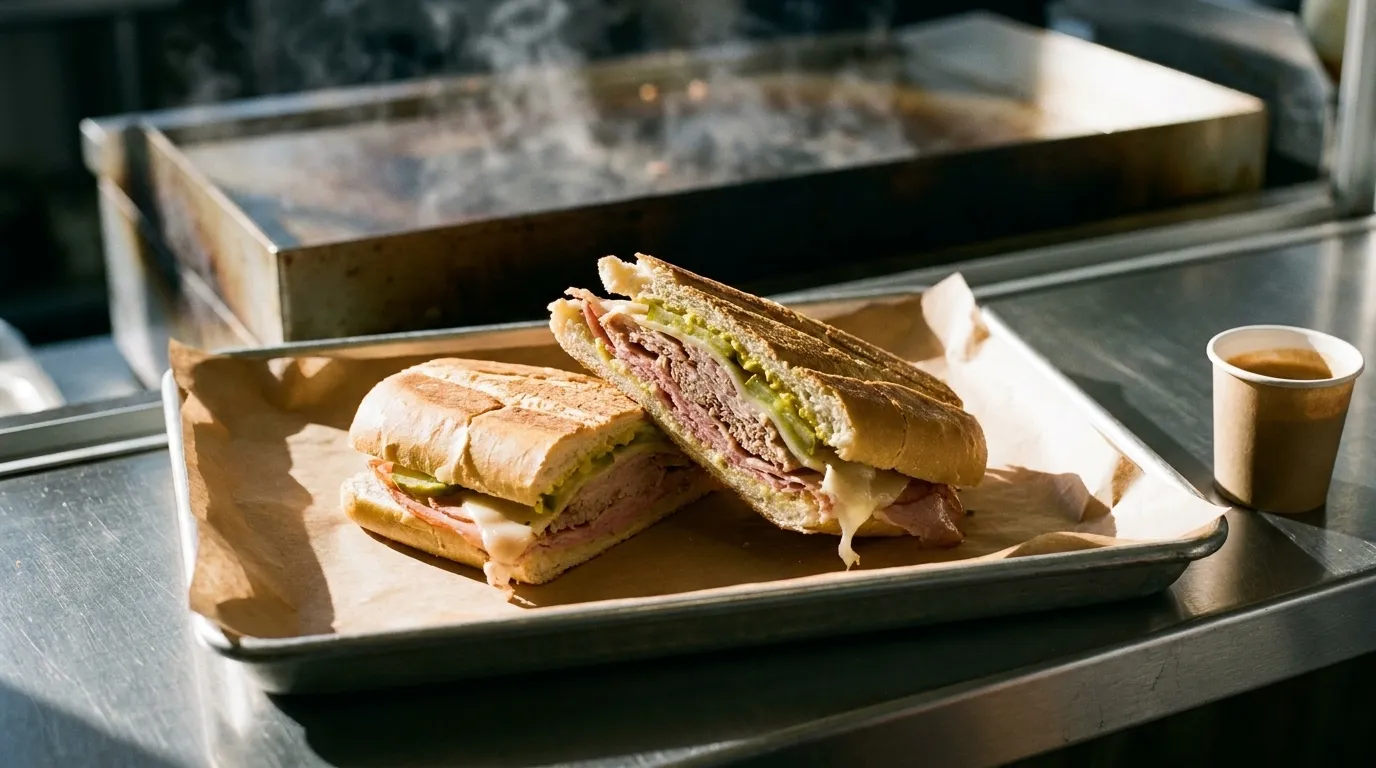
South Beach's late-night eating is concentrated on Washington Avenue and the blocks either side of it, and it is a genuinely different scene from Calle Ocho — faster, louder, and priced for people who have been spending money all night. Pizza by the slice, Cuban sandwiches and arepas are the three dominant formats, all of them counter operations designed to feed a queue leaving a club at the same moment.
The useful rule on the Beach is to eat before the clubs close rather than after. Between about one and two-thirty the counters are calm and the food is being made to order. From three the queue is twenty deep, the same counter is reheating rather than cooking, and the difference in quality is large. If you are eating at four, you are better off driving back over the causeway than joining a line on Washington.
There is a third Beach option that most visitors never find: the residential blocks north of Lincoln Road, up through the low-numbered forties and fifties along Collins. The restaurants there serve the people who live on the Beach rather than the people visiting it, and several of them keep genuinely late kitchens without any of the door policy or the pricing that comes with being on Washington. It is a five-minute drive from the clubs and a completely different night.
The 24-hour anchors
Every late city has a small number of rooms that never close, and they matter out of proportion to their number because they are the fallback when a plan collapses. In Miami these cluster in three places: Little Havana, the corridor around Coral Way, and the industrial edges near the airport where shift work runs through the night. A diner or cafeteria near a hospital or an airport is the single most reliable late bet in any American city, and Miami is no exception.
The other twenty-four-hour category here is the Latin bakery. A panadería with a lit case at three in the morning is selling pan cubano, guava pastelitos and croquetas to people going to work rather than people coming home from a night out, and the food is fresher at that hour than it will be at noon. These are not places with an online presence; they are places you notice from a car and remember.
Getting between them
The causeways are the constraint that shapes the whole night. Getting from South Beach to Little Havana means the MacArthur or the Julia Tuttle, and at two in the morning that is a fifteen-to-twenty minute drive that feels longer than it is. Rideshare surge is at its worst between two and three-thirty, when the Beach empties, and it drops noticeably after four. If the plan is to eat on the mainland, leaving the Beach before two is worth real money.
Parking is the other tax. Little Havana has street parking that is easy after midnight and impossible at eight in the evening; South Beach is the reverse of nothing — it is difficult at all hours, and the municipal garages are the only sane option. Budget for the garage rather than circling.
Practical notes
Cash still helps at ventanitas and older bakeries, where a card minimum is common and the machine is sometimes simply unplugged at that hour. Spanish is the working language on Calle Ocho at three in the morning; a few words are appreciated and pointing works fine. Hurricane season and the summer months compress late hours across the city — many kitchens that run to four in March close at two in August, and the change is rarely announced anywhere. Finally, check the night of the week: Miami's late layer is at full strength Thursday through Saturday and thins substantially on Sunday and Monday, when a room that is normally open until dawn may close at midnight.
Tags: #Miami #MiamiFood #LateNightEats #CalleOcho #LittleHavana #SouthBeach #Ventanita #CubanFood #MiamiNightlife #OpenLate #FoodNearMe #MiamiEats #24Hours #WynwoodMiami
All trademarks are the property of their respective owners.
Ask Karpo first
Want to know which ventanitas and counters are actually open at the hour you are reading this, and how long the causeway will take right now? Ask Karpo for a live late-night route between the Beach and Little Havana before you get in the car.