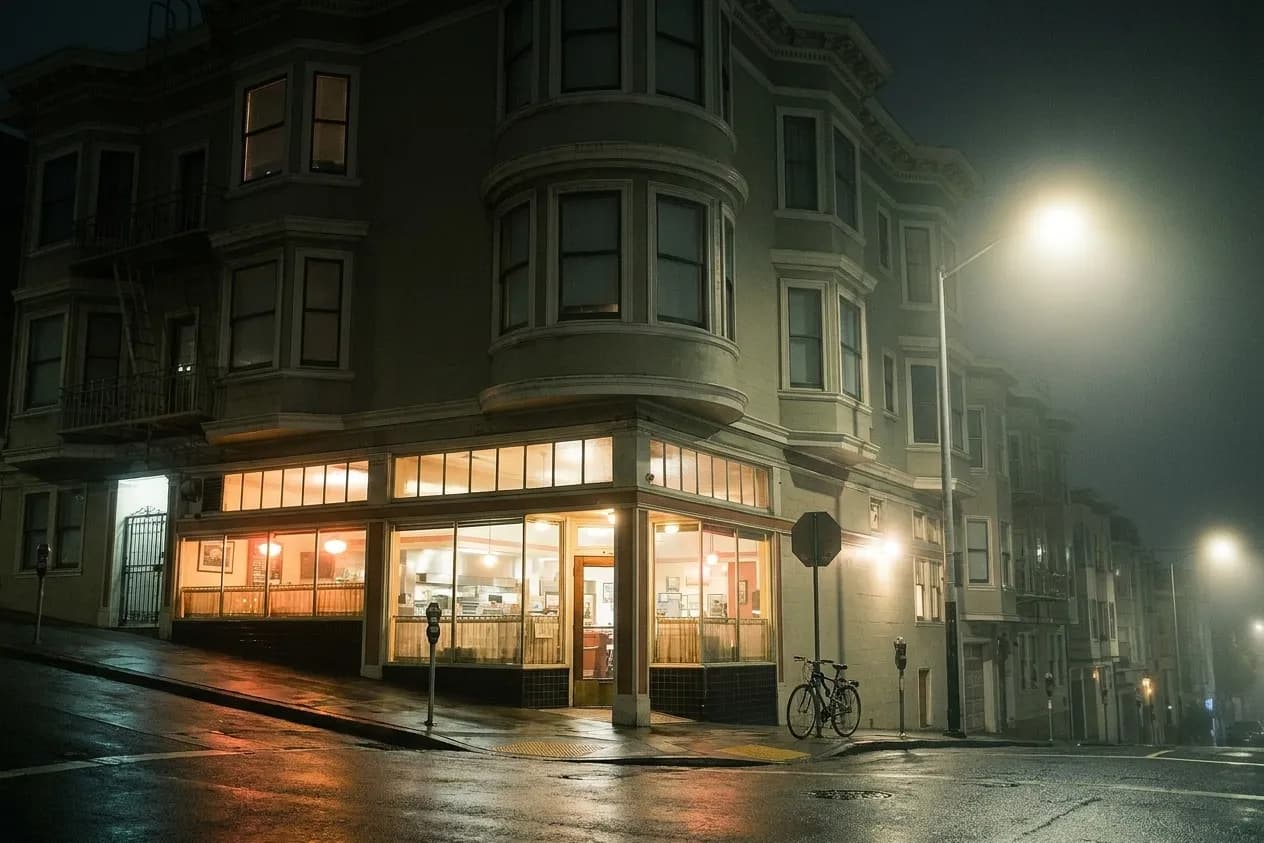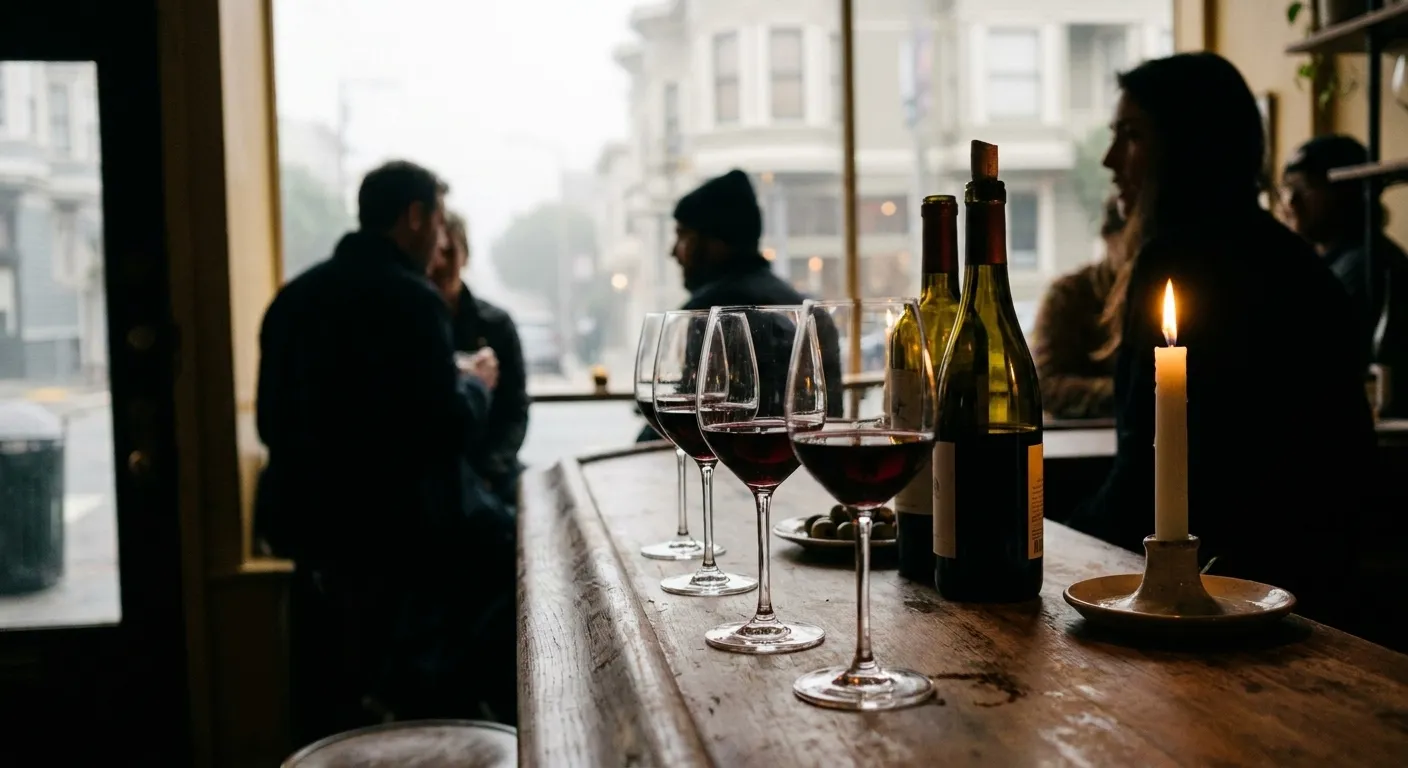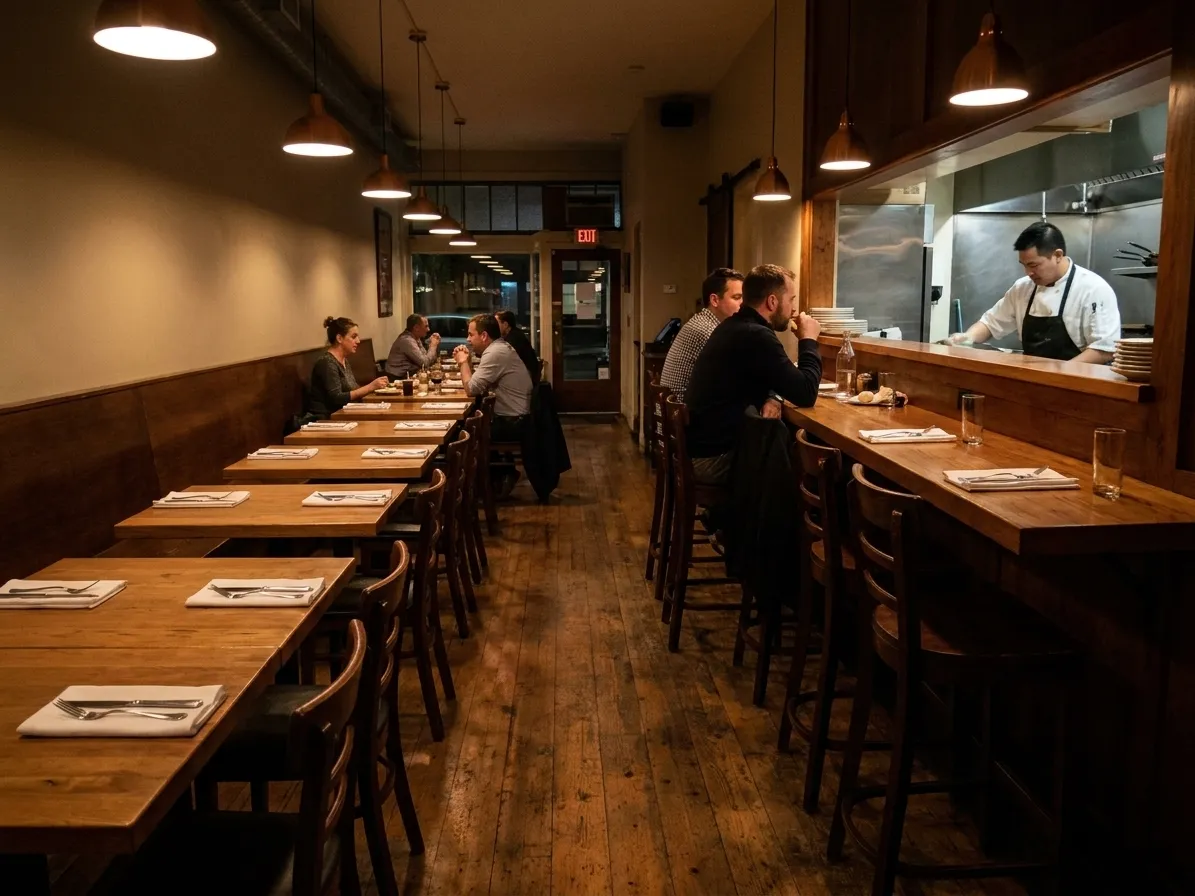
Eating late and dining late are different activities, and San Francisco does one of them much better than the other. Grabbing something at midnight is easy enough if you know the right few blocks. Sitting down to an actual dinner past 11 — a table, a menu, a glass of something, a conversation that runs an hour — is a narrower proposition, and the rooms that do it are not simply the ones that stay open longest. They are the ones that built their evening around the late shift.
A proper late dinner is a different experience from grabbing food late, and the rooms that do it well are not the ones that merely stay open. Tell Karpo the hour and the neighbourhood and it will find a table rather than a counter.
Who is eating at 11:30, and why it matters
Late dining rooms in this city fill with a specific crowd: restaurant and bar staff who just finished, hospital and hotel workers coming off shift, people leaving a show, and the small number of diners who genuinely prefer eating late. That crowd changes the room in ways that make it better. They are regulars, they know what is good, they tip well and they are not in a hurry — which means the kitchen keeps standards up rather than treating the last ticket as a chore.
It also means the best late rooms are frequently near clusters of other restaurants rather than near nightlife. Follow where the people who work in food eat after work and you will find the genuinely good late kitchens faster than any list will take you.
The menu shrinks, and that is usually good
Most kitchens serving past 11 run a reduced menu. That sounds like a downgrade and generally is not. A late menu is the dishes that hold up under a smaller brigade and sell reliably — which is to say, the things the kitchen is best at. Anything requiring a long fire or three components assembled at the last second comes off; the pasta, the roast, the bar snacks that the whole room orders stay on.
The practical consequence is to order from the late menu rather than asking whether something from the full menu is still possible. The answer may be yes, and the dish will be worse. A short late list cooked by two people who have been on since four is more reliable than a long one cooked reluctantly.
The bar is the late dining room
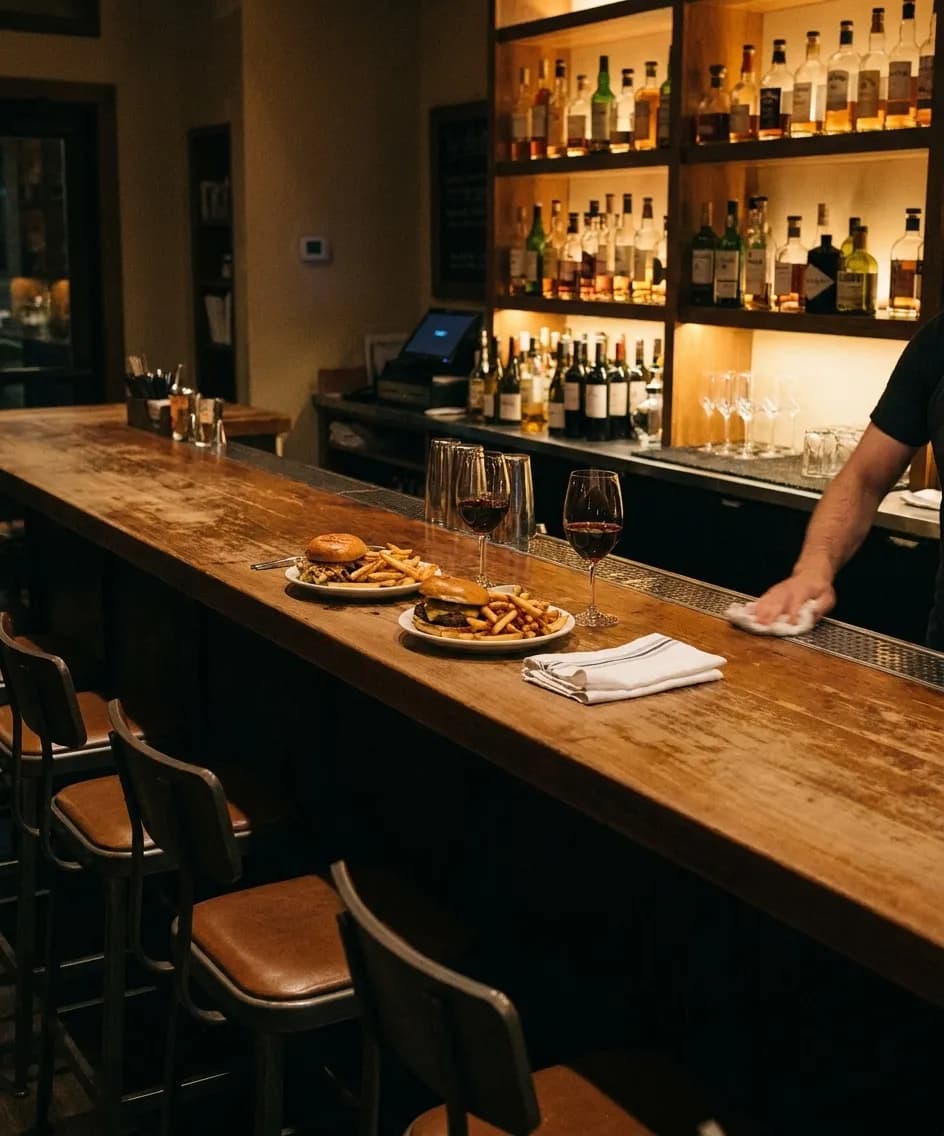
In San Francisco the bar counter is where late dinner actually happens. Many rooms stop seating tables well before they stop serving at the bar, because the bar is staffed anyway and a couple of seats do not require holding a section open. If you are arriving after 11 without a booking, ask for the bar directly instead of asking for a table — the success rate is dramatically higher.
Bar seats also solve the pacing problem. A late meal at a table can feel like you are keeping people from going home; at the bar you are part of the winding-down, which is a far more comfortable way to eat at midnight.
Booking still works, and almost nobody does it
The late slot is the most available reservation in the city and the least used. A table at 10:45 or 11 is frequently open at rooms that are impossible at 7:30, and holding a reservation changes your standing with the kitchen entirely — a booked table gets cooked for, whereas a walk-in at the same hour may be told the kitchen has closed.
If you have a specific restaurant in mind rather than a specific neighbourhood, the late booking is the single most reliable route in. It costs nothing and it converts the evening from a search into a plan.
Where the late tables are
San Francisco's late dining is concentrated rather than spread out, and it follows the same dense corridors that everything else late does — around Chinatown and North Beach, the Mission's main streets, and parts of the downtown edge near the theatres and hotels. Weeknights run substantially earlier than weekends, often by an hour or more, and posted hours usually reflect the weekend.
Check the kitchen's last order time rather than the closing time, and confirm on the day rather than relying on a listing. Late hours are the first thing to change when staffing is tight, and they change without much announcement.
What to order after eleven
The late menu rewards a particular kind of ordering. Anything braised, baked or simmered has been going for hours and is at its best; anything fried or grilled to order is being cooked by a smaller team on equipment that is being broken down around them. Pasta, soups, roast meats, a good salad and the bar snacks are the reliable end of a late list.
Drinking follows the same logic. The cocktail programme is often the first thing to simplify late, while the wine list stays fully available because it requires nobody to build anything. A glass of wine at 11:45 is usually a better version of itself than an elaborate cocktail made by the one person left behind the bar.
Tags: #SanFrancisco #SF #BayArea #NightsOut #BarHopping #AfterDark #LateNight #Dinner #SFEats #SFGuide #ExploreSF #SFLocal #SFWeekend #SFNights
Sources consulted: sfchronicle.com · eater.com · sfstandard.com
Please drink responsibly. Must be of legal drinking age.
All trademarks are the property of their respective owners.
Ask Karpo first
Karpo is a proactive AI assistant that lives in iMessage. Ask it for a late table and it will tell you who is genuinely still seating.