 Allied Woodshop Woodworking Workshop: Sunday Club $60
Weekend Plans
Collab Woodworking Workshop: $35 Public Classes in LA
Collab MakerSpace at 651 Clover Street offers public woodworking classes from $35, with 24/7 member access and a full shop north of downtown LA.
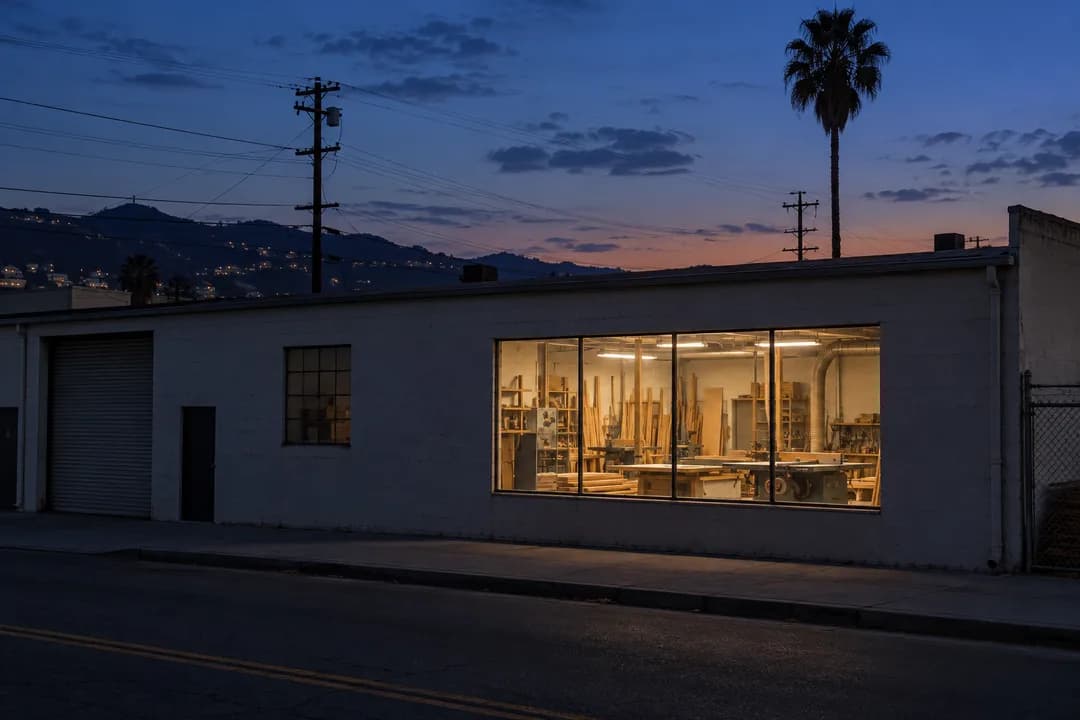
Collab MakerSpace is a woodworking workshop at 651 Clover Street, Los Angeles, CA 90031, just north of Downtown Los Angeles. Its own site describes a 3,500-square-foot community workshop with a full woodshop, metalshop, makerspace and public classes. The clearest low-commitment entry is Intro to Woodworking: a two-hour, hands-on class priced at $35 with materials included. Members get 24/7 access to the workspaces, while the public can reserve listed classes. The site publishes a daily 9 am to 5 pm listing for the space, so use that daytime window for a class visit and treat member access as a separate benefit.
The first useful distinction is between a class and open-shop access. A visitor who wants to learn should start with an event marked for the public rather than assume a day pass includes machine training. Collab says classes are open to everyone, members and non-members, and that some membership tiers receive class discounts and priority when seats are limited. The schedule says classes typically run from one to three hours and may be divided into beginner, intermediate or advanced segments. That format rewards a small, specific goal: arrive knowing whether you want to make a first pair of projects, practice a process, or decide whether a membership makes sense.
Start with the $35 Introduction
Intro to Woodworking is the natural first booking because the official class description calls it a two-hour hands-on course in basic woodworking with power tools. Students leave with their first two completed projects, and the $35 price includes all materials. That is cheaper than buying lumber, hardware and a beginner tool set before you know whether you enjoy the work. Expect a guided project rather than unrestricted machine time. Wear closed-toe shoes and clothes that can collect sawdust. The best place to stand is where you can see the instructor's setup, because a clean cut depends as much on clamping, measuring and feed direction as on the tool itself.
The site also lists a Parent-Teen Intro to Woodworking class at $35 including all materials. That is a useful choice for a pair who wants a shared project without buying two separate kits. Collab's broader class menu covers wood working, metal working, 3D printing, graffiti and spray-can work, CNC routers, laser cutters, craft skills, and costume or prop design. Those neighboring subjects matter because a simple wooden object can lead to a second visit for a routed detail or a small prop component. Read the event description and choose the entry level that matches your experience instead of booking an advanced-sounding session for the title alone.
Collab is more than a two-hour lesson. Its site presents a community workshop where members can imagine, build and create across several disciplines, with shop tables and a wide variety of tools. The woodshop is best understood as a path from instruction to repetition. The first class shows you the rhythm of a shared room; later visits can focus on accuracy, assembly or finishing. That community angle is also visible in the teaching model: members can propose and teach classes through a revenue-sharing arrangement. A beginner may be building a first box beside someone using the shop for a more ambitious fabrication project, which is exactly the kind of visual lesson a classroom cannot provide.
Membership is the part to consider only after a class. The homepage says memberships provide 24/7 access to workspaces, shop tables and tools, while the class page says members can receive discounts and priority access when seats are limited. The public class is the low-risk test. If you return often, ask about the membership tier that covers the machines you actually plan to use rather than paying for a broad list of tools you will not touch. That distinction keeps the experience affordable and prevents the common beginner mistake of buying access before learning the shop's rules, storage expectations and booking rhythm.
Weekend and weeknight projects
The woodworking visit does not have to end with the first class. Collab says public sessions usually run from one to three hours, and its broad workshop program lets a beginner return for a more focused process. Choose a second booking only after you know which part of the first project you enjoyed: measuring, cutting, assembly or surface work. If a class listing is divided into beginner, intermediate or advanced segments, stay with the level that matches your tool experience. A slower second visit is more useful than rushing into a complex build because the shop's real value is repetition with support, not simply access to a room full of machines.
The makerspace's class page also names private woodworking activities for groups of all sizes, most days of the week. That option works for a team outing or a family group that wants a guided build rather than separate public tickets. Ask for a defined project and a realistic skill level before reserving. The official site also lists metalworking, movie-prop making, CNC and spray-paint activities, so a private session can be shaped around a wider fabrication idea. For an individual, the public $35 introduction remains the cleaner starting point; for a group with one shared goal, private instruction can reduce the time spent deciding what to make.
Private lessons and bringing a friend
If a public schedule does not fit, Collab's site says it can do private woodworking activities for groups, most days of the week. The useful question is not whether a private booking sounds premium; it is whether everyone wants the same project. Bring a friend only if you can agree on the pace, the finished object and the amount of hands-on time each person expects. A two-hour public class already includes materials and a defined introduction, while a private session may be better for a birthday, team activity or family build. Keep the plan small enough that the instructor can finish it without turning the visit into a rushed demonstration.
Bench space, services and the founders
The homepage says memberships provide 24/7 access to workspaces, shop tables and a wide variety of tools. That benefit is most valuable to someone who has already taken an introduction and knows which machines the next project needs. Ask about storage, cleanup and any certification or orientation required before independent use; do not treat the public class price as a day-pass price. The $35 class is a learning product with materials included. Membership is ongoing access and should be judged by how often you will return, whether the hours fit your schedule and whether the shop's community model suits the way you work.
Collab also describes a community teaching model in which members can teach classes through revenue sharing. That detail explains why the workshop's menu extends beyond wood into CNC, laser cutting, craft skills and prop design. It is a place where a beginner can start with a small wooden project and later learn a digital or mixed-material technique from another maker. Keep a short project notebook: record the stock size, the cut order and the point where you needed help. Those notes are more valuable than trying to photograph every tool, and they make the next question to an instructor precise.
Visiting and planning your day
Collab MakerSpace is at 651 Clover Street, Los Angeles, CA 90031, with a public contact number of (310) 503-2365. The site's business listing gives a 9 am to 5 pm daily window, while the homepage separately describes 24/7 member access. Plan a public class inside the daytime listing, arrive early enough to sign in, and leave room for setup and cleanup. The space is north of Downtown Los Angeles, so a last-minute transit connection can be stressful if the class runs long. Read the specific event page before going, especially if you are booking a limited-seat session or a private activity.
The blocks around 651 Clover Street are more workshop-oriented than tourist-oriented, which is part of the appeal. Make the makerspace the anchor of the outing rather than promising yourself a long restaurant crawl before class. Arrive in clothes suited to sawdust, finish the build, then take a slower walk through the Northeast LA streets afterward. If you are meeting a friend, keep the post-class plan flexible: hands-on sessions can end with cleanup, a question about the next course or a short conversation with another maker. The neighborhood works best as a calm contrast to the concentration of a shared bench.
The judgment call is to choose the $35 public introduction before buying membership access. It includes materials, promises two completed projects and gives you a realistic two-hour test of the shop's pace. Skip the biggest possible build on day one; a compact project teaches more and leaves less pressure to rush. The $35 Parent-Teen Intro is the better pick for a pair, while private activities make sense for a group that can agree on one project. Save the class page in the Karpo APP, read the event details before booking, and arrive ready to learn one process well rather than trying to use every machine in the room.
Ask Karpo for more information.
Keep reading
- Allied Woodshop Woodworking Workshop: Sunday Club $60
 LA Woodshop Woodworking Workshop: Spoon Carving Weekends
 Community Woodshop LA Woodworking Workshop: Six Seats Max