 Los Feliz Nail Salon Walk In Finder for Broken Nail Repair
Neighborhood Guides

LA Transit Station Pitstop Finder: Hollywood View Break
Shape a 15-minute Hollywood/Highland pause with Karpo APP, pairing a viewing moment with a practical refreshment option and a clear B Line return limit.
A quick view near Hollywood/Highland can be a pleasant interruption to a B Line journey, but a fifteen-minute window is easy to spend looking for the view itself. Ask a transit station pitstop finder in the Karpo APP to compare a short elevated pause, a refreshment stop, and a simpler street-level alternative. Begin with the station exit you recognize and whether you must return to the train. The plan should help you choose one small experience without implying that a deck, doorway, or drink is immediately available.
Give the view a specific job
What do you want from the stop: a photograph, fresh air, a moment to sit, or a chance to point out the surroundings to a companion? Those are different requests. A photography pause may need a clear sightline but no food. Someone feeling tired might prefer a short rest even if the view is modest. Say which outcome matters so the app does not turn “scenic” into a long sightseeing itinerary that exceeds the time you meant to spend.
Use fifteen minutes as a discretionary allowance after accounting for the next transit commitment. The clock should start from a place you can identify, not from an assumed point outside the station. Getting from a platform to the right exit is part of your movement, and a viewpoint that requires another level adds a separate task. If the available leisure time becomes too small, keep the elevated idea for another visit and choose a straightforward pause along the route you already understand.
Decide between a view and a drink
Trying to complete both activities can make neither enjoyable. Ask Karpo to show a view-first plan and a refreshment-first plan, then choose based on your priorities. The first might leave the drink conditional on convenience. The second might make a brief look around optional after collection. This is a sequencing question, not a search for the most highly rated destination. An interesting refreshment counter is not useful if reaching it consumes the moment you hoped to spend outside.
Try telling the app: “I am near Hollywood/Highland and have a personal fifteen-minute pause before I continue on the B Line. I would like a short elevated look at the surroundings, prefer to avoid complicated stairs, and only want a drink if it fits the same route. Suggest a view-first sequence and a street-level fallback.” Add the exit or visible reference you know. Ask it to flag uncertain access instead of quietly treating the requested deck as established.
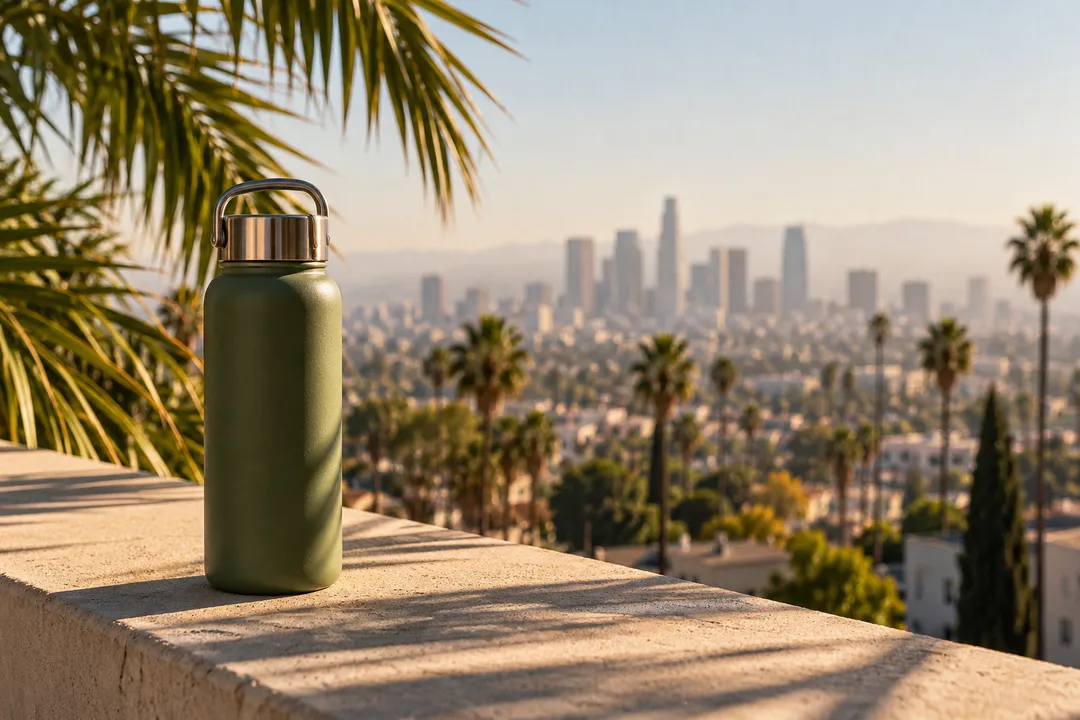
AI-generated hydration and city-view illustration; it does not document a specific accessible terrace or sightline.
Count the vertical part of the detour
A map can make a terrace look adjacent to the station while leaving the actual approach unclear. When a recommendation involves another level, ask how that changes your choices. You may need an escalator, stairs, a lift, or a particular entrance, and none should be assumed available from your position. The useful plan identifies those dependencies. You can then decide whether you understand enough of the route to begin it comfortably.
People with luggage, a stroller, limited stamina, or discomfort around heights should make those constraints explicit. A step-free preference is not satisfied merely by choosing a destination in a building with multiple levels. Keep access requirements attached to the whole approach and return. If the route cannot be described with enough clarity for your needs, choose the simpler alternative. A relaxed street-level look can meet the purpose of the break without forcing an elevated viewpoint.
Reserve a moment to actually look
Build the budget backward from the time you need to leave. Suppose you reserve five minutes for reorientation and the return, four for reaching and understanding the proposed spot, and six for the pause itself. That is an illustrative allocation, not a measurement of Hollywood/Highland. If the approach takes longer, reduce the optional drink or shorten the view. The return reserve should not become the balancing item whenever another activity expands.
Once you reach a suitable place, stop adding objectives. A quick photograph and a minute of observation can be enough. Do not use the remaining time to hunt for a marginally better angle while a companion waits elsewhere. Agree on a meeting point and the moment to move before anyone begins taking pictures. The point of this pause is to give the journey a small memorable scene, not to recreate a full Hollywood visit in a quarter hour.
Refresh without complicating the return
A sealed water or a small lidded drink may be easier to carry than something requiring a table. Explain whether you want hydration, caffeine, or a snack because those goals lead to different formats. If you already have water, let the plan focus on the view. If thirst is the main issue, a direct beverage stop may deserve the entire window. Karpo can help make that choice explicit instead of combining several weak priorities into one overfilled route.
Treat service speed as unknown. A menu that looks simple does not establish stock, payment time, or the pace of preparation. Make collection conditional on your remaining margin, and avoid placing an order that would leave you waiting beyond your turn-back point. You are not asking the app to submit or reserve a purchase. You are using it to decide which kind of refreshment would fit if the circumstances in front of you are suitable.
Have a fallback before the stairs
The best fallback for this task is lower effort: a brief look from a comfortable public approach, a shaded rest where you can establish access, or continuing the journey. It should not be another deck reached by a different set of stairs. Ask for a fallback that retains the quality you most value, such as daylight or a moment off your feet, while removing the uncertain part of the original route.
If the setting is crowded or the approach is confusing, describe that to Karpo and request a shorter revision. The app does not monitor the environment automatically. Your new information is what changes the plan. Avoid interpreting an earlier suggestion as proof of a safe path or unrestricted entry. Follow the responsible site's rules and station directions, and keep the photo opportunity subordinate to your comfort and the onward trip.
Practical notes for a short Hollywood pause
Carry the plan as three choices: where to attempt the view, which activity disappears first, and when to head back. Check your own departure target against the operator's information rather than a conversational estimate. Karpo APP can compare the route, preferences, and time you supply, but it does not establish live crowd density, access permissions, lift status, or an open counter. Those limits belong in your understanding of the plan, without turning the article into a list of unsupported local promises.
A satisfying fifteen-minute break might finish with one photograph, a little daylight, and no purchase. Another might be a cool drink followed by an immediate return. Either can be the right result when the choice matches your priorities. Use the transit station pitstop finder to keep the decision small enough that you can enjoy it, then leave with the station return still familiar and the next part of the journey clearly in view.
Ask Karpo for more information.
Keep reading
- Los Feliz Nail Salon Walk In Finder for Broken Nail Repair
 Highland Park Nail Salon Walk In Finder for Retro Manicures
 Koreatown Nail Salon Walk In Finder for K-Beauty Nail Looks