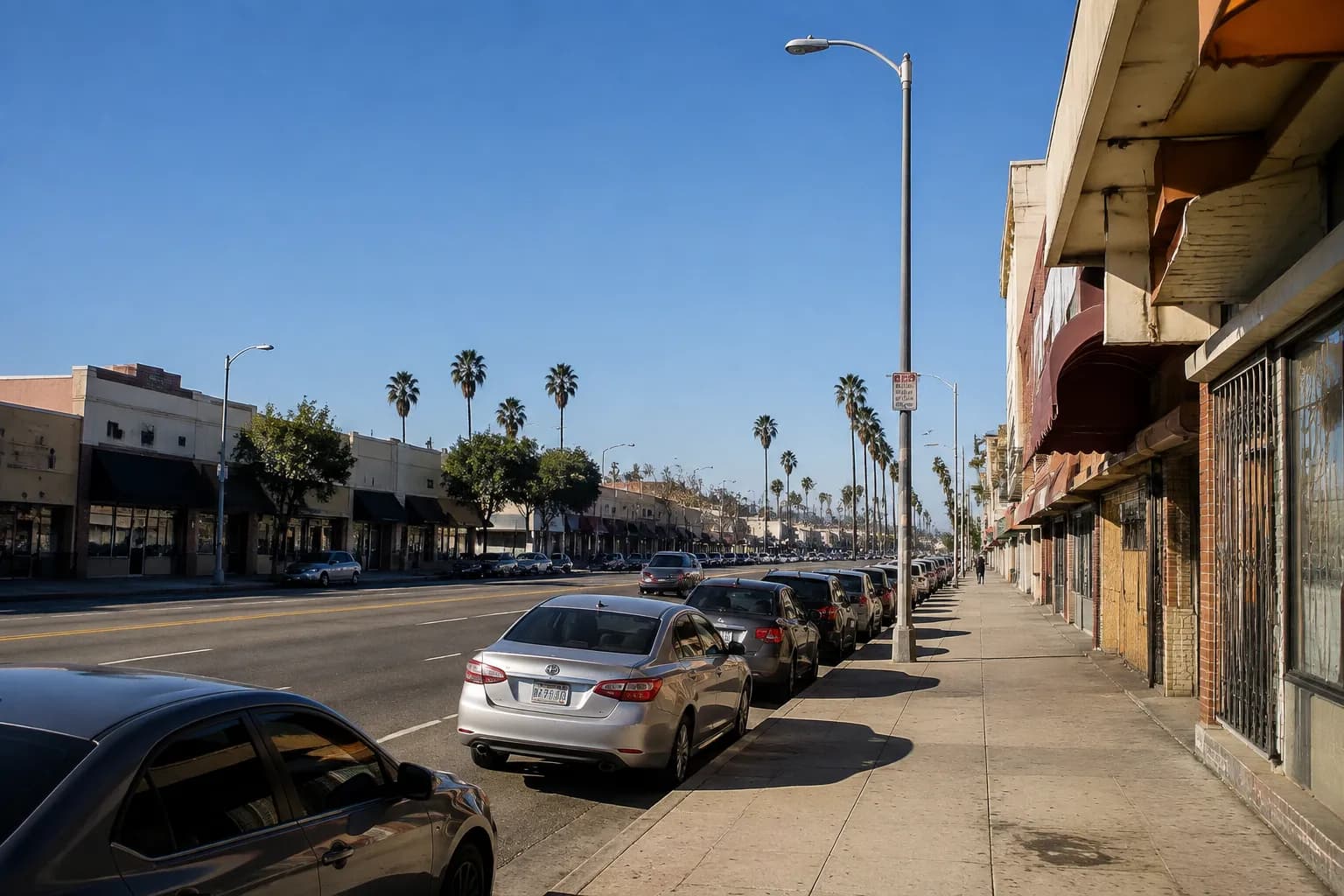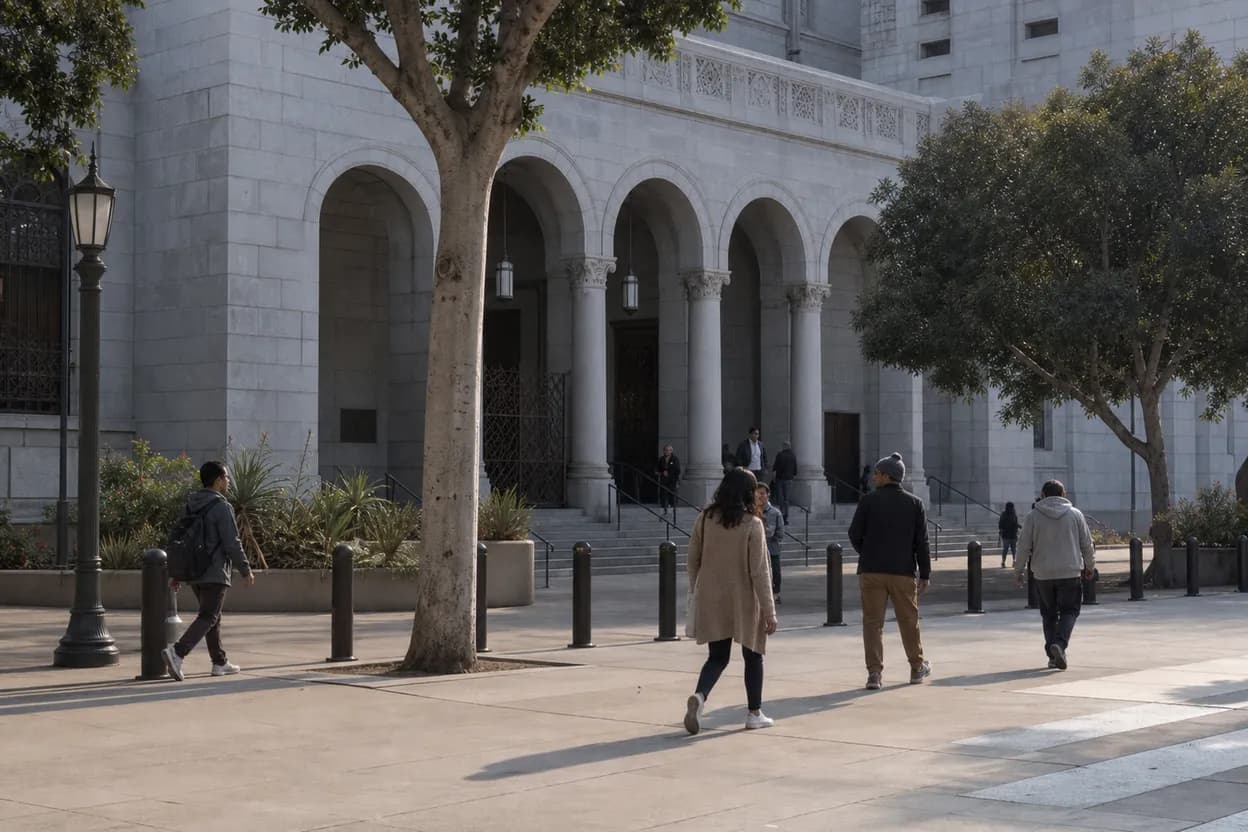
Los Angeles residents searching for tommy john after a headline, school sports conversation, or family injury question can turn the trend into a careful afternoon of public learning. Central Library at 630 W. 5th Street gives you a practical base: health databases, Wi-Fi, public computers, reference help, accessible entrances, and nearby transit. The goal is not to self-diagnose an elbow injury or choose a surgeon from a search result. It is to understand what UCL reconstruction means, where reliable information differs from commentary, and which details must be confirmed with a licensed clinician before any decision affects practice, rehab, or school athletics.
Want a cleaner downtown study route? Text Karpo before you go for Central Library access checks, transit-friendly timing, and source prompts for understanding Tommy John surgery in LA.

Start at Central Library on West 5th Street
Central Library is the right first stop because it supports slow research, not panic scrolling. LAPL lists the building at 630 W. 5th Street in Downtown Los Angeles, with Monday through Thursday hours posted as 10 a.m. to 8 p.m. Its Central Library page also names public computers, Wi-Fi, scanners, in-building laptops, ZoomText, and subject departments, giving solo visitors several ways to read, compare, and save notes without buying a medical book.
For an overcast Monday afternoon, pace the visit around one core task: define the procedure clearly before reading athlete stories. Start with the Science, Technology & Patents Department or Ask a Librarian if you need help locating medical reference databases. If the building is busy, use a public computer for database access, then shift to a quiet table for note sorting. The failure mode is treating one dramatic article as enough; your plan should require at least two reputable medical explanations.
Use LAPL Health Resources Before Search Results
LAPL’s Health Matters page points patrons toward health materials in print, online, DVD, CD, and electronic formats, plus links to resources such as MedlinePlus, Mayo Clinic, NIH, and CDC. Its Research & Homework listings include Gale Health & Wellness, available with an LAPL library card, and describe full-text medical encyclopedias, health journals, pamphlets, and general-interest health articles. That is useful when a term is familiar from sports coverage but medically specific.
The tradeoff is friction: library databases may require a card login, and some articles will be written for general readers while others assume medical vocabulary. Use that friction as a quality filter. Write down the source type beside each note, separating encyclopedia background, peer-reviewed discussion, hospital education pages, and news. If a database link fails, ask staff for the current access path rather than switching to unverified summaries.

Define UCL Reconstruction With AAOS OrthoInfo
The American Academy of Orthopaedic Surgeons explains Tommy John surgery as UCL reconstruction for an injured ulnar collateral ligament, especially in throwing athletes. AAOS describes the graft as a scaffold for new ligament growth and notes that the graft is often taken from the patient’s own tendon, such as the palmaris longus or a hamstring tendon. For a public-learning session, this source helps separate the procedure from the shorthand name.
Read AAOS with two columns: what the page says, and what it does not decide for you. It explains that nonsurgical treatment may avoid surgical risk, while surgery can involve a longer rehabilitation program. It also states that full recovery after reconstruction is typically about 12 to 18 months. Those numbers are educational, not a personal timeline. Your own age, sport, tear pattern, medical history, and clinician’s protocol can change the answer.
Compare Mayo Clinic’s Elbow Injury Language
Mayo Clinic’s sports medicine overview frames the UCL as the medial elbow ligament often associated with overhead throwing, including baseball, softball, and javelin. It also notes that UCL injuries can occur in gymnasts, wrestlers, football players, and other contact athletes. That broader framing matters in Los Angeles, where school athletics, club sports, adult leagues, and private coaching can all push people toward quick assumptions.
Use Mayo Clinic to build a symptom-and-context vocabulary, not to decide whether surgery is needed. The page emphasizes that UCL injuries vary by severity and location, including partial or complete tears. If your question involves pain, instability, numbness, throwing limits, or return-to-play pressure, mark it as a clinician question. The library session succeeds when you leave knowing what to ask, not when you leave convinced you know the diagnosis.

Take Metro or Validate Parking at Flower Street
LAPL’s parking page says Central Library does not own or operate nearby public parking facilities, but lists validation at the 524 South Flower Street Garage with a valid library card. It also warns that rates can change without notice and tells patrons to call 213-228-7000 to confirm. That makes parking a verification item, especially if you are timing a visit between school pickup, practice, or a downtown appointment.
Public transportation may be simpler. LAPL lists A, B, D, and E Line trains as stopping near Central Library, with most downtown buses stopping nearby, and also points visitors to DASH for downtown circulation. If mobility, weather, or carrying materials is a concern, check your route before leaving. Accessibility matters too: LAPL says the Central Library is fully accessible, and the Flower and Fifth Street entrances have ramps.
Bring a Notebook, Library Card, and Questions
A good LA back-to-school version of this plan is compact: library card, charged phone, headphones, notebook, and one written question. Examples include whether UCL reconstruction is always necessary, how rehab timelines are described, or why young throwers are discussed differently from professionals. Avoid bringing medical records unless you are simply organizing your own notes; a public library is not a clinic, and staff should not be put in the position of interpreting private health information.
Work in 25-minute blocks. First define UCL, then compare treatment paths, then identify what changes by age, sport, and diagnosis. After each block, write one sentence beginning with “I still need to verify.” This keeps curiosity from becoming false certainty. If you are researching for a student athlete, include the student’s coach, school trainer, parent or guardian, and clinician in later decisions, because return-to-play pressure is a common failure mode.
Call Central Library and a Clinician Before Acting
Before you rely on the plan, verify the day’s library conditions. Call Central Library at 213-228-7000 or check LAPL online for hours, database access, room availability, parking validation, and any service changes. Meeting rooms have their own rules, and LAPL lists same-day or one-day-ahead in-person reservations for certain glass-enclosed rooms. If your plan depends on quiet space, treat that as uncertain until confirmed.
The final action is medical, not logistical: bring your notes to a qualified health professional if the question involves pain, injury, surgery, rehab, or sports participation. Ask what diagnosis has actually been confirmed, which imaging or exam findings matter, what nonsurgical options apply, and what timeline is realistic. Use the library to become a better question-asker; use licensed care to make health decisions.
Tags: #AskKarpo #BeforeYouGo #LosAngeles #CentralLibrary #LAPL #DowntownLA #TommyJohn #UCL #SportsMedicine #BackToSchool #HealthLiteracy #PublicLibrary #StudentAthletes #LAParents
Sources consulted: Source 1: lapl.org · Source 2: lapl.org · Source 3: lapl.org · Source 4: orthoinfo.aaos.org · Source 5: sportsmedicine.mayoclinic.org · Source 6: lapl.org
All trademarks are the property of their respective owners.
Ask Karpo first
Tell Karpo your date, group size, budget, and starting point. We’ll check current access, timing, transit, and the cleanest Los Angeles plan for Los Angeles Public Library, Central Library before you head out.