 Burbank Film Memorabilia Collector Shop Walk: Studio Stash
Hidden Gems & Odd Finds
Eagle Rock Thrift Store Crawl Planner: Seventies Style
Plan an Eagle Rock thrift crawl for Seventies style: hunt corduroy, suede and earthy knits, judge real vintage from copies, then watch sunset at the rock.
Eagle Rock sits in the hills of Northeast Los Angeles, named for the giant boulder on its northern edge whose shadow looks like a bird with spread wings. Its main streets are lined with low storefronts, coffee shops and resale racks, and the college crowd and longtime families keep a steady flow of clothes moving through. This thrift store crawl planner is built for anyone chasing a Seventies look, with a route for finding corduroy, suede, warm knits and wide collars, then ending the day with the rock glowing at sunset.
Why Eagle Rock Suits a Seventies Hunt
Northeast LA has a long history of artists, students and families who stayed put for decades, and closets that stay in one family for a long time tend to hold onto the good stuff. When those closets finally get cleared out, the clothes often land in neighborhood shops instead of distant warehouses. That is why you can still find a rust-colored corduroy blazer or a hand-knit cardigan with wooden buttons in a small Eagle Rock store.
The neighborhood itself also fits the mood. Craftsman bungalows, old signs on Colorado Boulevard and hills covered in dry brush give the area a sun-faded warmth that matches mustard, brown and olive tones. Trying on a suede jacket here feels less like a costume and more like dressing for the place you are standing in.
Pick Your Palette and Pieces Before You Leave
A Seventies wardrobe can get loud quickly, so start with a short list. Choose three or four colors you actually like wearing, such as rust, camel, olive and cream, and decide on two or three key pieces. A good place to begin is one jacket, one pair of trousers and one knit, because those can be mixed with clothes you already own.
Write down your measurements, especially your waist, inseam and shoulder width, since vintage sizing runs very differently from modern labels. Bring a soft tape measure and a photo of an outfit you love for reference. Wear a fitted plain top and simple shoes so that every piece you try is judged on its own, not against a busy outfit.

First Stop: Corduroy and Suede
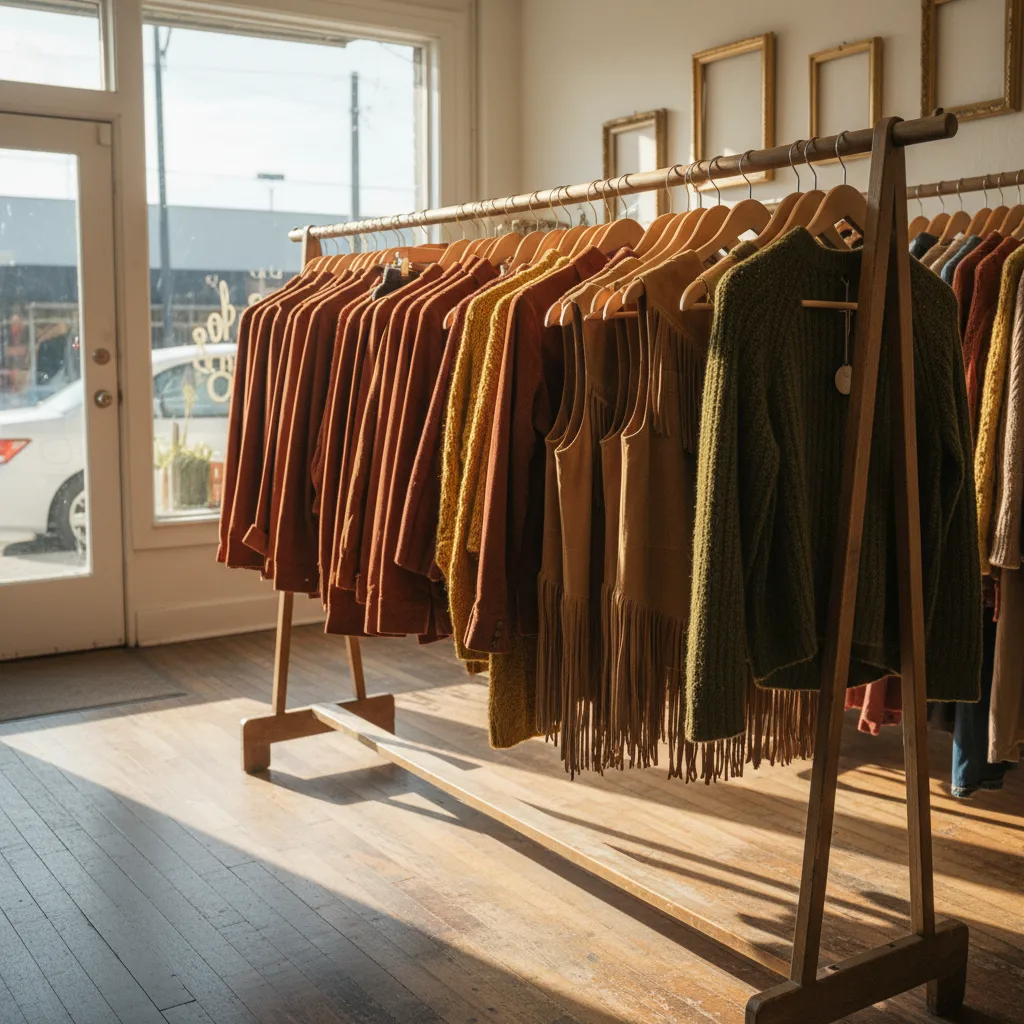
Begin at a shop with a deep jacket rail. Corduroy is easy to spot by touch, and the width of the ribs tells you a lot. Wide wale corduroy feels chunky and casual, while fine pinwale looks smarter and drapes better. Run your hand along the elbows and cuffs, where the ribs wear flat first. A little shine there is normal, but bald patches mean the fabric is near the end.
Suede and leather need a closer look. Check the collar and underarms for stiff, dark patches, which can come from sweat and are hard to clean. Bend a corner of the hem gently to see whether the hide cracks. Old suede that still feels soft and springy is worth keeping. Look at the lining as well, since a torn lining can be replaced by a tailor, while dried-out leather usually cannot be revived.
Second Stop: Knits, Collars and Prints
Next, head for the sweater and shirt racks. Hand-knit cardigans and chunky pullovers in warm colors are classic finds, and natural fibers like wool tend to age better than acrylic. Stretch a sleeve gently and let it go. If it snaps back, the knit still has life. Look for small moth holes along the shoulders and fold lines, holding the piece up to a window to spot them.
Shirts from the era often have long pointed collars, bold geometric prints or soft polyester that drapes in a particular way. Pair one statement shirt with plain pieces so it stays the focus. Check the collar points for fraying and the buttons for cracks, then make sure the shirt sits right across the shoulders. A slim cut that fits through the chest will look intentional rather than borrowed.
How to Tell Real Vintage From Later Copies
Seventies style has been revived many times, so plenty of racks mix true older pieces with later reproductions. Older clothes often have metal zippers, union labels, care tags with fewer symbols and seams finished in a simpler way. The fabric may feel heavier or slightly different in hand compared with modern versions of the same look.
Do not get too hung up on age, though. A recent piece that fits beautifully and suits your palette is a better buy than a fragile original you will never wear. The real goal is a wardrobe that looks warm and lived in. Use age as a tie-breaker, and let fit, condition and how often you will wear it lead the decision.
Third Stop: Flares, Boots and Accessories
Trousers can make or break the look. Flared and bootcut legs need the right length, so try them on with the kind of shoes you plan to wear, ideally boots with a small heel. The hem should nearly brush the floor. High waists were common, so match the rise to your own body rather than forcing a low cut into the style.
Finish the crawl with accessories, which are often where the best bargains hide. Wide leather belts with brass buckles, tinted sunglasses, silk scarves and woven bags add the era instantly without the commitment of a full outfit. Check belt holes for cracking, scarf edges for pulls and bag straps for weak stitching. A few small pieces can turn plain jeans and a tee into a convincing look.
Take a Break on Colorado Boulevard
Plan a pause midway through. Colorado Boulevard has plenty of cafes and casual places to sit, and a coffee break is a good moment to lay your finds out and test combinations. Take a few photos of each option against your own clothes in the bag. Seeing everything side by side makes it easier to drop the piece that only looked good on the hanger.
If you are shopping with a friend, trade honest opinions. One of you may have a better eye for color, the other for fit. Thrifting a full era look can tempt you into buying too much at once, so set yourself a limit, like one jacket and two smaller pieces for the day, and save the rest of your list for another visit.
End the Day at the Rock
Once your bag is full, finish the crawl at Eagle Rock itself. The boulder sits at the north end of the neighborhood beside a small park, and late in the day the sun lights up its face in shades of orange and gold. It is an easy place to sit, rest your feet and watch the hills change color, which suits a day spent chasing warm tones.
If you like, wear one of your new finds for the walk. A corduroy jacket or a fresh scarf feels different when you are wearing it outside, and it is a quick way to see how the piece fits into your real life. Snap a photo with the rock behind you as a small souvenir of the hunt.
Caring for Your Seventies Finds
Most vintage clothes need gentle care. Hand wash knits in cool water and dry them flat so they keep their shape. Hang corduroy inside out after washing to protect the pile. For suede and leather, use a soft brush and a product made for the material, and keep them out of direct sun at home so they do not dry out.
Store everything with a little breathing room. Wooden hangers help jackets hold their shoulders, and a cedar block in the closet discourages moths. If something needs a fix, like a split seam or a loose button, take care of it soon. Small repairs keep old clothes wearable for years, and that care is part of what makes vintage shopping worthwhile.
Plan Your Next Crawl With Karpo
When you are ready for another round, open the Karpo APP and ask for vintage clothing shops, resale stores or tailors in Eagle Rock, Highland Park and nearby Northeast LA. Karpo can suggest places that match the era and style you are hunting, so your next route starts with stores worth the trip.
A good Seventies wardrobe is built slowly, one warm jacket and one great knit at a time. Pick your palette, learn to read corduroy and suede, check for wear, take a coffee break and finish at the rock with the sun on your back. Each find carries a little of the neighborhood with it, and that makes the look feel truly yours.
Ask Karpo for more information.
Keep reading
- Burbank Film Memorabilia Collector Shop Walk: Studio Stash
 Pasadena Film Memorabilia Collector Shop Walk: Classic Route
 Silver Lake Film Memorabilia Collector Shop Walk: Indie Lore