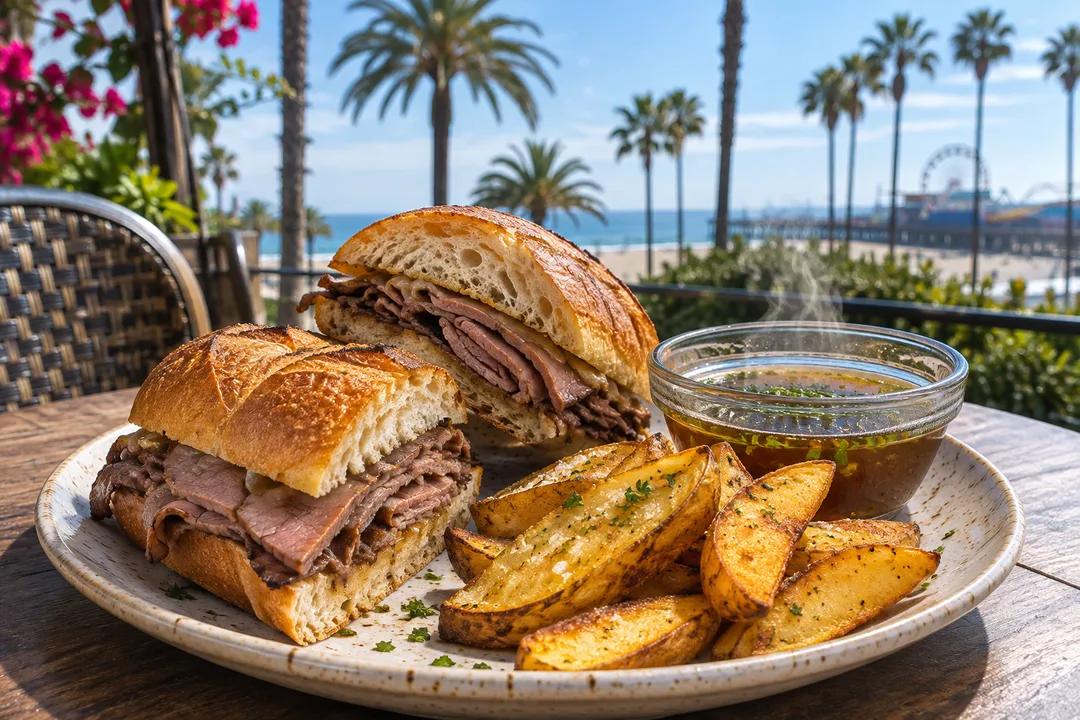
 Santa Monica French Dip Sandwich Lunch Picker by Ocean
Restaurants
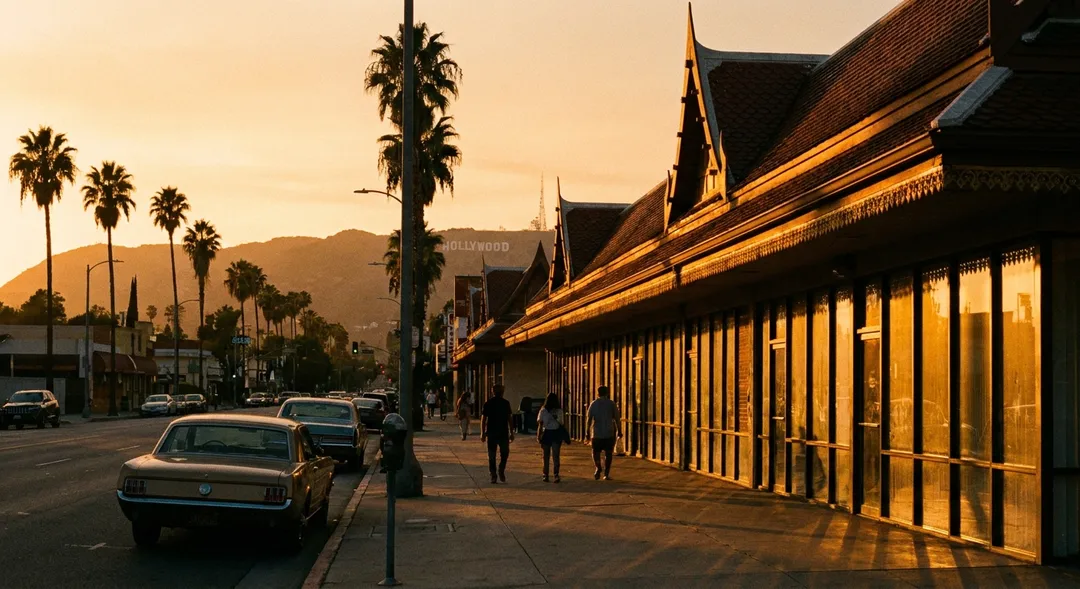
Thai Town Thai Boat Noodle Crawl: Hollywood Boulevard Bowls
Plan a Thai Town Thai boat noodle crawl along Hollywood Boulevard between Western and Normandie. Order petite sen lek bowls with pork rinds and chili vinegar.
Steam rising from deep stainless-steel stockpots scented with charred cinnamon bark, star anise, galangal, and dark soy sauce greets walkers the moment they climb out of the Hollywood and Western subway portal beneath the golden Apsara gateway statues. Planning a thai boat noodle crawl along the six-block stretch of Hollywood Boulevard between Western Avenue and Normandie Avenue works best when you treat the corridor like Bangkok's Victory Monument canal stalls rather than a single sit-down meal. Two Los Angeles comic-book illustrators and their cousin visiting from Chiang Mai recently spent a breezy November afternoon pacing themselves across three neighborhood strip-mall plazas, comparing palm-sized tasting bowls of dark pork and beef broth without hitting mid-crawl fatigue. Instead of committing to one massive soup tureen, they split small orders of thin rice-stick noodles, curly pork cracklings, and charred meatball skewers while walking the sunlit sidewalks between stops. The secret to finishing all three kitchens with room for steamed coconut-pandan cups is understanding how Thai Town's courtyard noodle houses portion their bowls, balance their four-jar condiment caddies, and stagger their afternoon kitchen rushes.
Pacing Small Stacking Bowls Versus Full-Size Courtyard Tureens
Authentic *kuay teow ruea* originated on narrow wooden paddle boats along central Thailand's canals, where vendors served compact, intensely concentrated portions in small ceramic bowls so customers could eat without spilling broth over the gunwales. Along Hollywood Boulevard in Thai Town, you will encounter two distinct serving formats that dictate the rhythm of your afternoon route. Tucked into the older L-shaped strip malls near Hobart Boulevard and Serrano Avenue, traditional boat noodle specialists still offer petite, five-bite tasting bowls alongside standard dinner-sized portions. The two illustrators and their Chiang Mai cousin always start their route at one of these small-bowl counters, ordering one beef and one pork bowl per person so they can compare the herbal dark-soy stock side by side while the broth is piping hot.
A block or two west toward Kingsley Drive and Normandie Avenue, spacious family dining rooms serve their boat noodles in deep, heavy stoneware tureens loaded with beef tendon, tripe, liver, sliced shank, and bobbing pork meatballs. If you order a full-size bowl at every stop, your crawl ends after ninety minutes. When visiting a kitchen that only serves large bowls, one unwritten neighborhood rule makes sharing effortless: ask the server for two extra empty soup bowls and an extra ladle the moment you sit down, then divide a single order among three people before the thin noodles absorb the dark *nam tok* broth. Look around the Formica tables at mid-afternoon and you will spot off-duty hospital staff from nearby Sunset Boulevard, CalArts animation students carrying sketchbooks, and Thai grandmothers who immediately fold a handful of raw bean sprouts and sweet basil leaves under the hot meat slices so the greens wilt solely from residual heat.

Decoding Noodle Textures, Spice Levels, and the Four-Jar Caddy
Every stop on a Thai Town noodle walk hinges on matching the right noodle strand to the thickness of the soup base. While menus list five or six noodle shapes—ranging from yellow egg noodles (*ba mee*) and glass mung-bean threads (*woon sen*) to flat wide ribbons (*sen yai*)—seasoned boat noodle regulars overwhelmingly choose *sen lek*, the medium-thin rice stick. *Sen lek* possesses enough surface grip to carry the rich, savory emulsion of dark soy, pickled bean curd, and aromatic five-spice herbs without turning gummy in the bowl. Skip ordering wide *sen yai* rice ribbons or instant *mama* noodles during a multi-stop boat noodle crawl; wide rice sheets soak up far too much broth in the first three minutes and leave your stomach feeling heavy before you reach your second courtyard plaza.
Before anyone stirs their bowl, the Chiang Mai cousin insists on tasting a spoonful of unseasoned broth to gauge the kitchen's baseline balance of sour tamarind, palm sugar, and roasted chili heat. Every Thai Town table carries a gleaming metal *kruang prung* caddy holding four essential jars: crushed toasted dried bird's-eye chilies (*prik pon*), white vinegar infused with sliced jalapeños or serranos, fermented fish sauce (*nam pla*), and granulated sugar. Because boat noodle broth is already far richer and more herbaceous than clear chicken or duck noodle soup, heavy-handed seasoning can easily muddy the aromatics. Add just half a spoonful of chili-vinegar to brighten the rich beef tallow, and keep a basket of curled, airy pork rinds (*kaeb moo*) beside your bowl—dipping each rind halfway into the spiced broth for three seconds preserves its audible crunch while soaking the outer blistered skin in savory gravy.
Timing the Afternoon Walk and Backup Courtyard Plans
Hollywood Boulevard traffic and strip-mall parking lots can frustrate drivers who try to hop between plazas behind the wheel, which is why walking the corridor on foot transforms the outing. The sweet spot for a three-stop crawl is a weekday or Sunday afternoon between late lunch and the early evening dinner wave, when the morning bone-broth cauldrons have reduced to peak richness and indoor dining rooms have plenty of open four-top booths. Parking once along a residential side street south of Hollywood Boulevard—or riding the Metro B Line directly to Hollywood and Western—lets your group stroll freely past Thai language bookstores, herbal apothecaries, and fruit stalls stacked with green mangoes and longans.
Even during mid-afternoon, a popular courtyard noodle shop can suddenly fill up when a tour van or studio crew arrives at once, and turning into a cramped strip-mall driveway only to see a dozen people waiting on the concrete steps breaks your momentum. If the waitlist at your first-choice Hollywood Boulevard counter stretches past twenty minutes, skip standing in the exhaust of the parking lot and pivot immediately to Plan B: walk two blocks west to a quieter side-plaza noodle house near Mariposa Avenue, or duck into a northern Thai specialty kitchen across the street where dark blood-seasoned noodle bowls come out in under ten minutes alongside grilled pork neck and sticky rice. When rain clouds roll off the Santa Monica Mountains or Santa Ana winds kick up along the boulevard, prioritize the enclosed indoor arcades near Western Avenue where you can move from a noodle booth straight to a covered bakery counter without stepping back into the wind.
Connecting Coconut Desserts, Barnsdall Park, and Karpo APP
Because traditional boat noodles pack a lingering warmth of roasted chili flakes, black pepper, and star anise, the final leg of a Thai Town crawl always calls for a cooling coconut dessert and an uphill walk. Between your second and third savory stops, duck into one of the legendary Thai sweet shops near Harvard Boulevard or Hobart Boulevard, where stainless-steel trays hold warm pandan-scented coconut milk puddings (*khanom thuai*) steamed in tiny shallow porcelain saucers, taro-studded coconut custard cubes, and toasted mung-bean crepes. Ordering a glass of iced chrysanthemum tea or fresh young coconut water—rather than a heavy sweetened condensed-milk Thai iced tea at every stop—keeps your palate clean so you can still taste the subtle galangal and cilantro root in your final bowl.
Once the last ceramic bowl is stacked on the table, walk ten minutes south and west toward Sunset Boulevard to climb the olive-tree paths of Barnsdall Art Park. The breezy hilltop lawn framing Frank Lloyd Wright's Hollyhock House offers wide wooden benches and unobstructed golden-hour sightlines north toward the Griffith Observatory dome and the Hollywood Sign, giving your group a quiet place to walk off the meal as dusk settles over the basin. Before you set out or while you are standing under the golden Apsara statues deciding which plaza to visit next, open the Karpo APP to browse nearby noodle houses, filter Eastside Thai kitchens by neighborhood and dish style, and organize your custom walking route across Thai Town.
Ask Karpo for more information.
Keep reading
- Santa Monica French Dip Sandwich Lunch Picker by Ocean
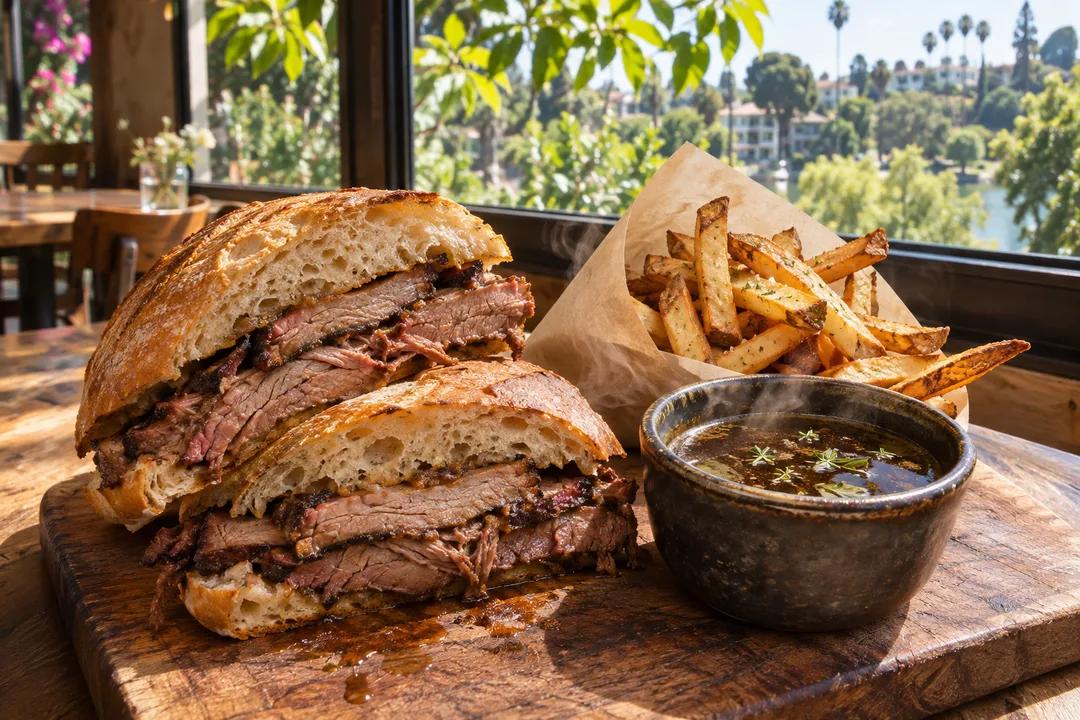 Echo Park French Dip Sandwich Lunch Picker Around Noon
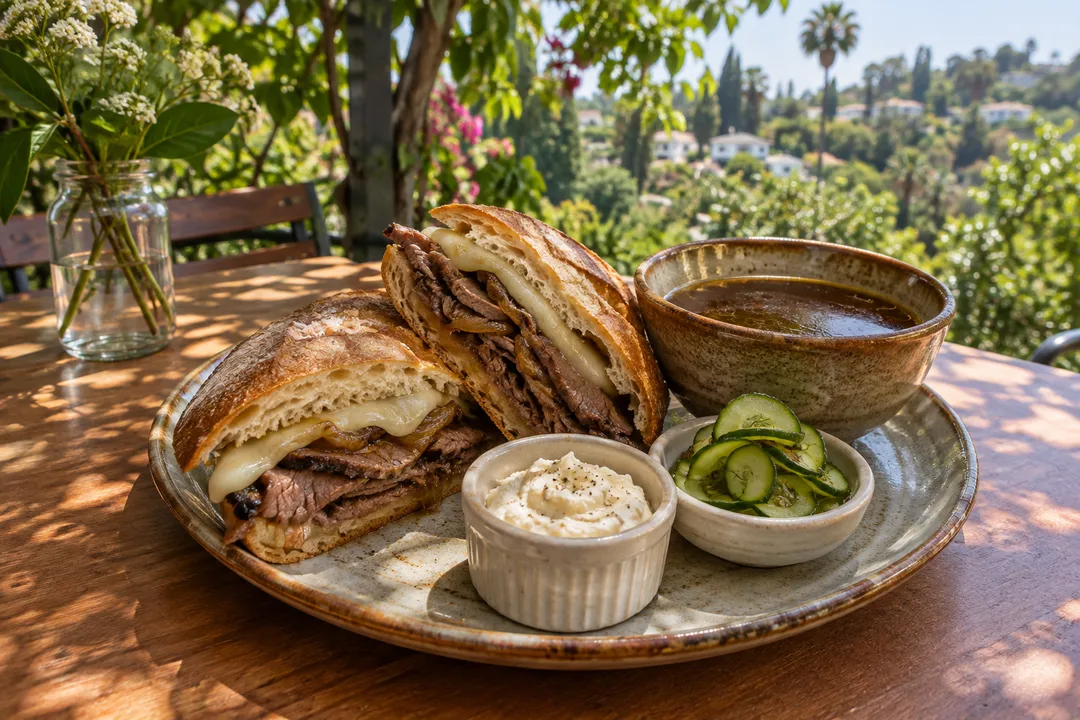 Silver Lake French Dip Sandwich Lunch Picker on Hillsides