 Sawtelle Bowling Group Night Planner for a College Reunion
Sports Social

LA Tennis Court Transit: Plan A Simple Arrival
Find an LA tennis court that fits a transit arrival by sharing departure points, transfer limits, gear needs, and the time you must leave before booking.
A transit-first tennis plan has to respect the final walk as well as the ride. For an LA outing, give Karpo the starting stop, transfer comfort, gear situation and return limit. The useful result is a route-aware set of areas that you can take to an operator’s public booking page.
Describe the trip in the language you actually use
Transit changes the question. For an LA tennis court search built around transit, begin with the station, neighbourhood or landmark where you would start. Add the date, the direction of travel and the latest time you can arrive. A journey that is manageable by car may be poor for someone carrying a racket on multiple transfers. Give Karpo those constraints so it can organise choices around the trip rather than returning a generic list of courts.
Start from the final stop. A scheduled session is only useful if there is enough time to reach the entrance, orient yourself, change shoes and warm up. Write an arrival buffer into the request instead of treating the court start as the moment you step off a vehicle. Include the time you must leave as well. These are personal planning limits, not claims about an operator’s hours. The comparison should show when the outing becomes too tight.
Choose the right geographic scale
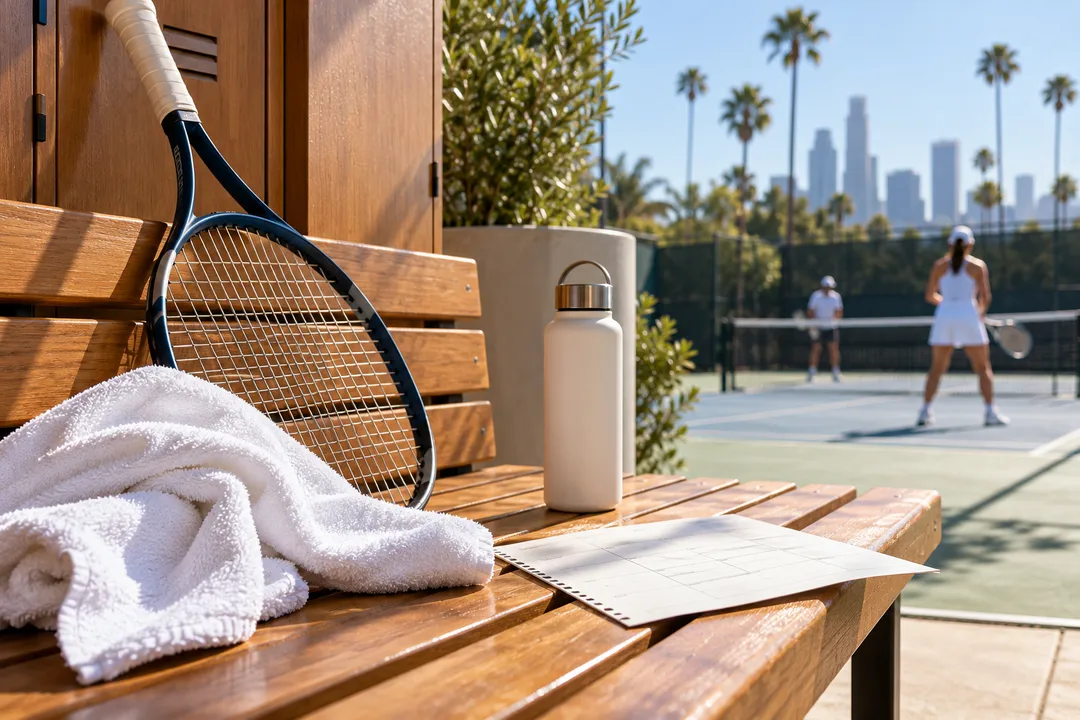
The geographic boundary Decide whether you want a neighbourhood near a rail stop, a short last-mile connection, or a broader LA County search. Tell Karpo how far you are willing to walk after the final transfer and whether a rideshare for that last leg is acceptable. A smaller area can produce fewer choices but a more honest plan. Add surface, singles or doubles, lighting and rental needs only after the transit boundary is clear.
A route-aware prompt Use a prompt such as: “Find an LA tennis court for a transit arrival. I start near a rail station, carry my own racket, need a relaxed singles session, and must be back at my starting area by the evening.” Replace the placeholders with your real details. Ask the result to compare transfer complexity and last-mile effort. Treat any travel estimate as a planning input to check yourself on the day.
Keep access and equipment visible
Before choosing a link, Some facilities separate court hire from lessons, rentals or guest access. Ask for those distinctions beside each candidate. If you need a demo racket or a place to store a bag, make it explicit before choosing the area. The presence of a photo showing benches or lockers does not establish a service. The operator’s current terms for the selected product should decide what you can rely on.
Once one area survives, When the shortlist is ready, pick one operator and open its booking route yourself. Confirm the location, arrival instructions and session type, then send the record to your playing partner. Karpo’s role is to gather the choices, links and tradeoffs. It does not claim a live court hold or a completed payment. Keep the route plan next to the booking confirmation so a station change does not strand the session.
Plan for a missed connection
When a connection fails, A transit-based fallback should preserve the time boundary. You might move to another area with a simpler last mile, shorten the hit, or change the day. Ask for those alternatives explicitly rather than accepting a distant court with an optimistic transfer chain. If the journey becomes too complicated, the correct answer may be to reschedule. Good planning protects the game’s feasibility before it protects the original date.
After you return, Afterward, note the real walk, the bag you carried, the time needed to change and the point at which the return trip became stressful. A future Karpo request can use those observations without exposing a private address. Transit players often benefit from a repeatable meeting area more than a new venue every time. Keep optional food or errands separate from the court plan unless the return window allows them.
Practical Notes
Give Karpo a starting stop, transfer comfort, walking limit, court format and the latest safe return time. Separate essential transit conditions from optional equipment or food. Use the shortlist to understand the route and participation tradeoffs, then open the operator page yourself. Save the route, arrival instructions and backup rule with the booking record so the plan can flex without becoming vague. For a transit plan, name the final stop, acceptable walking distance and whether a rideshare is a backup or a deal breaker. Ask for an arrival buffer that includes finding the entrance, not only the vehicle journey. When an option fits, open the operator link and verify the session type, visitor route and equipment policy yourself. Share the confirmation with the person joining and keep the return deadline visible. If a connection becomes awkward, shorten the game or move the area rather than relying on a perfect transfer. Save the actual walk and preparation time afterward; those observations make the next request more accurate without turning a personal home location into a public detail. Transit planning is easier when the journey is described as a sequence rather than a vague travel time. Include the starting stop, the number of transfers you can manage, the walking distance after the last vehicle and whether rain or a heavy bag changes the choice. Ask for a few areas and the tradeoff each creates. Once you choose one, read the operator’s access instructions, product conditions and equipment policy yourself. Put the booking record beside the route plan and send both to the other player. If a late connection changes the evening, keep the original return limit and revise the session length or date. Note the actual walk, the time spent finding the entrance and the amount of warm-up you needed. Those details improve the next request without turning a private address into a destination. The tool is most useful when it makes a transit outing legible, adjustable and easy to hand off.
For the LA transit version, pair the chosen operator confirmation with the final stop, walk limit, arrival buffer and person handling the handoff.
Keep the handoff obvious
Should the LA transfer chain break, protect the return limit and revise the walk, session length or date instead of assuming a perfect connection.
Karpo turns the LA route constraints into choices, and the operator remains the source for the final product, access instructions and reservation.
Practical Notes
Keep the transit route beside its LA booking details, with personal buffers and operator conditions clearly separated.
Ask Karpo for more information.
Keep reading
- Sawtelle Bowling Group Night Planner for a College Reunion
 Larchmont Bowling Group Night Planner for Carpool Parents
 Boyle Heights Bowling Group Night Planner for a Quince Court