 Santa Monica French Dip Sandwich Lunch Picker by Ocean
Restaurants
Culver City Taco Truck Night Finder for a Film Crew Wrap
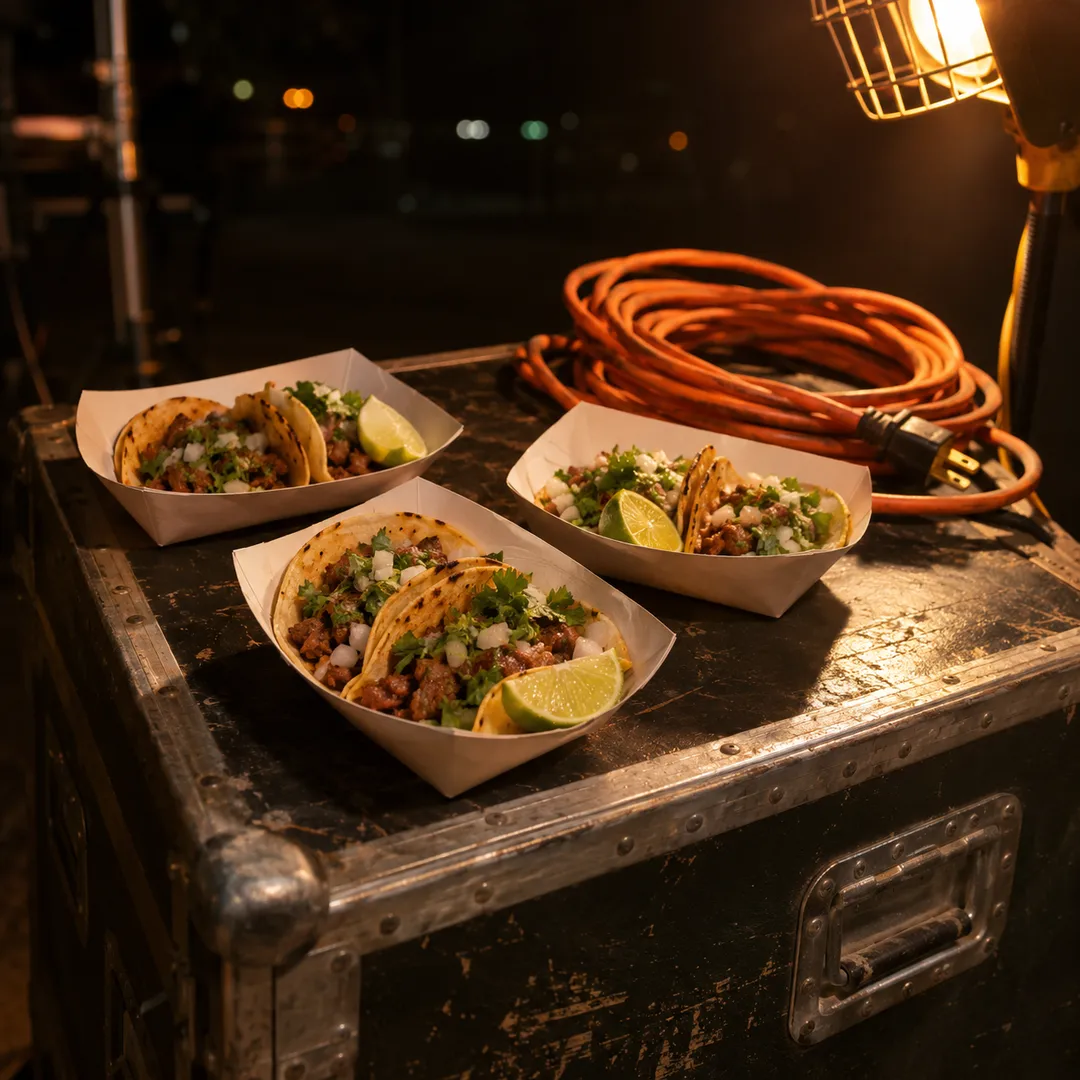
Plan a Culver City taco truck night for a film crew after wrap: pick a truck that fits a tired group, order in waves, and eat without losing anyone to the 405.
Wrap night in Culver City has its own mood. The lights are down, the carts are packed, and fifteen people who have spent the day saying almost nothing but copy that are suddenly hungry and talkative at once. Nobody wants a sit-down room with a host stand and a wait list. What the crew wants is food that shows up fast, can be eaten standing, and does not care if your boots are covered in gaffer tape. That is the moment a taco truck night finder earns its keep. This guide is about using a Culver City taco truck as the after-wrap table: how to choose one that suits a tired group, how to order without jamming the window, and how to make the meal feel like the end of the shoot instead of one more errand.
Why a Truck Beats a Restaurant After Wrap
A crew coming off a long day moves in clusters. Grips finish before the art department, the camera team is still logging cards, and the producer is on the phone until the very end. A restaurant asks everyone to arrive at once and sit in one place. A truck lets people drift in, eat, talk, and drift out, which matches how a wrap actually happens.
There is also the matter of energy. After hours on your feet, sitting down in a quiet dining room can feel like a trap, because the second you relax you realize how tired you are. Standing at a curb with a paper boat of tacos keeps the evening loose. People can leave when their body tells them to, and nobody has to wait for a check to be split fifteen ways.
Reading the Neighborhood After Dark
Culver City is a place built around studios, and the streets around the old lots carry that history. By night the main blocks quiet down, the office crowd is gone, and the sidewalks belong to people walking dogs, a few diners leaving late meals, and crews heading for their cars. Trucks tend to settle where there is room to park and a steady trickle of hungry people, so the edges of busy corridors and the stretches near work sites are worth a slow drive.
Use a map to narrow things down, then trust what you see. A truck with a small cluster of people waiting, a clean window, and steam coming off the plancha is usually a good sign. A truck sitting alone with the lights half off might be closing up. Do not get attached to one plan, since trucks move and the night changes from week to week.
Send a Scout Before the Whole Crew
The simplest wrap night trick is to send one person ahead. While the rest of the team finishes loading out, a production assistant or anyone already free drives over, looks at the line, and texts the group a quick read: how busy it is, whether there is room to stand, and what looks good on the plancha. That message saves twenty people from wandering around looking for a truck that has already left.
The scout can also warn the truck that a group is coming. A friendly heads-up at the window, something as simple as saying a crew of around fifteen will be over soon, gives the cooks a chance to prep more tortillas and meat. Most truck teams appreciate it, because a surprise wave of orders is much harder to handle than one they saw coming.
Order in Waves, Not All at Once
Fifteen orders hitting a single window in one minute will slow everyone down, including the regulars who were already in line. Break the crew into small groups by department. Grip and electric order first since they are usually hungriest, then camera, then art, then whoever is still wrapping out. Each wave gets food while the next wave is still walking over.
Keep orders simple. A wrap night is not the moment to ask the cook to explain every item on the board. Pick two or three tacos each, ask for everything on them, and leave the salsa choices for the salsa bar if there is one. Simple orders move faster, and a faster line means more of the crew eats while the food is still hot.
What to Order When Everyone Is Exhausted
Tired bodies want salt, fat, and warmth. Al pastor shaved from the spit, carne asada with charred edges, and slow-cooked meats like carnitas or suadero tend to hit the spot. If the truck offers a quesadilla or a mulita, those are friendly for anyone who wants something more filling than a few small tacos.
Plan for the people who do not eat meat. A crew always has a few vegetarians, and many trucks keep beans, potatoes, mushrooms, or grilled vegetables on hand. Ask politely at the window rather than assuming. Grab plenty of napkins and a few extra limes, because a crew eating on the curb will go through both faster than you expect.
Who Pays and How to Keep It Easy
On many shoots, the producer or a department head likes to cover the wrap meal as a thank-you. If that is the plan, decide it before anyone reaches the window. One person paying for each wave keeps the line moving, and the rest of the crew can just order and step aside. Cash and cards are handled differently from truck to truck, so ask the scout to check what the window takes.
If everyone is paying for themselves, that works too, as long as each person is ready before they step up. Have your order and payment in hand, step to the side once you are done, and wait for your name or number. Clearing the window quickly is the most polite thing a big group can do.
Eating on the Curb Like Good Neighbors
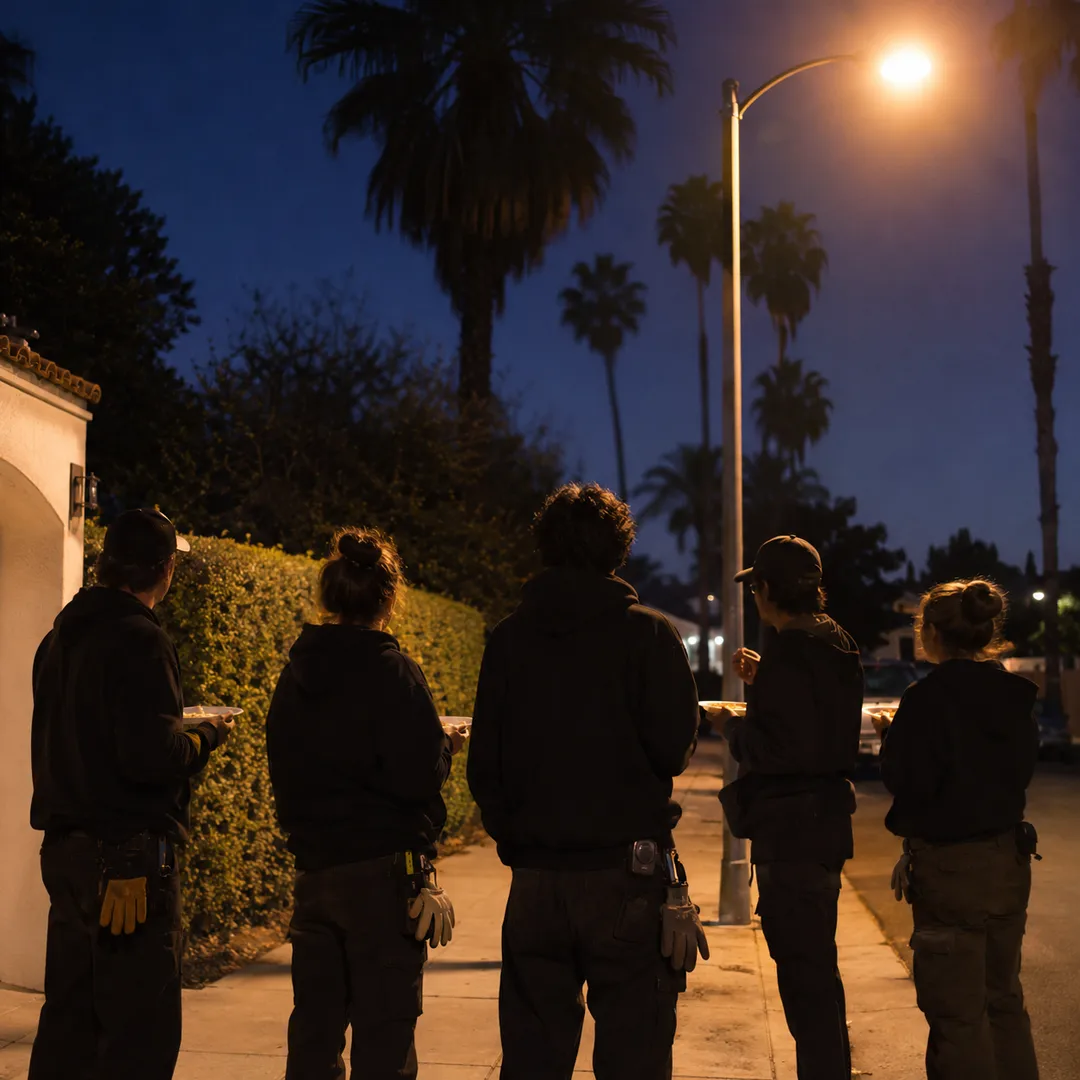
A crew that has spent the day respecting a location should bring the same habits to the curb. Do not block driveways, do not lean on cars that are not yours, and keep the noise at a level that lets the people living nearby sleep. If the truck has a trash bin, use it. If it does not, carry a bag back to the vans.
Spread out along the sidewalk rather than piling around the window. That leaves room for regulars to order and pick up their food, and it keeps the cooks from feeling crowded. A wrap crew that leaves the block cleaner than they found it is a crew the truck will be happy to see again.
Turning Tacos Into a Real Wrap Moment
Wrap nights are partly about food and partly about closing a chapter. Use the meal for the small rituals that matter: a quick thank-you from the director, a moment to name the day player who saved a scene, a group photo once the plates are empty. Those moments land better when people are relaxed and fed than when they are packing the last case.
If the shoot was long, consider making the truck a tradition. Some crews come back to the same corner at the end of every block, and the familiarity becomes part of the story they tell later. The cooks start to recognize you, and the meal becomes a small marker of a job well done.
Getting Everyone Home Safely
The real risk on wrap night is not the food, it is the drive home. People who have been working since before sunrise are tired, and a full stomach makes that worse. Encourage anyone with a long drive to eat, drink water, and leave early rather than staying for a third round of tacos. Carpooling and ride shares are worth suggesting out loud.
Keep an eye on the people who live far away. If someone faces a long run on the 405 or the 10, a coffee from a nearby spot might help, but a nap in the passenger seat while a colleague drives is even better. A good wrap night ends with everyone getting home, not with someone pushing through on caffeine and willpower.
When the Truck You Wanted Is Gone
Sometimes the scout arrives and the truck has moved or closed early. Have a fallback ready. Check a map for another truck nearby, or pick a backup corner in advance. Culver City sits close to neighborhoods with plenty of options, and a short drive often turns up another plancha already going.
If the night falls apart completely, a simple plan B is fine. Order from a counter spot, eat in the parking lot by the vans, and call it a wrap anyway. The point is not the perfect taco, it is the crew eating together before they scatter.
A Simple Wrap Night Checklist
Before the shoot ends, pick a scout, agree on who is paying, and share a backup option in the group chat. When the scout reports back, send the crew in waves, keep orders simple, and spread out along the curb. Take a moment for thanks, clean up after yourselves, and make sure the tired drivers have a plan for getting home.
Done right, a Culver City taco truck becomes the warmest part of the day. The crew remembers the tacos, the laughter on the sidewalk, and the feeling of having finished something hard together, which is exactly what a wrap night should give them.
Ask Karpo for more information.
Keep reading
- Santa Monica French Dip Sandwich Lunch Picker by Ocean
 Echo Park French Dip Sandwich Lunch Picker Around Noon
 Silver Lake French Dip Sandwich Lunch Picker on Hillsides