 Santa Monica French Dip Sandwich Lunch Picker by Ocean
Restaurants
Arts District Taco Truck Night Finder: Read the Menu Board
Plan an Arts District taco truck night as a first-timer: decode the board from trompo to cabeza, say con todo, then work the salsa bar like a regular.
You have just walked out of a gallery opening in the Arts District, wine glass returned, head full of big canvases and loud conversations. Somebody suggests tacos, and a few blocks over a truck is glowing under a bare bulb with a short line out front. If you are new to Los Angeles, or just new to ordering at a window, the board can look like a test. Trompo, suadero, cabeza, lengua, mulita, vampiro. The cooks are moving fast and the person behind you knows exactly what they want. This taco truck night finder is for first-timers: a plain guide to the menu board, the tortillas, the salsas, and the handful of Spanish words that turn a nervous order into a smooth one, all wrapped into a night among the warehouses.
Why the Arts District Is a Good Place to Learn
The Arts District grew out of old rail yards and industrial buildings on the east edge of downtown. Artists moved into the warehouses, galleries and studios followed, and the area now draws a steady crowd of people walking between openings, breweries, and loft buildings at night. Trucks follow those crowds, which means you can often find one within a short walk of wherever the evening started.
The mix of people helps. You will stand in line next to warehouse workers, gallery staff, and visitors from across the city. Nobody expects you to be an expert, and watching how others order is one of the easiest ways to learn.
Reading the Meats on the Board
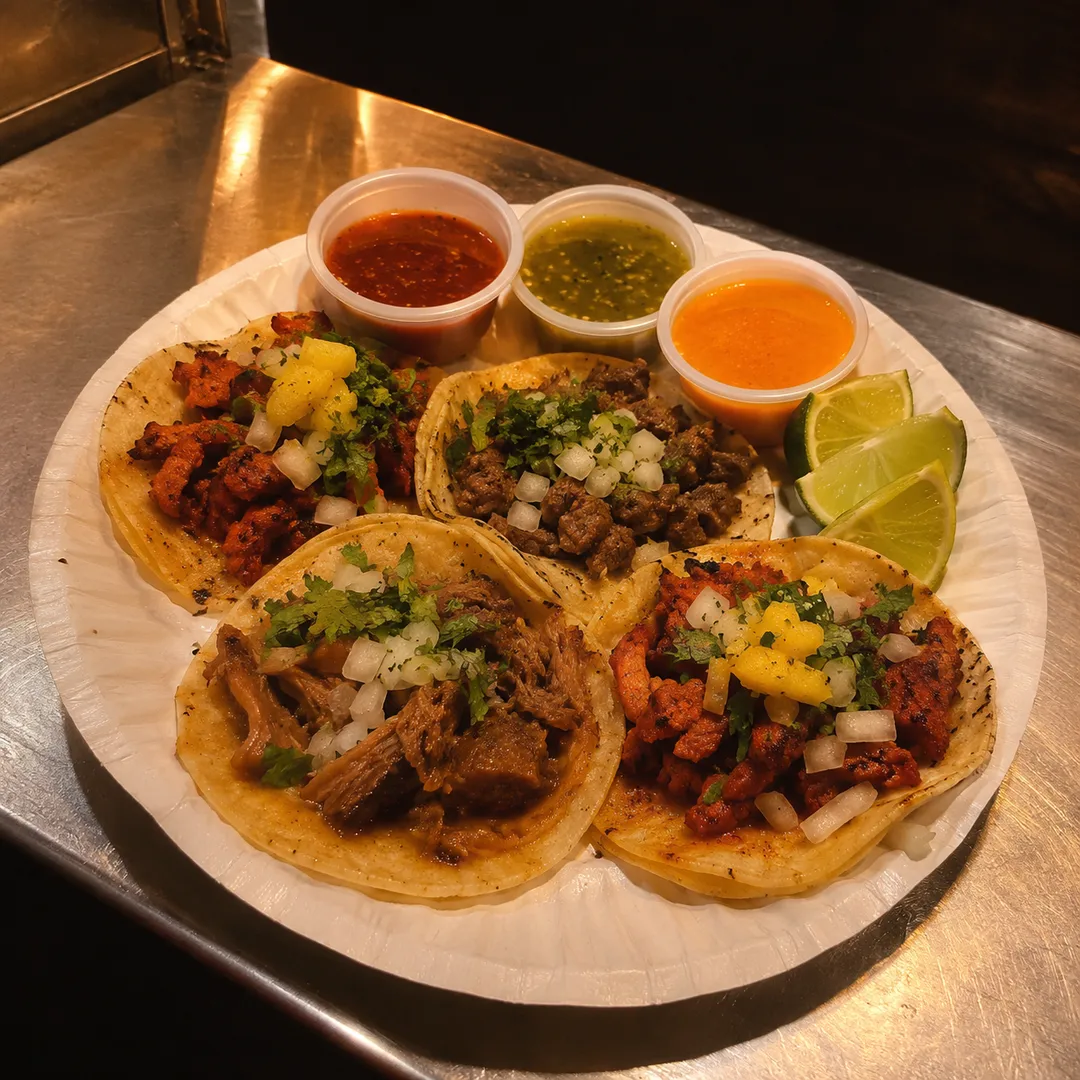
Most boards list fillings by their Spanish names. Asada is grilled beef, usually chopped fine and seared on the plancha. Al pastor is pork marinated in chiles and spices, often stacked on a vertical spit called a trompo and shaved to order, sometimes with a sliver of pineapple. Carnitas is pork slow cooked until tender and crisp at the edges.
A few others are worth knowing. Suadero is a thin, soft cut of beef cooked in its own fat. Cabeza means meat from the head, rich and tender. Lengua is beef tongue, mild and buttery when cooked well. Tripa is tripe, often griddled until crunchy. Pollo is chicken, and chorizo is spicy sausage. Pick one familiar filling and one new one, and you will learn fast.
Tortillas, Sizes, and Formats
Street tacos usually come on small corn tortillas, often doubled so they do not tear. Some trucks offer flour tortillas too, especially for certain fillings. If you have a preference, say so when you order.
Beyond tacos, a few formats show up often. A quesadilla folds cheese and filling inside a tortilla. A mulita is like a small sandwich of two tortillas with cheese and meat between them. A vampiro is a crisped tortilla with melted cheese and toppings. A burrito wraps everything in a large flour tortilla, and a torta is a sandwich on a soft roll. If you are hungry and unsure, a couple of tacos plus one of these is a safe place to start.
The Words That Make Ordering Easy
You do not need fluent Spanish, but a few words go a long way. Con todo means with everything, which usually means onion and cilantro. Sin cebolla means no onion, and sin cilantro means no cilantro. Para aqui means for here, and para llevar means to go.
A simple order sounds like this: two al pastor con todo, one asada sin cebolla, para aqui. Say please and thank you, por favor and gracias, and smile. Cooks deal with hundreds of orders a night, and a clear, friendly one is always welcome. If you mix up a word, nobody minds. Pointing at the board works too.
How the Line Usually Works
At many trucks, you order and pay at the window, then step aside and wait. Some trucks give you a number or call your name, while others hand the food straight out as it is ready. Watch for a minute before you join the line to see how it flows.
Have your order ready when you reach the front, and step away from the window once you have paid. That keeps the line moving for everyone else. When your food comes out, check it quickly, grab napkins, and move to the salsa bar or a spot to eat.
Using the Salsa Bar Like a Regular
The salsa bar is where a taco becomes yours. Expect a few salsas, from a mild green tomatillo version to a smoky red one and sometimes a fiery orange or creamy avocado sauce. Taste a drop before you pour, since heat levels vary a lot from truck to truck.
You will often find sliced radishes, lime wedges, grilled or pickled jalapenos, cucumbers, and pickled carrots and onions. Take what you will use, and do not double dip with a spoon that has touched your food. A squeeze of lime and a few radish slices between bites keep your palate fresh.
How to Eat a Street Taco
Pick the taco up, tilt your head, and eat it over the plate. Street tacos are messy by nature. If the tortillas are doubled and one feels loose, you can peel it off and use it to scoop up anything that falls. Eat soon after you get your food, since tacos are at their peak in the first few minutes.
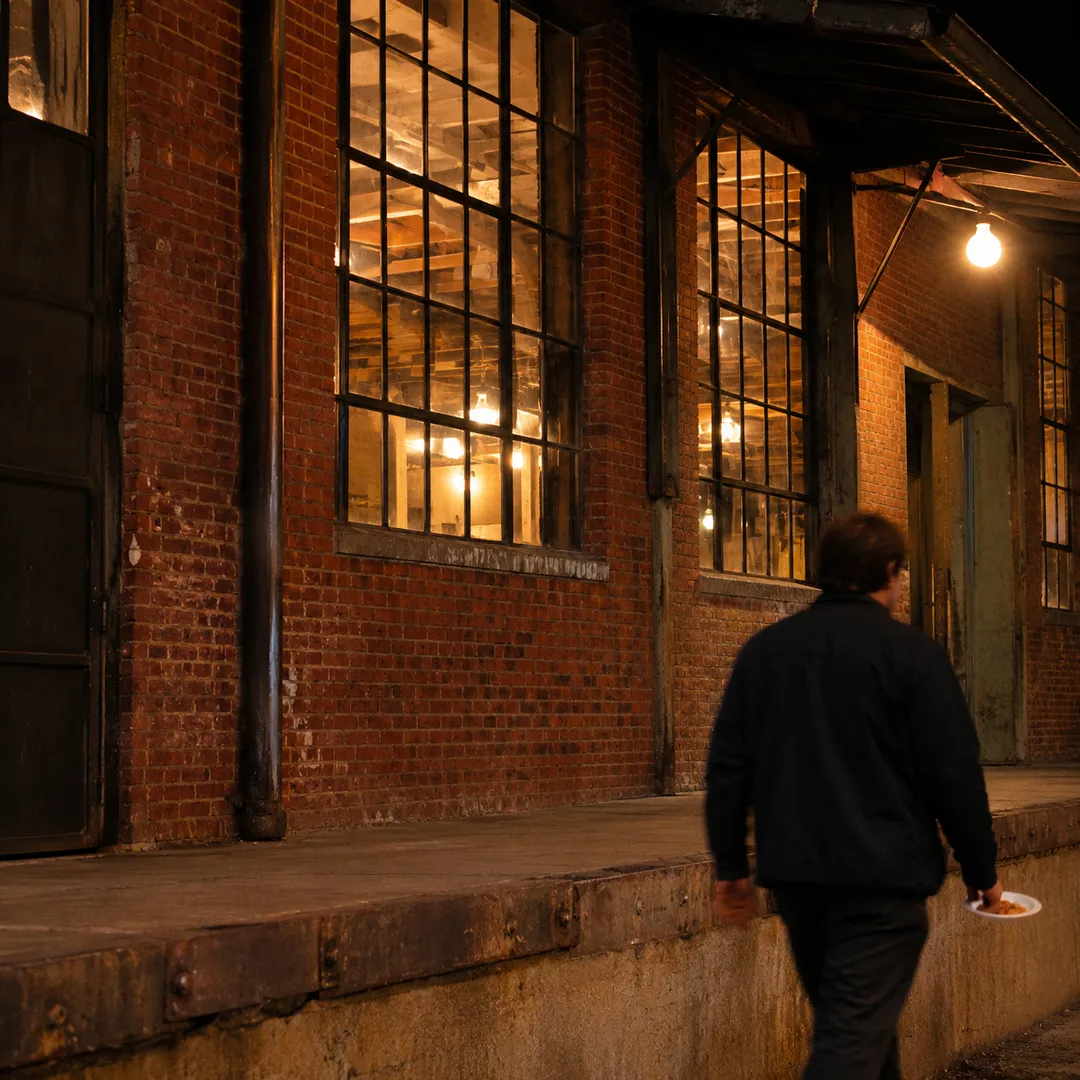
Stand near the truck or find a ledge or curb nearby. In the Arts District, the wide sidewalks and loading docks make good impromptu tables, as long as you are not blocking a door or a driveway.
Pairing Tacos With a Gallery Night
The rhythm of the Arts District at night suits a slow crawl. See a show, grab tacos, walk a few blocks to another space, and talk about what you saw. Tacos make good fuel between stops because they are quick and light enough to keep you moving.
If you are with friends, take turns picking the next filling to try. Someone who has never had lengua may surprise themselves, and the shared tasting gives the group something new to talk about besides the art.
Night Habits for the Warehouse Blocks
The warehouse streets can be quiet between busy pockets, so walk with friends and stay on lit stretches. Keep an eye on your bag, and plan how you will get home before the night winds down. Ride shares are common in the area.
Be a good neighbor. People live in many of the loft buildings, so keep your voice down near entrances and throw your trash away. Leaving the block as clean as you found it is part of being welcome there.
Your First Order, Step by Step
Read the board and pick one familiar filling and one new one. Choose corn or flour if there is a choice. Order clearly with con todo or sin and a filling name, and say para aqui. Pay, step aside, and wait for your food. Visit the salsa bar, taste before you pour, and grab radishes and lime.
Eat right away, standing or perched on a ledge, and enjoy the warehouse lights around you. By your second or third truck, the board will stop looking like a test and start looking like a menu you want to work through.
Ask Karpo for more information.
Keep reading
- Santa Monica French Dip Sandwich Lunch Picker by Ocean
 Echo Park French Dip Sandwich Lunch Picker Around Noon
 Silver Lake French Dip Sandwich Lunch Picker on Hillsides