 Sawtelle Bowling Group Night Planner for a College Reunion
Sports Social
LA Strength Conditioning Gym With a Partner: Weekly Plan
Training with a partner at a Los Angeles strength conditioning gym works when you share a drive and warm-up but keep separate weights, sets and goals.
Some of the most consistent lifters in Los Angeles train with someone else. A partner, a spouse, a roommate or a close friend makes it harder to skip a session, turns the drive into shared time and adds a little friendly competition to the hard sets. But partner training also comes with traps. Different strength levels, goals and schedules can turn shared sessions into frustration. A good plan gives you the benefits of training together while letting each person progress at their own pace.
Share the Logistics
The easiest wins are logistical. Drive together and you halve the traffic stress, since one person can handle the road while the other relaxes. Pick a gym that works for both commutes, ideally close to home, so weekday sessions fit naturally. Shared schedules mean you are each other's reminder, and it is much harder to cancel when someone is already waiting in the car with their gym bag.
Agree on fixed days in advance. Two or three shared sessions a week is a realistic target for most couples and friends.
Warm Up Together, Lift Separately
Start each session side by side. A shared warm-up of easy rowing or cycling, mobility work and light sets keeps you in sync. Then split into your own programs for the main work. One person might be chasing a heavier deadlift while the other is building endurance or learning a new lift. Trying to follow the same program with the same weights rarely works when two people start from different places.
Rotate through equipment when you can. Sharing a rack and taking turns between sets keeps you together without forcing identical training.
Partner Exercises That Work
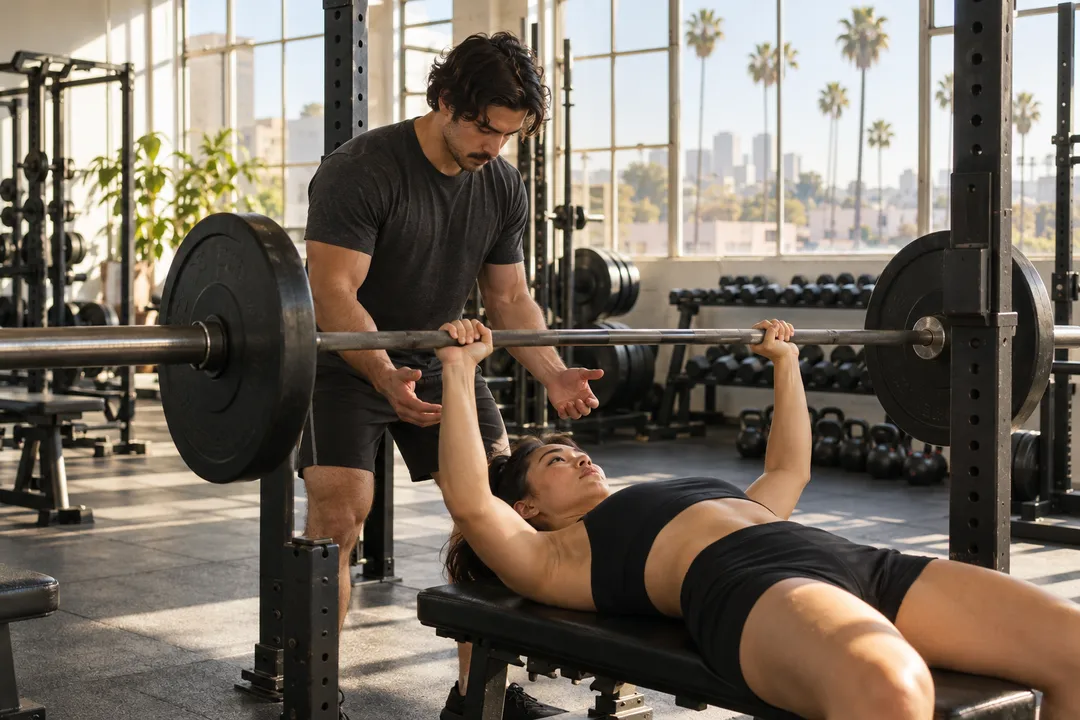
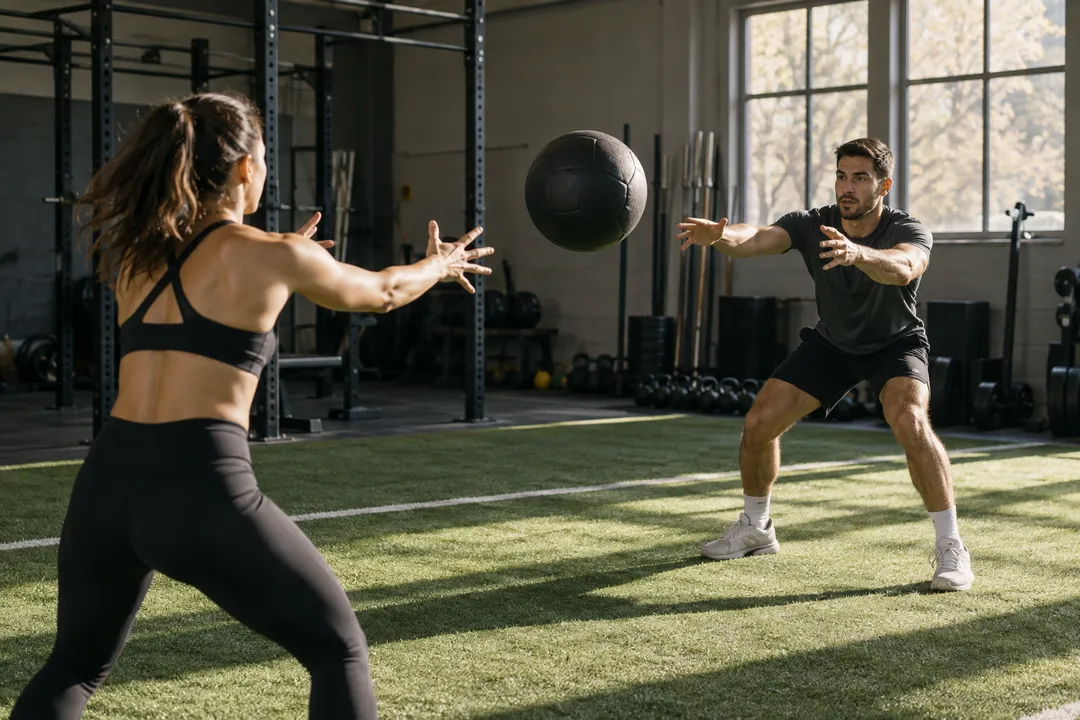
Some movements are genuinely better with two people. Medicine ball passes, partner sled pushes, resisted sprints with a band and alternating circuits where one works while the other rests all make conditioning more fun. Spotting each other on bench press or squats adds safety on heavy sets. Save these partner elements for the end of the session, after each person has finished their own strength work.
Respect Different Goals
Partners often want different things from the gym. One may be training for a hike or a race while the other wants to build muscle or lose weight. Talk openly about those goals so neither person feels dragged into a plan that does not suit them. Programs can share structure, such as a squat day and a hinge day, while differing in weights, reps and exercise choices.
Handle the Competition
A little rivalry is healthy and often pushes both people to try harder. Problems start when one person feels judged or rushed. Compare progress against your own past numbers rather than against each other. Celebrate each other's milestones, like a first pull-up or a new deadlift record, and avoid coaching your partner unless they ask for it. Friendly encouragement goes much further than unsolicited form corrections.
When One of You Misses a Session
Schedules will not always align. Agree in advance that the other person still goes alone. That rule protects both of your habits, since a partnership where one cancellation cancels both sessions will eventually fall apart. Keep a solo version of the plan ready so training continues even when work, travel or illness keeps one person home.
Weekend Sessions and Outdoor Add-Ons
Weekends give partners more freedom. Try a longer gym session followed by a walk along the beach in Santa Monica or Venice, or a hike in Griffith Park. Combining training with time outdoors turns the gym into part of a shared weekend rather than a chore. Many partners say these longer Saturday sessions become their favorite part of the week.
Choosing a Gym for Two
Look for a strength conditioning gym with enough racks and equipment that two people can train at the same time without blocking others. Ask about couples or household memberships, since many gyms offer discounted rates for a second person. Check parking, opening hours and whether there is space for partner drills like sled pushes or medicine ball throws.
Keep Recovery in Sync
Training together means you can recover together too. Plan rest days on the same schedule, cook balanced meals and prioritize sleep as a household. Sharing those habits makes recovery feel like part of the routine. On weeks when one partner is more tired, adjust that person's training load while still showing up together.
A Shared Log
Keep a shared notes file or notebook where each person writes down their main lifts and how they felt. Reviewing progress together every few weeks is motivating and helps you spot patterns, like sessions that always feel rough after late nights. It also turns long-term progress into something you build as a team.
A Sample Shared Week
Here is how a week can look. On Monday, both partners warm up together, then one squats heavy while the other works on goblet squats and lunges, before finishing with a shared medicine ball circuit. On Wednesday, one trains deadlifts and pull-ups while the other does Romanian deadlifts and rows, and both finish with partner sled pushes. On Saturday, both do a lighter full-body session followed by a walk by the ocean. Each person progresses on their own numbers.
Adjust the split when goals change. A partner preparing for an event can add a session alone while the shared days stay the same.
Learning New Lifts Together
Starting a new movement at the same time can be a bonding experience. If neither of you has tried a barbell deadlift or a kettlebell swing, book a coached session together and learn the basics side by side. Watching someone else work through the same learning curve takes the pressure off. Afterward, you can film each other's sets from the side to compare technique, which is far easier with a training partner than alone.
Safety When Training Together
Spotting is one of the biggest advantages of a partner, but it only helps if you agree on how to do it. Talk through signals before a heavy set, such as when the spotter should step in and how to rack the bar. Use safety arms on the rack for squats and bench press even with a spotter present.
Practical Notes
Pick a gym close to home with parking and space for two. Share warm-ups and conditioning, but keep separate strength programs. Agree that missed sessions do not cancel the other person's training. Ask about discounted memberships for a second person. The Karpo APP can help you compare Los Angeles strength gyms that suit both of your schedules and commutes.
Ask Karpo for more information.
Keep reading
- Sawtelle Bowling Group Night Planner for a College Reunion
 Larchmont Bowling Group Night Planner for Carpool Parents
 Boyle Heights Bowling Group Night Planner for a Quince Court