 Sawtelle Bowling Group Night Planner for a College Reunion
Sports Social
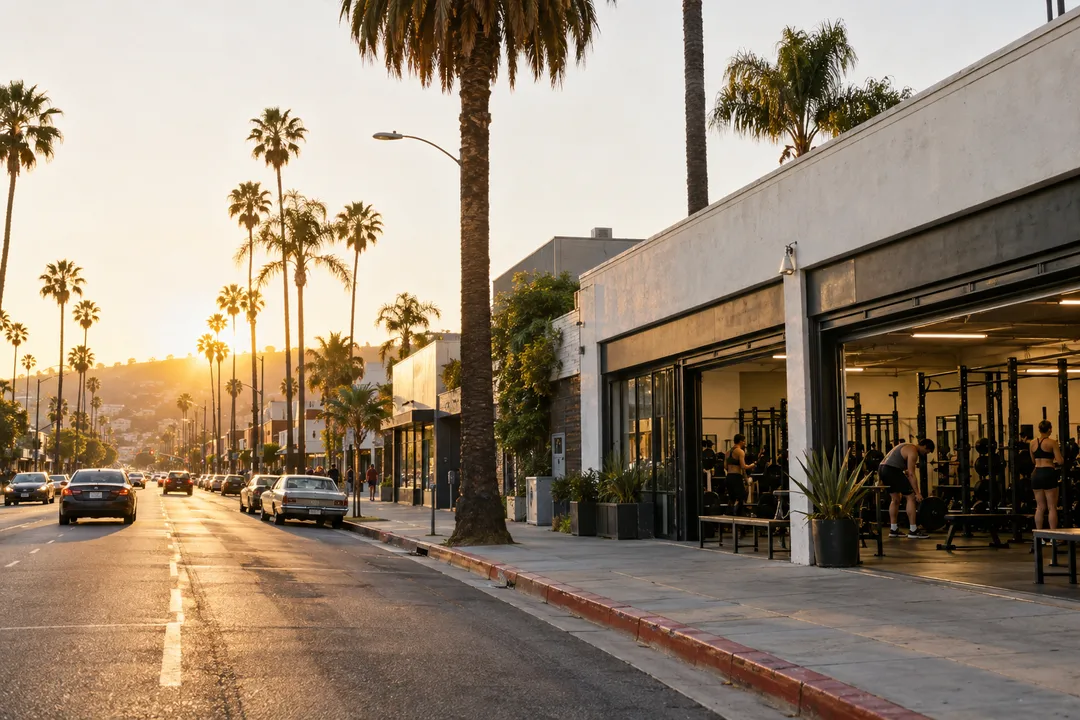
LA Strength Conditioning Gym by Drive Time, Not Miles
In Los Angeles, choose a strength conditioning gym by drive time, not miles: one on your commute side of the freeway, with free parking, gets used more often.
Ask anyone in Los Angeles why they stopped going to the gym, and traffic comes up sooner or later. A strength conditioning gym three miles away can be eight minutes at noon and forty minutes at six, and nobody wants to sit on the 405 just to do squats. The trick is to stop thinking about distance and start thinking about drive windows. Pick a gym that sits on the right side of your commute and train during the hours when sitting in traffic would be the alternative.
Distance Lies, Drive Time Does Not
Map distance means little in this city. A gym across a freeway, over a canyon or on the far side of a busy boulevard may be close on paper but painful in practice. Open a navigation app at the hour you plan to train and check the actual drive from work and from home on a weekday. Do this for each gym on your shortlist, and you will usually find that one or two candidates become obvious winners while others drop off the list entirely.
Look at both directions. A gym that is easy to reach after work may be terrible to drive home from, especially if it sends you back onto a freeway during the evening peak. The return trip is often the part that quietly kills the habit.
Train While the Freeways Jam
One of the smartest moves for LA commuters is to use the gym as a traffic shelter. Instead of joining the jam at five, drive a short distance to a gym near your office, train for an hour and set off home once the worst has eased. You turn time that would have been wasted in the car into a productive session, and the drive home afterward is calmer. Many people find this makes the gym feel like a reward rather than an extra burden on the day.
The same logic works in the morning. Leaving home early to train near work means you arrive before the morning peak and skip the slowest part of the drive.
Parking Is Part of the Membership
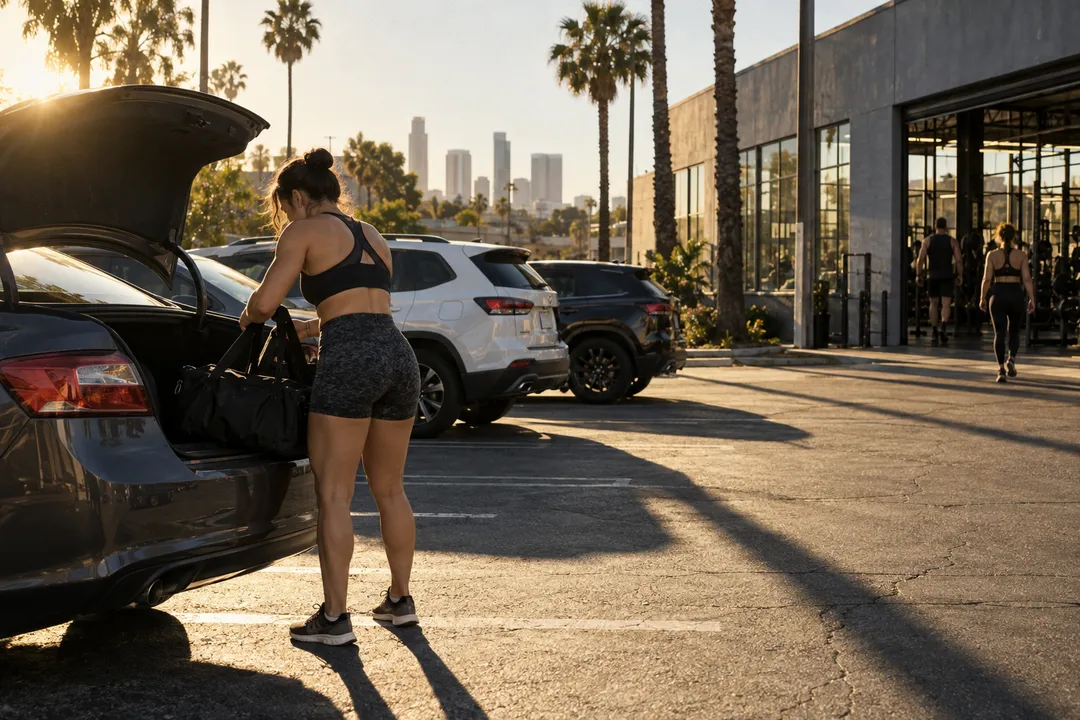
In Los Angeles, parking can make or break a gym. A dedicated lot or validated garage parking means you pull in, train and leave without circling. Street parking around busy neighborhoods like West Hollywood, Silver Lake or Santa Monica can add ten to fifteen minutes and sometimes a ticket. Ask about parking before you ask about equipment, and visit at your training hour to see how full the lot actually gets.
If parking costs money, factor it into the membership price. A cheaper gym with paid parking every visit can end up costing more than a pricier one with a free lot.
Pick One Gym Near Work and One Near Home
Some Angelenos split their training between two locations, especially if their gym has more than one branch or offers a membership that works across sites. A weekday gym near the office and a weekend gym near home remove most of the driving. Even if your gym has only one location, knowing a second spot that offers day passes near home is a useful fallback on days when the commute makes the main gym unrealistic.
Make the Session Efficient
Once the drive is solved, keep the session focused. Plan your main lift, two supporting exercises and a short conditioning piece before you arrive. Most people can finish in under an hour, which fits neatly into a traffic window. Use the car as your locker by keeping a spare gym bag in the trunk with shoes, a towel and a change of clothes, so you can train on a whim when the freeway looks red on the map.
Heat and the Car
Southern California sun turns a parked car into an oven. Do not leave water bottles, supplements or electronics baking in the trunk all afternoon. A small cooler bag keeps a drink cold for after the session, and a sunshade makes getting back into the car less punishing. During summer heat waves, an early morning session often feels much easier than one in the hottest part of the afternoon.
Reading Traffic Patterns Over a Month
Traffic in Los Angeles has a rhythm. Fridays often clear earlier, Monday mornings are slow, and school terms change the picture around many neighborhoods. Keep a simple note of how long your drives take on training days for the first month. That record will show you which days and times are consistently smooth, so you can lock in a schedule that survives the city's unpredictable roads.
Morning, Midday or Late Night
Different schedules open different windows. Early risers can train at six and be at their desks before the morning crush peaks. Remote and hybrid workers have the luxury of a midday session, when roads and gyms are often at their quietest. Night owls can train after eight, when the freeways finally loosen and many gyms thin out. Pick the window that matches your life rather than forcing a five o'clock session that puts you in the worst traffic of the day.
Whichever window you choose, keep it consistent for at least a month. Repetition builds the habit, and you will learn exactly how long each drive takes.
Combine Errands With Training
Los Angeles life involves a lot of driving anyway, so stack trips. A gym near your grocery store, your kids' school or a regular appointment turns training into part of a loop you already drive. Many strip malls and shopping centers across the city include strength gyms alongside markets and pharmacies, which makes it easy to lift and then pick up dinner in the same parking lot. Fewer separate trips means fewer reasons to skip.
What a Good Gym Floor Looks Like
Once the drive and parking are sorted, check the floor itself at your training hour. Count the racks and platforms, look at the range of dumbbells and see whether there is space for carries or sled work. A strength conditioning gym that fits LA traffic but forces you to wait twenty minutes for a rack simply moves the waiting from the freeway to the gym. You want both halves of the problem solved before signing anything.
Practical Notes
Shortlist gyms within fifteen minutes' drive at your training hour, not your quietest hour. Ask about parking, validation and whether the lot fills up at peak times. Keep a stocked gym bag in the car. Schedule sessions to avoid peak freeway hours whenever possible. The Karpo APP can help you compare strength gyms near your office and home so you pick the one that fits your real commute rather than the map.
Ask Karpo for more information.
Keep reading
- Sawtelle Bowling Group Night Planner for a College Reunion
 Larchmont Bowling Group Night Planner for Carpool Parents
 Boyle Heights Bowling Group Night Planner for a Quince Court