 Waterfront Park Near Me: Swan Boats and Cherry Trees at Lake Balboa
Free Things to Do
Street Art Near Me at the Great Wall of Los Angeles
A free visit to the Great Wall of Los Angeles, with SPARC history, Tujunga Wash access context, viewing advice, and nearby Valley planning notes.
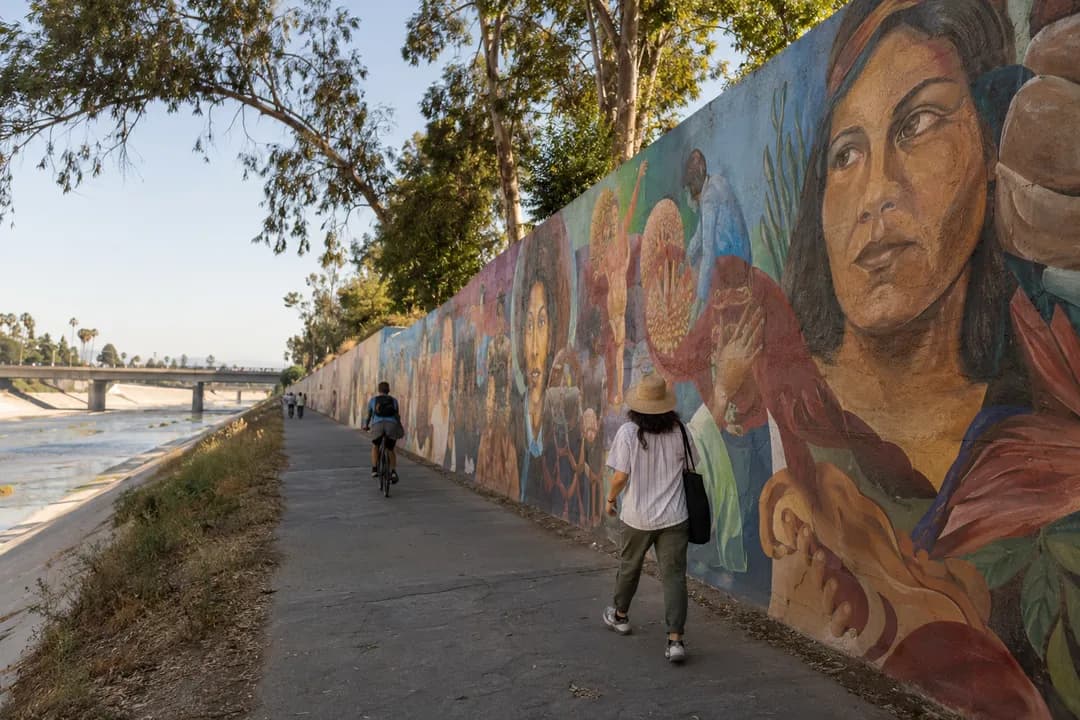
Typing street art near me in Los Angeles can produce quick mural stops, but the Great Wall of Los Angeles asks for a slower mindset. This is a long public artwork along the Tujunga Wash, not a compact selfie wall. Its scale, history, and narrative structure make the visit feel closer to walking through a painted civic archive. Because the Tujunga Wash setting turns the mural into a measured walk, the Great Wall gives the opening choice a local anchor, and Los Angeles feels easier to read from there.
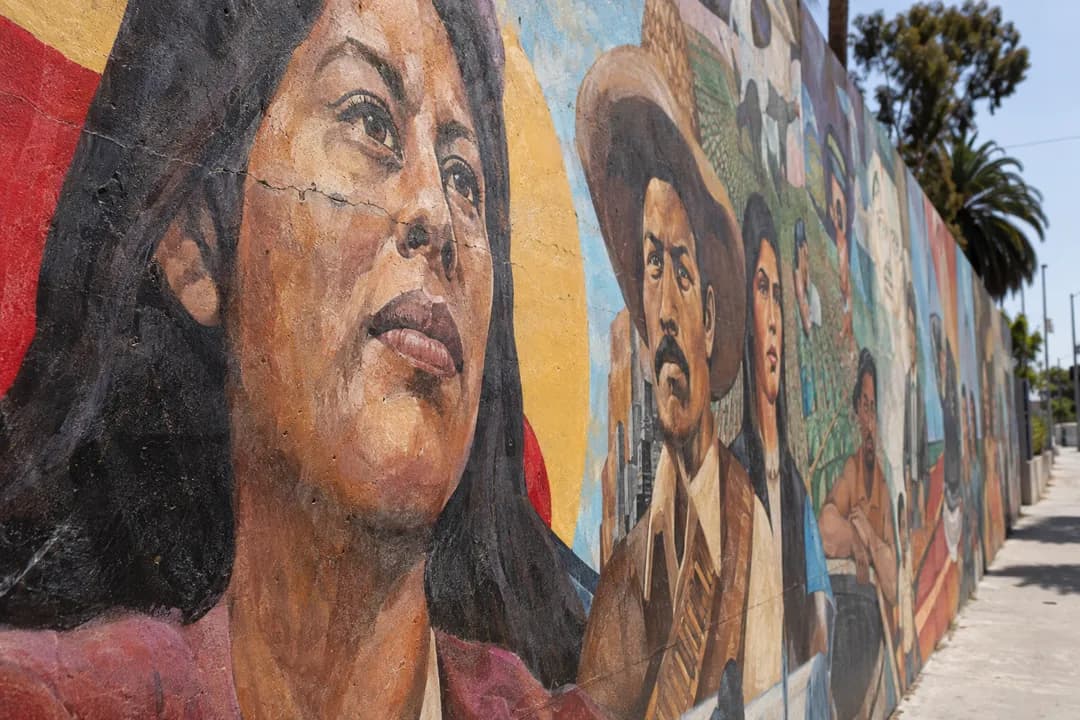
The mural is the signature work of SPARC, the Social and Public Art Resource Center, and was conceived by artist Judith F. Baca. Its purpose is sweeping: a pictorial history of California's communities, especially stories often pushed out of official textbooks. That context gives every section more force than a decorative street image. Around the Great Wall, the detail to notice is that Judith F. Baca's long historical sequence needs more patience than a selfie wall; it keeps the stop from becoming a generic wall on a map.
Plan around the wash rather than a storefront address. The mural unfolds along a linear flood-control channel, so the experience depends on where you enter, how far you walk, and whether current restoration or access conditions affect the route. Think of it as a measured walk beside a monumental artwork, not a single stop. Use this route cue near the Great Wall: SPARC's stewardship gives the piece a civic frame, not just a visual one. That the Great Wall cue helps visitors decide when to pause and when to move.
The visual language is sequential. Figures, eras, social movements, cultural references, and historical scenes appear in relation to one another. Instead of hunting for one perfect frame, follow the timeline and notice transitions. The length is part of the meaning; the wall uses distance to show that history accumulates and keeps moving. At the Great Wall, notice that restoration boundaries matter because the work is both public and cared for. That the Great Wall texture matters when the block is busy, shaded, or changing by the minute.
Stay on public paths, obey posted boundaries, and do not climb into restricted channel areas for a closer angle. Restoration work, fencing, or maintenance may change what can be seen from certain points. A respectful visit accepts those limits because preservation is part of keeping the mural available for future viewers. For timing at the Great Wall, remember that Valley heat makes morning shade more valuable than extra stops. Around the Great Wall, light, traffic, and comfort can change the pace of looking.
Morning and late afternoon are the most comfortable times. The concrete setting can feel hot and bright at midday, and direct sun may flatten color. Softer light helps the figures read more clearly, especially across longer sightlines. Bring water even if you expect a short visit; the setting is more exposed than it looks. Etiquette feels clearer at the Great Wall when you remember that the concrete channel changes how scale and distance feel underfoot. The art at the Great Wall still sits inside a working Los Angeles neighborhood.
This stop pairs well with a Valley plan rather than a classic Hollywood itinerary. Coffee or lunch in Studio City, North Hollywood, or along Ventura Boulevard can balance the mural's reflective pace. Because the site is linear, decide before arrival whether you want a quick focused view or a longer walk. Planning stays flexible at the Great Wall when nearby Studio City makes a practical food pause after the long wall is treated as useful context, not a promise that every visit will match.
Unlike a dense mural district, the Great Wall benefits from silence. Give yourself time to read the scenes, not just scan them. Certain sections may hit harder if you know California history, but the visual storytelling remains accessible. Painted bodies, gestures, landscape elements, and crowd scenes carry emotional information even without a guide. A smaller loop around the Great Wall works well because the narrative panels reward visitors who move slowly from era to era can pull attention away from the obvious wall.
Transportation requires a little homework. Driving may be easiest for many visitors, but do not assume parking or access points will be obvious. Check current directions before leaving, especially if construction, restoration, or path conditions are changing. The mural's public nature does not mean every approach is equally simple. Nearby, the Tujunga Wash setting turns the mural into a measured walk can reset the day, giving the Great Wall a second rhythm after the first sweep of color.
Photography works best in segments. Wide shots show the scale of the wash, while closer views help with faces and details. Avoid entering restricted areas for a cleaner image. If a fence or angle shapes your view, let it remind you that this is a real public infrastructure site, not a curated gallery wall. Let the frame include the fact that Judith F. Baca's long historical sequence needs more patience than a selfie wall at the Great Wall; real street life often explains scale better than an empty shot.
The mural's history of youth involvement and community labor adds another layer to the visit. Many public artworks are described as community projects, but here the phrase carries actual weight. The wall reflects organizing, education, and collaboration as much as individual authorship. That makes the long format feel earned rather than merely ambitious. Look for how SPARC's stewardship gives the piece a civic frame, not just a visual one changes the surface, because the Great Wall carries weather, repair, and neighborhood use together.
Nearby neighborhoods offer a useful contrast after the walk. North Hollywood brings theaters, casual restaurants, and transit connections; Studio City offers cafes and Ventura Boulevard errands. If you are building a larger day, keep the art visit first or second, before heat and traffic reduce your patience. As of October 2026, restoration boundaries matter because the work is both public and cared for is the sort of current detail worth checking before crossing Los Angeles.
Practical Notes: admission is free, but public access, viewing angles, and restoration conditions can shift. Wear sun protection, bring water, and confirm the best entry point before you go. The mural is long, so choose a manageable section if you are visiting with kids, limited mobility, or a tight schedule. Valley heat makes morning shade more valuable than extra stops keeps this street art near me result specific to the Great Wall, not interchangeable with another mural district.
Do not rush the ending. Because the wall is narrative, stopping abruptly can feel like closing a book mid-chapter. Even if you cannot see the entire work, pause before leaving and look back along the channel. The scale becomes clearer when you consider how much painted history extends beyond your immediate view. Practical planning improves when the concrete channel changes how scale and distance feel underfoot is handled before arrival, leaving more attention for the free outdoor art.
The Great Wall of Los Angeles stands apart from trend-driven mural routes because it treats public art as memory work. It is free, monumental, and grounded in place. Visit with patience, stay within allowed areas, and let the long painted sequence remind you that Los Angeles street art can be both beautiful and deeply civic. For the last pass, nearby Studio City makes a practical food pause after the long wall gives the Great Wall a memory beyond the search phrase and the first photograph.
Ask Karpo for more information.
Keep reading
- Waterfront Park Near Me: Swan Boats and Cherry Trees at Lake Balboa
 Waterfront Park Near Me: Tidal Swimming Beach at Long Beach's Colorado Lagoon
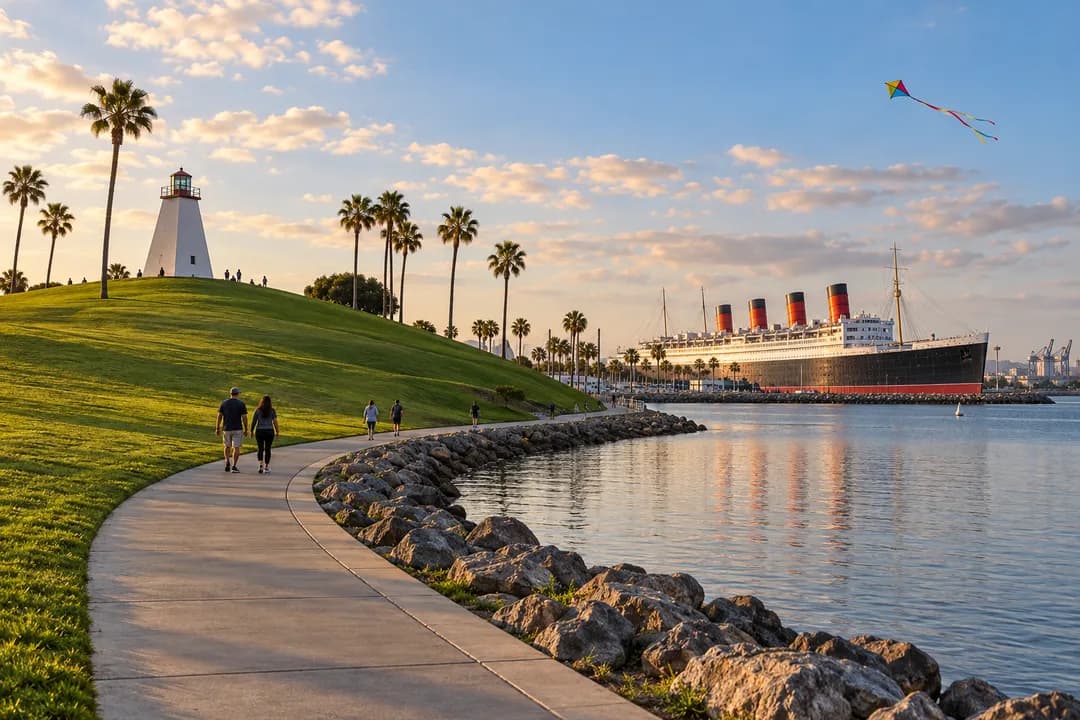 Waterfront Park Near Me: Lighthouse Hill at Shoreline Aquatic Park