 Lincoln Heights Champurrado Winter Cafe Picker: Two Routes
Coffee & Dessert
Silver Lake Specialty Coffee Bean Roaster Flight at Home
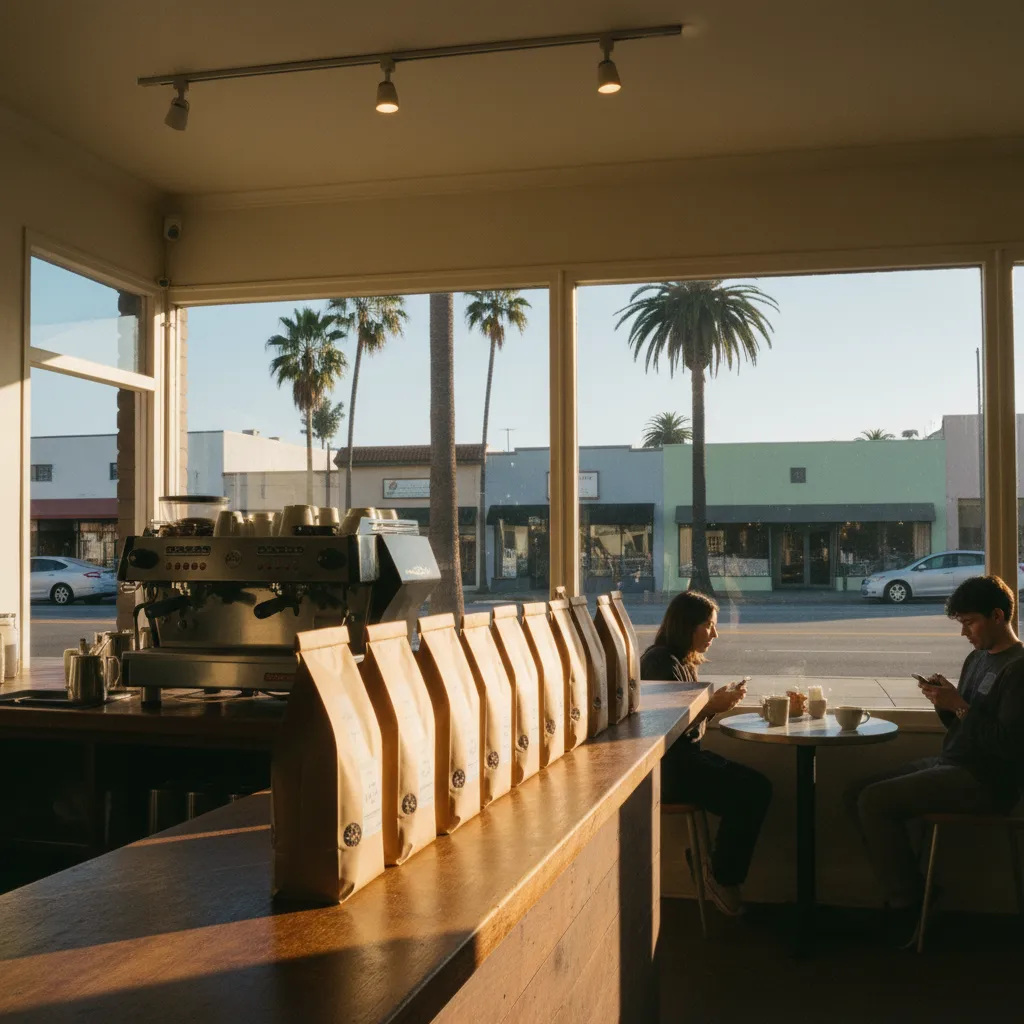
Compare single-origin beans the patient way: shop Silver Lake's Sunset Junction for three small bags, walk the reservoir, then cup them side by side at home.
Most people buy coffee beans the way they buy a paperback at the airport: one bag, chosen in a hurry, judged on a single rushed cup. If you actually want to know whether you prefer a washed Ethiopian over a natural from Colombia, the better move is a small tasting flight, and Silver Lake is an easy neighborhood to build one in. Sunset Junction, the stretch of Sunset Boulevard where Silver Lake meets the edge of Los Feliz, packs several specialty coffee bars into a short walk, and the reservoir loop gives you a reason to slow down between stops. This plan treats the day as research rather than a caffeine sprint.
Why a Flight Beats a Single Bag
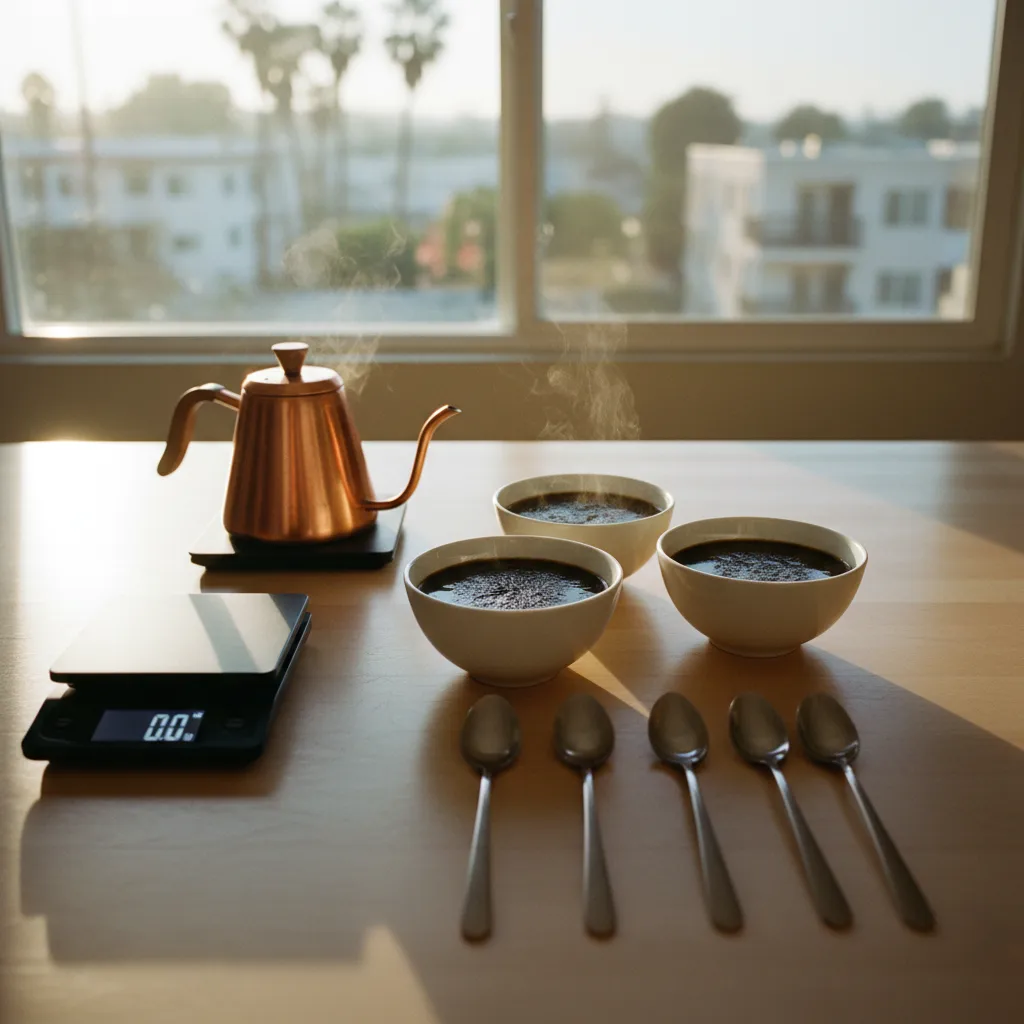
A single bag tells you very little. You taste it, you like it or you do not, and you never learn why. Three coffees tasted together make the differences obvious. Brightness that seemed sharp on its own reads as lively next to a heavier cup. A chocolate note that felt flat suddenly feels comforting. The point of a flight is contrast, and contrast is what teaches your palate faster than any tasting card.
The goal for this day is simple: leave the neighborhood with three small amounts of whole-bean coffee from different origins or processing styles, then taste them at home under the same conditions. Many specialty shops sell smaller bags or will talk you through which single origins are drinking well right now. Asking that question out loud is the single most useful thing you can do at the counter.
Starting at Sunset Junction
Begin on Sunset Boulevard near the Sanborn Avenue triangle, where the neighborhood's coffee identity has been taking shape for years. Intelligentsia's Silver Lake bar, a long-running anchor of this corner, is a good first stop because its baristas are used to customers who want to talk origin, altitude and process. Order a pour-over of whatever single origin interests you, drink it slowly, and ask what else on the shelf would contrast with it. Write the answer down. That is the start of your flight.
From there, wander. The blocks around the junction are dense with small cafes, some roasting their own beans and some pouring guest roasters from around Los Angeles. You are not trying to visit every shop. You are trying to collect a second and third coffee that pull in a different direction from your first. If your opener was a bright, floral washed coffee, look for a natural-process bean or a darker, rounder blend component. If your opener was rich and syrupy, hunt for something lighter and more acidic.
Reading the Bag Before You Buy
Whole-bean bags from serious roasters carry most of what you need right on the label. Look for the origin country and region, the farm or cooperative when listed, the processing method, and the roast date. Processing matters more than many first-time buyers expect. Washed coffees tend to taste cleaner and brighter. Natural coffees, dried with the fruit still on, often lean jammy and wine-like. Honey-processed lots sit somewhere between.
The roast date is your freshness check. Beans that rested about a week after roasting usually brew more evenly than beans roasted yesterday, and they keep improving for a couple of weeks after that. Skip bags with no roast date at all. If a shop grinds for you, politely decline for this project, since whole beans hold their character much longer and you want all three coffees to stay fair competitors until tasting day.
The Reservoir Walk in Between
Once you have one or two bags, walk north toward the Silver Lake Reservoir. The loop around the water is popular with joggers, dog walkers and families, and it offers the kind of unhurried break that keeps a coffee day from turning jittery. The Meadow on the eastern side is a pleasant spot to sit on the grass, compare notes, and decide what the flight still needs. Drink water here. Your palate will thank you later.
If you still need a third coffee after the loop, double back toward Sunset or follow Silver Lake Boulevard south. Some of the area's smaller bars rotate guest roasters, which is a good way to add a coffee from a different Los Angeles roastery without crossing town. Keep the same habit at every stop: ask what is drinking well, ask what contrasts with your other two bags, and look at the roast date before you pay.
Setting Up a Home Cupping
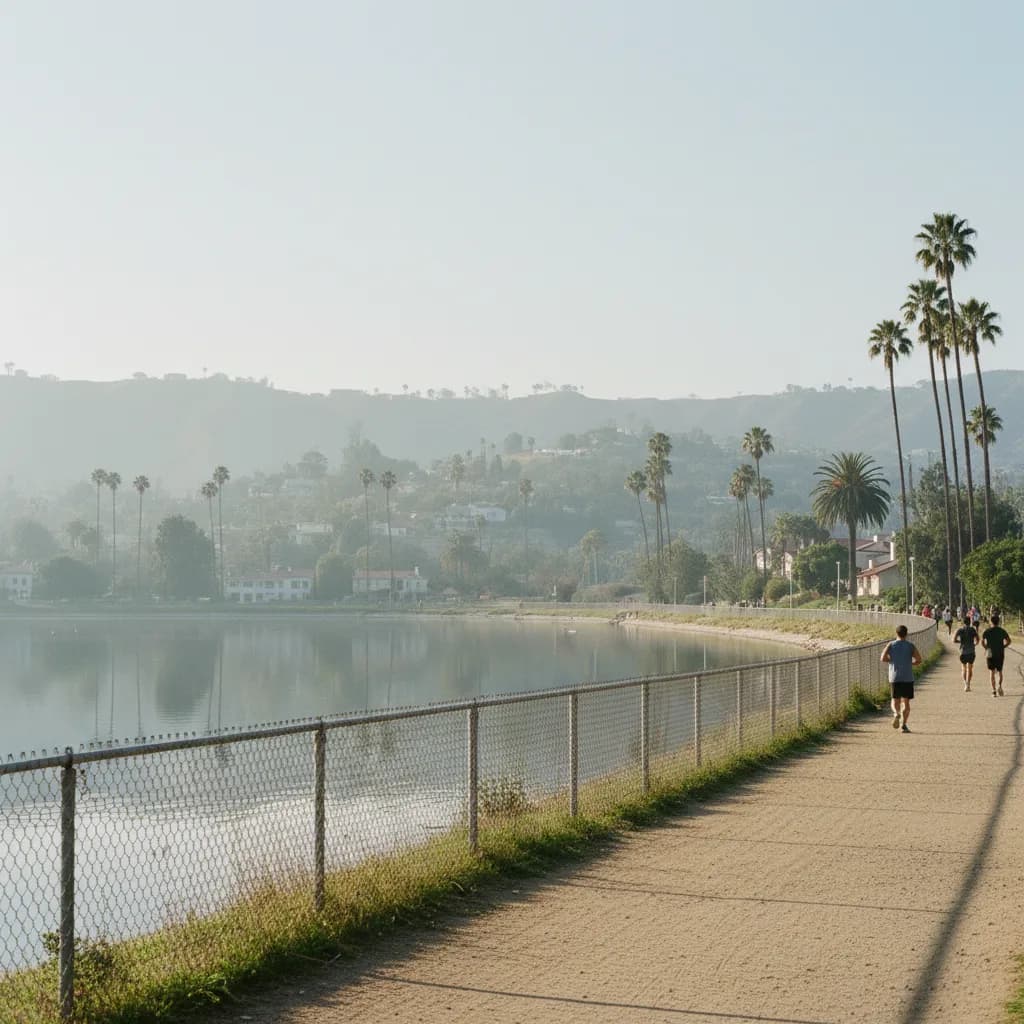
Cupping is how professionals compare coffees, and it is easier at home than it sounds. You need three identical mugs or glasses, a kettle, a scale, a grinder and three spoons. Weigh the same amount of each coffee, roughly ten to twelve grams per cup, and grind each one medium-coarse, about like kosher salt. Smell the dry grounds first and note what you notice. Then pour the same weight of water just off the boil over each cup and start a timer.
After about four minutes, a crust of grounds forms on top. Break it gently with a spoon and lean in to smell the aroma that rises. Skim off the remaining foam and grounds, let the cups cool for a few minutes, then slurp a spoonful from each. Go back and forth. Coffee changes as it cools, and the differences you could barely sense at first become obvious once the cups reach a warm, drinkable temperature.
Scoring Without Overthinking
Skip the formal score sheet. Instead, give each coffee three quick notes: what it reminds you of, how heavy it feels in the mouth, and whether the finish lingers or disappears. Then rank them. The ranking is the real result. Most people discover a clear pattern after one or two flights, such as a steady preference for naturals or a surprise fondness for washed Central American coffees. That pattern tells you what to ask for the next time you stand at a roaster's counter.
Brew your winner properly the next morning using your usual method, a pour-over or a French press, so you can confirm it holds up outside the cupping setup. A good rule of thumb is about one gram of coffee for every sixteen grams of water, adjusted to taste. If the top pick tastes just as good in your daily brewer, that is your next full bag.
Planning Your Next Silver Lake Run
Once you know your preferences, the next trip becomes faster and more fun. You can walk into any shop around Sunset Junction and ask for something specific, a fruit-forward natural, a clean Kenyan, a comforting Brazilian for milk drinks, rather than staring at a wall of bags. Many specialty bars also change their single-origin lineup with the harvest seasons, so a second flight a couple of months later can taste completely different.
If you want help keeping track, you can ask Karpo in a chat for a short list of Silver Lake coffee bars that sell whole beans, save that list, and open map links when you head out. Bring the list back after your tasting and note which bags won, so your next run starts from what you already learned. Contact each shop directly if you have questions about smaller bag sizes or which origins they currently stock.
A tasting flight turns a routine errand into a small adventure with a clear payoff: a coffee you genuinely prefer, chosen for reasons you can explain. Silver Lake, with its compact cluster of cafes and a reservoir loop built for slow thinking, is one of the friendliest places in Los Angeles to run the experiment.
Ask Karpo for more information.
Keep reading
- Lincoln Heights Champurrado Winter Cafe Picker: Two Routes
 Pico-Union Champurrado Winter Cafe Picker: Two Easy Ways
 Highland Park Champurrado Winter Cafe Picker: Two Avenues