 Lincoln Heights Champurrado Winter Cafe Picker: Two Routes
Coffee & Dessert
Arts District Specialty Coffee Bean Roaster for Espresso
Bought a home espresso machine? Use a walk through the Arts District's warehouse blocks to pick beans that pull well, then dial them in over your first week.
A new home espresso machine is exciting for about three days. Then the shots start running too fast, tasting sour, or gushing into the cup like weak tea, and the shiny machine on the counter begins to feel like a mistake. Very often the problem is not the machine. It is the beans. Espresso is far fussier than drip coffee, and the bag you grabbed at the supermarket was probably roasted months ago. The Arts District, with its converted warehouses and long industrial blocks just east of downtown Los Angeles, is a good place to fix that, because the neighborhood's coffee bars tend to take espresso seriously and many of them will talk shop with you.
What Espresso Asks of a Bean
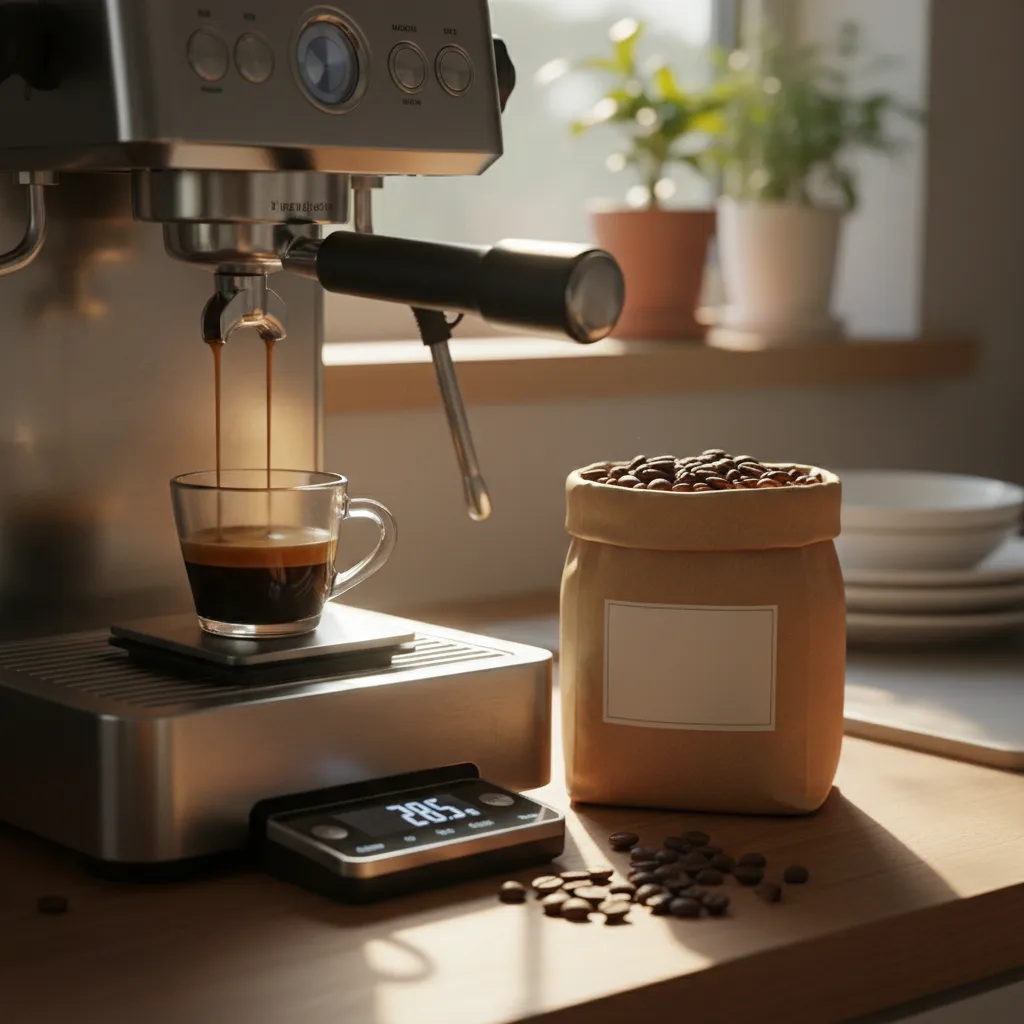
Espresso forces hot water through finely ground coffee under pressure in roughly half a minute. That intensity magnifies everything. Freshness, roast level and even the way beans were rested all show up in the cup. Coffee that is too old has lost the gases that create crema, so shots look thin and taste hollow. Coffee that is too fresh can be so gassy that shots spray and channel. And a very light roast that tastes beautiful as a pour-over can turn sharp and sour as espresso unless you have experience pulling it.
For a first bag, most baristas will steer you toward a medium roast built for espresso. Many roasters sell a house espresso blend designed precisely for this, combining coffees that balance sweetness, body and acidity so that small mistakes in your technique are forgiven. Think of it as training wheels that also happen to taste great.
Questions to Bring to the Counter
Walk into a specialty bar in the Arts District and order a straight espresso first, not a latte. Taste it and decide whether you like the direction: chocolatey and round, or fruity and bright. Then ask the barista a few direct questions. Which bean is in the hopper today? Is it sold as whole beans to take home? How many days off roast do they like to pull it? What dose and yield are they using on the bar? Those last two numbers give you a starting recipe for your own machine.
Be honest about your setup. A barista will recommend differently for someone with an entry-level machine and a basic grinder than for someone with a commercial-style setup. If your grinder struggles with very fine adjustments, a medium roast is a much easier partner than a light Nordic-style roast. Ask whether the beans also work well in milk drinks if you plan to make cortados or flat whites at home.
Walking the Warehouse Blocks
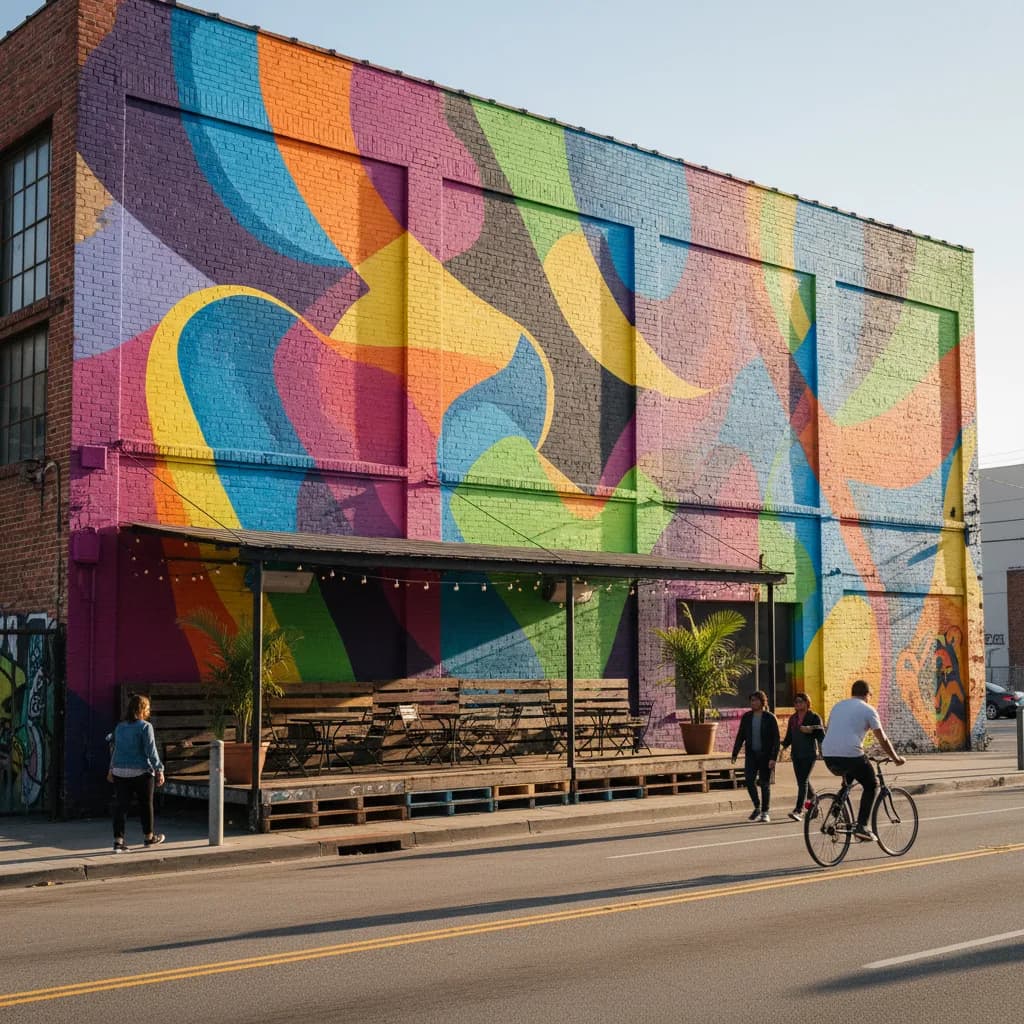
The Arts District rewards a slow walk. Large murals cover the sides of former industrial buildings, loading docks have become patios, and the streets between Alameda Street and the Los Angeles River feel quieter than the downtown core a few minutes away. Coffee bars here often share space with design studios, bakeries and small retail shops, so expect to find a roaster's beans on a shelf beside ceramics or furniture.
A good approach is to sample at two places before you buy. Taste one espresso, take notes, walk a few blocks, and taste another. The contrast will tell you more than any label. If you arrive by Metro, the Little Tokyo and Arts District station gives you a short walk into the neighborhood, and the galleries and food halls nearby make it easy to fold a bean run into a broader afternoon.
Blend or Single Origin for Your First Bag
A blend is the safer starting point because it is engineered to taste good across a range of shots. Single-origin espresso can be thrilling, with clear notes of berries or citrus, but it usually needs a tighter recipe and more patience. A sensible plan is to buy one bag of a house blend for learning, then add a small single origin once your shots become consistent. Changing only one variable at a time is how you actually learn your machine.
Check the roast date on any bag before you buy. For espresso, many home baristas like beans that are somewhere between one and three weeks off roast. Buy only as much as you will use in two to three weeks, store it in an airtight container away from sunlight and heat, and resist the urge to keep it in the fridge, where condensation can damage the beans.
Your Week-One Dial-In Routine
Start with the barista's recipe, or a simple default such as eighteen grams of ground coffee in and about thirty-six grams of liquid espresso out. Aim for a shot that takes somewhere between twenty-five and thirty-five seconds. If it runs fast and tastes sour, grind finer. If it runs slow and tastes bitter or harsh, grind coarser. Adjust in small steps and write each change down on a sticky note beside the machine.
Taste every shot, even the bad ones. Day one is about getting into the right range. Day two and three are about fine-tuning. By the end of the first week, you should know roughly where your grinder setting lives for that bean, and you will notice how the coffee shifts as it ages. That knowledge transfers. The next time you bring home a new bag, you will be dialed in within a few shots instead of a few days.
Milk Drinks and Weekend Experiments
Once your straight shots taste balanced, try the same beans in milk. Some espresso blends that taste intense on their own become wonderfully sweet in a flat white. Others disappear under milk. That reaction is useful information for your second bag. If you mostly drink lattes, tell the roaster that next time and ask for a coffee with enough body and chocolate to carry through.
Weekends are the time to experiment. Pull a shorter ristretto, try a longer lungo, or compare the same bean at two different temperatures if your machine allows it. Keep notes in the same place you track your recipes. Over a month or two, you will develop a clear sense of what you enjoy, which makes every future visit to a roaster faster and more satisfying.
Making the Arts District Part of Your Routine
Many home espresso owners settle into a rhythm: one trip every two or three weeks to restock fresh beans, taste what is new on the bar, and ask the staff about anything that is not working at home. Baristas usually enjoy those conversations, and they can spot common problems from a short description of your shots.
Before your next downtown trip, tell Karpo you are hunting for espresso beans in the Arts District and it can pull together a few coffee bars worth trying, which you can keep in the chat and open on a map when you leave. Jot how each bag pulled after you finish it, and that note becomes your opening question at the counter next time. Bag sizes and what is on the hopper change often, so check with the shops themselves.
A home espresso machine pays off only when it is paired with the right beans and a little patience. A slow afternoon in the Arts District, a few honest questions at the counter and a week of careful notes are usually enough to turn frustrating shots into the best coffee you make all day.
Ask Karpo for more information.
Keep reading
- Lincoln Heights Champurrado Winter Cafe Picker: Two Routes
 Pico-Union Champurrado Winter Cafe Picker: Two Easy Ways
 Highland Park Champurrado Winter Cafe Picker: Two Avenues