 Burbank Film Memorabilia Collector Shop Walk: Studio Stash
Hidden Gems & Odd Finds

LA Shoe Repair Shop: 6 Details for Suede Cleaning
Find a Los Angeles shoe repair shop for suede cleaning with six details about your pair. Organize the material, marks and finish before an assessment.
For suede cleaning, give a Los Angeles shoe repair shop six details before asking it to assess the pair: the material label, the affected area, what happened, what you already tried, the finish you hope to keep and your practical deadline. Use that brief in the Karpo APP to organize a search for a suitable counter. The purpose is to find someone to assess the shoes and discuss a process, rather than promise that every mark can disappear or that the color will remain unchanged.
Detail one: identify what you actually own
Read the original label or product description if it is available and copy the wording accurately. If you do not know whether the surface is suede, nubuck or another material, say that it is unknown. A soft-looking finish is an observation, not a material certificate. Include the brand and model when you have them, but avoid guessing a composition from the price or appearance. Clear uncertainty gives the counter a better starting point than an incorrect label stated with confidence.
Describe the shoe as a whole, including panels or decorative details that look different from the affected area. A mixed-material sneaker and a plain ankle boot present different questions for the person examining them. Your search brief does not need technical vocabulary to be useful. “Pale ankle boots with a darker patch on the left toe” communicates more than “premium shoe restoration.” Keep the description simple enough that another person could identify the pair without a photograph or a long explanation.
Detail two: locate the mark precisely
Say where the change appears and whether both shoes are affected. The toe, heel, seam and entire upper are distinct locations. Note whether the issue is a patch, a line, a loss of texture or an overall difference in appearance. Describe only what you can see in ordinary light. You are not expected to name the substance or diagnose the cause. If the mark is more noticeable from one direction, include that observation instead of declaring the material permanently damaged.
Use the same neutral description when contacting candidates. It lets you compare their replies to one problem rather than subtly changing the request each time. Ask whether they assess this type of footwear and finish, then arrange the next step according to their response. A listing that mentions leather care does not by itself answer a suede-specific question. The useful filter is the counter's stated service and its response to your description, with the final process discussed after inspection.
Detail three: explain the incident without guessing
Write down what you remember about how the mark appeared. You might know that the shoes were caught in rain or that a drink spilled nearby, while being unsure what actually reached the surface. Separate those observations. “I noticed it after the walk” is different from “this is definitely a water stain.” You can also give an approximate sequence in plain language: before storage, after the outing or first noticed when unpacking. Do not invent a chemical explanation to make the account sound complete.
If the shoes are sentimental or part of a matching outfit, mention why the appearance matters to you. That preference can help frame the assessment, but it does not establish a recoverable original finish. Ask the repairer how they would discuss an acceptable outcome and any visible limits. Skip promises of making the pair new again when gathering candidates. A useful search identifies people willing to explain their approach, including reasons they might decline the work, rather than rewarding the strongest promotional wording.
Detail four: list everything already applied
Tell the counter about any cleaner, brush, spray or household treatment you have used. Copy product names from the containers if you still have them and distinguish your own actions from earlier professional work. An incomplete memory is fine if you label it honestly. Avoid testing another product simply to improve the appearance before the assessment. This brief is about communicating the state of the shoes, not giving instructions for an at-home cleaning procedure or recommending a universal treatment.
You can ask Karpo to turn your notes into a concise message: “I have light suede shoes with a patch on the toe after an outdoor event. I used this named spray once. Help me find cleaning candidates around my neighborhood and prepare questions about assessment and color changes.” Supply the actual neighborhood and product name yourself. Treat this as a prompt example, with no implied result from a real shop. The shorter brief should retain the details that could change the conversation.
Detail five: say which finish matters most
Decide whether your priority is a particular color, the feel of the surface, a consistent appearance across the pair or simply making the shoes wearable again. Explain that priority before approving a proposed process. Ask what the repairer expects the work to accomplish and what uncertainty remains after assessment. A careful answer may include limits. Do not interpret the absence of a guarantee as a reason to search for a more dramatic promise. You need a proposal you understand for a pair you value.
Request a clear scope that distinguishes cleaning from recoloring or other work. These words should not become interchangeable merely because they appear under a broad restoration heading. If a proposal includes a change you do not want, pause and say so. Ask which steps you are authorizing and how further decisions would be handled. Keep the reply with any estimate. That record is especially helpful when the shoes are left at one counter and collected on a different day by someone else.
Detail six: give a workable handover plan
Your deadline should explain both the occasion and when you can travel. Tell the shop when you need the shoes and ask what schedule it proposes for the accepted work. In the Karpo APP, use that information to plan drop-off and collection around your other commitments. The conversation can organize your choices; an agreed repair schedule comes from the provider. If the proposed timing leaves no comfortable collection window, choose a different pair for the occasion rather than relying on an assumed emergency turnaround.
Practical Notes for a cleaner search brief
Keep your six details together so you can reuse the same accurate account when a candidate asks for more information. Compare replies for relevance to the finish and for a clear assessment process, with travel convenience considered separately. Bring both shoes, any product details and your questions to the visit. At collection, discuss the result against the authorized scope and record the care instructions the repairer gives you. The outcome you are planning toward is a considered decision, with fewer vague assumptions between your search and the counter.
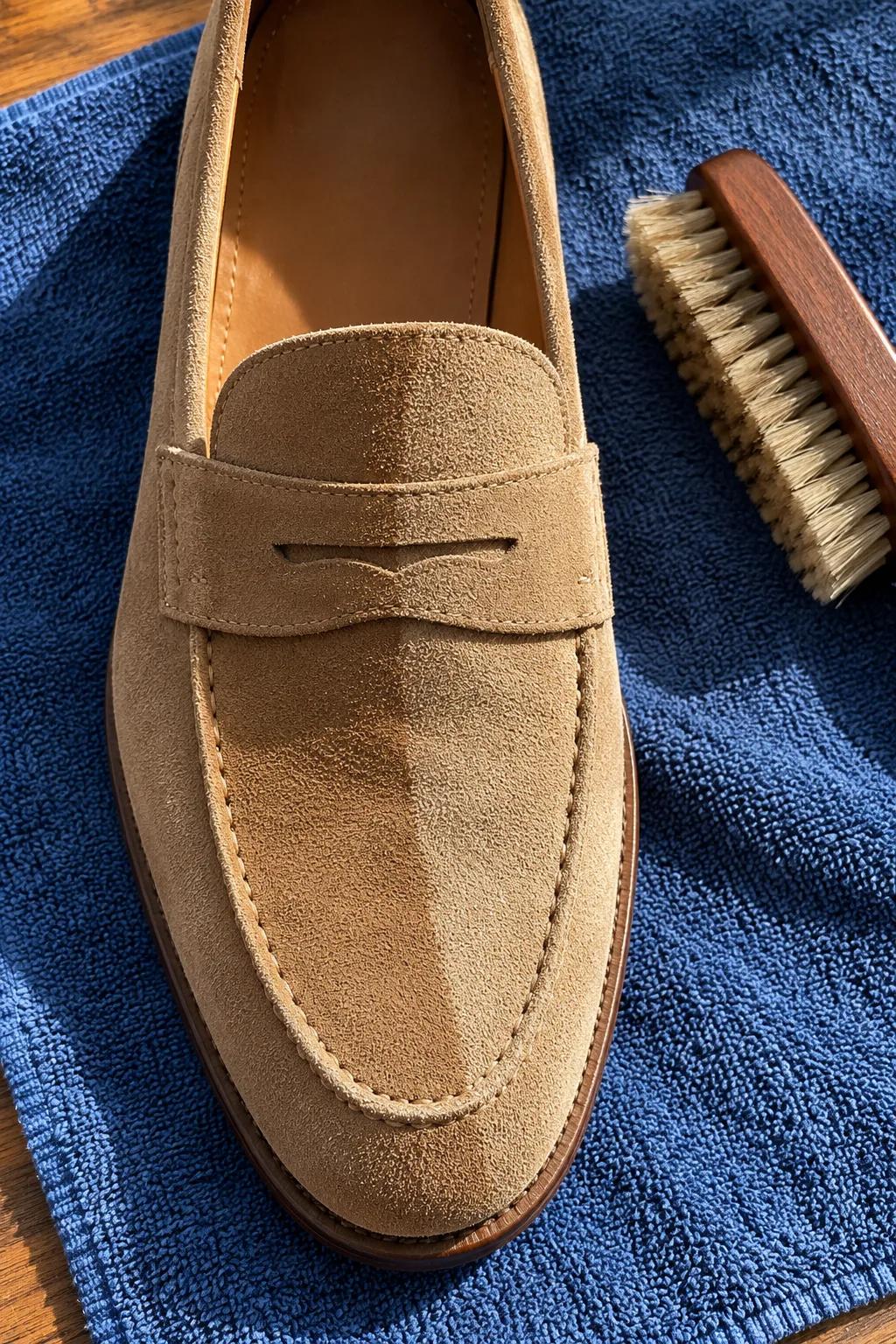
Generated imagery pairs pale suede boots with a loafer and brush to illustrate the materials described in a cleaning brief.
Ask Karpo for more information.
Keep reading
- Burbank Film Memorabilia Collector Shop Walk: Studio Stash
 Pasadena Film Memorabilia Collector Shop Walk: Classic Route
 Silver Lake Film Memorabilia Collector Shop Walk: Indie Lore