 Burbank Film Memorabilia Collector Shop Walk: Studio Stash
Hidden Gems & Odd Finds

LA Shoe Repair Shop: 3 Stops for Easier Pickup
Plan a Los Angeles shoe repair shop errand around assessment, drop-off and pickup. Compare the full route and leave time to discuss the finished work.
Plan a Los Angeles shoe repair shop errand as three stops: assessment, drop-off and pickup. Two may happen on the same visit, but treating them separately makes the route easier to organize. In the Karpo APP, describe where you start, how you travel and when you can return. Ask for help comparing the trip as a whole. You are building a practical plan around a provider's agreed process, rather than assuming that arrival at a counter guarantees immediate acceptance or completed work.
Stop one is a decision, not just a destination
An assessment visit should answer whether the counter offers a suitable proposal for your pair. Before traveling, write a short description of the problem, the material information you know and any earlier work. Include the result you care about most. The person at the counter can then explain what they are prepared to assess and propose. Leave space in your plan for taking the shoes home again. A productive first visit can end with information rather than a repair ticket.
Choose a starting area that fits your normal movements. If you live on one side of the city and work on another, explain which journey you want to attach the errand to. “Somewhere in Los Angeles” gives a conversation little basis for choosing a convenient route. A neighborhood, transport mode and return constraint are more useful. You might prefer an assessment beside an existing appointment or a counter you can reach from home. State that preference explicitly so it can shape the shortlist.
Give the route a real return journey
Try asking: “Help me plan a shoe repair assessment near my Los Angeles work route. I can leave the pair only if collection fits another weekday trip. Compare a few options by travel convenience and help me prepare the questions for the counter.” Add the neighborhoods involved and your mode of transport. This is an example prompt for organizing a search, not a completed itinerary or a claim that any named business has accepted the work.
Think about what you will be carrying after each stop. If you use transit or walk, a pair of boots can make another shopping errand less appealing than a pair of flats would. If you drive, include the extra time you personally need for parking and walking to the counter without inventing a parking arrangement. Keep those practical assumptions separate from provider information. You can revise the plan when a shop gives you an assessment or explains how its intake works.
Stop two begins when you agree to leave the pair
Drop-off is the point at which a proposal becomes an accepted job. Before handing over the shoes, make sure the scope, quoted charge and collection arrangement are clear to you. Ask how further work would be authorized if something else is found. Keep the resulting ticket or written record somewhere accessible. A route planner cannot replace this agreement. Your itinerary should follow the provider's process and your decision to accept it, rather than treating the first search result as a booked service.
If another person will collect the shoes, ask what the counter requires for that arrangement. Record the answer and pass along only the relevant details. Do not assume that a photograph of a ticket, a name or a payment record will work at every shop. The useful plan includes the provider's own collection instructions. For several pairs, keep a simple description beside each job so that you can associate the work and ticket with the right footwear when pickup day arrives.
Use the space between visits deliberately
Once the shoes are left, organize your next trip around the agreed handover rather than repeatedly making speculative visits. If you also want a coffee break or a neighborhood walk, ask Karpo to help you arrange that around the repair errand. Keep the optional stop easy to remove. An assessment can run longer than you expected, and you may finish it carrying the shoes. The repair decision comes first; the pleasant extra should fit the resulting plan without creating pressure to leave the pair.
Avoid turning a collection estimate into a personal deadline for wearing the shoes. Allow room to reach the counter, discuss the finished work and bring the pair home. If the shoes are for an event, state the event date during the assessment and decide whether the proposed schedule suits you. You can choose another pair for the occasion and collect the repaired one later. That is often a more manageable planning choice than arranging a long journey around an unagreed rush assumption.
Stop three includes an inspection
Pickup deserves enough time for a conversation. Bring the ticket or follow the agreed collection procedure, then compare the work with the scope you accepted. Ask the repairer to explain what was done and any instructions that accompany it. If a question remains, raise it before leaving. The collection stop is not complete merely because the shoes are in a bag. You also need to understand the result and keep a record of the work you paid for.
If the shoes need trying on, follow the counter's directions and leave yourself the time to do it. Describe your concern specifically if the fit or feel differs from what you expected. Keep any follow-up terms in the provider's exact wording and store them with the receipt. Do not assume all counters share one guarantee or remedy. A route built with a little room around pickup gives you a better chance to resolve questions with the people who handled the job.
Compare convenience without inventing certainty
When several candidates remain, compare the trips they would require after their processes are known. A location near your office may be easy for intake but difficult for collection if you will soon work elsewhere. A counter close to home may suit a slower repair you are happy to leave for another week. These are personal planning judgments. They do not rank craftsmanship, prove service availability or create a reservation. Use each piece of information for the decision it can actually support.
Ask for a short route comparison in the Karpo APP using your real constraints and the information you have gathered. State which dates are fixed and which are preferences. Keep provider replies distinct from your own assumptions so an unanswered question stays visible. If you are still waiting for an assessment, build a provisional first visit rather than a detailed repair schedule. A useful plan can stop at the next concrete action, such as preparing a message or choosing which counter to approach first.
Practical Notes: keep the errand portable
Use one small note for the pair, proposed work, ticket location and collection instructions. Pack the shoes so they are easy to show and carry, and choose an optional nearby activity only after the necessary stop is settled. If a provider declines the work, revise the brief with that explanation instead of repeating the same vague request elsewhere. The three-stop approach gives each visit a purpose. You finish with an assessment you understand, an accepted job when appropriate and a pickup journey that leaves room for the final conversation.
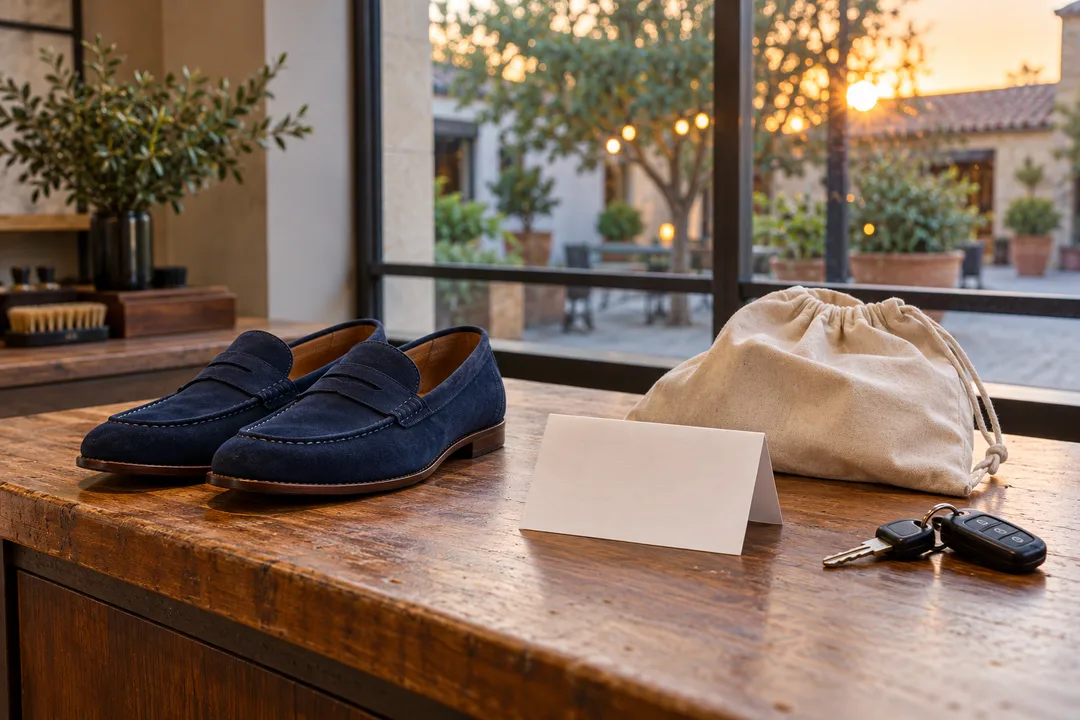
The tote and collection-counter images were generated for this route-planning article rather than photographed at a real repair business.
Ask Karpo for more information.
Keep reading
- Burbank Film Memorabilia Collector Shop Walk: Studio Stash
 Pasadena Film Memorabilia Collector Shop Walk: Classic Route
 Silver Lake Film Memorabilia Collector Shop Walk: Indie Lore