 Burbank Film Memorabilia Collector Shop Walk: Studio Stash
Hidden Gems & Odd Finds
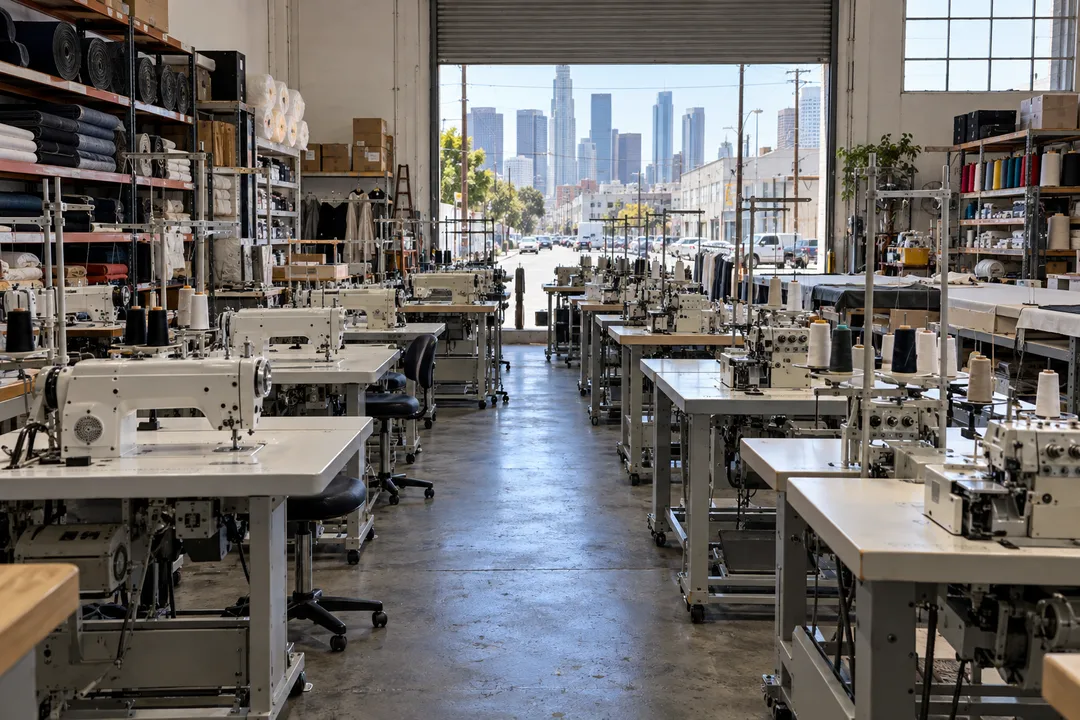
Industrial Sewing Machine Store Since 1980: ABC Sewing
ABC Sewing Machine at 2100 S Main St sells and repairs industrial Juki, Brother and Consew machines, open Mon–Fri 8am–5pm and Saturday 8am to 1pm.
ABC Sewing Machine, at 2100 S Main St, is the industrial end of the sewing machine store near me search, a family business founded in 1980 that sells, rents and repairs factory machines from Juki, Brother, Consew, Pegasus and Union Special. It opens Monday to Friday from 8am to 5pm and Saturday from 8am to 1pm, closed Sunday, and its parts counter is where garment workshops send someone when a machine stops mid-order.
From One Freelance Mechanic to a Parts Warehouse
The company's own origin story is one line long. ABC was established in 1980 and started off as a hardworking freelance sewing machine mechanic service, fixing machines in the garment shops that once filled downtown. It grew into a full-service business with around 20 employees and now describes itself as the largest carrier of spare parts in Los Angeles, with the largest service team in the industry. The focus has stayed the same: industrial equipment that has to run all day.
That history shapes who the counter serves. The company describes its customers as the textile and garment industry, which in practice means cut-and-sew contractors, upholstery and leather shops, and independent designers who have moved up from a home machine to a straight-stitch industrial head. The staff speaks the language of hook timing, needle systems and feed dogs, so bring precise terms if you have them and an honest description if you do not.
Brands and Machines on the Floor
The about page lists Juki, Brother, Pegasus, Kansai Special, SWF and Union Special, and says ABC is an authorized distributor for the major brands. The homepage adds 3Q Special, Consew, Megasew and Hikari to the brand strip. In practice that covers single-needle lockstitch machines, overlockers and sergers, coverstitch machines, walking-foot machines for leather and canvas, and SWF embroidery equipment. Machines are available to buy or rent, which suits a workshop that needs extra capacity for one season.
First-time industrial buyers should come with a fabric list rather than a brand preference. A machine set up for chiffon will fight you on denim, and a walking-foot machine built for upholstery is overkill for T-shirts. Ask the staff which motor and table package the machine ships with, and whether they will set it up before pickup. ABC offers financing through Click Lease, which helps small studios that would rather pay monthly than tie up cash in a new line.
The Parts Counter Prices
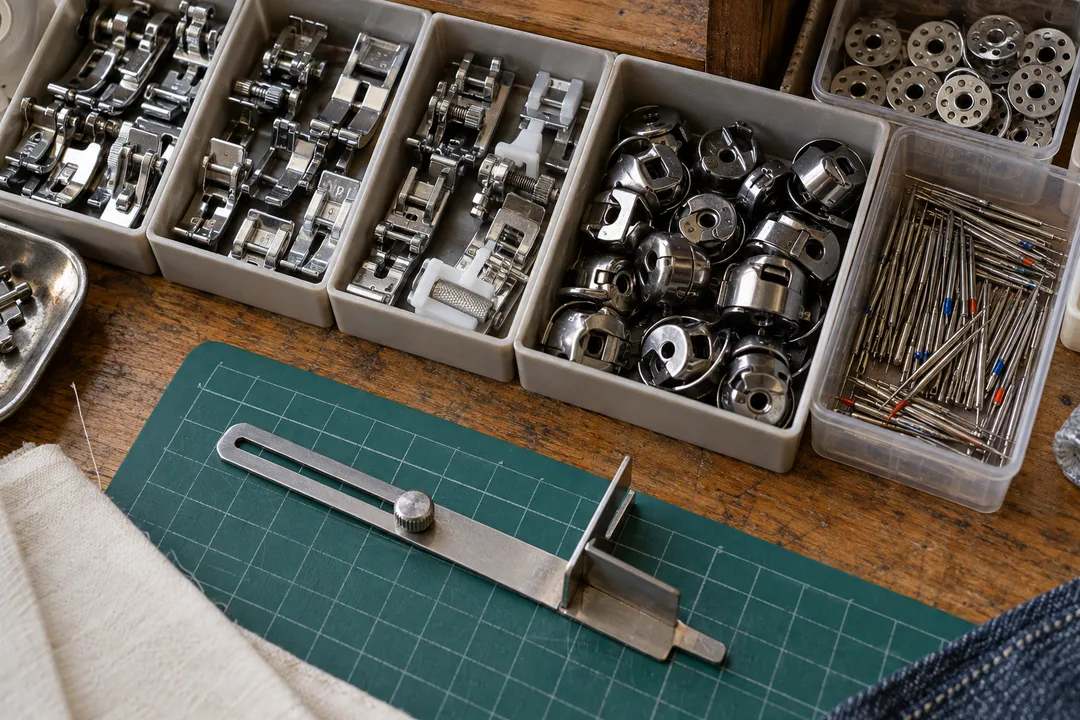
The online store posts prices for the small parts that keep a factory moving. A 3-in-1 magnetic seam guide is $5.50, a stainless steel flexible drawstring threader is $7.50, a Teflon base and gear industrial presser foot is $15.50, and an adjustable Teflon hemming foot is also $15.50. Those Teflon feet are the fix for vinyl, leather and coated fabrics that stick under a metal foot, which is one of the most common complaints from new industrial owners.
Skip buying a full box of mixed presser feet on your first visit. Industrial feet are specific to the machine family, and a hinged foot for one lockstitch model may not sit right on another. Bring the old foot or a photo of the model plate, buy the one foot your job needs, and test it before adding more. The same goes for needles: note the needle system printed on your current pack, because the counter will ask for it.
Repairs and Free Help
Repair is the other half of the business. ABC services industrial machines across the textile and garment industry and keeps the spare parts on hand that a repair usually needs, which shortens the wait compared with a shop that has to order in. For a home sewist with a domestic machine, this is not the right stop, and a dealer such as Tanner's in Westchester or Mayhall's in Montrose will serve you better.
ABC also gives away know-how. The site offers free sewing tutorials, a downloadable needle size chart and a YouTube channel with machine demonstrations, so you can watch a threading or timing video before driving over. Watching the threading video for your exact model before you come in can save a trip, especially on a serger, where most problems turn out to be a thread path skipped at one guide.
Around South Main Street
The shop sits south of the Fashion District, close to Washington Boulevard and LA Trade-Technical College, whose fashion and pattern-making students are a natural customer base. Head north toward Maple Avenue and the blocks between 8th Street and Olympic Boulevard for fabric, trims, zippers and thread wholesalers, then come back to ABC for the machine side of the project. A morning loop works best, since the counter opens at 8am and closes at 1pm on Saturday.
Parking and loading are the practical issue in this part of downtown. If you are buying a full industrial machine with a table and motor, bring a vehicle with a flat cargo area and a second person, because a head and table together weigh far more than a home machine. Smaller parts runs are easy on foot from the Fashion District once you have parked for your fabric shopping.
Practical Notes
ABC Sewing Machine, 2100 S Main St, Los Angeles, CA 90007. Hours are Monday to Friday 8am to 5pm and Saturday 8am to 1pm, closed Sunday. On Saturday the doors close at 1pm, so a parts run should happen early in the morning. Save a long machine demo for a weekday, when the full five-day schedule leaves more room for test stitching.
Bring the brand, model number and needle system of your machine, the broken part if you have it, and a fabric sample if the problem is stitch quality. For a purchase, bring the fabrics you sew most and ask for a test stitch on the exact head and table you plan to take home. Keep the receipt and the model plate photo together, since future parts orders depend on matching that information.
Ask Karpo for more information.
Keep reading
- Burbank Film Memorabilia Collector Shop Walk: Studio Stash
 Pasadena Film Memorabilia Collector Shop Walk: Classic Route
 Silver Lake Film Memorabilia Collector Shop Walk: Indie Lore