 Los Feliz Nail Salon Walk In Finder for Broken Nail Repair
Neighborhood Guides
WeHo Scenic Pedestrian Stroll from Melrose to Robertson
Plan a West Hollywood scenic pedestrian stroll linking the Pacific Design Center, Melrose showrooms, Robertson courtyards and the rainbow crossings.
West Hollywood packs a surprising amount of design and street life into under two square miles, and a scenic pedestrian stroll here is mostly flat, compact and easy to shape. The loop below starts at the Pacific Design Center on Melrose Avenue, runs west through the design quarter, cuts north along Robertson Boulevard and finishes at the rainbow crossings at San Vicente and Santa Monica Boulevard. Give it two to three hours and walk it clockwise so the afternoon sun stays behind you.

Start at the Blue Whale
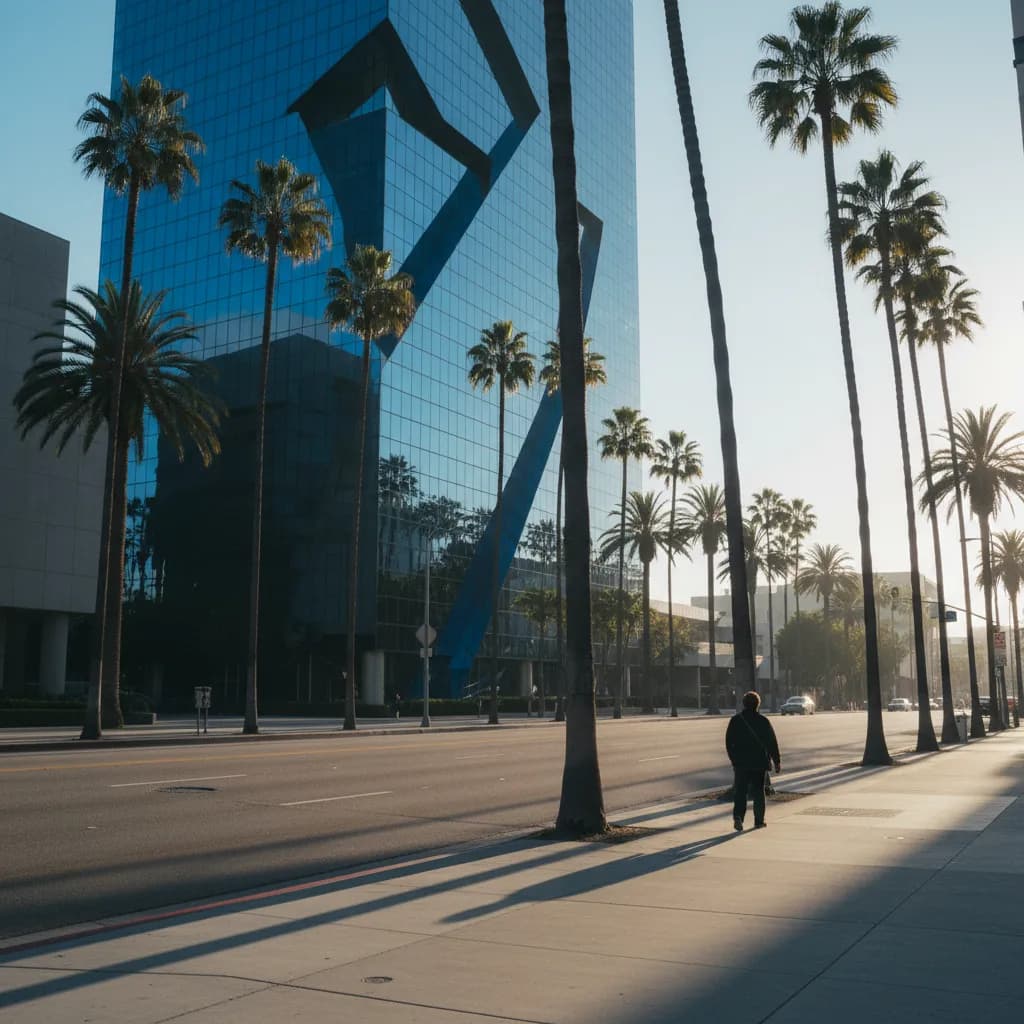
The Pacific Design Center is the landmark that anchors this part of the city. Architect Cesar Pelli designed the first building, clad in cobalt glass, which opened in 1975 and quickly earned the nickname the Blue Whale. A green building followed in 1988 and a red one in 2013, and the three shapes now sit together above a plaza that works as a natural meeting point before the walk.
Take a few minutes on the plaza to look at the buildings from different angles, because the glass shifts color with the light and the time of day. Early in the morning the blue reads almost black, while late afternoon makes it glow. The complex is mainly a trade center for interior designers, so treat the outside as the main attraction and keep the inside visit short unless a public exhibition is on.
The Melrose Design Quarter on Foot
Head west from the design center along Melrose Avenue and the street shifts into the stretch locals call the design quarter. Furniture showrooms, lighting studios, galleries and fashion boutiques sit behind clean low facades, often with large windows that let you see full room sets from the sidewalk. Window shopping is the point here, and nobody expects you to walk in.
Notice the planting along this part of Melrose. Many storefronts use olive trees, agaves and gravel courts rather than lawns, which gives the street a Mediterranean feel and a little shade. The sidewalks are wide and generally calm on weekday mornings. On weekends the western end grows busier with shoppers and photo sessions, so plan the Melrose stretch early if you want empty frames.
A Detour to the Schindler House
If you enjoy architecture, add a short detour north to the Schindler House on Kings Road. Rudolph Schindler built it in 1922 as a shared home and studio, using concrete slab walls, sliding canvas panels and open courtyards that blur inside and outside. It is now run by the MAK Center for Art and Architecture and is widely seen as one of the first modern houses in California.
Even from the street, the low walls and dense bamboo hedges make a quiet contrast with the polished showrooms a few blocks away. Visiting the interior usually means checking the MAK Center calendar in advance. If you skip the inside, the side streets around Kings Road still make a pleasant shaded link back toward Melrose and the rest of the loop.
Robertson Boulevard Courtyards
Turn north onto Robertson Boulevard and the mood becomes more social. This short stretch is lined with restaurant patios, small fashion stores and courtyards tucked behind arches and gates. Many of these spaces are semi public, so feel free to look in from the entrance and enjoy the fountains, string lights and climbing plants without making it a shopping trip.
Robertson has long been a place to see and be seen, and it can feel like a stage on busy afternoons. Walk on the shadier side of the street, slow down at corners and look up at the mix of older two story buildings and newer infill. If you want a coffee break, this is the best spot on the route, since there are plenty of outdoor tables close together.
Santa Monica Boulevard and the Rainbow Crossings
Robertson meets Santa Monica Boulevard in the heart of the city's LGBTQ nightlife district. West Hollywood incorporated as a city in 1984, and its early leadership made it one of the first cities in the country with an openly gay majority on its council. The rainbow crosswalks at San Vicente and Santa Monica Boulevard, painted in 2012, are now one of the most photographed spots in town.
Walk east along Santa Monica Boulevard past bars, clubs and cafes that are quiet in the daytime and full at night. Banners, public art and plaques along the sidewalk mark local history and pride events. Stop at the rainbow crossings to take photos from the corners rather than in the road, and keep an eye on turning traffic, which is frequent at this junction.
West Hollywood Park and the Library
Just beside the rainbow crossings, West Hollywood Park and the West Hollywood Library make a calm place to finish. The library building, which opened in 2011, has large windows, an outdoor terrace and murals on its parking structure that face the street. The park around it has lawns, shade trees and seating, and it is a good place to sit before heading home.
Around the park you will often see locals walking dogs, people reading on benches and fitness classes on the grass. On event days, including Pride in June, this whole area becomes much busier. Check the city events calendar before choosing a date if you want either a quiet finish or the energy of a festival, because the difference is dramatic.
Who Walks Here and When It Feels Best
West Hollywood's walkers are a blend of design professionals, residents with dogs, shoppers, fitness regulars and visitors on a first trip to Los Angeles. Weekday mornings bring design traffic and a calmer pace on Melrose. Weekend afternoons draw crowds to Robertson and Santa Monica Boulevard, and evenings belong to the nightlife district, which can be loud and lively.
The weather is usually mild, but summer middays on the flat boulevards can feel hot because shade is patchy. Spring adds purple jacaranda blossoms on many side streets, which makes the detours especially pretty. For the softest light, start in the morning at the design center and aim to reach the rainbow crossings in the late afternoon, when the low sun warms the painted stripes.
Planning Your Loop with Karpo APP
Karpo APP is useful when you want to turn this idea into a personal plan. Ask for a West Hollywood stroll that starts at the Pacific Design Center, includes the Melrose design quarter and Robertson courtyards, and ends near the rainbow crossings, and it can arrange the stops in a sensible order and suggest how long to spend at each one.
You can also ask Karpo APP for a shorter version, a route with more shade, or a version that adds the Schindler House detour. It is a planning helper rather than a live guide, so use your usual map app for turn by turn directions and the official city and venue websites for event and access details.
Distance, Transit and an Easier Version
The full loop from the Pacific Design Center along Melrose, up Robertson, east on Santa Monica Boulevard and back to the park is roughly two to three miles, almost all on flat ground. Several Metro bus lines run along Santa Monica Boulevard and nearby streets, so you can start or finish at a different point if that fits your day better.
For an easier version, focus on the Pacific Design Center plaza, a short stretch of Melrose and the walk north on Robertson to the rainbow crossings, which takes about an hour at an easy pace. If you have more time, extend north to the Sunset Strip for views over the city, but expect steeper streets and more traffic on that climb.
Ask Karpo for more information.
Keep reading
- Los Feliz Nail Salon Walk In Finder for Broken Nail Repair
 Highland Park Nail Salon Walk In Finder for Retro Manicures
 Koreatown Nail Salon Walk In Finder for K-Beauty Nail Looks