 Los Feliz Nail Salon Walk In Finder for Broken Nail Repair
Neighborhood Guides

Arts District Scenic Pedestrian Stroll to Sixth Street
An Arts District scenic pedestrian stroll is free from the Little Tokyo/Arts District station: murals, Hauser & Wirth and the Sixth Street Viaduct at dusk.
The Little Tokyo/Arts District Metro station is the natural start for an Arts District scenic pedestrian stroll, a free walk of about three miles through warehouse streets, gallery courtyards and the new Sixth Street Viaduct. The route works in either direction, but going south toward the river lets you end on the bridge as the arches light up after sunset. Allow two hours, wear sunscreen and stick to busier streets once evening falls, because some industrial blocks empty out quickly.
From the Metro Plaza to Traction Avenue
Exit the station at Alameda and First Street, where the A and E lines meet after the Regional Connector opened in 2023. Cross Alameda heading east and you are immediately in a different landscape: low brick warehouses, freight rail spurs and loading docks converted into studios, cafes and design shops. Artists began moving into these buildings in the 1970s, and a 1981 city ordinance allowed them to live where they worked.
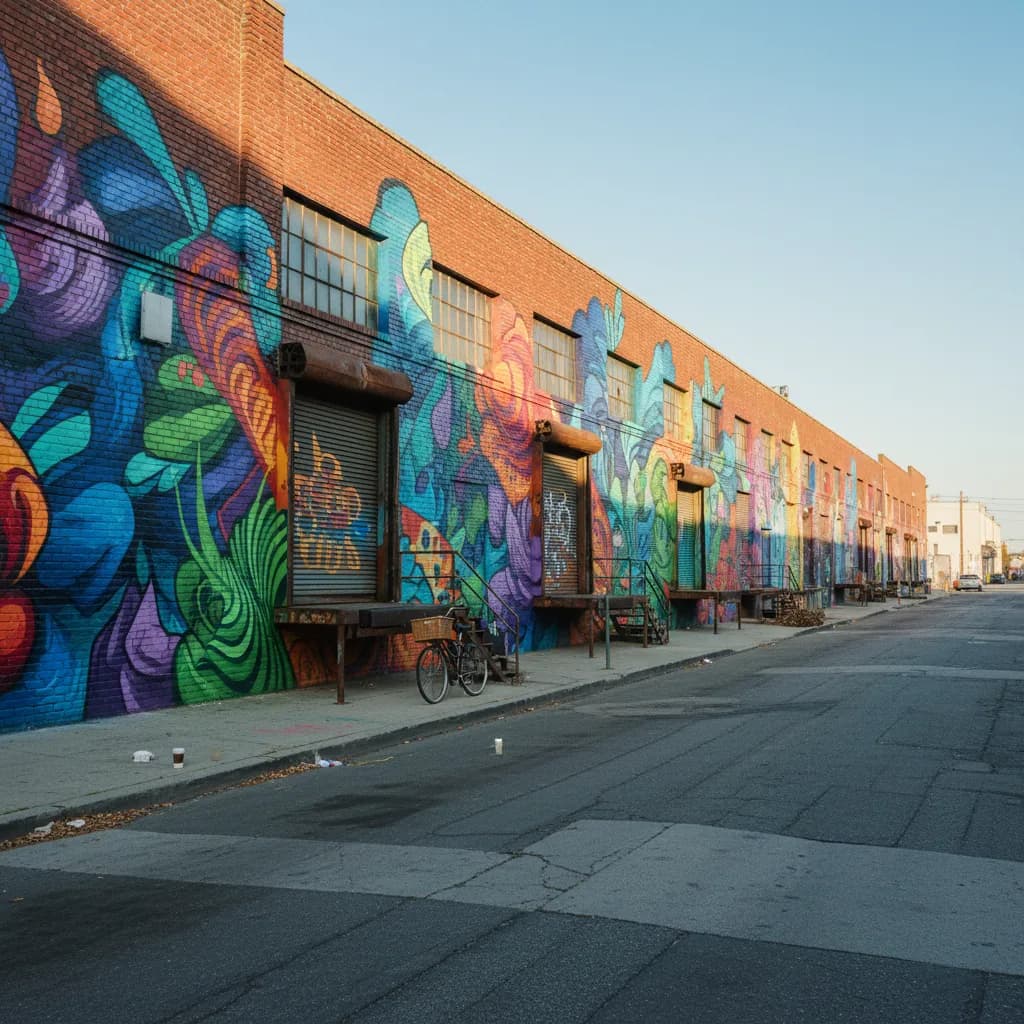
Turn onto Traction Avenue, which curves gently southeast and has some of the neighborhood's most photographed walls. Murals change frequently here, as building owners commission new pieces and older ones fade, so do not expect to find a specific artwork you saw online years ago. Walk slowly, look down side alleys and loading docks, and notice how industrial details such as freight doors and old signage are woven into the newer designs.
Gallery Courtyards on Third Street
Head south to Third Street, where Hauser & Wirth Los Angeles occupies a former flour mill complex that the gallery opened in 2016. Its courtyard, with a garden and outdoor seating, has become one of the neighborhood's informal gathering spots. Inside, exhibitions rotate several times a year, and the scale of the brick halls suits large sculptures and installations that would never fit in a typical gallery.
A few blocks east, the Southern California Institute of Architecture sits in the former Santa Fe Freight Depot, a building roughly a quarter mile long. SCI-Arc moved here in 2001, and its students often work late, which keeps this stretch lively. Look along the depot's long side for a sense of how rail freight once shaped the area. Here is an honest call: skip the tempting shortcut across the rail yards, which is private and dangerous.
Mateo Street and the Warehouse Grid
From Third Street, walk south along Mateo Street, where former warehouses now house design studios, furniture showrooms, restaurants and loft apartments. The blocks are long and the buildings blunt, but the details reward a slow pace: painted ghost signs, metal stairways, roll-up doors left open to reveal workshops. This is where you see the Arts District as a working neighborhood rather than a backdrop, with deliveries and studio vans constantly coming and going.
Sidewalks along Mateo and nearby streets are sometimes narrow or interrupted by driveways and loading zones, so stay alert for trucks backing out. Weekend mornings are the calmest time to walk this section, when traffic is lighter and people gather outside the bakeries and coffee shops. Weekday afternoons bring more vehicles and construction noise, which makes the walk feel more like an industrial commute than a stroll.
Crossing the Sixth Street Viaduct
Continue south to Sixth Street and climb onto the Sixth Street Viaduct, which opened in July 2022 to replace a 1932 bridge famous from film and television. The new span, sometimes called the Ribbon of Light, is defined by ten pairs of sweeping white arches lit at night. Wide protected lanes for pedestrians and cyclists make it one of the most comfortable places in Los Angeles to walk above traffic.
Walk out to the middle of the bridge and look north for views of the downtown skyline framed by arches, and south along the concrete channel of the Los Angeles River. The bridge connects the Arts District to Boyle Heights on the eastern side. Sunset and the half hour after it are the most dramatic times, as the sky shifts and the arch lights come on. Stay on the marked pedestrian lanes and away from the arches themselves.
Who You Meet in the Arts District
Weekday mornings belong to studio workers carrying coffee, architecture students heading to SCI-Arc and dog owners from the lofts walking the quieter streets. Weekends bring visitors from across Los Angeles who come for brunch, gallery openings and mural photos, sometimes in groups with professional photographers and models. Film crews are a regular sight too, with trucks and cables blocking sidewalks for a few hours on some days.
On the Sixth Street Viaduct, expect cyclists, skaters, families and couples taking sunset photos. The bridge has drawn crowds and occasional street takeovers since it opened, which led the city to add barriers and patrols. On weekday evenings it is usually calm, while weekend nights can be busier and louder. If the bridge feels too crowded, enjoy the view from the Arts District end instead of walking out.
Planning the Stroll With Karpo APP
Karpo APP is useful for shaping this walk ahead of time. Ask for an Arts District stroll that starts at the Metro station, includes a gallery visit and ends on the Sixth Street Viaduct around sunset, and it can put the stops in a logical order. You can also ask it to work in a coffee or lunch break on Mateo or Traction, or to suggest how to shorten the loop.
It does not track live crowds on the bridge, monitor safety conditions or confirm gallery exhibitions. Karpo APP will not book tours, tables or tickets. Use it to build a clear list of stops and to keep your plans in one place, then check gallery websites and official city announcements for any closures or changes before heading out.
Getting There, Distances and Alternatives
The full loop from the Little Tokyo/Arts District station through Traction Avenue, Third Street and Mateo Street to the middle of the Sixth Street Viaduct and back is about three miles on flat ground. Public restrooms are limited, so plan a break at a cafe or gallery. Metro buses also run along Alameda and Seventh Street, which makes it easy to cut the walk short or return by bus.
If you prefer a shorter stroll, focus on the northern section around Traction Avenue and Third Street, which takes about an hour. For a different ending, cross Alameda at the end and walk through Little Tokyo, where Japanese Village Plaza and the Japanese American National Museum sit a few minutes from the station. On very hot days, start early and keep the bridge walk for a cooler evening.
Ask Karpo for more information.
Keep reading
- Los Feliz Nail Salon Walk In Finder for Broken Nail Repair
 Highland Park Nail Salon Walk In Finder for Retro Manicures
 Koreatown Nail Salon Walk In Finder for K-Beauty Nail Looks