 Santa Monica French Dip Sandwich Lunch Picker by Ocean
Restaurants
Sandwich Shop Near Me in Downtown LA: Philippe's French Dip
A Downtown Los Angeles guide to Philippe The Original, its French dip sandwiches, counter rules, mustard, pricing, and an old Downtown walk.
Philippe The Original is the sandwich shop near me answer when the order itself carries a Los Angeles origin story. The French dip is simple on paper: sliced roast meat, a crusty roll, and jus for dipping. The experience is more physical than that description suggests. You stand in line, choose a meat and dip style, find a table, and eat a sandwich that makes a little mess while the room keeps moving around you.
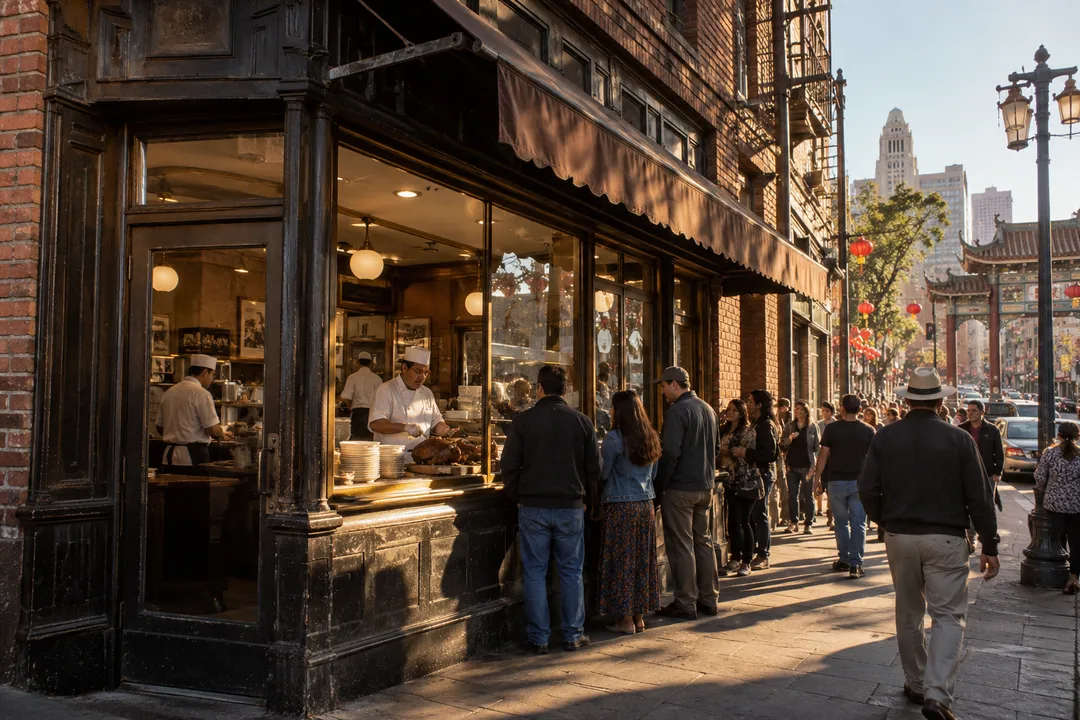
The restaurant is at 1001 North Alameda Street near Chinatown and Union Station. It is a useful stop before or after a train, a Chinatown walk, or a Downtown day that includes Olvera Street. Driving can be less predictable than the address makes it sound, so check parking and traffic before leaving. The building is distinctive, but the surrounding streets can be busy enough that a first visit deserves a few extra minutes.
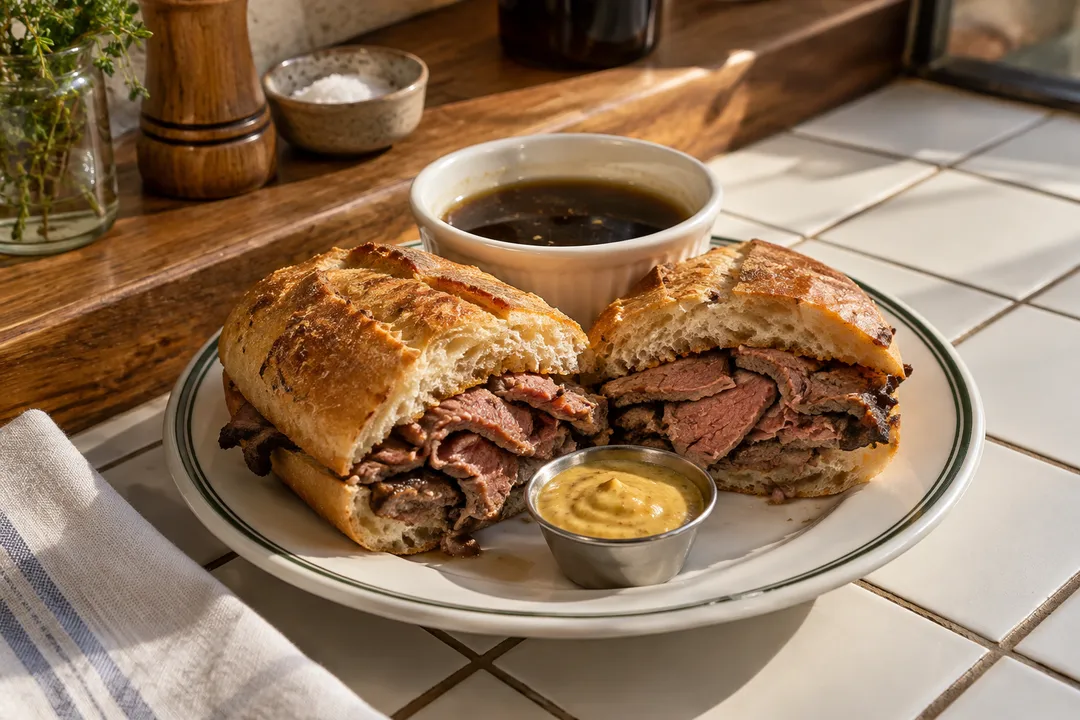
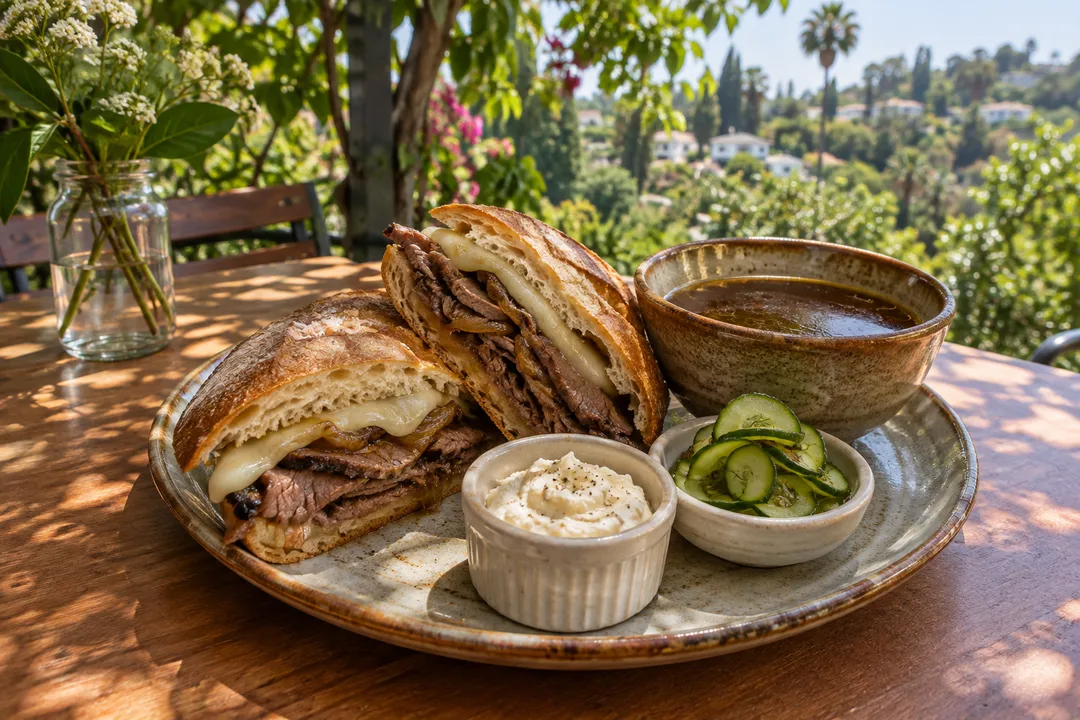
The classic French dip uses roast beef or another available meat on a crisp roll dipped in the restaurant's jus. The bread softens at the edges while keeping enough structure for the meat. Philippe's famous hot mustard is part of the flavor, not a decorative extra. Start with a restrained amount if you are sensitive to heat. The sandwich tastes most balanced when the jus and mustard do not compete.
A basic French dip generally lands around $12 to $16 depending on meat, size, and current pricing. Adding a side, dessert, or drink takes the meal into the high teens. Because the sandwich is not built like a towering deli sub, one order per person is normal, though a lighter eater may pair half a sandwich with a side. Check the current menu board before ordering multiple meats for the table.
The queue moves through a working counter, so watch what the customer ahead of you is doing and decide before reaching the front. Choose the meat, whether you want the roll dipped, and any side or drink without turning the line into a committee meeting. After paying, carry the tray carefully and find a table before opening the sandwich. There is no need to create a second queue around the condiments.
The restaurant's rules are informal but clear: keep the line moving, share tables when appropriate, and leave room for staff carrying trays. The sandwich is designed to be eaten with both hands and a napkin nearby. If you are ordering for children or someone avoiding mustard, say so early. Ask about bread, dairy, sauces, and shared preparation if an allergy is involved, because the kitchen handles several classic sides.
Philippe's story is bound to the claim that the French dip was invented here, but the restaurant's staying power comes from more than the anecdote. The place has a recognizable service system, a loyal local following, and a menu that has not lost its usefulness. History gives the sandwich a hook. The daily rhythm of workers, visitors, families, and transit riders keeps it from becoming a museum piece.
Try the first bite without a heavy sauce load. Let the beef, jus, and roll establish the baseline, then add mustard to the next bite. If the bread is dipped too long, the texture becomes soft quickly, so use the jus cup as a tool rather than a bath. A pickle or crisp side can reset the palate between bites. The best meal alternates tenderness with a little crunch.
Philippe's is an easy starting point for a Downtown walk. Head toward Chinatown for shops and bakeries, continue to Union Station and El Pueblo, or take a shorter loop around the historic core. The restaurant is close enough to transit that you can build the meal into a larger itinerary without driving between every stop. Eat before walking far; the dipped roll is not an ideal car snack.
Practical notes: hours, meat availability, and menu prices can change, so check the current board before traveling. Lunch crowds can be steady, but the counter system usually moves when customers are ready. Seating may involve shared tables. Ask about allergens in the roll, jus, mustard, and sides. Public transit is useful, parking varies, and the safest plan is to give yourself a little time on both sides of the meal.
Philippe's works for a first-time visitor, a history-minded diner, or anyone who likes a sandwich with a strong sense of place. It is less suited to a long private conversation, a very tidy meal, or someone who wants a modern menu with many custom choices. The restaurant's charm is in the old system. You order into it, then let the room and the sandwich do their work.
Start with roast beef and hot mustard, then decide whether you need a second meat or a side. If you are sharing, two different dips can be more useful than two identical sandwiches, but keep the order simple while the line is moving. Eat the crispest edge first, then use the jus to soften the center. That sequence makes the texture easier to understand.
The most memorable part of Philippe's is the combination of small actions: watching the counter, carrying a tray through the room, dipping the roll, and stepping back onto a Downtown street. The sandwich does not need elaborate presentation because the ritual supplies the setting. Los Angeles history can feel abstract at a landmark. Here, it arrives warm, salty, and slightly drippy on a plate.
Philippe The Original belongs in a sandwich shop near me guide because it turns a French dip into a Downtown route. Budget roughly $12 to $16 for the signature before sides, decide your meat and dip before the counter, and keep mustard close. Then walk toward Chinatown, Union Station, or El Pueblo. The food is humble, the story is large, and the visit still works as lunch.
Ask Karpo for more information.
Keep reading
- Santa Monica French Dip Sandwich Lunch Picker by Ocean
 Echo Park French Dip Sandwich Lunch Picker Around Noon
 Silver Lake French Dip Sandwich Lunch Picker on Hillsides