 Burbank Film Memorabilia Collector Shop Walk: Studio Stash
Hidden Gems & Odd Finds
Downtown Los Angeles Record Player Repair: Common Wave
Visit Common Wave in Downtown Los Angeles for turntable setup, tonearm calibration, cartridge mounting, and expert analog audio system repairs today.
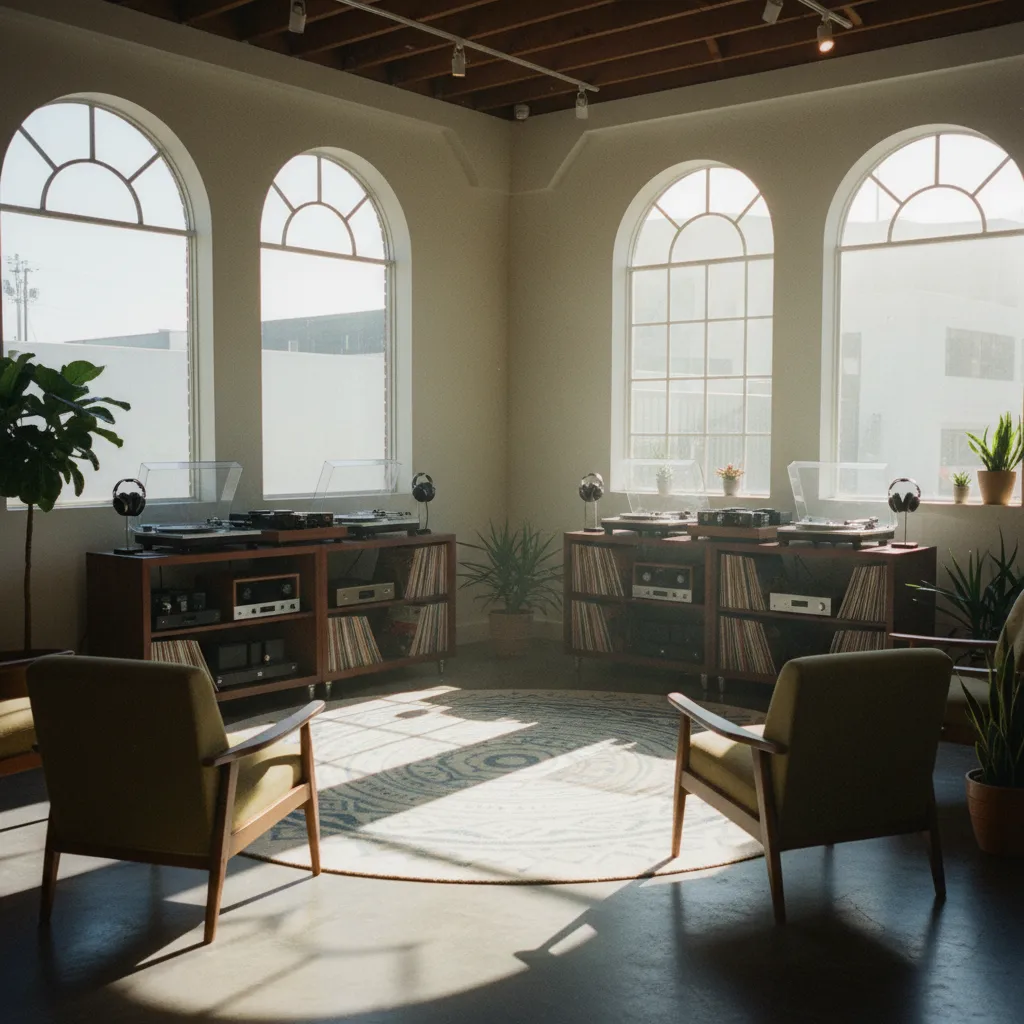
At 1451 E 4th St, Suite 106, Common Wave operates as a modern analog haven in the Downtown Los Angeles Arts District, combining dedicated turntable repair and precision calibration with an audiophile showroom and communal listening salon. Founded in 2016 by experiential designer Wesley Katzir, who opened the physical studio in 2018, the workshop emerged to provide deliberate listening experiences centered on vinyl craftsmanship. Visitors access the studio through the exterior iron gate located on Anderson Street, entering a bright space featuring custom acoustic woodwork, pristine turntables, and specialized bench tools. The facility bridges the gap between classic analog repair and contemporary hi-fi design, welcoming collectors who want their belt-driven and direct-drive record players operating at peak acoustic fidelity.
Diagnostic Inspection and Mechanical Restoration
Every record player brought into the Arts District studio undergoes a structured diagnostic examination to identify mechanical friction and electrical degradation. Technicians begin with a comprehensive physical inspection, examining the plinth isolation feet, drive motor condition, and spindle bearing clearance. Over years of domestic use, hardened synthetic grease and fine airborne dust impede smooth rotation, leading to audible speed instability and motor strain. The technician team thoroughly disassembles rotating assemblies, removes hardened lubricants with specialized degreasers, and applies high-purity synthetic oils engineered for silent platter rotation.
Drive mechanisms receive exacting attention across both direct-drive and belt-driven designs. For belt-drive turntables from Rega, Pro-Ject, and VPI, technicians measure drive belt elasticity, align synchronous AC motors, and clean motor pulleys to eliminate micro-vibrations. Direct-drive turntables are evaluated with electronic tachometers and stroboscopic discs to ensure electronic speed governors maintain pitch accuracy at 33.3 and 45 revolutions per minute under dynamic stylus drag.
Chassis resonance suppression is a core focus at the workshop. Technicians inspect sub-chassis suspension springs on classic suspended decks, adjusting tension collars so the floating platter maintains level horizontal travel. Damaged rubber isolation feet are replaced with specialized damping materials, preventing external acoustic feedback from home speakers from muddying deep bass frequencies. Furthermore, electronic ground loops are systematically traced using sensitive hum detectors. Technicians ensure internal ground straps between the mechanical sub-chassis and electrical shielding isolate delicate audio signals from stray electromagnetic hum generated by nearby power transformers or home lighting dimmers.
Tonearm Alignment and Cartridge Micro-Geometry
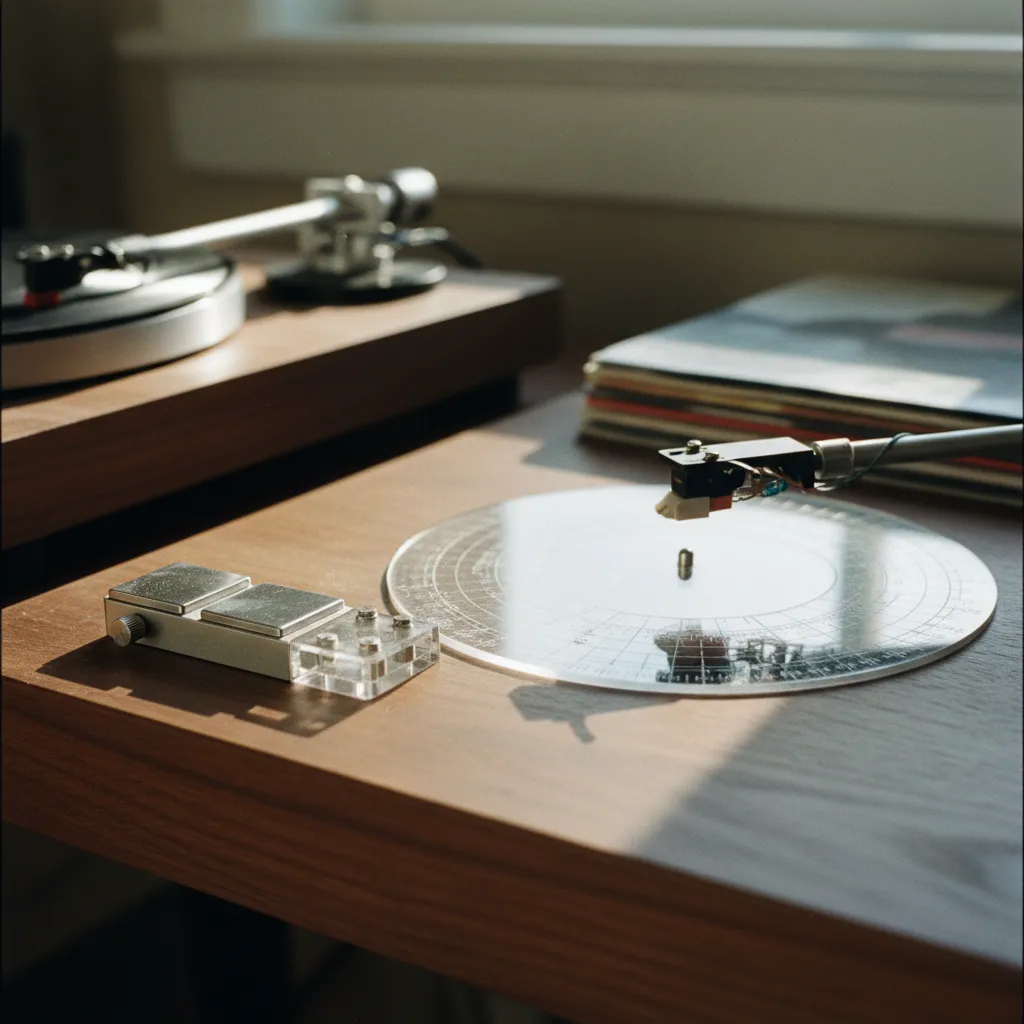
Extracting rich musical nuance from vinyl record micro-grooves requires microscopic alignment precision across tonearm and cartridge geometry. The workshop utilizes precision mirrored alignment protractors, digital downforce scales, and calibrated optical loupes to establish exact overhang and null-point tracking. Even fractional tracking angle discrepancies create noticeable high-frequency distortion, making precise bench calibration indispensable for discerning vinyl collectors.
Azimuth calibration is verified with specialized test records and high-gain phono preamplifiers, ensuring equal signal output and channel separation between left and right channels. Technicians adjust the tonearm collar to guarantee the diamond stylus sits perfectly perpendicular inside the record groove. Anti-skate compensation is dialed in across the tonearm sweep, counteracting skating forces that pull the stylus toward the record center and cause uneven vinyl wear.
For turntables suffering from electrical grounding issues or channel dropouts, the technician rewires tonearms using high-conductivity oxygen-free copper leads. Delicate wiring is terminated with gold-plated headshell clips and routed to shielded output RCA terminals. The studio carries premium phono cartridges from analog manufacturers like Ortofon, Hana, and Dynavector, guiding patrons toward the ideal cartridge compliance for their tonearm effective mass. During initial consultations, staff walk customers through tracking force adjustments, antiskate bias, and stylus cleaning protocols to prolong the lifespan of both diamond tips and cherished vinyl records.
Studio Hours and Service Appointment Guidelines
Common Wave welcomes visitors to its Arts District studio Tuesday through Saturday from 10:00am to 6:00pm, and remains closed on Sunday and Monday. Because equipment drop-offs and technical consultations involve detailed diagnostic reviews, coordinating with the technical team ahead of your arrival ensures a bench technician is immediately available at the counter to evaluate your turntable.
Careful transit preparation protects delicate analog components during the journey across Los Angeles. Always remove the heavy platter and rubber mat, transporting them flat in a separate padded box to prevent impact stress from bending the central bearing shaft. Fasten the tonearm securely to its armrest with a padded wire tie, unmount the headshell or install a secure stylus guard, and remove the counterweight. Cushion the acrylic dust cover separately to protect delicate rear hinges from cracking.
Following initial evaluation, technicians provide a detailed written proposal outlining recommended service steps, replacement components, and anticipated completion schedules. Clients review the repair plan before restoration work commences, ensuring clear communication throughout the process.
Arts District Strolls and Creative Neighbors
Visiting East 4th Street places you in one of the city's most vibrant cultural and creative corridors. The surrounding Arts District features converted brick industrial warehouses, striking street murals, and independent artist studios. A pleasant walking route leads along 4th Street toward Colyton and Mateo Streets, where contemporary art galleries and specialty publishing bookstores invite exploration.
Nearby independent coffee roasters and neighborhood bakeries serve seasonal espresso and artisanal pastries in relaxed open-air spaces. Grabbing a warm drink and relaxing in a sunny courtyard provides a welcome pause while your audio equipment receives bench attention. Specialty design shops and vintage boutiques dot the district, offering engaging stops for creative inspiration.
Downtown Los Angeles Transit and Driving Access
Reaching 1451 E 4th St is convenient from across Southern California via the Hollywood Freeway (US-101), Santa Monica Freeway (I-10), and Golden State Freeway (I-5). Access to the studio entrance is via the Anderson Street gate, with street parking available along Anderson Street and adjacent neighborhood blocks.
Public transit riders can utilize the Metro A Line or E Line light rail, disembarking at the Little Tokyo/Arts District Station followed by a short walk or quick bus transfer south. Additionally, LA Metro Bus Line 18 runs along nearby East 4th Street, providing direct transit connections from downtown Los Angeles. With its founding in 2016 and focus on acoustic excellence, Common Wave stands as an essential destination for record player repair and analog audio care.
Ask Karpo for more information.
Keep reading
- Burbank Film Memorabilia Collector Shop Walk: Studio Stash
 Pasadena Film Memorabilia Collector Shop Walk: Classic Route
 Silver Lake Film Memorabilia Collector Shop Walk: Indie Lore