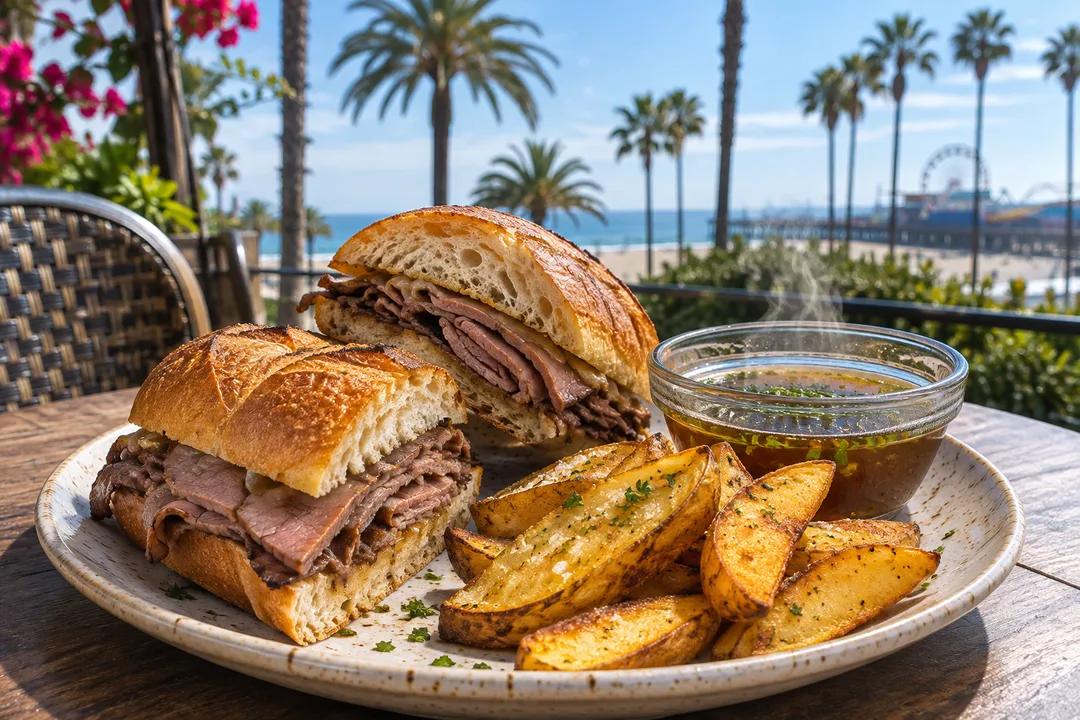
 Santa Monica French Dip Sandwich Lunch Picker by Ocean
Restaurants
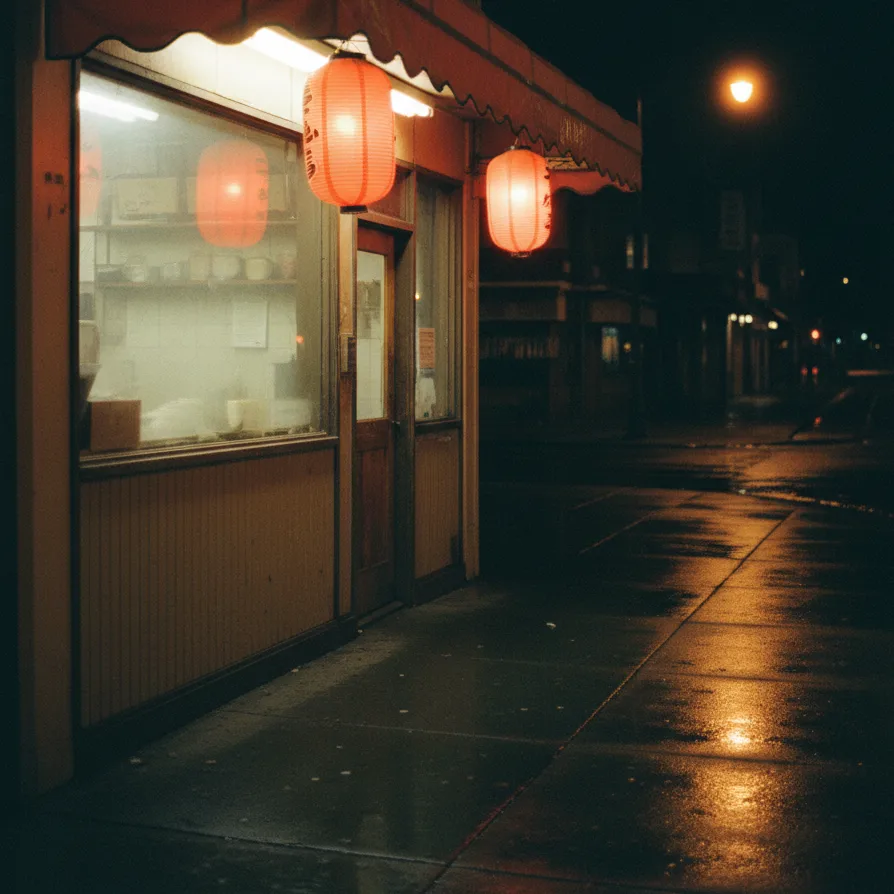
Kouraku Ramen Shop in Little Tokyo: Late Night Bowls Since 1976
A Little Tokyo guide to Kouraku at 314 E 2nd St, honored by the City of Los Angeles as a pioneer of ramen in America and open until 1:40 am on weekends.
Kouraku has been ladling ramen in Little Tokyo since 1976, and on Friday and Saturday its kitchen stays open until 1:40 am, which makes it the late-night ramen shop of choice on Second Street. The current home is 314 E 2nd St, where a plain bowl of Ramen costs $18 and the menu notes that all prices already include sales tax. The Los Angeles Conservancy calls it America's oldest Japanese ramen noodle restaurant still in operation.
The Little Tokyo/Arts District stop on the Metro A and E lines sits roughly 250 meters from the door, so the train is the simplest way in from Pasadena, Santa Monica or Long Beach. Walk west on Second Street from Central Avenue and the shop is on the left side of the block. Riding in also means you can order a beer with your bowl and still get home without driving after a 1 am dinner.
Kouraku is not a tonkotsu temple, and that is the reason to come. The menu reads like a Japanese-Chinese diner from the 1970s, with egg drop soups, hot and sour broth, mabo tofu, fried rice and katsudon sitting alongside the noodles. The Infatuation frames it as comfort food and says curries are king. If you came for a creamy pork-bone bowl, go elsewhere; if you want a bowl with history, sit down.
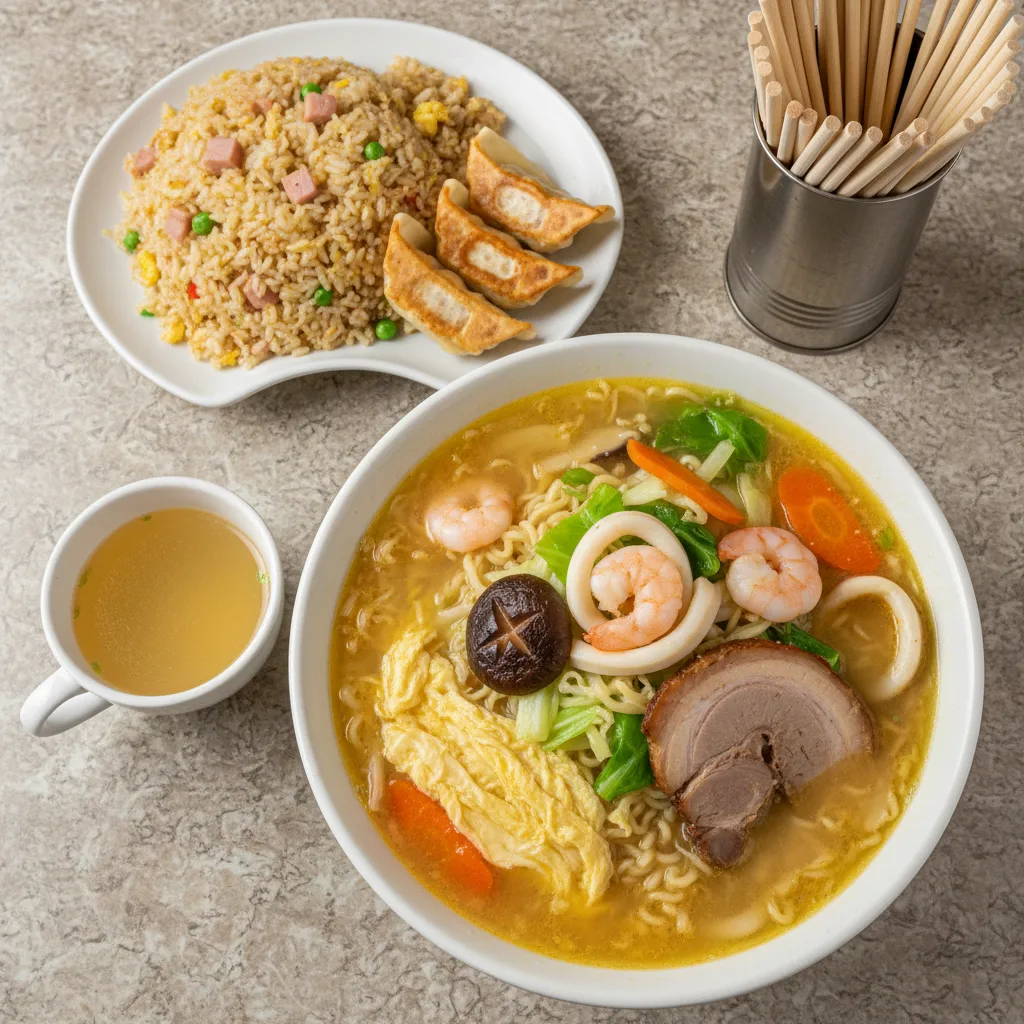
Start with the house classics. The basic Ramen is $18 and can be dressed up with add-ons such as a seasoned egg, corn or butter for $3 each, or kimchee for $4. The Kouraku Special Ramen at $19 is described on the menu as sliced pork, seafood, mushrooms and vegetables in an egg drop soup, a silky, almost Cantonese-tasting bowl that you will not find at the newer shops nearby.
Spice lovers should look at the Tan Tan Men, $19, built from ground pork, Chinese pickles, cabbage and onions in a hot and sour soup. The Popeye Ramen, also $19, gets its name from the spinach heaped on top, with sliced pork and garlic in a soy sauce flavored soup. For a pork-bone base, the Ton-Shio-Tan Men at $19 is the closest thing on the menu to a modern tonkotsu.
Vegan diners get a genuinely different bowl. The Vegan Ramen, priced from $17 to $19 depending on toppings, uses a tomato and carrot based soup rather than a mushroom broth, giving it a bright, slightly sweet flavor. The Miso Yasai Ramen and the Mabo Ramen are both $19. The Mabo version tops the noodles with the same spicy tofu and ground pork sauce that the kitchen also sells as a plate.
The side menu is where groups should build a feast. Pan-fried pork gyoza range from $4 for three pieces to $15 for twelve, so a table can scale up easily. Chahan, the pork fried rice that comes with a cup of chicken broth, runs from $7 for a half order to $18 for a large. Takoyaki is $10 for six pieces, and the Katsudon, a breaded pork cutlet over rice, is $19.
Hours are long. The official ordering site lists 11:30 am to 11:45 pm Sunday through Thursday, and 11:30 am to 1:40 am on Friday and Saturday. Lunch on a weekday is the easiest time to sit right away. After 11 pm on weekends the room fills with people coming from bars and concerts downtown, and Time Out once described the place as packed at 2 am most Saturday nights, back when it stayed open even later.
The shop does not publish a reservation system, so plan on walking in. Small parties move fastest. If the wait looks long, Men Oh Tokushima Ramen is just down the block at 456 E 2nd St, though it closes earlier, so after 10 pm Kouraku is usually the only bowl on the street. For pickup, the online menu takes card orders, which is a handy option when the dining room is full on a weekend night.
The dining room is low-key and practical, and the long menu has grown over five decades. The Rafu Shimpo noted in 2025 that the shop now uses a robotic server to help carry dishes, an odd and charming contrast with a restaurant that predates most of the ramen boom in America. Bring patience during the late weekend rush, when every seat turns over slowly.
The history is the main event. Kouraku opened in 1976 at 240 E 2nd St and moved to its current address in 1986, according to the Rafu Shimpo, the same year the late Hiroshi Yamauchi took over the business. He ran it for decades, and the current owner is Mamoru Tokuda. On January 30, 2025, the City of Los Angeles dedicated a historical marker recognizing the restaurant's role in popularizing ramen in America.
That recognition matters because Kouraku was serving noodles to Los Angeles long before Japanese ramen chains crossed the Pacific. Kouraku arrived when most Americans knew ramen only as a dried instant packet, and its late hours still define it today. Ordering a bowl here is a way to taste the version of ramen that many Angelenos grew up with before tonkotsu took over the conversation.
Before or after dinner, walk one block north to First Street. Fugetsu-Do at 315 E 1st St sells mochi and manju from 8 am to 6 pm, so pick up sweets on the way in if you arrive early. For a drink, Far Bar at 347 E 1st St is a short walk east along the same street. Note that the Japanese American National Museum's pavilion is closed for renovation until January 23, 2027.
The official ordering site at kouraku.square.site posts the full menu, prices and hours, and it accepts card payment for online orders. Prices include sales tax, so the number on the menu is what you pay before tip. Large groups should arrive before 7 pm on weekends. The station entrance at First and Central is the easiest landmark for meeting friends.
This is the right ramen shop for night owls who want a hot bowl after midnight, history buffs who want to eat at the restaurant the city itself honored, and anyone tired of the same pork-bone formula. Order the Kouraku Special Ramen with a half chahan, add gyoza for the table, and come back for the Tan Tan Men. For more late-night food ideas downtown, ask the Karpo APP.
Ask Karpo for more information.
Keep reading
- Santa Monica French Dip Sandwich Lunch Picker by Ocean
 Echo Park French Dip Sandwich Lunch Picker Around Noon
 Silver Lake French Dip Sandwich Lunch Picker on Hillsides