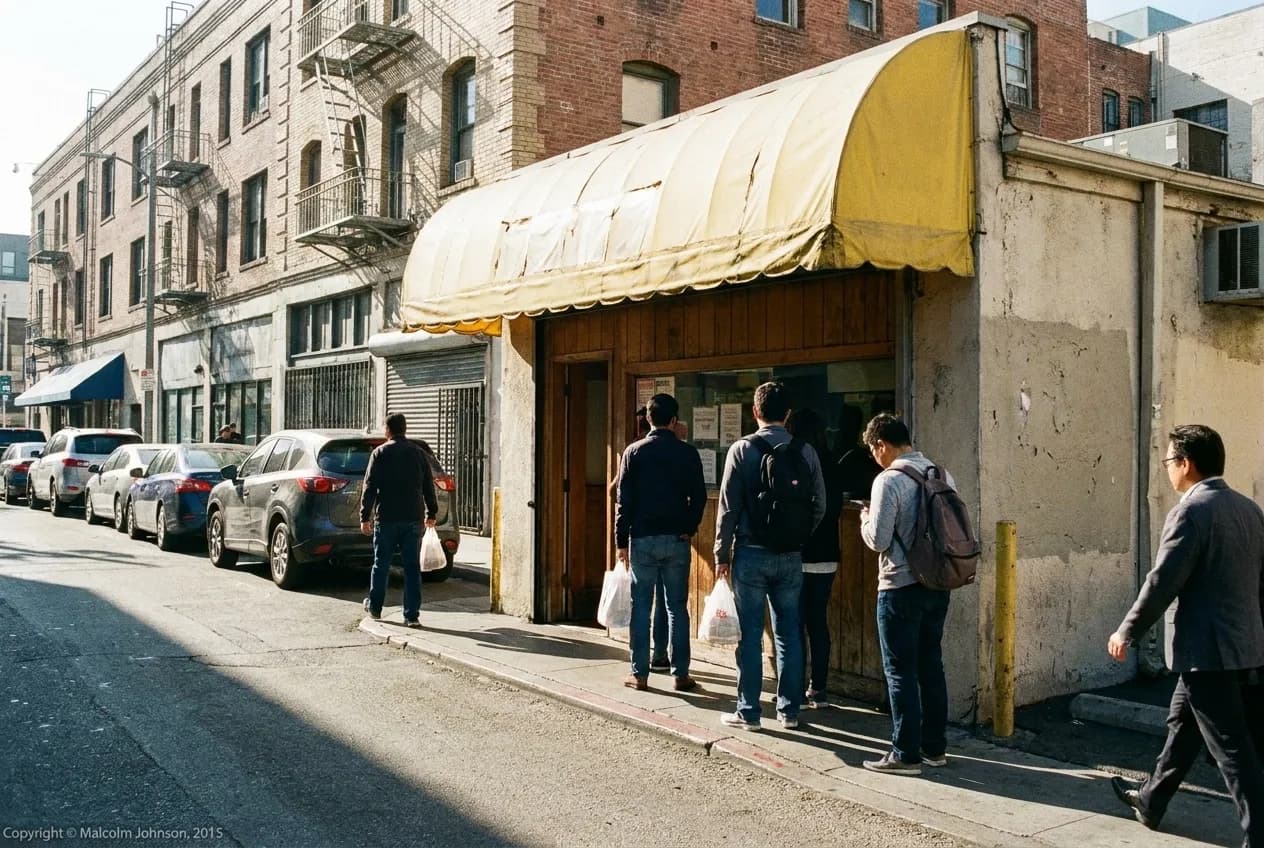
The yellow awning at 327 E 1st St has been the landmark for nearly two decades. You'll see it from half a block away, usually with a line snaking underneath—twenty people on a weekday lunch, double that on Saturday evening. This is Daikokuya, the shop that taught Los Angeles to queue for ramen before every strip mall had a tonkotsu option.
Karpo shows you live wait estimates for Daikokuya and other Little Tokyo ramen spots right now, plus the fastest route from wherever you are.
The room inside is compact and energetic in the way proper ramen shops are: counter seating along one wall, booths for four tucked against the other, a few window seats up front that accommodate six if you're lucky. Minimal decoration, open kitchen, the sound of ladles hitting steel. It's a place built around a single task, and the task is the bowl.
Finding the door and joining the queue
The entrance sits mid-block on 1st Street, between Alameda and Los Angeles. If you're driving, the nearest structure is the Little Tokyo Public Parking lot on 2nd Street; street parking is scarce. The queue forms directly under that yellow awning, and it moves—just not quickly. Weekday mid-afternoon is your best window if you can swing it, though arriving right at the 11:00 AM opening shaves twenty minutes off your wait.
Weekend lunches and the conventional dinner rush between 5:00 and 7:00 PM are when locals know to avoid the place. You'll stand for forty minutes, sometimes longer. They don't take reservations. They never have. The line is structural, part of the operation, and complaining about it is like complaining about rain in November.
What the counter seats give you
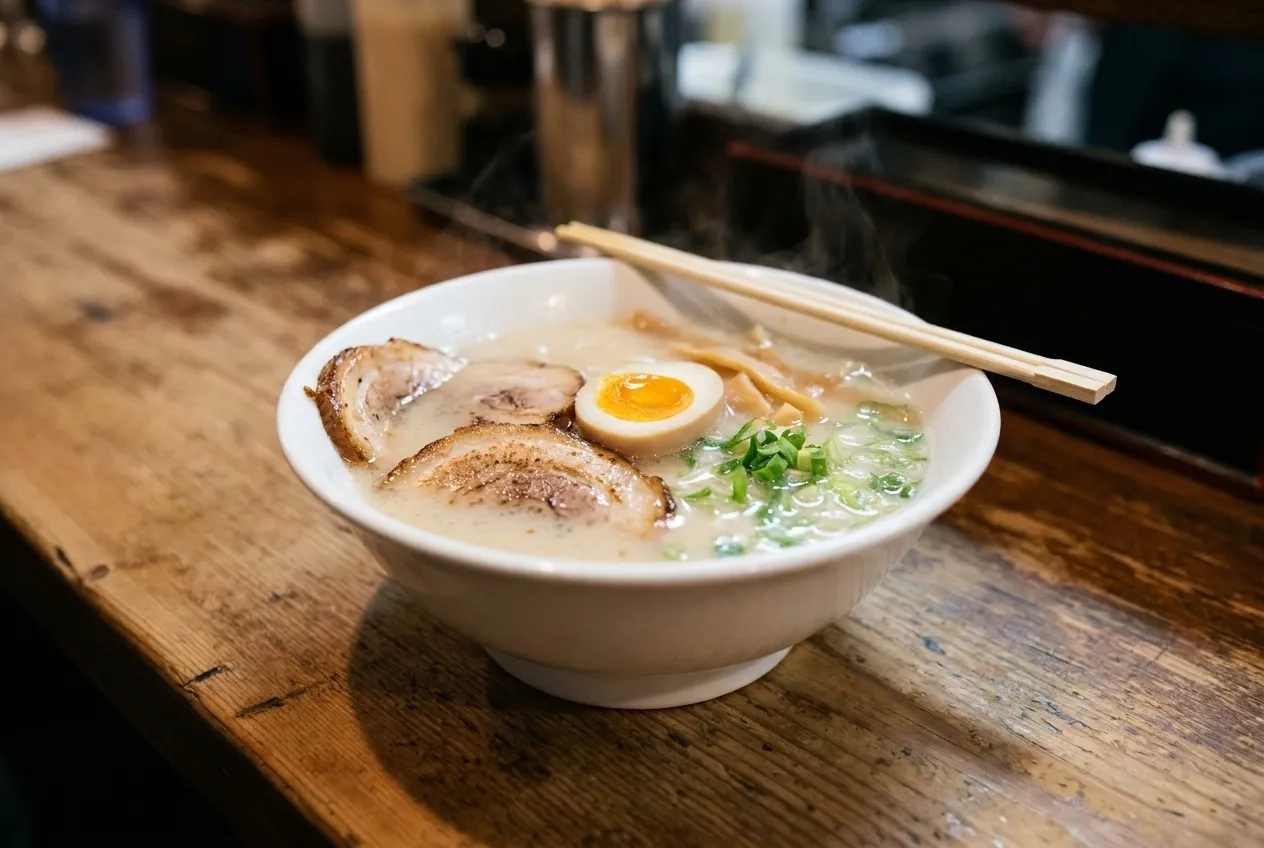
Solo diners and pairs should head straight for the counter when the host waves you in. It turns over faster than the booths, and it's the proper way to experience a ramen shop—close enough to watch the cooks work, close enough to smell the broth before it reaches your bowl. The booths seat four, two per side, and they're fine if you're a group. The window seats are the white whale: six people, natural light, but nearly impossible to secure during peak hours.
The room fills quickly once service starts. It's loud in the good way, the hum of people eating something hot and satisfying. No one lingers. You eat, you leave, the next group sits down. The rhythm is part of the appeal.
The order and what it costs
The Daikoku Ramen is what you came for: tonkotsu broth that's been simmered into milky opacity, fat pork belly chashu, a marinated boiled egg with a jammy yolk, bamboo shoots, green onions, sesame seeds. It's the bowl that started the craze, and it still holds up. The broth is rich without being cloying, the noodles have the right chew, the chashu melts under your spoon.
If you want more fat and more salt, the Koterri Ramen is the extra-savory version. The Spicy Miso Ramen brings heat and depth. The gyoza are correct—crisp skirt, juicy filling—and worth adding. If you're here at lunch, the tuna sashimi bowl combo comes with a complimentary cabbage salad dressed in Kewpie mayo, which is a better deal than it sounds. Expect to spend twenty to thirty dollars for a full meal, fifteen if you're just having the ramen.
When you've finished and what's nearby
You'll know you're done when the bowl is empty and your coat is back on. The staff are polite but efficient; they're already eyeing the next group. Daikokuya has three other locations—Sawtelle, Monterey Park, and Torrance—if you want the same menu with potentially shorter waits. All serve the same tonkotsu, same gyoza, same cabbage salad. The Little Tokyo original is worth the queue if you care about the source, but the others are legitimate alternatives.
If you're staying in the neighbourhood, there are other ramen shops within walking distance, though none with quite the same history. Little Tokyo itself rewards an hour of wandering after you eat: bookshops, matcha cafes, the plaza near 2nd Street. The ramen is the anchor, but the district gives you reasons to stay.
Who finds the wait unreasonable
Daikokuya's walk-in-only policy and structural queue make it a poor fit for anyone on a fixed schedule. If you have 45 minutes before a movie at the Geffen Playhouse or a meeting in the Arts District, the risk calculus does not work—weekend waits routinely stretch past 40 minutes, and there is no text-ahead system to hedge your arrival. Families with restless children under six will find the compact room and counter-forward layout difficult; booths seat four but turn over slowly, and the energetic noise level offers no insulation. The menu's narrow focus—tonkotsu variants, miso ramen, gyoza—leaves little room for anyone avoiding pork or seeking vegetable-forward options. One source notes a cash-only policy, though this is not universally confirmed; if accurate, it adds friction for travelers relying on cards.
The West Hollywood and Sawtelle locations offer identical menus and broth quality without the Little Tokyo flagship's wait-time premium, making them rational alternatives for anyone prioritizing speed over provenance. If the queue itself holds no appeal—if you view it as operational failure rather than ritual—those second and third outposts deliver the same Daikoku Ramen and koterri variation in neighborhoods with easier parking and less pedestrian density. The original location's value proposition rests partly on its role in LA's ramen history; diners indifferent to that narrative gain nothing by enduring the 1st Street line when a Westside branch sits empty at the same hour.
Hours, booking and how to time it
Daikokuya opens at 11:00 AM every day and closes at 10:00 PM Sunday through Thursday, with last call at midnight on Friday and Saturday. No reservations, ever. The queue is shortest right at opening or during the weekday mid-afternoon lull, assuming service runs continuously. Peak waits run twenty to forty minutes, sometimes longer on weekends. They're closed Christmas Day and run modified hours on Christmas Eve and New Year's Eve.
The address is 327 E 1st St, Little Tokyo. Metro's Gold Line stops at Little Tokyo/Arts District, two blocks south. If you're driving, budget time for parking and the queue. The meal itself takes twenty minutes once you're seated. Plan for an hour door-to-door if you're coming at lunch, ninety minutes if you're coming at dinner on a weekend.
Tags: #daikokuya #littletokyola #ramenla #tonkotsuramen #losangelesramen #ramennearme #littletokyoramen #laramenshops #daikokuramen #eastla #dtlaramen #ramenshop #porkbellychashu #walkinonly #cashmealonly
All trademarks are the property of their respective owners.
Ask Karpo first
Ask Karpo for live wait estimates at Daikokuya and nearby Little Tokyo ramen spots before you leave. It'll show you the fastest route from your current location and confirm today's opening hours. Useful if you're trying to dodge the weekend dinner rush.