 Sawtelle Bowling Group Night Planner for a College Reunion
Sports Social

Arts District Public Track Running Loop: Downtown Pace
Find free public track running loops near the Arts District at Belmont High track from dawn. Paved riverfront greenways offer flat tempo recovery runs.
The Arts District has evolved into one of Downtown Los Angeles's most culturally compelling neighborhoods, characterized by converted industrial warehouses, bold mural installations, and a thriving creative workforce. For runners residing or working among these historic rail yards and brick buildings, finding a dedicated public track running loop is indispensable for executing structured tempo work and sharp interval pacing. While the neighborhood's quiet industrial streets provide scenic morning routes, precision speed training requires an uninterrupted synthetic athletic oval free from crosswalks, freight crossings, and vehicular traffic. By linking accessible downtown athletic facilities with measured pathways along the Los Angeles River corridor, runners can seamlessly alternate between intense 400-meter track repeats and sustained aerobic volume.
Belmont High School Track and Downtown Athletic Ovals
Located a short warm-up jog northwest of the Arts District across the historic core, Belmont High School at 1575 W 2nd Street offers the premier regulation athletic facility for downtown runners. Founded in 1923 on historic Crown Hill, Belmont High features an eight-lane all-weather synthetic polyurethane track surrounding a full regulation sports turf field. Community runners utilize this municipal facility during non-instructional dawn hours beginning at 6:00 AM on weekdays and throughout weekend daylight hours when school sporting events are not taking place. The track offers excellent shock absorption, protecting joints during explosive interval bursts and sustained tempo laps.
The elevated terrain of the Belmont athletic complex delivers inspiring views of the Downtown Los Angeles skyscraper skyline, providing an urban athletic setting that fuels motivation during grueling interval sessions. Access to the track is free for community athletes during open public hours. Morning athletes arrive at dawn to finish workouts before daily academic assemblies begin. The facility represents an essential sports sanctuary amidst the dense concrete geometry of central Los Angeles, supporting dedicated athletes year-round who require calibrated split times and dependable running surfaces.
Los Angeles River Greenway and Industrial Route Loops
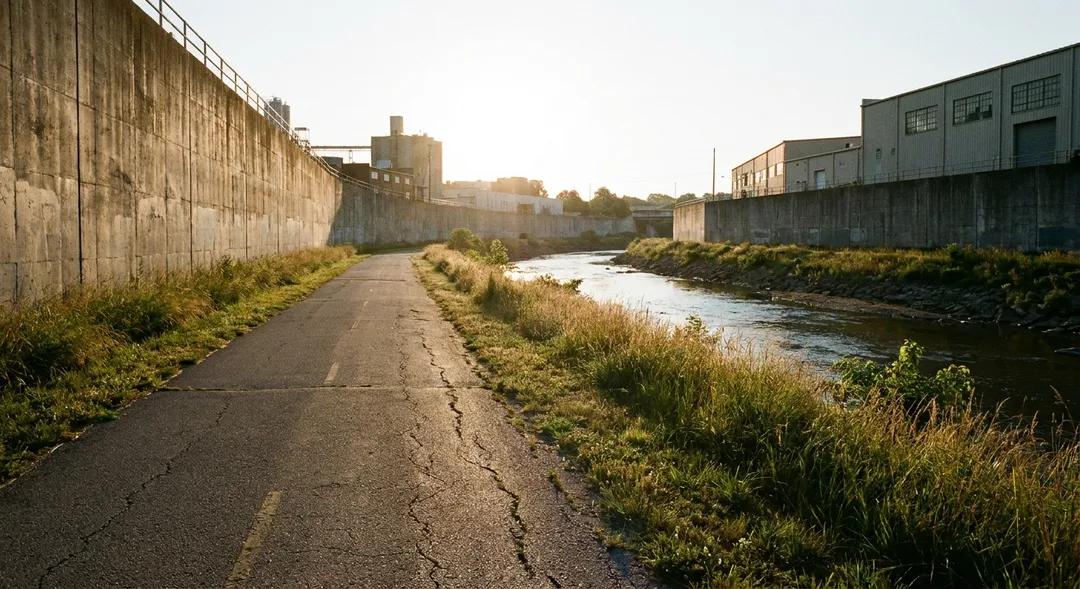
For distance runs and recovery days that call for continuous foot travel without street stops, the Los Angeles River Greenway path provides an outstanding measured training corridor easily reached from Santa Fe Avenue. Following historic channelization efforts initiated in 1938, the river embankments have been steadily integrated with dedicated pedestrian and cycling paths. A continuous 2.0-mile paved loop connects the 1st Street Bridge southward to the 7th Street Bridge, creating an uninterrupted loop past historic rail arches and striking street-art murals. Runners can log multiple circuits along this flat, paved route while enjoying gentle canyon breezes channeled by the river basin.
During early morning hours between 6:00 AM and 7:30 AM, vehicle traffic along adjacent logistics corridors is light, and the morning sun illuminates the concrete viaducts with warm golden light. This loop provides an exceptional platform for steady-state aerobic runs and progressive threshold training, allowing athletes to settle into uninterrupted rhythmic breathing. Transitioning from five miles of steady riverfront pacing to crisp 200-meter strides on an athletic oval offers a comprehensive conditioning routine that balances endurance with turnover speed, ensuring complete preparation for upcoming road races and local community marathons.
Lane Protocols and Urban Athletic Track Customs
Exercising on downtown athletic ovals requires strict adherence to universal running etiquette to guarantee safety in a bustling urban environment. The innermost lane one is reserved exclusively for athletes running active fast intervals and strict pacing efforts. Those performing recovery walks, warm-up jogs, or dynamic stretches should immediately vacate the inner rail and utilize outer lanes six through eight or the synthetic end-zone zones. This division of track space ensures that high-speed runners do not encounter sudden stationary obstacles when pushing through exhaustive final strides.
Movement around the track always proceeds in a counter-clockwise orientation. When approaching a runner in your lane, maintain spatial awareness and yield outward into lane two if you intend to pass, avoiding cutting closely in front of the overtaken athlete. Given the metropolitan setting, running with one earbud removed is strongly recommended so you can hear ambient announcements, whistle signals, and approaching runners. Demonstrating courtesy and attentiveness preserves welcoming access for all community running clubs and solo athletes across downtown Los Angeles.
Hydration Planning, Air Flow, and Urban Pacing Windows
Downtown Los Angeles experiences significant heat retention due to extensive asphalt and brick surfaces, making timing crucial for quality training sessions. Early morning hours between 6:00 AM and 8:00 AM provide the crispest air, lowest ambient temperatures in the low sixties, and calm atmospheric conditions before urban thermal buildup takes hold. Evening workouts from 6:00 PM to 7:30 PM offer cooler breezes as the sun dips behind the downtown towers, providing an atmospheric backdrop for twilight training sets.
Public water infrastructure along industrial thoroughfares is sparse, so athletes should plan ahead by carrying an insulated handheld water bottle or keeping a hydration pack staged at the track perimeter. Electrolyte replenishment is essential during dry summer months when low relative humidity accelerates sweat evaporation. Wearing breathable, light-colored technical fabrics and shielding eyes with ultraviolet-blocking eyewear will keep athletes comfortable throughout intensive downtown workouts in every athletic season.
Karpo APP Navigation and Arts District Athletic Recovery
Navigating the maze of railway spurs, active loading docks, and viaduct stairs between the Arts District and downtown tracks is simplified with digital mapping support. Karpo APP provides urban runners with optimized turn-by-turn pedestrian routing, safely guiding athletes across signalized crossings, identifying open track access gates, and calculating cumulative elevation profiles. Having reliable digital routing eliminates the frustration of arriving at locked facility entrances or encountering temporary construction detours along industrial avenues.
After finishing a rigorous track interval workout, the Arts District provides some of Southern California's finest culinary and restorative amenities. Athletes can rehydrate with artisanal pour-over coffees and cold-pressed juices along Mateo Street and East 3rd Street, or replenish glycogen stores with hearty grain bowls and wood-fired pastries at neighborhood cafes. Performing gentle leg stretches in shaded industrial pocket parks while reflecting on completed split times brings physical relief and mental clarity. This harmonious balance of gritty urban athletics and sophisticated creative dining defines the exceptional allure of running in the Arts District.
Ask Karpo for more information.
Keep reading
- Sawtelle Bowling Group Night Planner for a College Reunion
 Larchmont Bowling Group Night Planner for Carpool Parents
 Boyle Heights Bowling Group Night Planner for a Quince Court