 Santa Monica French Dip Sandwich Lunch Picker by Ocean
Restaurants
Pico-Union Pozole Dinner Picker: Oaxacan or Guerrero Pots
Weigh Oaxacan costeño-chile hominy bowls near Pico Boulevard against late-evening Guerrero campechano cauldrons along Alvarado Street in Pico-Union at night.
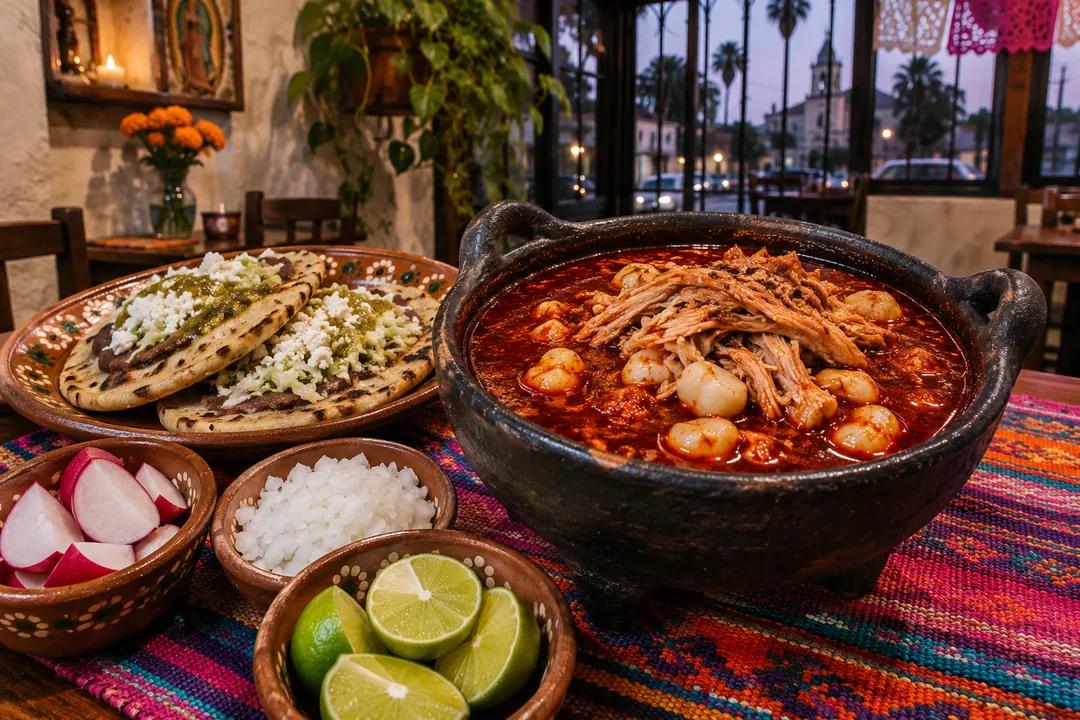
Stepping out of a late design critique near Venice Boulevard with three studio colleagues as November mist settles over central Los Angeles, we rely on a pozole dinner picker strategy to choose between an Oaxacan clay-pot kitchen along Pico Boulevard and a bustling Guerrero pozolería near Alvarado Street in Pico-Union. Few neighborhoods in the city pack such distinct southern Mexican culinary traditions into a ten-block radius. Walk west along Pico Boulevard or Olympic Boulevard and you step into Oaxacan and Pueblan dining rooms where giant, chewy kernels of nixtamalized white corn swim in broths perfumed with toasted costeño chiles, wild oregano buds, and aromatic hierba santa leaves. Head east toward Hoover Street or Washington Boulevard, and late-evening counters ladle rich mixed-meat campechano bowls alongside crisp pork rinds and freshly griddled masa snacks. Knowing how these two regional styles diverge lets an evening crew sit down to the ideal cauldron.
Comparing Oaxacan Costeño-Chile Broths with Guerrero Pozolerías
Your first decision in Pico-Union centers on whether your table wants the herbal, complex spice of an Oaxacan kitchen or the hearty, garnish-laden punch of a dedicated Guerrero pozolería. Along the Pico Boulevard and Venice Boulevard corridors, Oaxacan family restaurants simmer giant white maíz pozolero—prized for its broad, flat kernel and substantial chew—in a stock seasoned with dried costeño and guajillo chiles, roasted garlic cloves, and a single leaf of anise-scented hierba santa. Some kitchens even offer a specialty mole-style hominy bowl where a ladle of dark, savory mole negro or coloradito enriches the pork broth with toasted seeds and warm spices. Pick an Oaxacan dining room when your group appreciates layered herbal aromatics and firmer heirloom corn.
Walk over toward Alvarado Street, Hoover Street, or the blocks bordering the Byzantine-Latino Quarter, and you will encounter Guerrero-style counters where three cauldrons—blanco, rojo, and verde—stay on a low bubble through the evening. Here, the signature order is a campechano bowl that combines tender pulled pork shoulder, gelatinous knuckle pieces, and shredded chicken breast in one deep vessel. Because Guerrero cooks bloom dried chiles or ground pumpkin seeds in rendered pork fat before adding them to the stockpot, the broth coats the spoon with an immediate, savory richness.
When ordering for a group with mixed appetites, pay attention to bowl sizing before everyone orders a large portion. In Pico-Union, the standard grande bowl is served in a wide ceramic basin deep enough to anchor two meals, so ordering a mediana bowl leaves room on the table to sample griddled corn masa specialties without wasting half a pot of broth.
Matching Griddled Memelas, Chalupas, and Garnish Plates to Your Bowl
The side plates that accompany hominy soup in Pico-Union reflect each kitchen's home state, giving your table far more texture than plain crackers or bagged chips. In Oaxacan dining rooms along Pico Boulevard, pair your soup with an order of memelas or picaditas—thick, hand-patted masa cakes pinched around the rim on a hot clay comal, brushed with asientos pork drippings, and topped with black bean paste and crumbly queso fresco. Tearing off a warm piece of griddled masa to alternate with spoonfuls of costeño-chile broth highlights the sweet, toasted flavor of nixtamalized corn in two distinct forms.
At Guerrero and Pueblan counters near Hoover Street and Union Avenue, look for small fried chalupas or crispy potato-and-cheese taquitos served alongside the main garnish tray. When the server sets down the verdura plate of finely chopped white onion, shredded green cabbage, radish slices, and key limes, crush a pinch of dried wild oregano buds between your fingers over the hot liquid before squeezing in the citrus.
If the tabletop condiment caddy includes a jar of dark, oil-steeped chile de árbol flakes or toasted habanero paste, test a single drop on the tip of your spoon before stirring it into the bowl. Oaxacan and Guerrero table salsas are roasted for concentrated heat, and a tiny drizzle is more than enough to wake up an entire basin of hominy.
Navigating Side-Street Parking and Post-Event Dining Waves
Because Pico-Union sits immediately west of the downtown arena and convention district, evening traffic and restaurant seating follow a two-wave rhythm. On nights when concerts or basketball games let out downtown, the bright corner dining rooms along Pico Boulevard and Figueroa-adjacent blocks fill rapidly with hungry crowds looking for a late supper. If you are driving in with friends, avoid hunting for curb spaces directly on Alvarado Street or Pico Boulevard during the evening rush; instead, turn onto the wider cross streets near Union Avenue, Burlington Avenue, or Venice Boulevard where parking lots and side curbs offer easier access.
Inside the restaurants, booth layout varies between compact storefront counters with high stools and expansive family dining halls decorated with hand-woven textiles and painted clay pottery. When four colleagues want to spread out and talk over a relaxed dinner, walk past the front takeaway counter toward the rear dining room away from the street door draft. If your first-choice Oaxacan spot has a line outside after a neighborhood church festival or concert, pivot two blocks south toward Venice Boulevard or Washington Boulevard where spacious family booths turn over steadily.
Checking the Karpo APP before you leave the studio or step off the Metro bus along Pico Boulevard keeps your group from wandering in the damp night air. You can use the Karpo APP to compare Pico-Union soup kitchens by street corridor, check which dining rooms pair hominy cauldrons with regional masa griddles, and pick a nearby backup table in moments.
Walking Past Bonnie Brae Victorians and Historic Courtyards
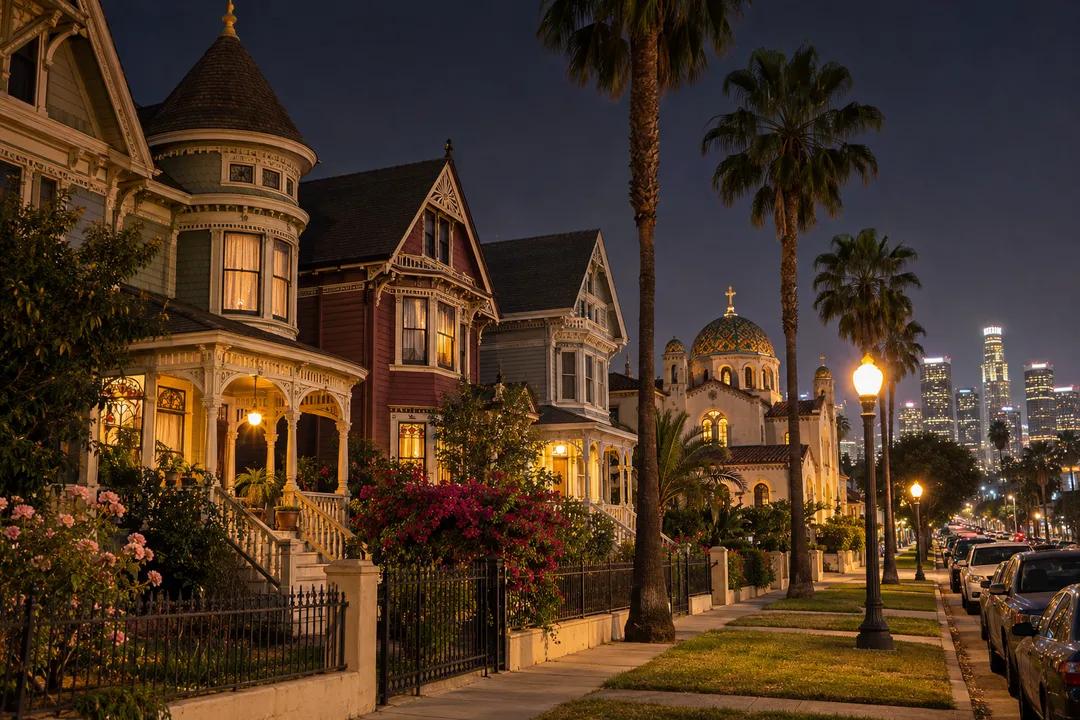
Finishing a steaming basin of hominy and griddled memelas sets you up nicely for an architectural evening stroll through one of central Los Angeles's most historic streetscapes. From Pico Boulevard or Alvarado Street, walk north toward Bonnie Brae Street and Alvarado Terrace, where ornate late-nineteenth-century Queen Anne and Victorian residences display carved wooden gables, turret roofs, and wide front porches under the amber glow of streetlamps.
Continue west toward the tree-lined blocks around Terrace Park or walk past the striking geometric masonry facades and open plazas near Olympic Boulevard and Valencia Street. The flat, grid-patterned sidewalks make it easy for a group of four to walk together while taking in the blend of historic brickwork and neighborhood murals.
Before heading back to your transit stop or car, duck into an Oaxacan bakery or sweet window along Pico Boulevard for a cup of warm tejate or cinnamon-scented chocolate de agua whisked into a frothy foam with a wooden molinillo, paired with a slice of pan de yema egg bread for the trip home.
Ask Karpo for more information.
Keep reading
- Santa Monica French Dip Sandwich Lunch Picker by Ocean
 Echo Park French Dip Sandwich Lunch Picker Around Noon
 Silver Lake French Dip Sandwich Lunch Picker on Hillsides