 Burbank Film Memorabilia Collector Shop Walk: Studio Stash
Hidden Gems & Odd Finds
Sawtelle Plant Shop Crawl Planner on the Old Nursery Row
Plan a Sawtelle plant shop crawl rooted in its Japanese American nursery past: choose pines, maples and moss for a calm patio, then stop for a noodle break.
Long before Sawtelle was known for ramen lines and dessert shops, it was a neighborhood of gardeners. Japanese American families ran nurseries along the boulevard and tended yards across the Westside, shaping the look of many Los Angeles gardens with pruned pines, maples and carefully placed stones. A few green businesses still carry that spirit today. This plant shop crawl planner is for anyone who wants a calmer, garden-inspired patio or balcony. It mixes a little neighborhood history with practical advice on choosing classic Japanese garden plants, adding moss and stone, and fitting a noodle break into the walk.
The Nursery Roots of Sawtelle
For much of the last century, Sawtelle was one of the centers of Japanese American life in Los Angeles. Many families worked as gardeners and ran nurseries, supplying plants and skills to homes across the Westside. Their pruning style and love of evergreen structure helped define what a Southern California garden could look like.
The community faced deep hardship, including forced removal during the Second World War, and many families rebuilt their lives and businesses afterward. Walking the boulevard with that story in mind changes how you see it. The neat hedges, pines and stone lanterns in older Westside yards are part of a living craft handed down by these gardeners.
What a Calm Patio Needs
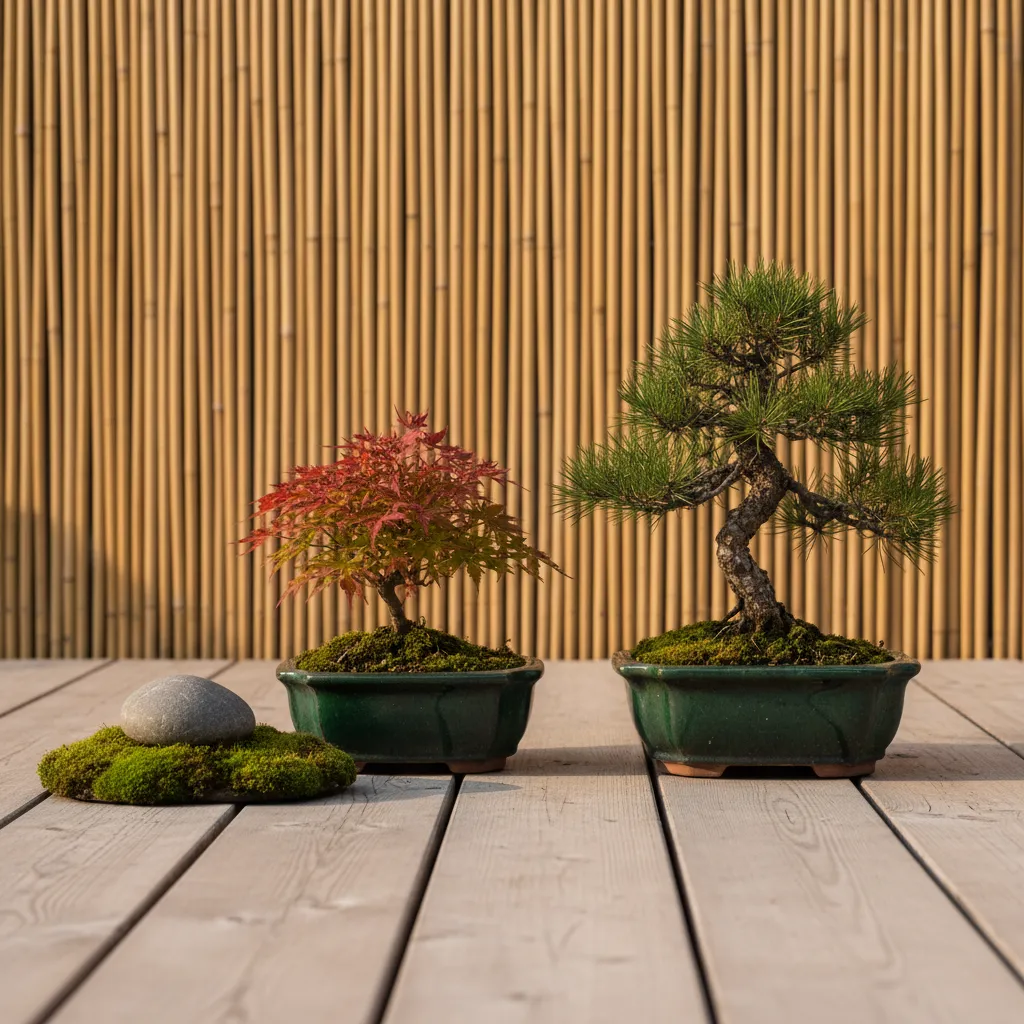
A Japanese-inspired patio is not about filling every corner. It is about a few strong plants, open space and natural materials. Think of one or two focal plants, such as a small maple or pine, softened by low greenery, a stone or two and perhaps a simple water bowl. Empty space matters as much as the plants.
Before your crawl, look at your patio or balcony and choose one view to design around, usually from the spot where you sit with a cup of tea. Decide how many pots fit without crowding. Three well-chosen plants in good pots usually look calmer than ten small ones scattered across the floor.
Pines, Maples and Evergreen Structure
Japanese black pine, dwarf mugo pine and junipers give a patio structure all year. They tolerate sun and dry spells and can be shaped slowly with careful pruning. Japanese maples bring soft, lacy leaves that change color with the seasons. In inland Los Angeles they prefer morning sun and afternoon shade, plus a pot that does not dry out completely.
Smaller evergreens such as boxwood, dwarf mondo grass and azaleas fill in around the focal plants. Ask nursery staff which varieties stay compact in containers and how much sun each one needs. A plant that looks small now may want to grow much larger, so choose varieties bred for pots when you can.
Reading a Nursery Like a Gardener
Nurseries in this part of the Westside often have rows of shrubs, trees and perennials in the yard, with tools and pots inside. Walk the rows slowly and look at shape before size. A plant with interesting, open branches and a balanced form is easier to prune into a garden feature than a dense, lopsided one, even if it is smaller.
Check the trunk and roots. Healthy pines and junipers have firm needles and no large brown patches. Maples should have plump buds or clean leaves without heavy scorch. Lift the pot slightly to feel the weight and peek at the drainage holes for circling roots. Staff can tell you which plants have just arrived and which have settled in.
Moss, Stone and Gravel
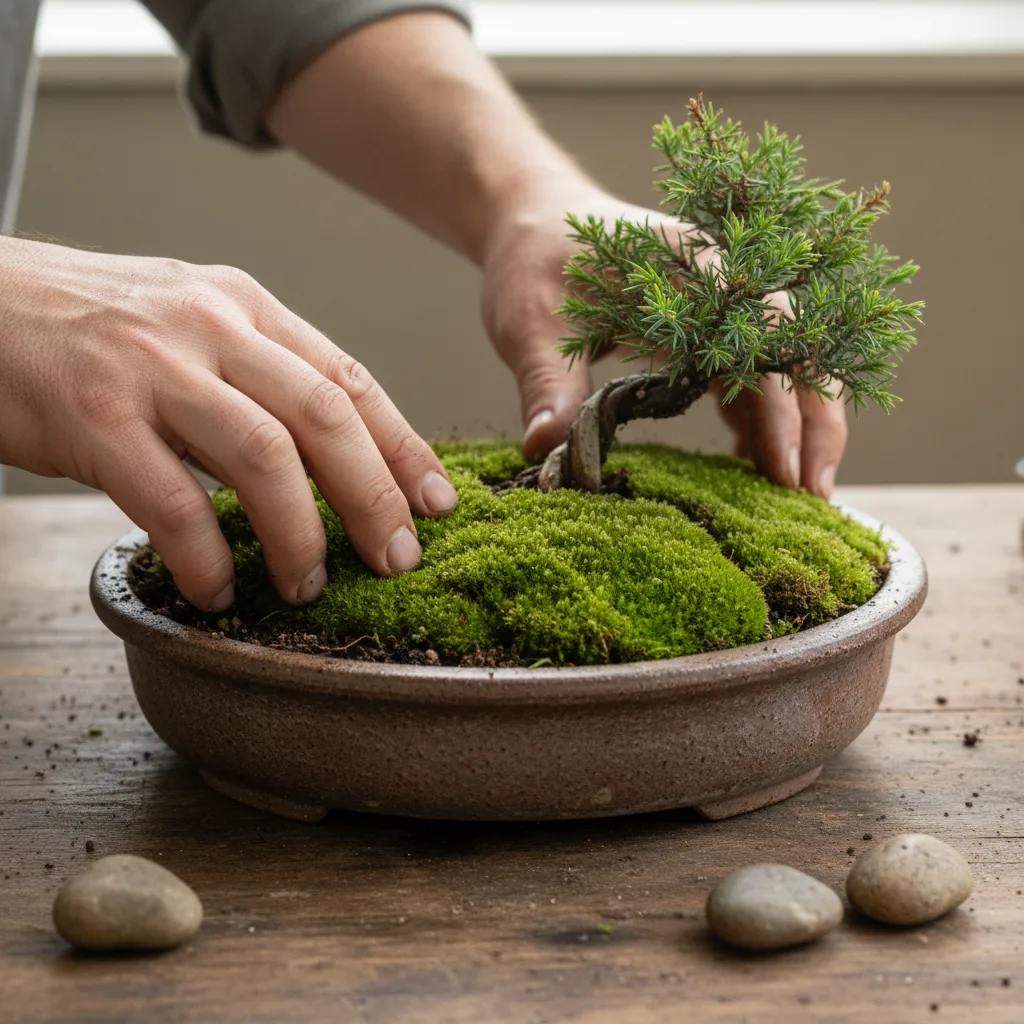
Moss and stone are what make a Japanese-style container feel finished. Cushion moss pressed onto the soil keeps it cool and moist and gives a soft, aged look. In dry Los Angeles air, moss does best in shade and needs a light misting on hot days. Some nurseries sell moss in trays, and some gardeners collect it from their own shaded corners.
A single smooth stone placed near a plant creates a sense of scale, as if the pot were a tiny landscape. Fine gravel or crushed granite around the base of larger pots keeps soil from splashing and looks tidy. Choose natural, muted colors rather than bright decorative pebbles, and keep things simple.
Choosing Pots With Quiet Character
Pots matter in Japanese-style gardening. Glazed ceramic in deep blue, brown, green or grey suits pines and maples, while unglazed clay feels earthy and calm. Shallow, wide pots work well for groupings of moss and small shrubs, while deeper pots give larger trees room to grow. Make sure every pot drains well.
Look for pots with simple shapes and a slightly handmade feel. Avoid busy patterns that fight with the plant. If you find a pot you love but the plant is still undecided, buy the pot and wait. Many gardeners pick the container first, then search for the right plant to fill it on a later visit.
A Noodle Break on the Boulevard
Sawtelle today is known for its food, and a crawl here would feel incomplete without a meal. Set aside time for a bowl of ramen, udon or a plate of curry rice at one of the many small restaurants along the boulevard. Afterward, a matcha drink or a scoop of something cold is the local way to finish.
Plan your food stop in the middle of the walk so you are not carrying heavy pots into a busy dining room. If you have already bought plants, ask the shop to hold them while you eat, or keep them in a sturdy bag at your feet. Popular spots can have lines, so a little patience or a less crowded side street helps.
Getting Trees and Pots Home
Small trees and heavy glazed pots need a car or a friend with a trolley. Lay pines and maples on their side in the back seat or trunk with a towel under them, and wedge them with bags so they do not roll. Keep maples out of hot, enclosed spaces for long, since their leaves scorch easily.
Carry pots and plants separately so nothing chips. Wrap glazed ceramic in newspaper or a blanket, and do not stack pots without padding between them. If you are buying several large items, ask the nursery whether they can hold them so you can pick them up on a separate trip.
Caring for Pines and Maples in LA
Container trees in Los Angeles need steady care. Water pines and junipers deeply when the top of the soil dries, and water maples a little more often in summer, especially if they sit in sun. A layer of moss or gravel helps hold moisture. Feed lightly in spring and early summer, and avoid feeding heavily in the heat.
Prune with patience. Remove dead or crossing branches, and shape slowly over seasons rather than all at once. Pinch new candles on pines to keep growth compact. Many local gardeners learned these skills by watching older relatives work, and nursery staff can often show you a simple technique if you ask.
Carrying the Garden Craft Forward
When you bring a small pine or maple home from Sawtelle, you are taking part in a long Westside tradition of patient gardening. Every careful pruning and every seasonal change on your patio echoes the work of the families who once ran nurseries along the boulevard.
Next time you are in the area, check the Karpo APP for nurseries, garden shops and noodle counters nearby. Return with the seasons, add a stone or a patch of moss, and let your patio grow quieter and more balanced year after year.
Ask Karpo for more information.
Keep reading
- Burbank Film Memorabilia Collector Shop Walk: Studio Stash
 Pasadena Film Memorabilia Collector Shop Walk: Classic Route
 Silver Lake Film Memorabilia Collector Shop Walk: Indie Lore