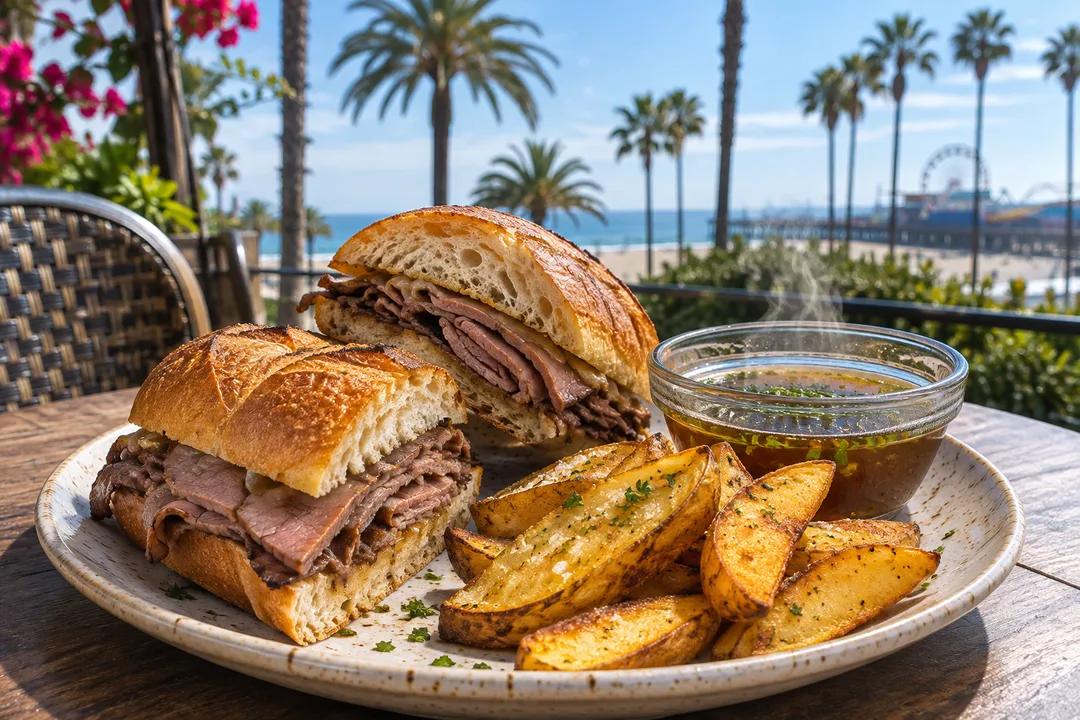
 Santa Monica French Dip Sandwich Lunch Picker by Ocean
Restaurants
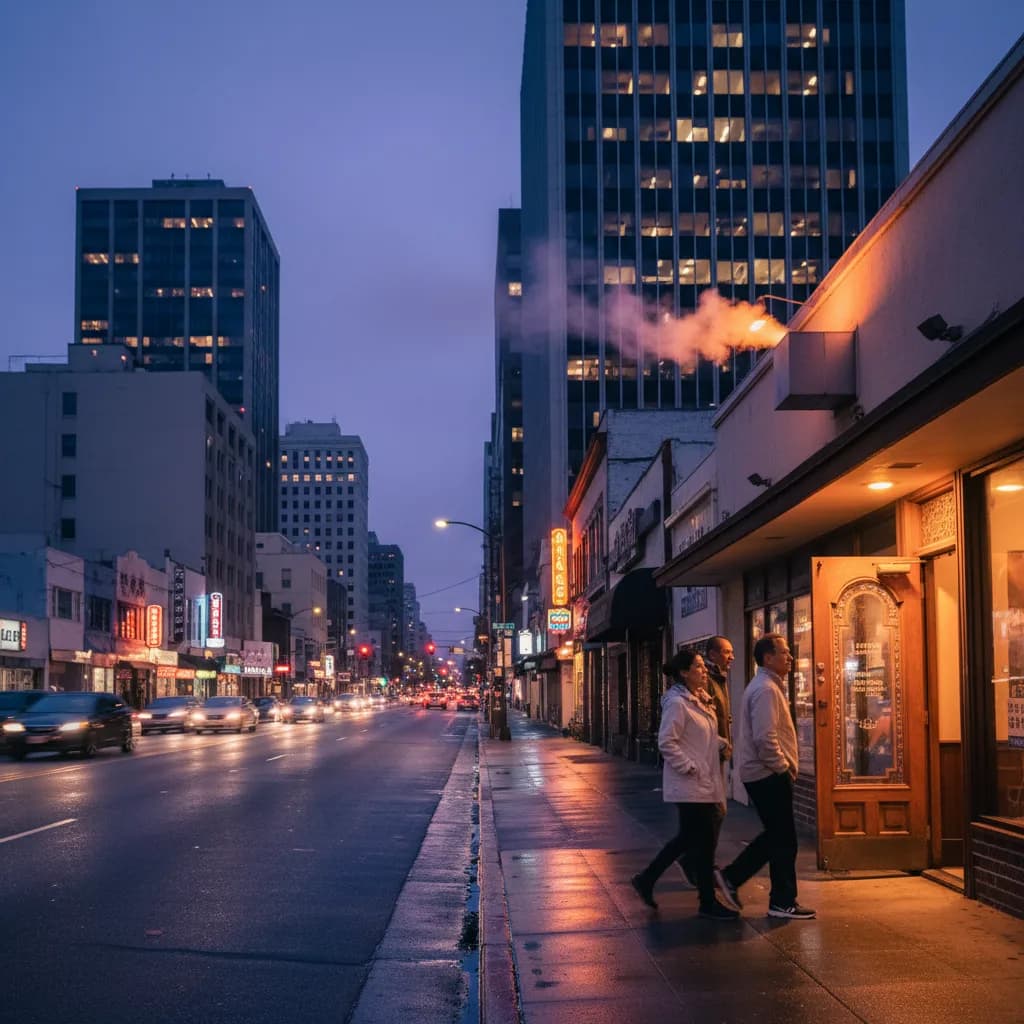
Out of Town Guest Dinner Picker in Koreatown: Grill Night
Hosting visitors in LA? Koreatown along Wilshire turns one dinner into a shared show at the grill. Match the table to your guests, then plan a second stop.
When friends or family fly into Los Angeles, the first dinner sets the tone for the whole visit, and Koreatown is one of the few neighborhoods where the meal itself becomes the entertainment. Guests who have only seen LA through beaches and freeway footage step out under mid-century office towers on Wilshire Boulevard, smell charcoal drifting from kitchen vents, and sit down at a table with a grill built into the middle. Nobody has to perform small talk when there is short rib to flip. This picker walks through how to match a Koreatown dinner to the specific people you are hosting.
Why Koreatown Works for a First-Night Dinner
Koreatown packs an unusual amount of dining into a compact grid between Vermont Avenue and Western Avenue, with Wilshire running through the middle like a spine. For a host, that density matters. You can park once or arrive by Metro on the Purple Line and still have a dozen different moods within a few blocks: smoky barbecue halls, calm soup kitchens, tofu stew counters, dessert cafes and karaoke rooms stacked above strip malls. If the first choice feels wrong when you walk in, the next door is rarely more than a few minutes away.
There is also a story your guests can feel without a lecture. Korean immigrants built this district from the 1970s onward, and the signage, churches, markets and spas still reflect that community, even as the neighborhood has become home to large Latino and Bangladeshi populations too. Visitors notice the layers. A grandmother at the next table teaching a teenager how to wrap lettuce around pork belly says more about Los Angeles than any guidebook paragraph, and it gives your guests something to talk about on the drive back.
Match the Table to the People You Are Hosting
Start with who is visiting rather than which restaurant is trending. Parents in their seventies often enjoy the grill but tire of loud rooms and bench seating, so steer toward places where staff cook the meat at the table and chairs have backs. College friends on a reunion trip usually want the opposite: a crowded barbecue hall with music, shared bottles of soju and a long menu to argue over. In-laws you are still getting to know may prefer a quieter room where conversation does not compete with extraction fans.
Dietary needs change the shortlist more than budget does. Vegetarian guests can feel stranded at a meat-focused grill, so look for kitchens known for soft tofu stew, japchae, vegetable pancakes and bibimbap, where a full meal without meat feels natural rather than improvised. Guests who avoid spice should hear in advance that many banchan, stews and sauces carry chili, and that it is perfectly normal to ask which side dishes are mild. Children usually love the grill, the scissors and the endless small plates, as long as the table is not cramped.
How a Koreatown Grill Dinner Actually Unfolds
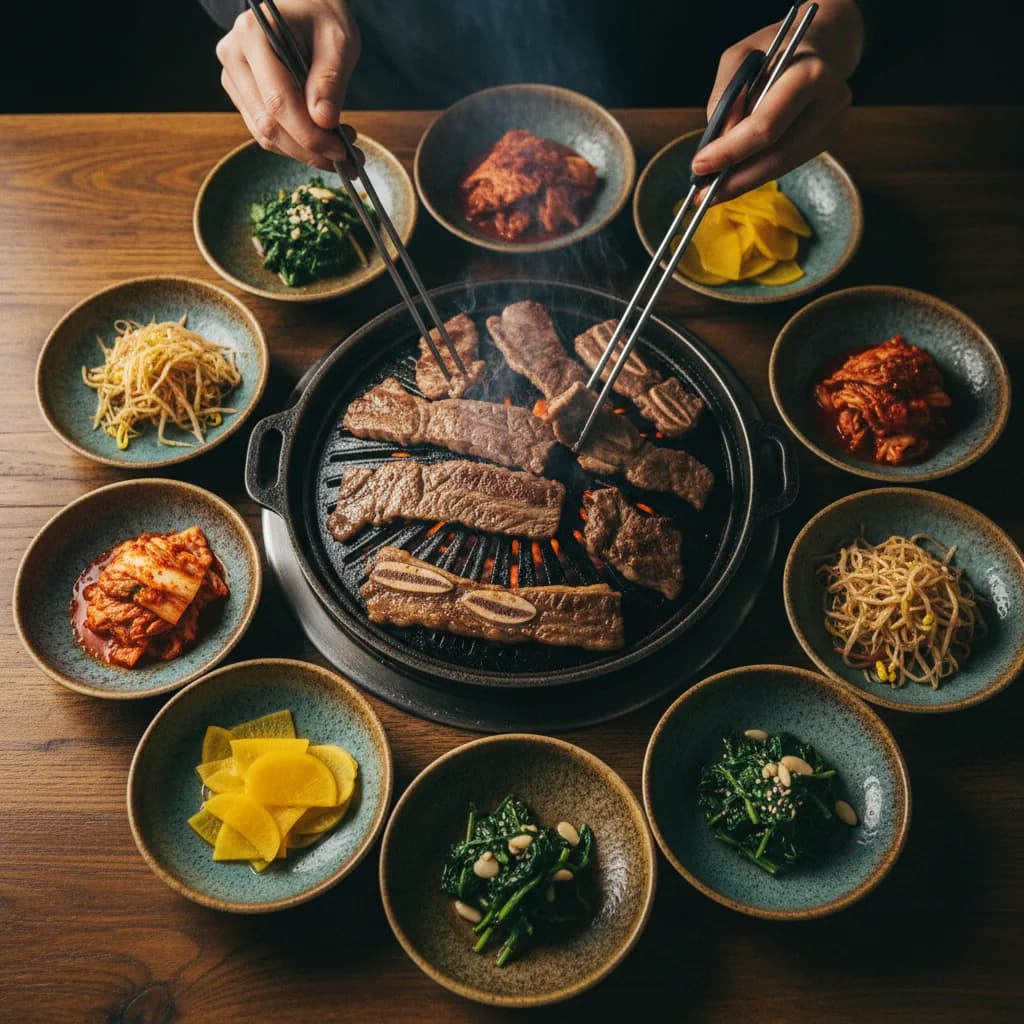
First-time visitors appreciate a quick briefing in the car. At a typical barbecue spot, a server lights the grill, brings a spread of banchan in little ceramic dishes, and often handles the first round of cooking, cutting meat with kitchen scissors right over the flame. Banchan are refilled on request, which surprises many out-of-town guests. Lettuce, perilla leaves, sliced garlic, green onion salad and ssamjang paste turn each bite into a small wrap, and there is no wrong way to build one.
Order in waves rather than all at once. Begin with one marinated cut and one plain cut so guests can taste the difference, then add a round of pork belly or brisket once you see what they enjoy. Finish with a stew, cold noodles or fried rice made on the same grill, because the closing dish is often the part visitors remember. If someone at the table is nervous about cooking, simply let the server lead and enjoy watching the room.
Timing, Waits and the Walk-In Question
Popular Koreatown grills draw long lines on Friday and Saturday evenings, and the wait can stretch while hungry guests are still jet-lagged. A weekday dinner on their first or second night tends to be calmer and gives you a better chance at a corner table. If your visitors land on a weekend, consider an earlier seating so the meal does not collide with the rush, or pick a soup or tofu stew restaurant that turns tables quickly and save the barbecue for a midweek night.
When a wait is unavoidable, use it. Put your name down, then walk a block or two along Wilshire to look at the Wiltern, the teal Art Deco theater that anchors the corner of Western Avenue and still lights up for concerts. Guests who love architecture can trace the older bank buildings and churches nearby. By the time your table is ready, the neighborhood has already done some of the hosting for you.
Building the Rest of the Evening Around Dinner
Koreatown rewards a second stop, which makes it ideal for guests who like to keep moving. After a grill dinner, a bingsu cafe with shaved milk ice and fruit is a gentle landing for parents and kids. Friends in a playful mood can book a private karaoke room for an hour, where even shy relatives end up singing. If your visitors would rather slow down, a late stroll past the lit-up towers on Wilshire gives them a view of LA that feels nothing like the postcards.
For guests who want a taste of daily life, finish with a walk through a Korean supermarket. Aisles of banchan, rice cakes, snacks and household goods tell a story about the community that cooks here, and visitors often leave with gifts to take home. It is a low-key way to extend the night without adding another reservation or another bill to split.
Using the Karpo APP to Narrow the Shortlist
The Karpo APP is useful when you know your guests better than you know the neighborhood. Describe the group in plain language, such as two parents who dislike loud rooms, one vegetarian, and a preference for chairs over benches, and Karpo can suggest Koreatown places that fit those needs along with nearby options for a second stop. You still choose the final table and contact the restaurant directly, but the conversation narrows dozens of possibilities down to a handful worth considering.
It also helps when plans shift. If the line at your first choice is longer than expected, ask Karpo for a similar spot within a short walk, or switch the evening from barbecue to stew without starting the search from scratch. That flexibility matters most when you are hosting tired travelers who would rather eat than debate.
Practical Notes for Hosting in Koreatown
Parking in Koreatown can be tight, so many restaurants rely on shared lots with valet attendants. Brief your guests so the handoff feels routine rather than confusing. The Metro Purple Line, now also signed as the D Line, has stations at Wilshire and Vermont, Wilshire and Normandie, and Wilshire and Western, which is handy for visitors staying downtown who want to avoid driving after drinks.
Grill smoke clings to clothing, so warn guests before they wear a favorite jacket, and suggest layers they will not mind airing out at the hotel. Tipping follows standard Los Angeles customs even when the meal feels casual. Most importantly, let your guests try the scissors, the lettuce wraps and the sauces themselves. The first dinner is less about finding a perfect restaurant and more about giving visitors a story they will tell when they get home.
Ask Karpo for more information.
Keep reading
- Santa Monica French Dip Sandwich Lunch Picker by Ocean
 Echo Park French Dip Sandwich Lunch Picker Around Noon
 Silver Lake French Dip Sandwich Lunch Picker on Hillsides