 Burbank Film Memorabilia Collector Shop Walk: Studio Stash
Hidden Gems & Odd Finds
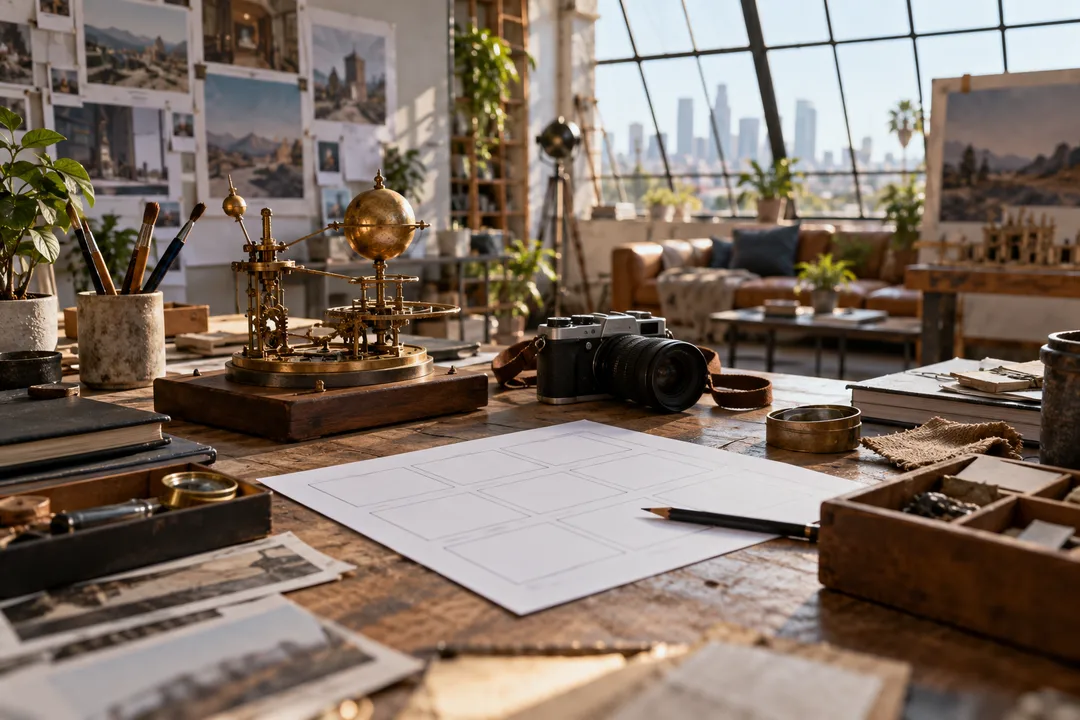
LA Oddities Shop: Find Props For One Film Scene
Build an LA oddities shop prop search around one film scene, matching silhouette, camera handling and continuity before committing to a decorative object.
An LA oddities shop prop search starts with the shot, not the shop window. Decide what the object must communicate on camera, how an actor will use it and whether it must survive repeated takes. Then turn those requirements into a focused request in the Karpo APP. A strange-looking object can be a good starting point for a scene, but the useful purchase is the one that works at the planned distance, under the intended lighting and in the performer's hands.
Describe the scene without naming a collectible
Write a sentence about the character and the moment. “A meticulous inventor unlocks a drawer with something that looks handmade” gives the search a job. “Find a weird antique” gives it an aesthetic with no function. You can use the first sentence to explore replica keys, small mechanisms or sculptural substitutes without prematurely deciding that an authentic old object is necessary for the story.
Separate the visual requirement from the character's fictional explanation. A script can call an object ancient while the production uses a modern decorative cast. That decision belongs to the film's design, not to a seller's factual description. Keep any real claims about maker, material or age in the purchase record. Let the fictional history live in the script and art department notes, where nobody will confuse it with provenance.
Prepare a prop brief the search can use

Include the camera distance, the approximate size you need and the action that happens during the shot. Add the material impression, the color family and any handling restrictions. For example: “Help me explore Los Angeles oddities shop options for a small mechanical-looking prop. It appears in a close view, needs a dull surface and will be picked up repeatedly. Decorative replicas are welcome.” Add your area and your own purchasing limit before sending it.
Ask for object categories as well as potential shopping leads. A miniature sculpture might create the same silhouette as an elaborate mechanism with fewer moving parts. A cast can be easier to duplicate than a unique collectible. These alternatives help you decide what the scene needs before spending the day traveling. No suggestion should be treated as proof that a business currently has a particular item available.
Test the outline before admiring the detail
At the intended framing, ask whether the viewer can understand the object's shape. Tiny engraving can be fascinating in a hand and disappear on camera. A bold handle, an unusual opening or a clear contrast between two materials may carry the scene more effectively. If photography is allowed, take a plain reference image at a distance that resembles the planned shot. Keep the reference free of other shoppers and private business information.
Look at the object against a background similar in brightness to the set. An appealing dark piece can vanish on dark furniture. A reflective surface can catch an unwanted bright patch. You do not need to solve the whole lighting setup at the counter, but you can identify the visual questions worth testing. Record those questions instead of assuming the camera will preserve everything that attracted you in person.
Give the performer a manageable action
A prop that looks excellent at rest can be awkward to pick up, rotate or put down quietly. Consider where the hand goes, whether the base is stable and which parts move. Ask the seller for permission before trying any action. Do not force a mechanism or handle a fragile piece as though it were a production sample. A collectible's survival matters more than proving that it can complete an improvised rehearsal.
For repeated handling, prefer a suitable decorative substitute when the original's condition or construction introduces uncertainty. A production should assess the actual item's sharp edges, breakable parts and material concerns through its own appropriate processes. Neither an attractive listing nor an AI description establishes that an object is suitable for a performer. The shopping brief narrows candidates, and the production decides which ones can enter the scene.
Think about the second take while buying the first
Continuity begins with knowing which way the object faces. Record its position, the visible side and the starting state of any moving part. If a mark or repair makes one side distinctive, photograph that detail with permission. These notes can save time when the setup changes and someone needs to reconstruct the previous arrangement. They also reveal whether the design depends on an unusual feature that will be hard to reproduce.
Ask whether matching pieces exist only if the production needs duplicates, and record the seller's actual answer. A shop carrying one example does not imply a source for five. If the shot involves damage, alteration or extensive handling, buying a unique antique may be the wrong solution. Reconsider the visual brief and explore a replica or a constructed object. That change can protect both the production schedule and the object you originally admired.
Separate acquisition from permission to alter
Before paying, decide who owns the purchase, who keeps the receipt and who can approve modifications. The person browsing may not be the person responsible for the final art budget. A clear record prevents an attractive find from becoming an unresolved reimbursement. Keep the seller's description attached to the object, particularly when the production needs to distinguish an ordinary decoration from a piece with a documented history.
Plan the trip back to the workspace around the actual parcel. A loose mechanism, a tall stand and a small boxed cast create different carrying problems. Ask about packaging and leave time to protect protruding parts. Skip the extra shopping stop if it means leaving the prop unsecured in a vehicle or carrying it through several unrelated errands. Acquiring the object is only useful when it reaches the test intact.
Practical Notes for the first camera test
At the workspace, compare the purchase against the original sentence about the scene. Put it in the frame, rehearse the intended action and record whether the silhouette reads. Use those observations to decide whether it needs a different background, a simpler action or replacement. Keep an honest distinction between a fix that improves the scene and an attempt to justify money already spent.
Return to Karpo with the result if the first category was unsuitable. “The mechanism is too small in the wide shot, so I need a larger outline and fewer details” is a useful revision. The assistant can help explore the new direction while the production keeps control of the physical tests. A successful prop search ends with an object that serves a specific shot, plus a record of why it was chosen and how it should be handled.
Ask Karpo for more information.
Keep reading
- Burbank Film Memorabilia Collector Shop Walk: Studio Stash
 Pasadena Film Memorabilia Collector Shop Walk: Classic Route
 Silver Lake Film Memorabilia Collector Shop Walk: Indie Lore