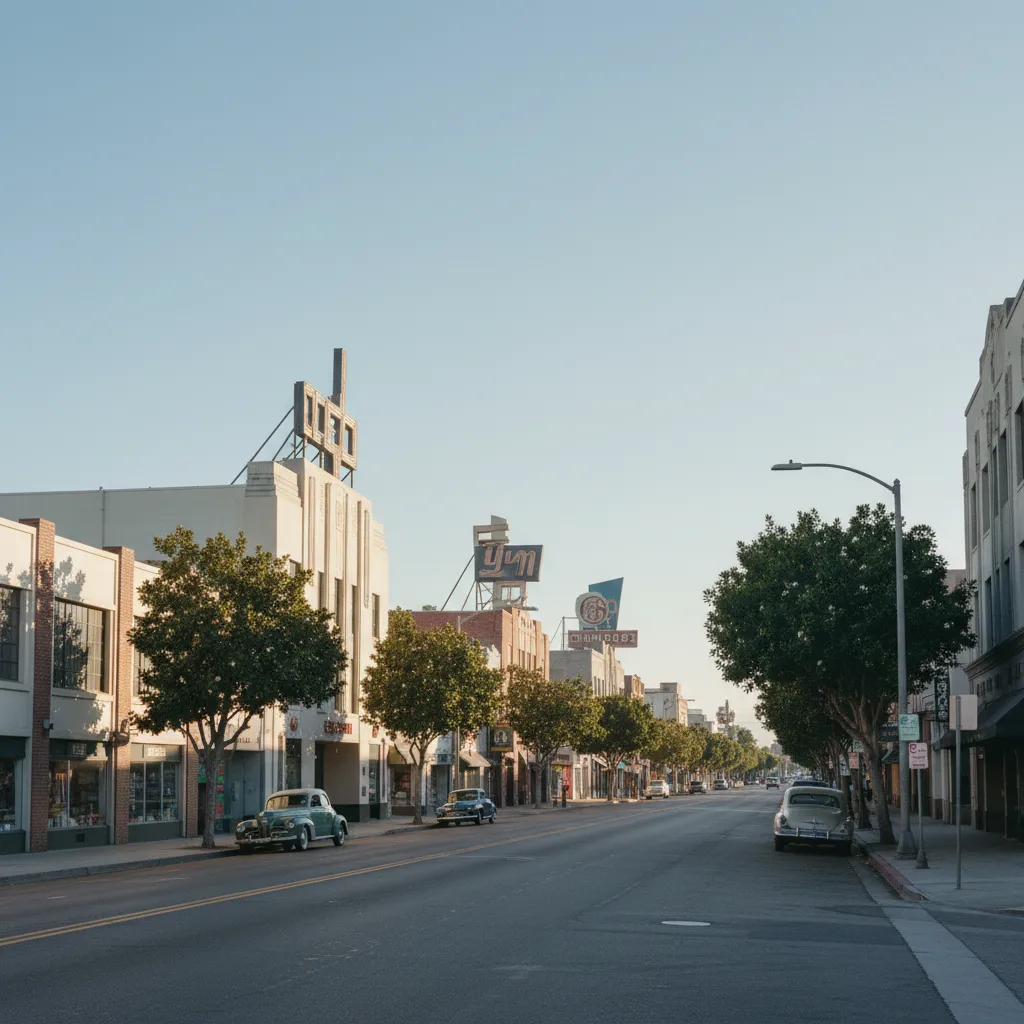
 Burbank Film Memorabilia Collector Shop Walk: Studio Stash
Hidden Gems & Odd Finds
LA Oddities Shop: Keep Useful Notes Before You Buy
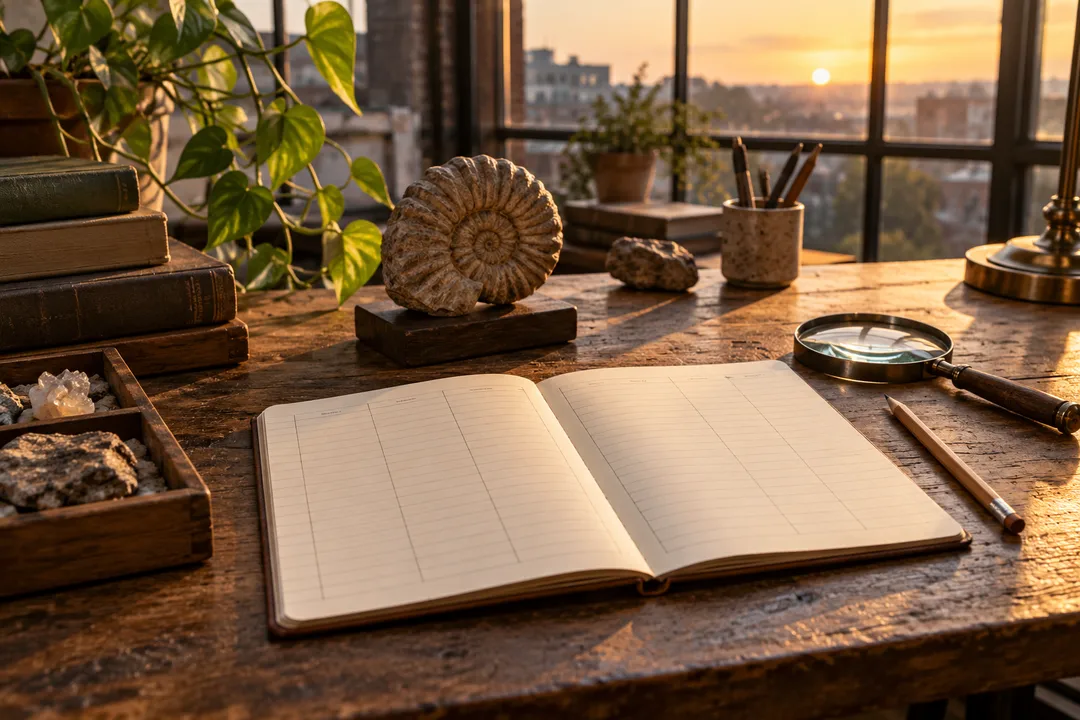
Keep an LA oddities shop notebook that separates observations from seller descriptions, records dimensions and makes each collecting decision easier to review.
An LA oddities shop notebook is most useful when it preserves the difference between what you saw and what you were told. Give each candidate its own entry, record its dimensions and keep unresolved questions visible. Use the Karpo APP to organize your collecting interests or plan a focused browse, then take responsibility for the evidence you bring home. A modest record can prevent an appealing story from gradually becoming a claim you no longer remember how to support.
Begin with an entry you can finish
A complicated catalogue is easy to abandon halfway through an afternoon. Start with a date, a short object name and a reference number of your own. The name only needs to distinguish this object from the next one. “Small green mineral on square base” can be more useful than a dramatic title when you are still learning what it is. Leave the material unassigned if the identification has not been established.
Add the reason it attracted you in a separate sentence. Perhaps the base is unusually compact, the shape resembles an instrument or the surface would work beside a particular book. This line records taste, which is a legitimate part of collecting. Keeping taste separate from identification means you can change your opinion about the material later without losing the honest reason you wanted the object in the first place.
Keep observation and description in different columns
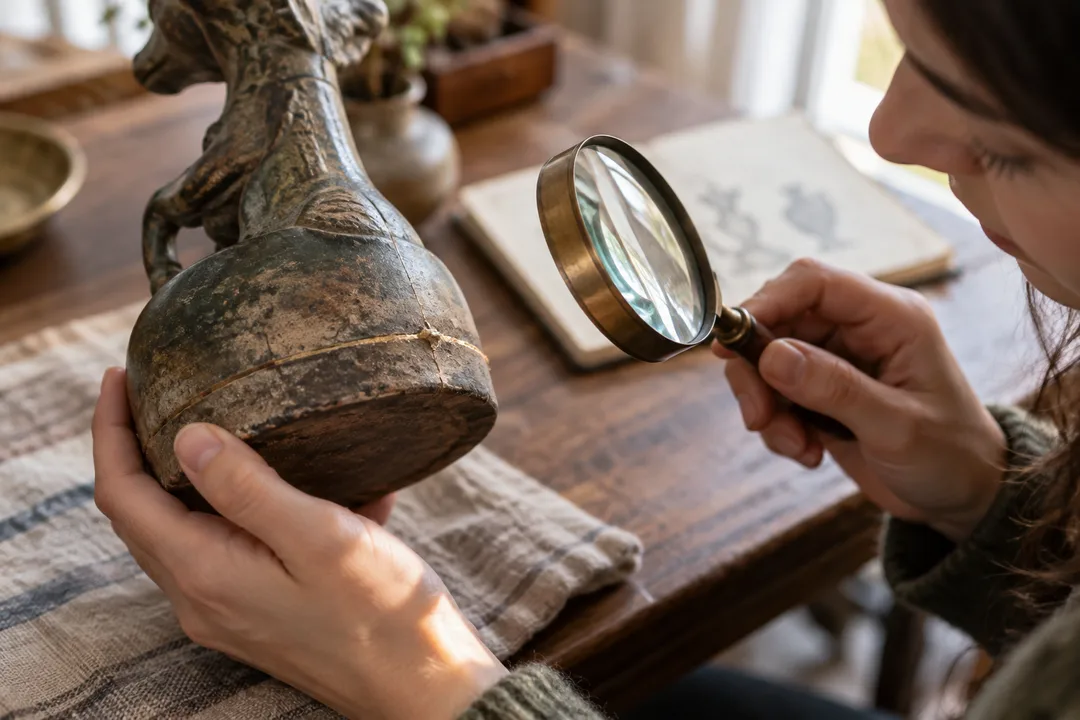
Use one column for features you can directly observe: approximate shape, visible damage, detachable pieces and the way the object stands. Use another for the seller's wording. If the seller calls something a cast, write that wording with its context. Do not quietly translate it into an assertion that the piece was made in a particular period. The purpose is to retain what was actually communicated, including the limits of the description.
A third column can hold questions. “What is beneath the felt base?” and “Is the mount included?” are actionable. “Probably old” is an interpretation that risks becoming more certain every time you reread it. Turn interpretations back into questions whenever possible. The notebook then becomes a practical aid for the next conversation rather than a place where guesses accumulate until they resemble a documented history.
Photograph the details that words describe poorly
Ask before taking photographs, and keep other customers and unrelated documents outside the frame. A full view shows proportions, while a base, label or repair detail can answer a different question later. Give the image files the same reference as the written entry. Without that connection, a folder full of attractive close views becomes difficult to use when several objects share similar colors or shapes.
Include a sense of scale through measurements you are allowed to take. A ruler is more useful than relying on a hand in the image, especially when the object will occupy a narrow shelf. Record height, width and depth separately, with the unit written clearly. Do not let the apparent size in a phone photograph control the purchase. Camera angle and cropping can make an object seem more compact than it is.
Record condition without diagnosing it
Describe the location of a chip, seam, discoloration or loose part in plain language. If you do not know whether a line is a repair, call it a visible line and ask. A condition record does not require you to become a conservator at the counter. It requires enough specificity that you can identify what you noticed and compare it with the seller's answer afterward.
Write care instructions in the form they were given, and note who supplied them. Avoid adding a cleaning method from a superficially similar object. A decorative finish can require different treatment from the material underneath it. If the instruction is unclear, ask the narrow question before purchase. This is easier than trying to reconstruct a brief explanation after packaging has been discarded and the original display is no longer in view.
Use Karpo to sharpen the collecting question
A useful planning request could be: “I am building a small collection in Los Angeles and want an oddities shop browse focused on mechanical forms and decorative casts. Help me narrow the object categories and plan a visit where I can ask informed questions. I care more about clear descriptions than rarity.” Add your area and time window. The conversation helps frame the project, while the notebook retains the evidence gathered during it.
You can also bring your own notes into a follow-up without asking the assistant to certify them. Ask it to separate observations, seller statements and unanswered questions, or to help express the tradeoff between two candidates. Review that organization against your original wording. An orderly summary is useful only if it preserves uncertainty. It must not turn “the seller thinks” into an unqualified historical claim.
Capture the transaction as its own event
When you purchase, connect the receipt to the object reference and record what was included. A stand, cover or spare part can matter later when you reorganize the collection. Keep the business's stated sale terms with the transaction rather than mixing them into the object's description. The object can remain the same while your understanding of its condition changes, and the transaction record should still be easy to find.
For a piece you leave behind, record the reason without inventing a future promise. “Too deep for cabinet” or “material question unresolved” tells you what prevented the purchase. Do not describe it as reserved unless the seller actually made that arrangement. A photograph and a reference number make a useful memory, but they do not establish ownership, availability or any obligation on the part of the business.
Practical Notes for a record that stays useful
At home, give the object a stable storage location and add that location to the entry. Keep labels and care notes where they can be found without lifting a fragile display. If you later receive better evidence about the maker or material, append the information with its date and context. Preserve the earlier description so you can see how the understanding changed. A correction improves the record when its origin remains visible.
Review the notebook before the next outing. Look for repeated problems: objects too large for the cabinet, unanswered condition questions or categories you enjoy seeing but do not want to own. Those patterns can make your next Karpo brief shorter and more specific. The collection then grows through informed choices, and the notebook becomes a record of attention rather than a list of purchases whose stories have drifted beyond what you actually know.
Ask Karpo for more information.
Keep reading
- Burbank Film Memorabilia Collector Shop Walk: Studio Stash
 Pasadena Film Memorabilia Collector Shop Walk: Classic Route
 Silver Lake Film Memorabilia Collector Shop Walk: Indie Lore